Artwork
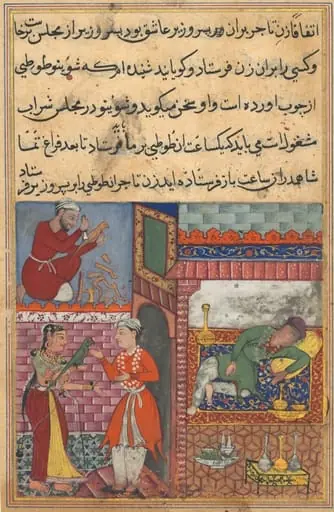
The pious man’s son, now a king, reveals himself to his father; his nurse upbraids his unfaithful mother, from a Tuti-nama (Tales of a Parrot): Fifty-second Night
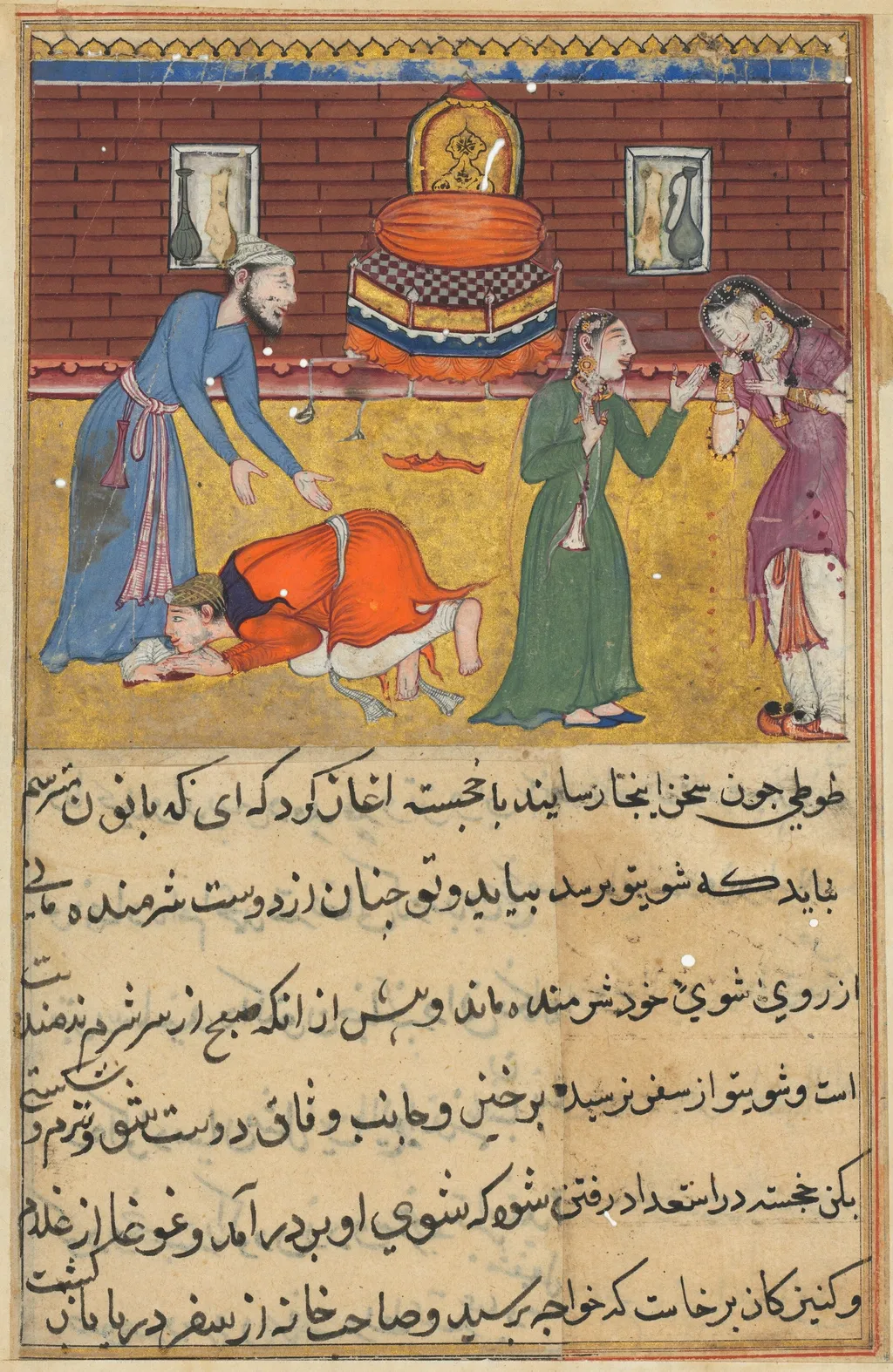
The pious man’s son, now a king, reveals himself to his father; his nurse upbraids his unfaithful mother, from a Tuti-nama (Tales of a Parrot): Fifty-second Night is an unspecified painting. It dates from 1560 and is held in the collection of the Cleveland Museum of Art.
About this work
Subject & Meaning
The composition depicts a pivotal narrative moment where a son, who has ascended to the throne, reveals his true identity to his father.
The artwork illustrates a scene from the fifty-second night of the Tuti-nama, or Tales of a Parrot. The composition depicts a pivotal narrative moment where a son, who has ascended to the throne, reveals his true identity to his father. Simultaneously, the king's nurse confronts and chastises the mother for her infidelity.
As a product of the Mughal Empire created in 1560, the painting serves as a visual translation of this specific literary episode, focusing on the dramatic revelation of lineage and the moral reprimand of unfaithfulness within a royal family.
History & Provenance
The miniature comes from a Tuti-nama manuscript produced in the Mughal Empire around 1560. It entered the collection of the Cleveland Museum of Art, where it is catalogued as 1962.279.340.a. The work depicts the moment when the pious man's son, now a king, reveals himself to his father while his nurse rebukes his unfaithful mother.
The painting is attributed to an unknown artist and is classified as a miniature from the fifty-second night of the narrative.
Context
The miniature illustrating the fifty-second night of the Tuti-nama was created in 1560 within the Mughal imperial workshop, reflecting the period's synthesis of Persian narrative traditions and Indian visual sensibilities. The work belongs to a corpus of illustrated manuscripts produced during the reign of Akbar, when court artists integrated storytelling with meticulous naturalism, as evident in the depiction of familial revelation and domestic conflict. Its attribution to an anonymous painter situates it within the broader trajectory of 16th-century Mughal painting, in which narrative cycles served both aesthetic and didactic purposes.
The piece remains a key example for understanding the transmission of Persianate literary motifs into the visual culture of the Mughal court.
Legacy
Later scholarship has highlighted the painting's role in shaping Mughal narrative illustration, noting its place within studies of the Tuti-nama manuscript tradition. The work is held in the collection of the Cleveland Museum of Art, where it is catalogued as 1962.279.340.a.
Overview
The work illustrates a narrative episode from the fifty‑second night of the Persian illustrated manuscript known as the Tuti‑nama, or Tales of a Parrot. Set within an opulently adorned interior of red‑brick walls and gilded flooring, four figures occupy the space: a kneeling man in blue, a fallen figure in orange, and two standing women dressed in green and purple. The composition captures a moment of revelation and accusation within the story.
Technique & Style
Rendered with vivid pigments and strong contour lines, the painting employs a flat, decorative approach typical of Persian miniature art. The use of saturated blues, oranges, greens, and purples creates visual contrast, while the intricate architectural details, lamp, shelves, jars, and mirror, enhance the sense of a lavish domestic setting.
Artist & collection

- The pious man’s son, now a king, reveals himself to his father; his nurse upbraids his unfaithful mother, from a Tuti-nama (Tales of a Parrot): Fifty-second Night
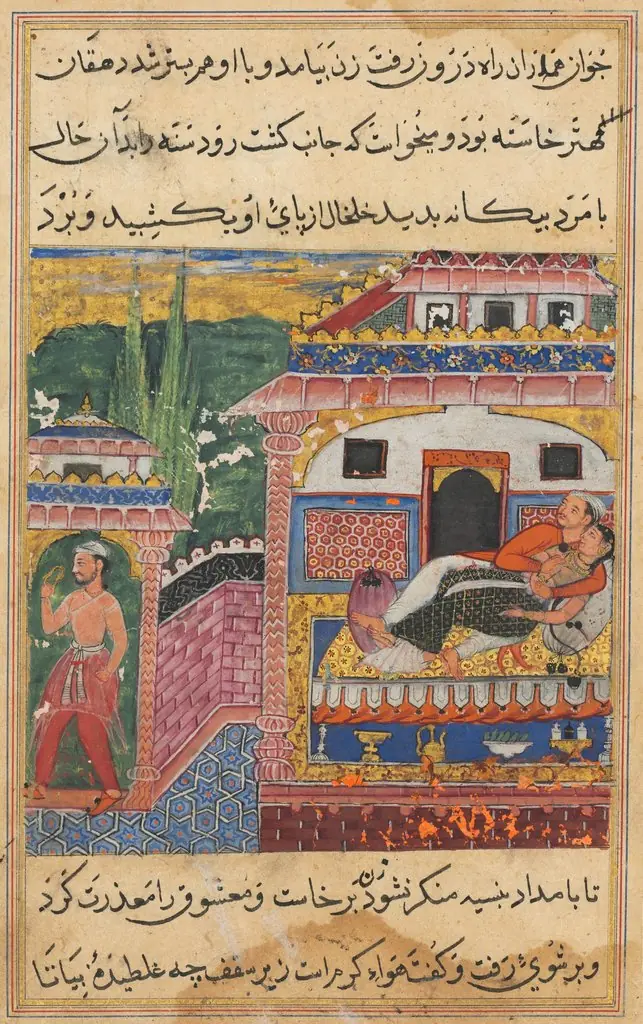 The farmer, father of the son with the deceitful wife, steals away with her anklet while she is in bed with her lover, from a Tuti-nama (Tales of a Parrot): Eighth Night
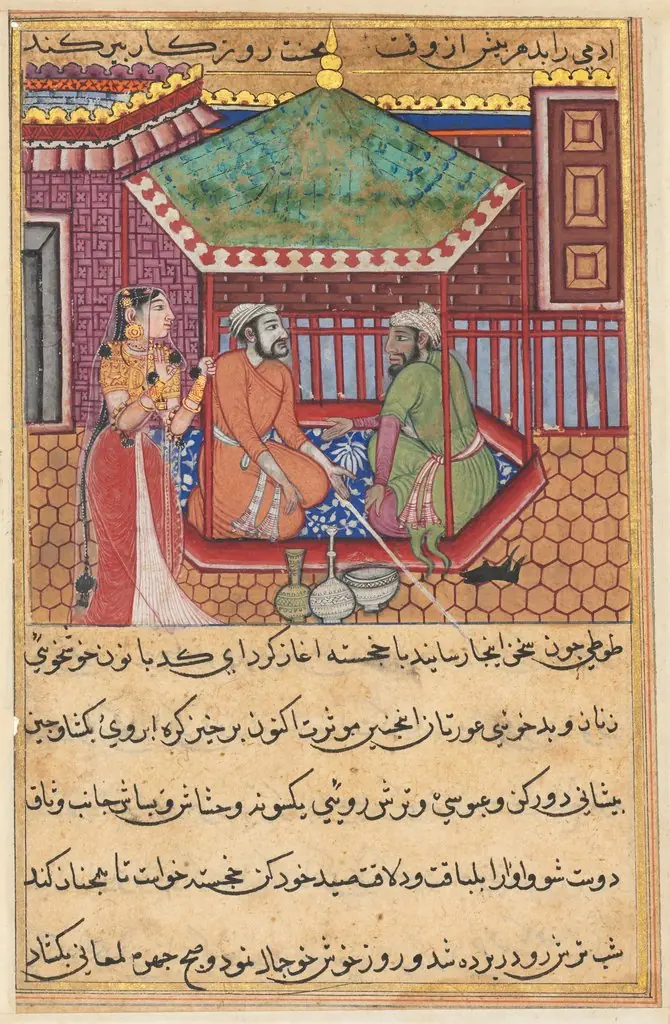 The eldest brother explains the reason for his youthful appearance, from a Tuti-nama (Tales of a Parrot): Forty-ninth Night
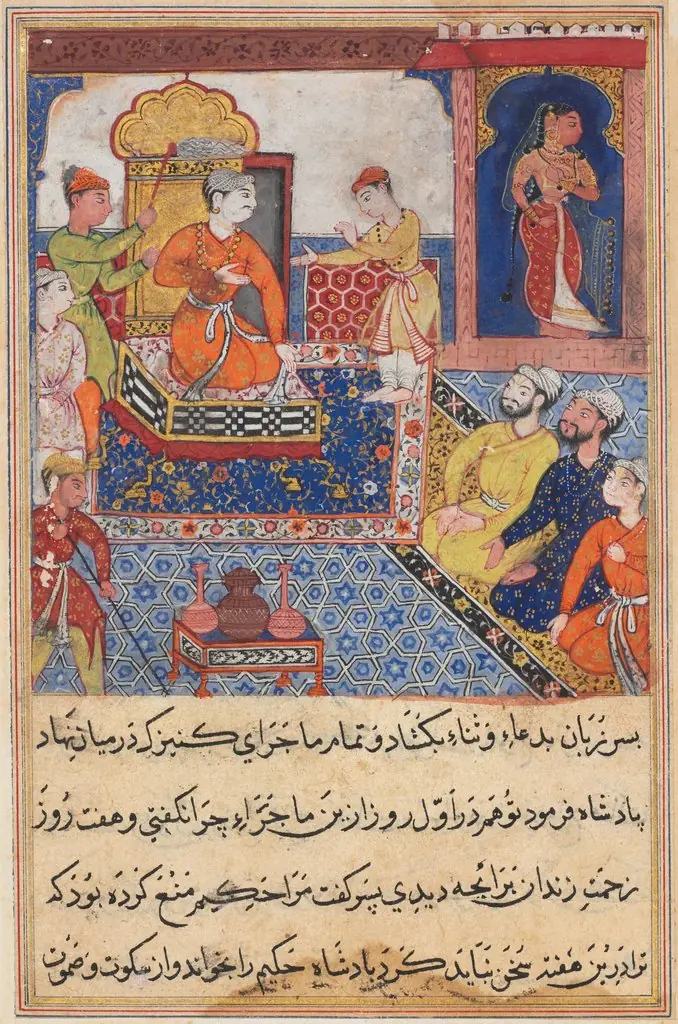 The young prince recounts his experiences to his father, the king, from a Tuti-nama (Tales of a Parrot): Eighth Night
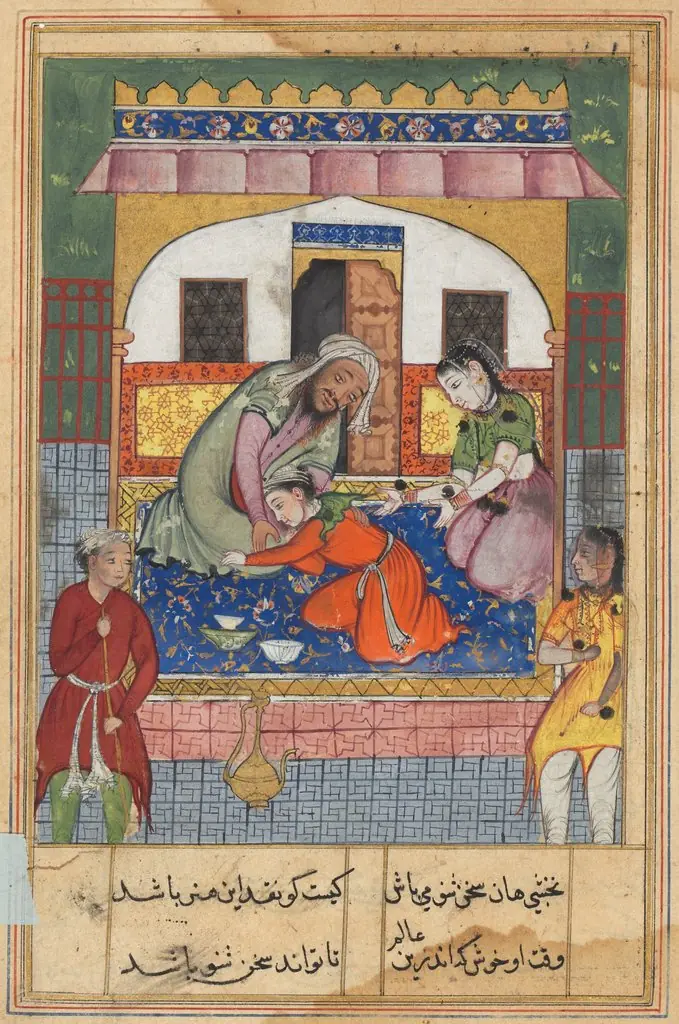 Repenting his conduct, ‘Ubaid falls at the feet of his parents, from a Tuti-nama (Tales of a Parrot): Forty-second Night
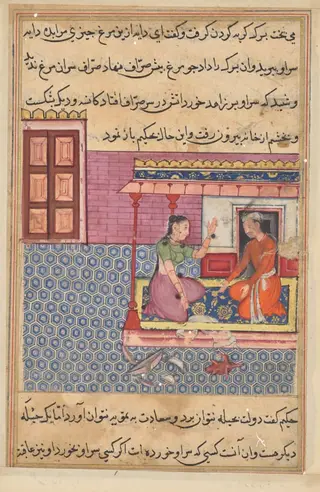 The pious man’s wife offers the seven-colored bird as food to her lover, but not finding its head, he breaks the pot and bowl in anger, from a Tuti-nama (Tales of a Parrot): Fifty-second Night
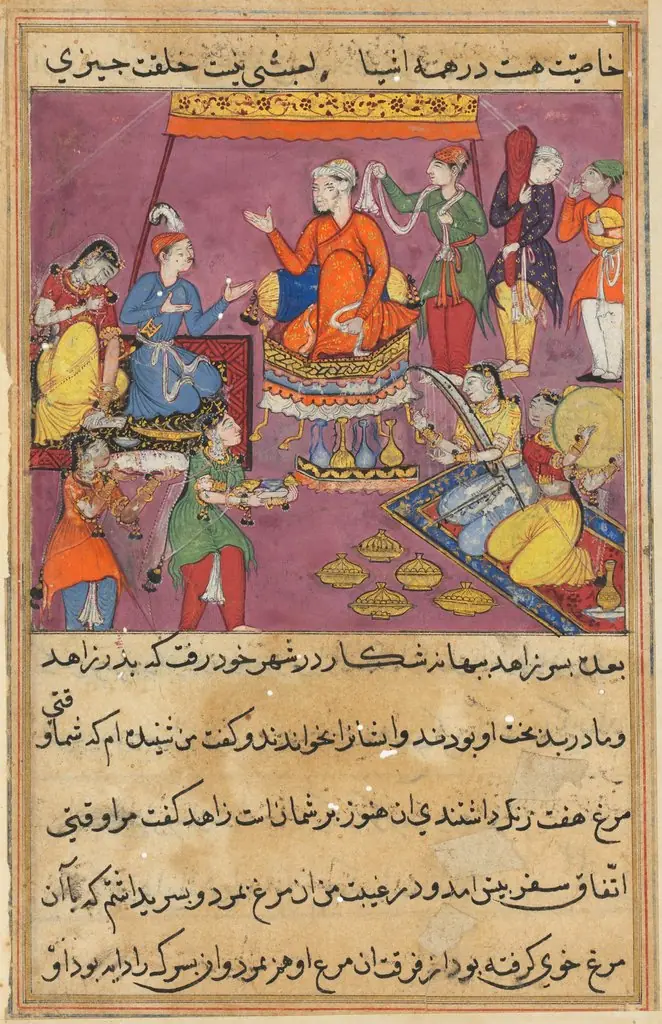 The king gives his daughter in marriage to the pious man’s son, from a Tuti-nama (Tales of a Parrot): Fifty-second Night
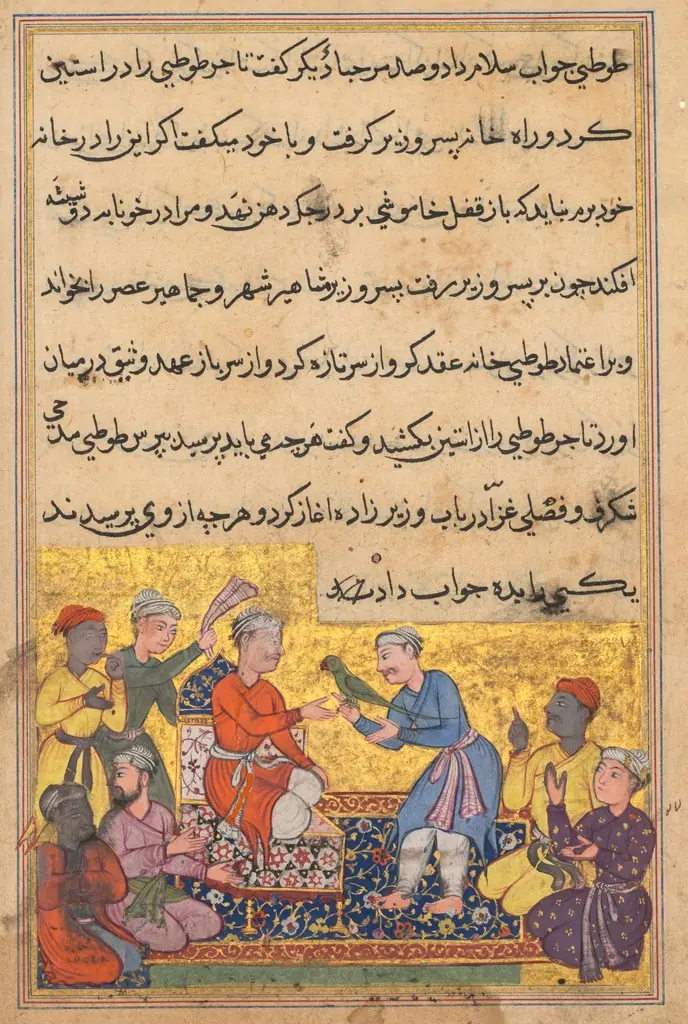 The magic parrot of the merchant talks to the vizier’s son, from a Tuti-nama (Tales of a Parrot): Tenth Night
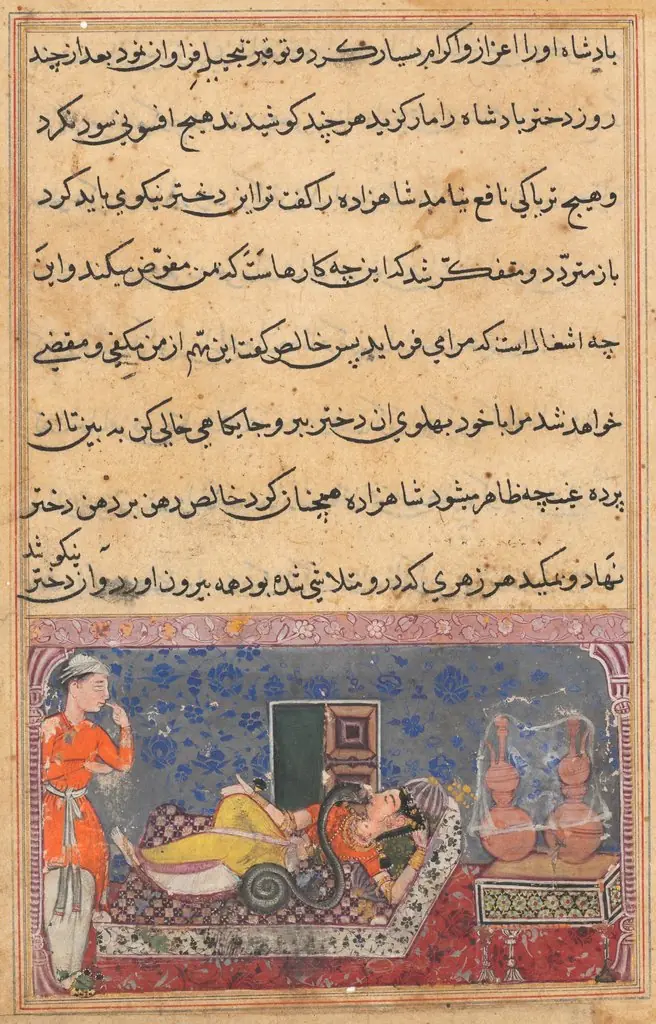 Khalis repays the prince for his kindness by changing into a snake and sucking the poison from the king’s daughter, from a Tuti-nama (Tales of a Parrot): Eighteenth Night
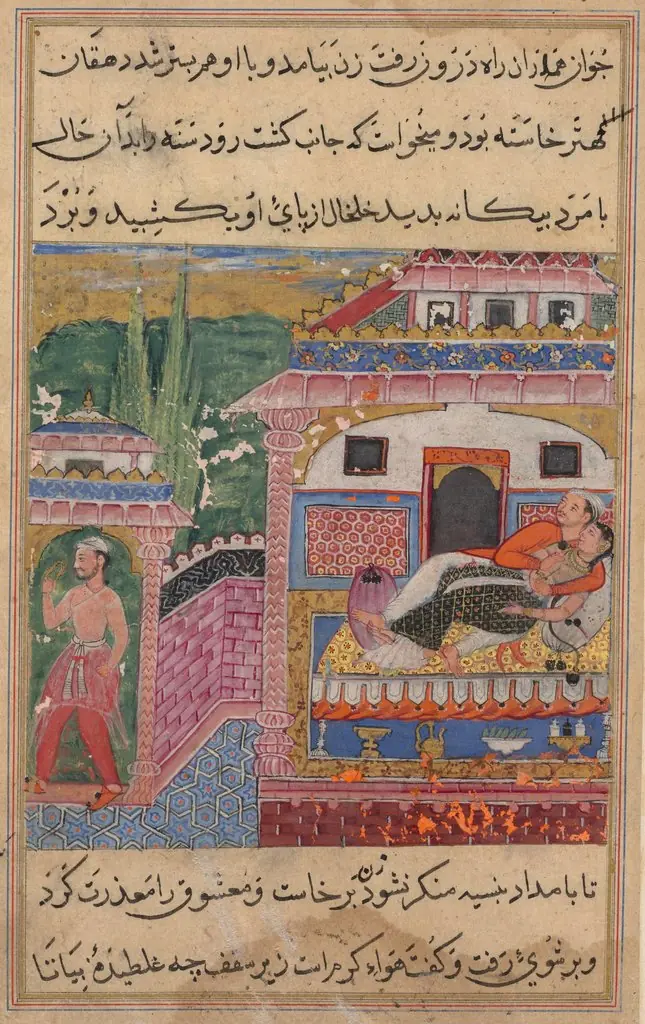 The deceitful wife persuades her husband to sleep in the same place where she had previously slept with her lover, from a Tuti-nama (Tales of a Parrot): Eighth Night
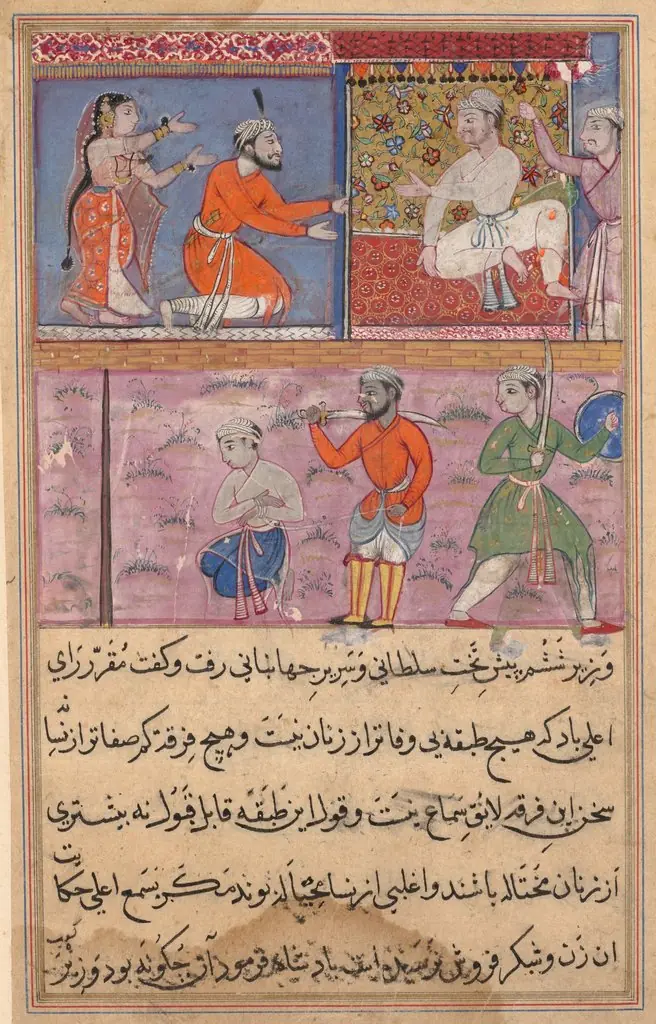 Page from Tales of a Parrot (Tuti-nama): text page
 The vizier’s son receives the magic wooden parrot from the wife of the merchant, who is drunk, and has a replica made by a carpenter, from a Tuti-nama (Tales of a Parrot): Tenth Night