Artwork
清 徐揚等 乾隆南巡圖, 第四卷﹕黃淮交流|The Qianlong Emperor's Southern Inspection Tour, Scroll Four: The Confluence of the Huai and Yellow Rivers (Qianlong nanxun, juan si: Huang Huai jiaoliu)
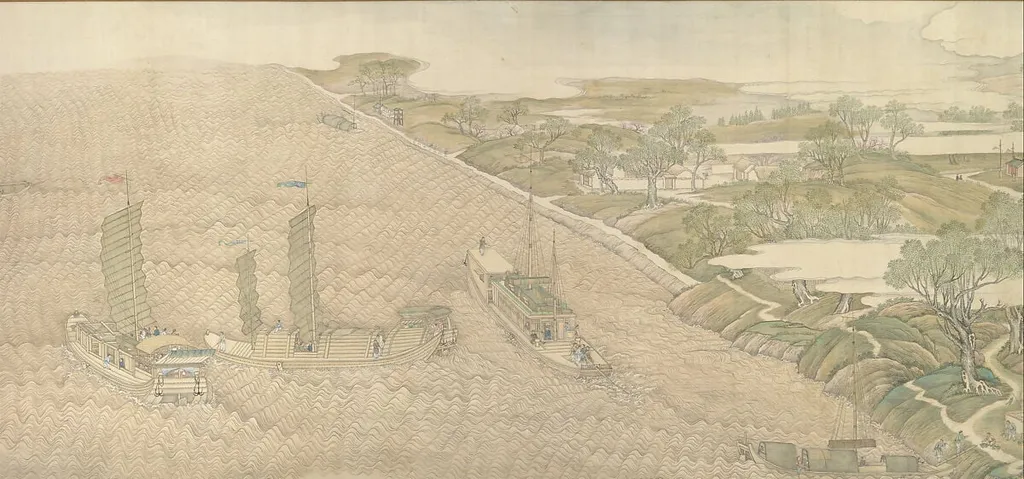
清 徐揚等 乾隆南巡圖, 第四卷﹕黃淮交流|The Qianlong Emperor's Southern Inspection Tour, Scroll Four: The Confluence of the Huai and Yellow Rivers (Qianlong nanxun, juan si: Huang Huai jiaoliu) is an ink painting by the Ming dynasty painting artist Xu Yang. It dates from 1770 and is held in the collection of the Metropolitan Museum of Art.
About this work
Subject & Meaning
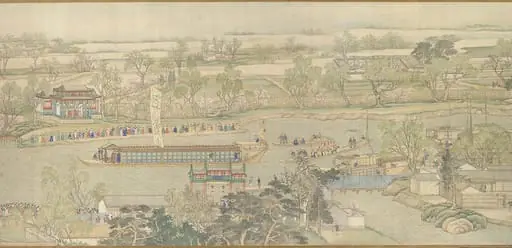
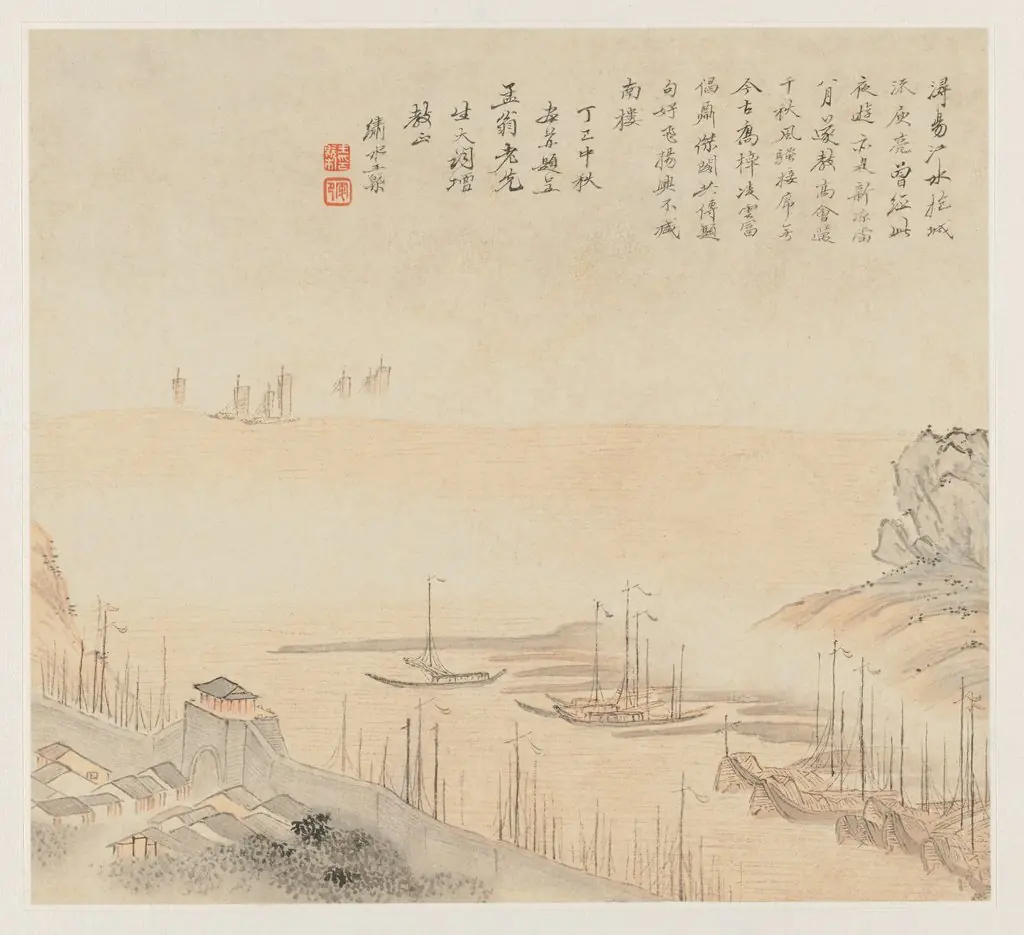
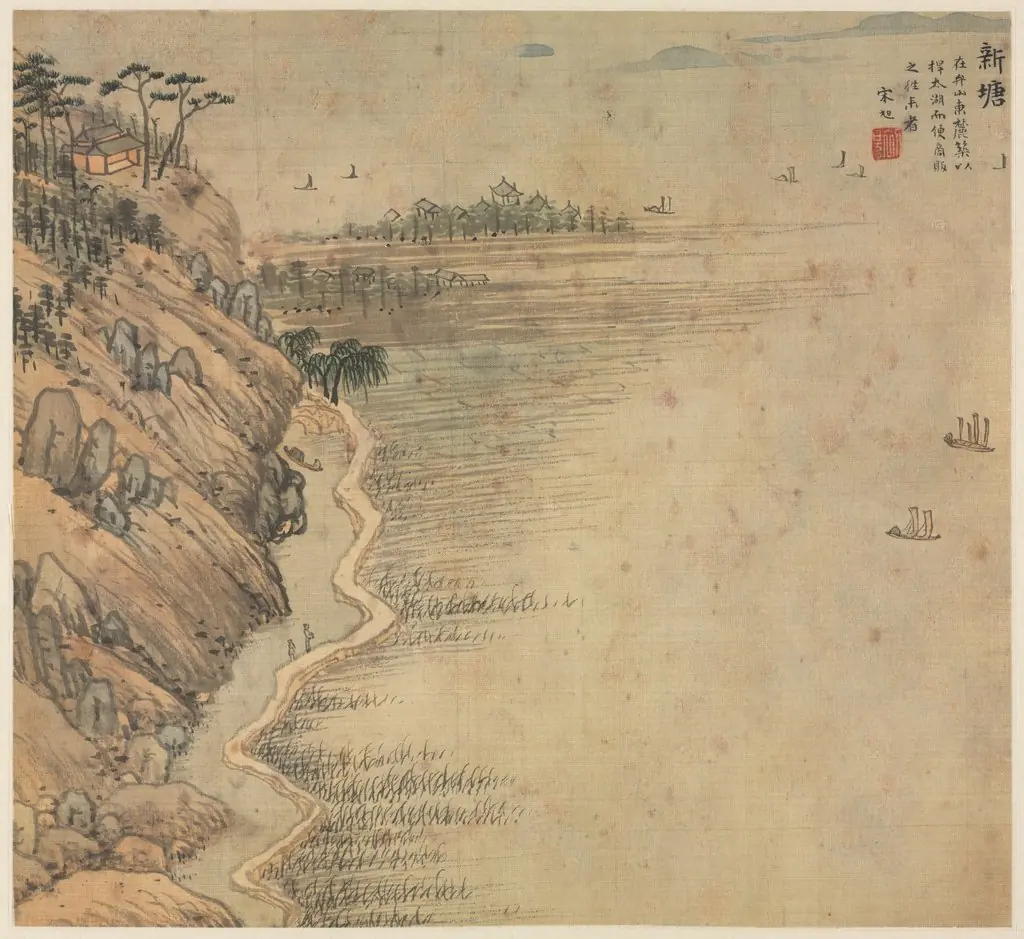
Rendered in ink and color on silk, the composition features a river landscape with a boat, emphasizing the geographical focus of the imperial journey.
The handscroll illustrates the meeting point of the Huai and Yellow Rivers during the Qianlong Emperor's southern inspection tour, a scene identified in the title as the Confluence of the Huai and Yellow Rivers. Rendered in ink and color on silk, the composition features a river landscape with a boat, emphasizing the geographical focus of the imperial journey. As part of the fourth volume of the Qianlong southern inspection series, the work functions as a visual record of the emperor's administrative reach, using the natural landmark of the river confluence to symbolize the controlled and surveyed territories of the Qing court. The depiction aligns with the genre of landscape painting prevalent in 18th-century Chinese art.
Technique & Style
The handscroll is executed in ink and color on silk, a medium favored for its luminous surface and capacity to render fine detail in Qing court commissions. Xu Yang employs meticulous brushwork to delineate the confluence of the Huai and Yellow Rivers, combining controlled line with modulated washes to articulate the river currents and atmospheric recession. Boats and river craft are outlined in fine ink and filled with delicate mineral pigments to suggest wood and sail textures.
The composition balances panoramic breadth with intricate topographical detail, characteristic of a court style that synthesizes Song academic recession with Qing descriptive clarity.
History & Provenance
Scroll Four of the Southern Inspection Tour series was commissioned by the Qianlong Emperor (r. 1736–1795) to document his 1751 southern tour, part of a program of imperial display and administrative oversight. Executed in 1770 by the court painter Xu Yang with a team of artisans, the handscroll belongs to the emperor's patronage of large-scale narrative landscapes celebrating imperial authority.
The fourth scroll, titled The Confluence of the Huai and Yellow Rivers, is held in the collection of the Metropolitan Museum of Art in New York. It measures approximately 68.8 centimeters in height by 1096.17 centimeters in width and is classified as a landscape painting executed in ink and color on silk. The sources confirm its presence in the museum and provide its dimensions and creation date, but record no specific accession number or detailed exhibition history.
Overview
The Qianlong Emperor's Southern Inspection Tour, Scroll Four: The Confluence of the Huai and Yellow Rivers, executed by Xu Yang in 1770, is a handscroll rendered in ink and color on silk. This work documents the fourth stage of the Qianlong Emperor's 1765 southern tour, specifically depicting the hydrological meeting point of the Huai and Yellow Rivers. The composition unfolds horizontally, utilizing a panoramic perspective to illustrate the vastness of the landscape and the scale of the imperial procession.
Tiny figures, numerous boats, and intricate bridge structures populate the scene, emphasizing the logistical complexity of the journey and the emperor's command over the realm's infrastructure. Created as part of a twelve-scroll series commissioned to celebrate the emperor's achievements, the painting serves both as a historical record and a piece of political propaganda. The depiction of the rivers as calm and orderly contrasts with the region's frequent flooding, projecting an image of imperial stability and effective governance.
Xu Yang, a court painter of European training, blends traditional Chinese landscape techniques with Western-inspired spatial depth and realistic detail, a hallmark of the Qianlong court's artistic output during the mid-eighteenth century.
Context
Created under imperial commission, this work functioned as a visual testament to the Qianlong Emperor's authority. The meticulous production process involved close scrutiny by government officials, who reviewed every detail before the artist could finalize the piece. This rigorous oversight ensured the painting aligned with the official narrative of imperial might and the emperor's benevolent rule, reinforcing his image to his subjects and future generations.
Artist & collection