Artwork
The suitors take the devotee’s daughter out of her tomb after breaking it open, when the physician discovers she is still alive, from a Tuti-nama (Tales of a Parrot): Twentieth Night
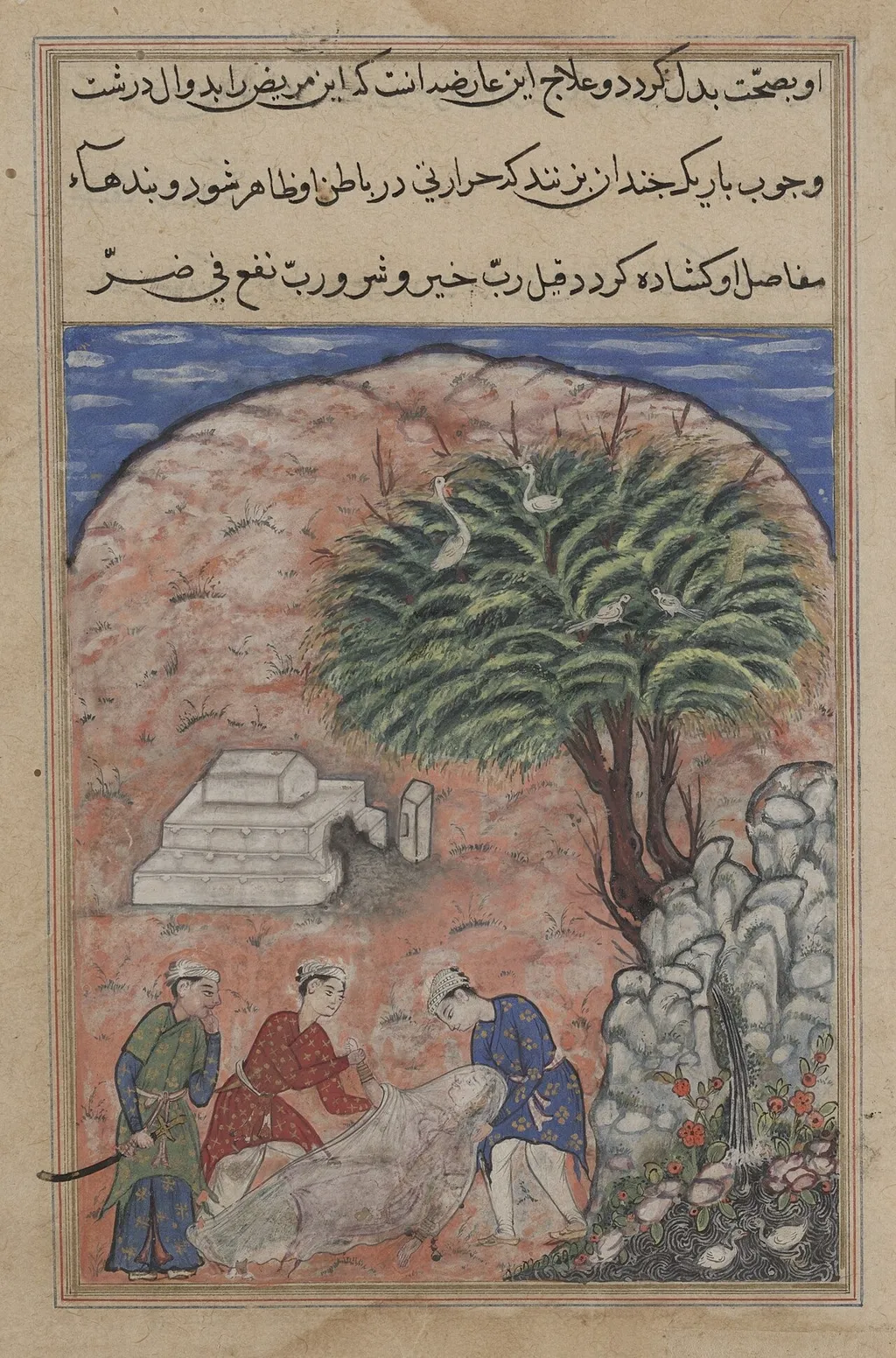
The suitors take the devotee’s daughter out of her tomb after breaking it open, when the physician discovers she is still alive, from a Tuti-nama (Tales of a Parrot): Twentieth Night is an unspecified painting. It dates from 1560 and is held in the collection of the Cleveland Museum of Art. The work illustrates a moment from the twentieth night of the Tuti‑nama, a narrative collection known as the Tales of a Parrot.
About this work
Subject & Meaning
The scene illustrates a dramatic moment from a Persian narrative, showing suitors removing a devotee's daughter from an opened tomb when a physician discovers she is still alive. The composition emphasizes resurrection and divine intervention, central themes in the illustrated manuscript. The work originates from the Mughal artistic tradition and is housed in the Cleveland Museum of Art.
History & Provenance
No specific details regarding the original commission or the earlier ownership chain prior to its arrival at the museum are provided in the available records.
Created in 1560 within the Mughal Empire, this painting illustrates a scene from the Twentieth Night of the Tuti-nama (Tales of a Parrot). The work was executed by an unknown artist and is identified as a single leaf from the manuscript depicting the suitors removing the devotee's daughter from her tomb. The piece is currently held in the collection of the Cleveland Museum of Art, where it is cataloged under the accession number 1962.279.146.a.
No specific details regarding the original commission or the earlier ownership chain prior to its arrival at the museum are provided in the available records.
Overview
The work illustrates a moment from the twentieth night of the Tuti‑nama, a narrative collection known as the Tales of a Parrot. In the scene three figures in red and blue garments are shown extracting a woman clad in white from an opened tomb, while a physician nearby realizes she remains alive. The composition includes a distant stone structure, a solitary tree with birds, and a clear blue sky, suggesting an arid, historic landscape.
Technique & Style
Rendered in a narrative painting style, the artist employs a limited palette of vivid reds, blues, and whites to differentiate characters, while the background is softened with muted earth tones. Linear perspective suggests depth, and the inclusion of natural elements, tree, birds, clouds, balances the stark stone architecture, creating a tableau that merges realism with illustrative storytelling.
Context
The Tuti‑nama, a Persian literary work, compiles moral and romantic stories centered on a talking parrot. This particular illustration forms part of a series that visualizes each night’s episode, serving both as a decorative manuscript element and as a didactic aid for readers to follow the plot.
Legacy
Such narrative paintings were common in manuscript illumination and early book illustration, influencing later visual storytelling traditions in Persian and South Asian art. The depiction of dramatic rescue scenes contributed to the visual vocabulary used in later illustrated texts that blend literary and pictorial expression.
Artist & collection

- The suitors take the devotee’s daughter out of her tomb after breaking it open, when the physician discovers she is still alive, from a Tuti-nama (Tales of a Parrot): Twentieth Night
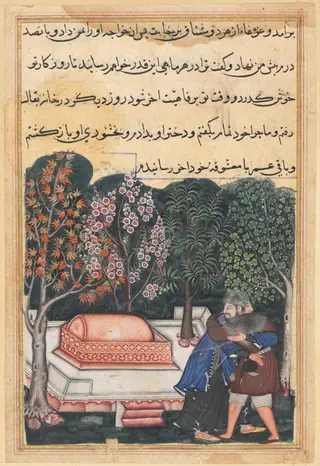 The young man of Baghdad reunited with his slave-girl, from a Tuti-nama (Tales of a Parrot): Forty-eighth Night
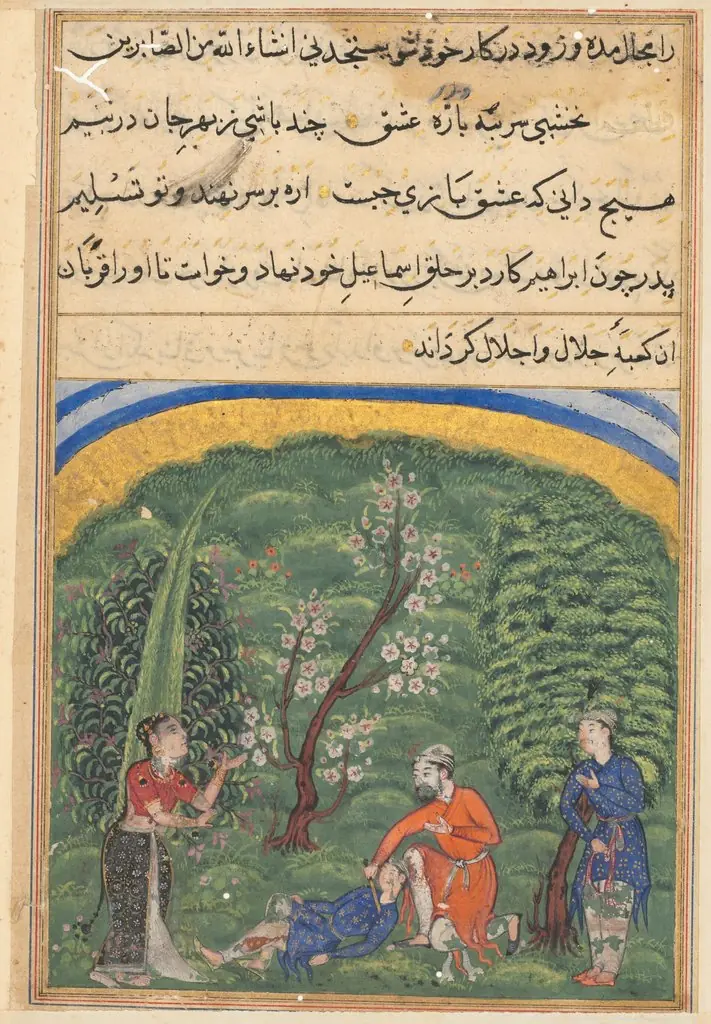 The sentinel in the employ of the Shah of Tabaristan prepares to sacrifice his son to the ghost of the Shah’s soul, from a Tuti-nama (Tales of a Parrot): Second Night
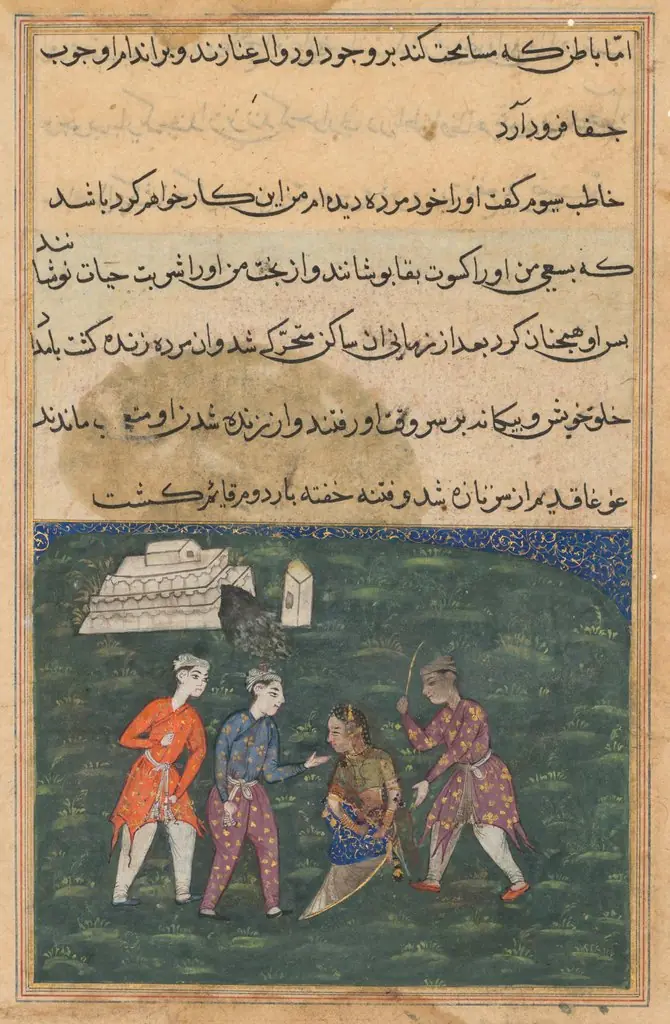 The third suitor strikes the devotee’s daughter and thus restores her to life, from a Tuti-nama (Tales of a Parrot): Twentieth Night
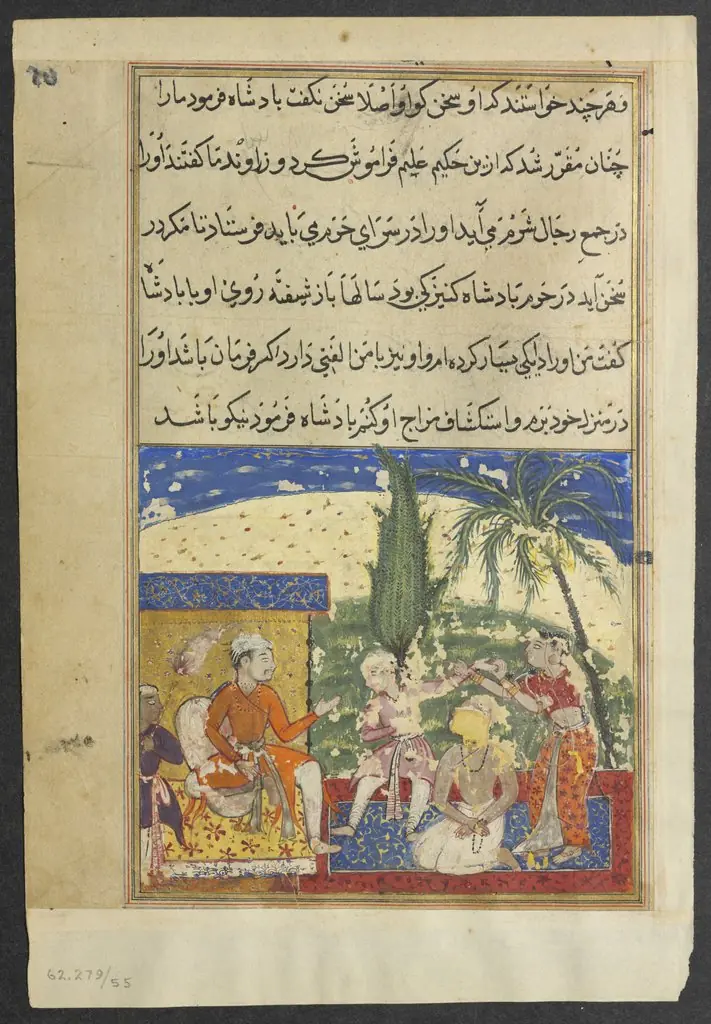 The king’s handmaiden takes the prince away to the harem, from a Tuti-nama (Tales of a Parrot): Eighth Night
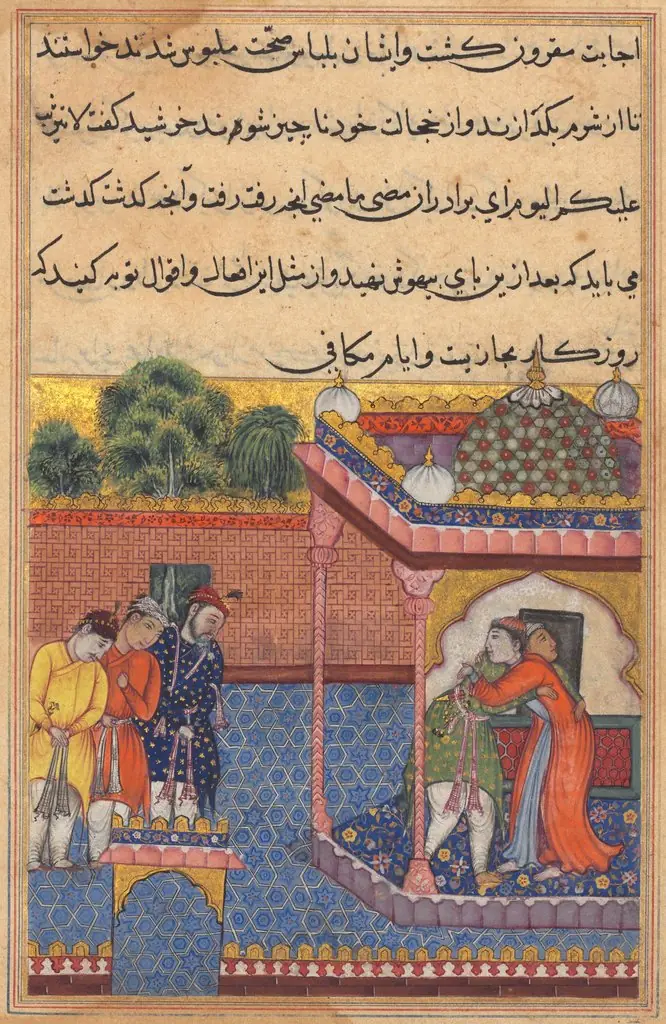 Khurshid reunited with her husband Utarid, from a Tuti-nama (Tales of a Parrot): Thirty-second Night
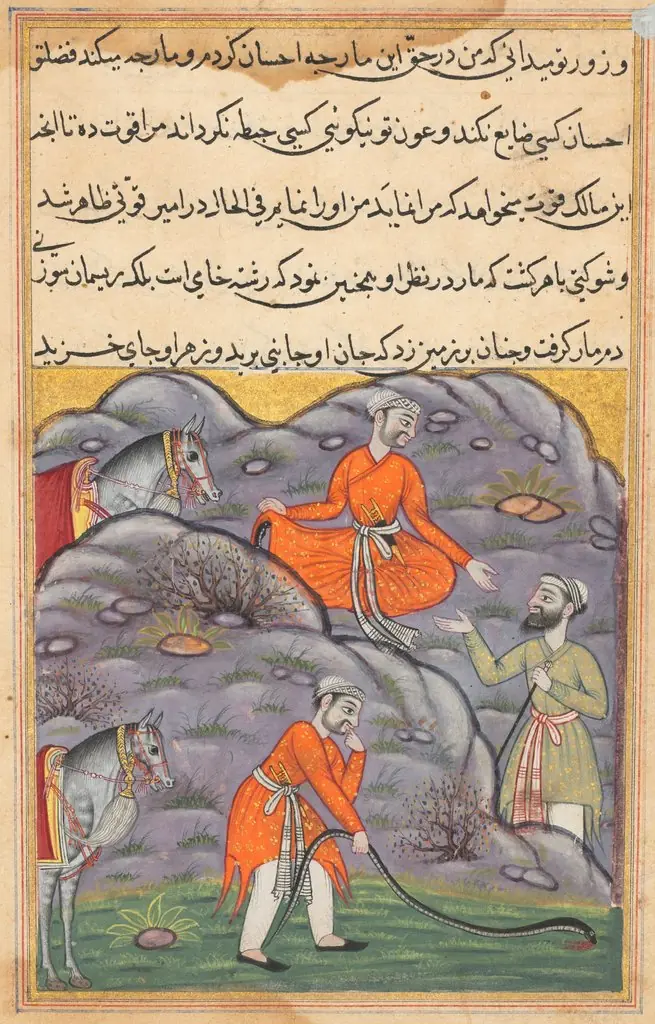 The Emir slays the snake after giving it shelter, from a Tuti-nama (Tales of a Parrot): Forty-fifth Night
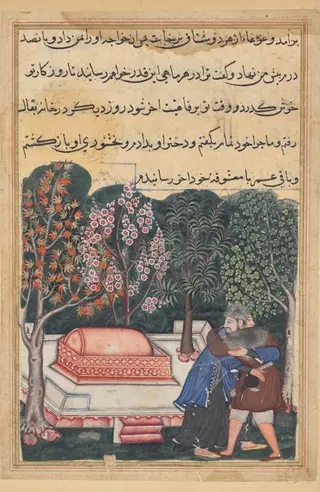 The young man of Baghdad reunited with his slave-girl, from a Tuti-nama (Tales of a Parrot): Forty-eighth Night
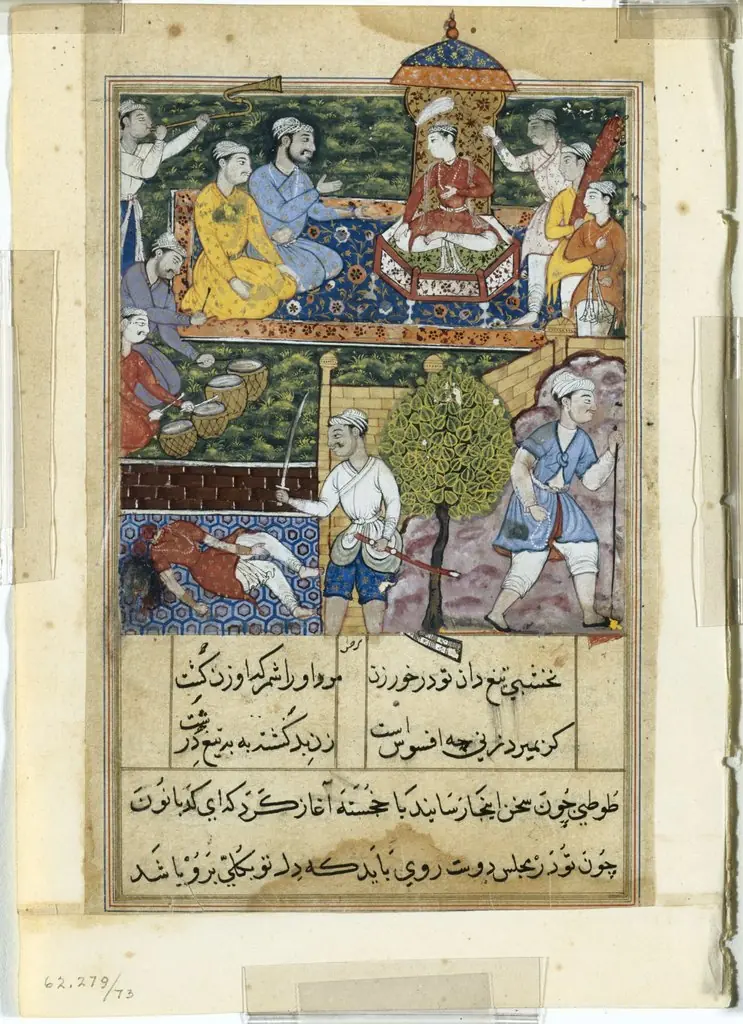 The young prince is crowned and the wicked handmaiden is executed, from a Tuti-nama (Tales of a Parrot): Eighth Night
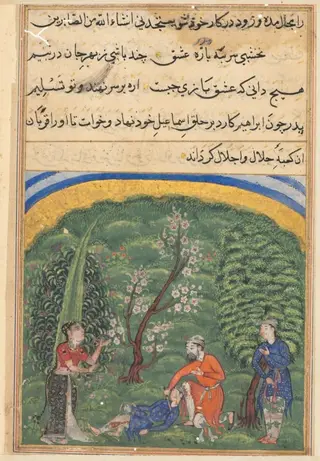 The sentinel in the employ of the Shah of Tabaristan prepares to sacrifice his son to the ghost of the Shah’s soul, from a Tuti-nama (Tales of a Parrot): Second Night
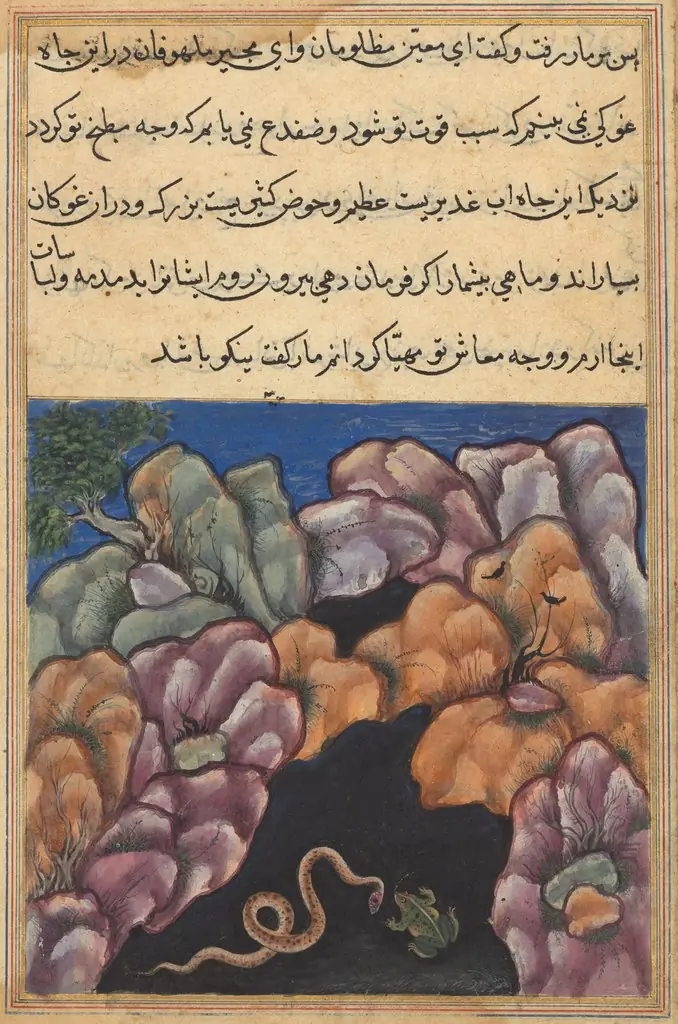 The snake enters into an argument with the frog, from a Tuti-nama (Tales of a Parrot): Twenty-sixth Night
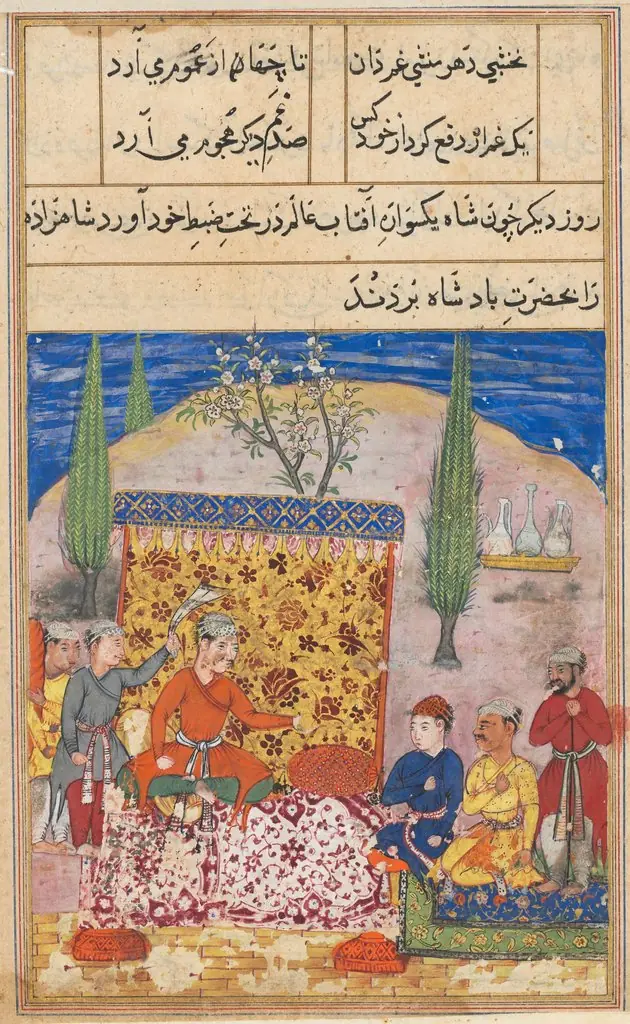 The young prince is presented to the king, his father, by his teacher, but refuses to speak, from a Tuti-nama (Tales of a Parrot): Eighth Night