Artwork
The sentinel in the employ of the Shah of Tabaristan prepares to sacrifice his son to the ghost of the Shah’s soul, from a Tuti-nama (Tales of a Parrot): Second Night
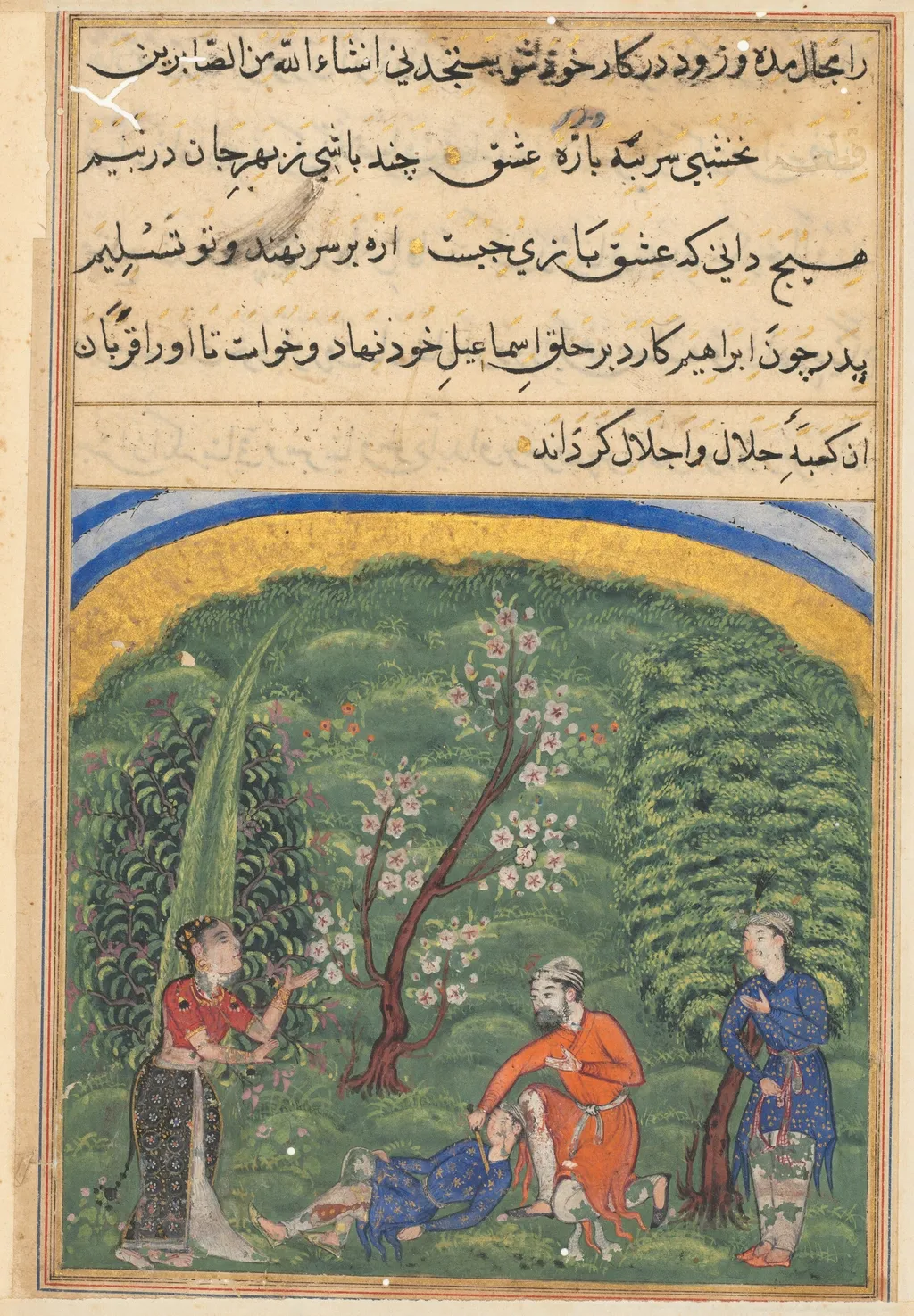
The sentinel in the employ of the Shah of Tabaristan prepares to sacrifice his son to the ghost of the Shah’s soul, from a Tuti-nama (Tales of a Parrot): Second Night is an unspecified painting. It dates from 1560 and is held in the collection of the Cleveland Museum of Art.
About this work
Subject & Meaning
Symbolic elements include the ceremonial sword held by the sentinel, the ghostly translucence of the Shah, and the sacrificial altar that marks the ritual act.
The painting shows a sentinel, a low‑ranking official, about to offer his son as a sacrifice to the spectral form of the Shah, a scene drawn from the second night of the Persian illustrated narrative Tuti‑nama. The composition emphasizes the tension between duty and familial love, using the figure of the Shah’s ghost to symbolize divine judgment and the weight of royal command. Symbolic elements include the ceremonial sword held by the sentinel, the ghostly translucence of the Shah, and the sacrificial altar that marks the ritual act.
Together these motifs convey themes of loyalty, the burden of obedience, and the moral cost of carrying out imperial edicts.
History & Provenance
The miniature titled "The sentinel in the employ of the Shah of Tabaristan prepares to sacrifice his son to the ghost of the Shah’s soul, from a Tuti-nama (Tales of a Parrot): Second Night" was created in 1560 in the Mughal Empire as part of a Tuti-nama manuscript. It entered the collection of the Cleveland Museum of Art, where it remains on view in the Indian and Persian Miniature Gallery. The work is attributed to an unknown artist and is classified as a painting.
Context
The painting entered the Cleveland Museum of Art collection in 1962 and is catalogued as accession 1962.279.16.a, recorded as a work by an unknown artist created in 1560 within the Mughal Empire. Its subject derives from the Tuti-nama, specifically the Second Night tale, depicting a sentinel in the service of the Shah of Tabaristan poised to sacrifice his son to the spirit of the departed Shah. Scholarship on the piece remains sparse, with most commentary focusing on its provenance and stylistic placement within 16th-century Persian miniature traditions rather than detailed iconographic analysis.
The work is situated within the broader corpus of Mughal-era manuscript illumination, reflecting the cross-cultural transmission of narrative art between Persianate courts and regional workshops.
Overview
The work, titled The sentinel in the employ of the Shah of Tabaristan prepares to sacrifice his son to the ghost of the Shah’s soul, depicts a dramatic moment from the second night of the Persian illustrated manuscript Tuti‑nama (Tales of a Parrot). Executed as a miniature painting, it presents a forest clearing populated by four adult figures and a young boy, arranged to emphasize a central, kneeling sentinel holding the child.
Technique & Style
Rendered in the traditional Persian miniature manner, the painting employs delicate brushwork and a restrained palette of earth tones and muted greens to convey the forest setting. Linear perspective is suggested through overlapping foliage, while the composition draws the eye to the kneeling figure, creating depth and a sense of tension.
Artist & collection

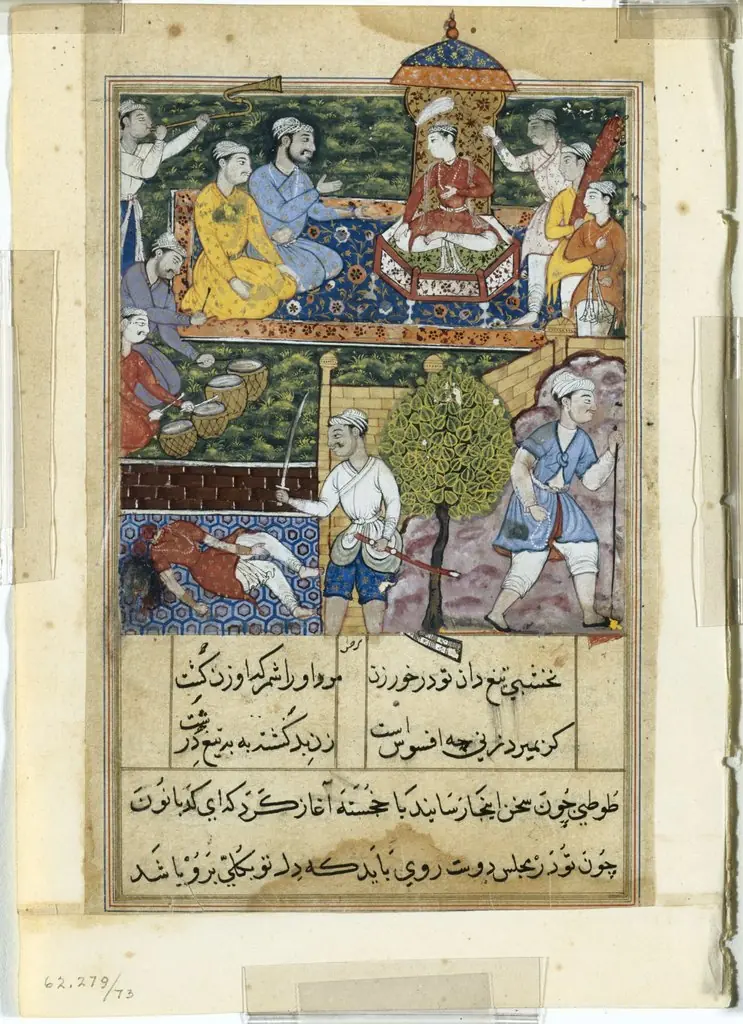 The young prince is crowned and the wicked handmaiden is executed, from a Tuti-nama (Tales of a Parrot): Eighth Night
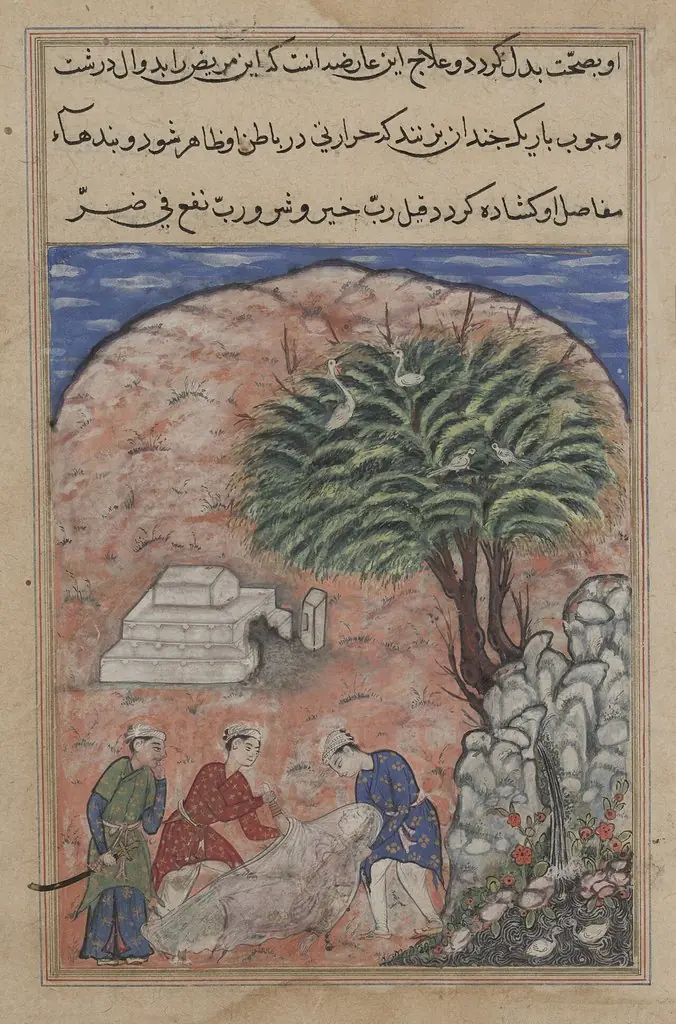 The suitors take the devotee’s daughter out of her tomb after breaking it open, when the physician discovers she is still alive, from a Tuti-nama (Tales of a Parrot): Twentieth Night
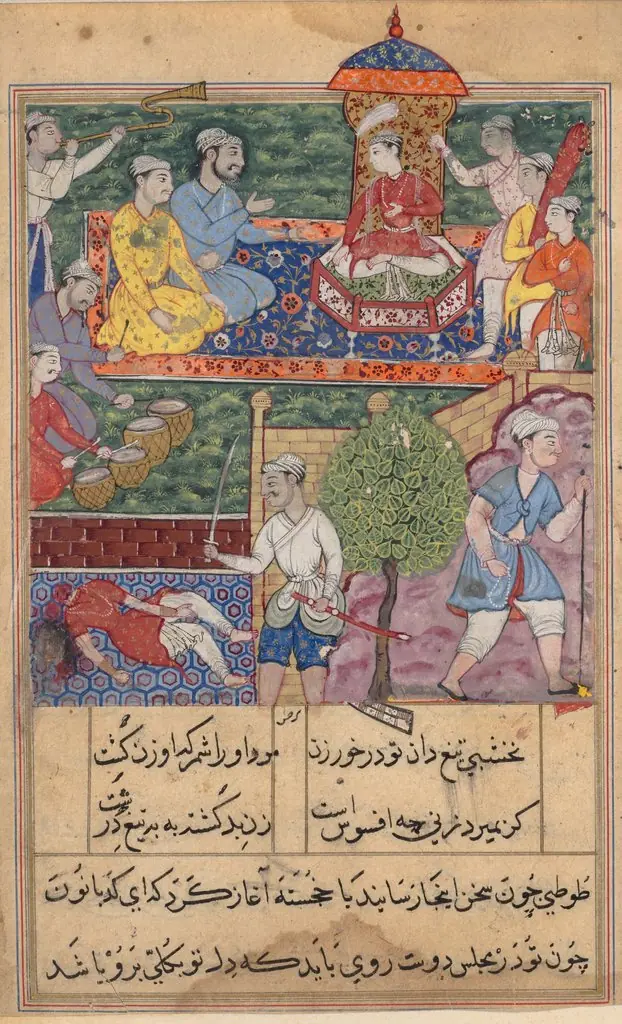 Page from Tales of a Parrot (Tuti-nama): text page
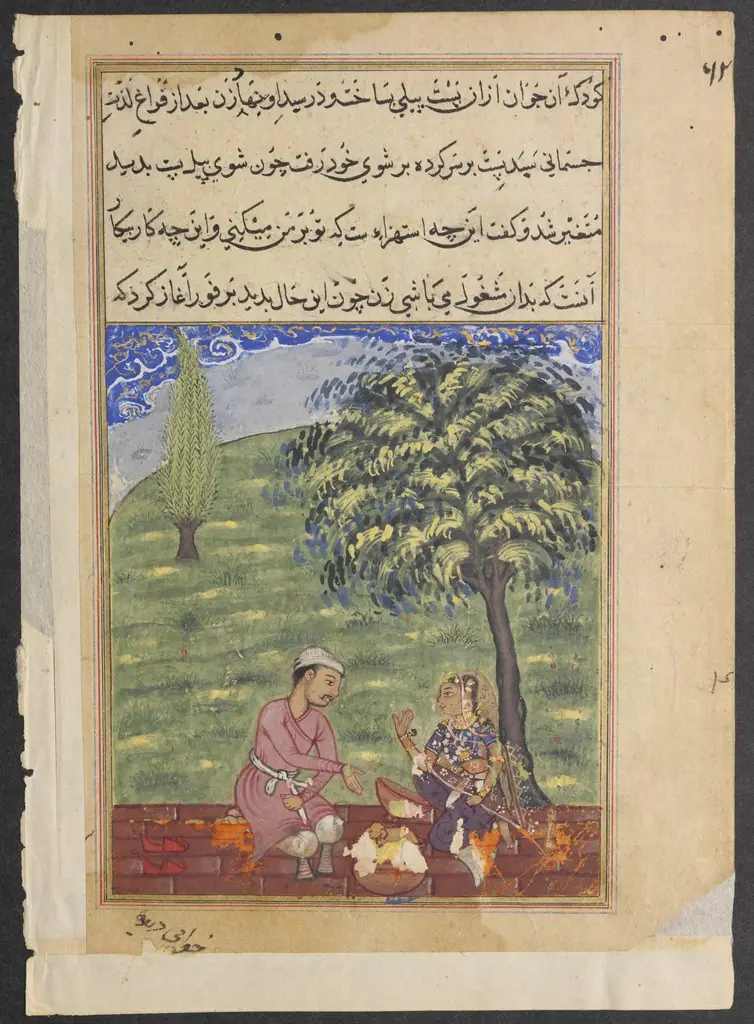 The unfaithful wife explaining away the presence of the dough elephant, from a Tuti-nama (Tales of a Parrot): Eighth Night
 The unfaithful wife explaining away the presence of the dough elephant, from a Tuti-nama (Tales of a Parrot): Eighth Night
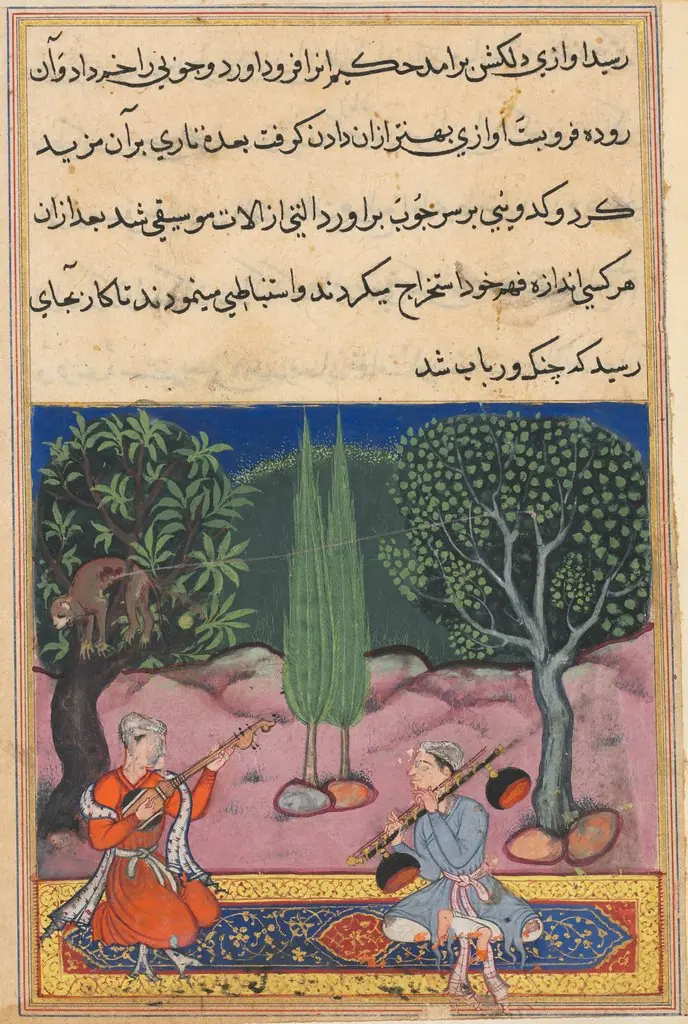 The invention of musical instruments from the intestines of a monkey, from a Tuti-nama (Tales of a Parrot): Fourteenth Night
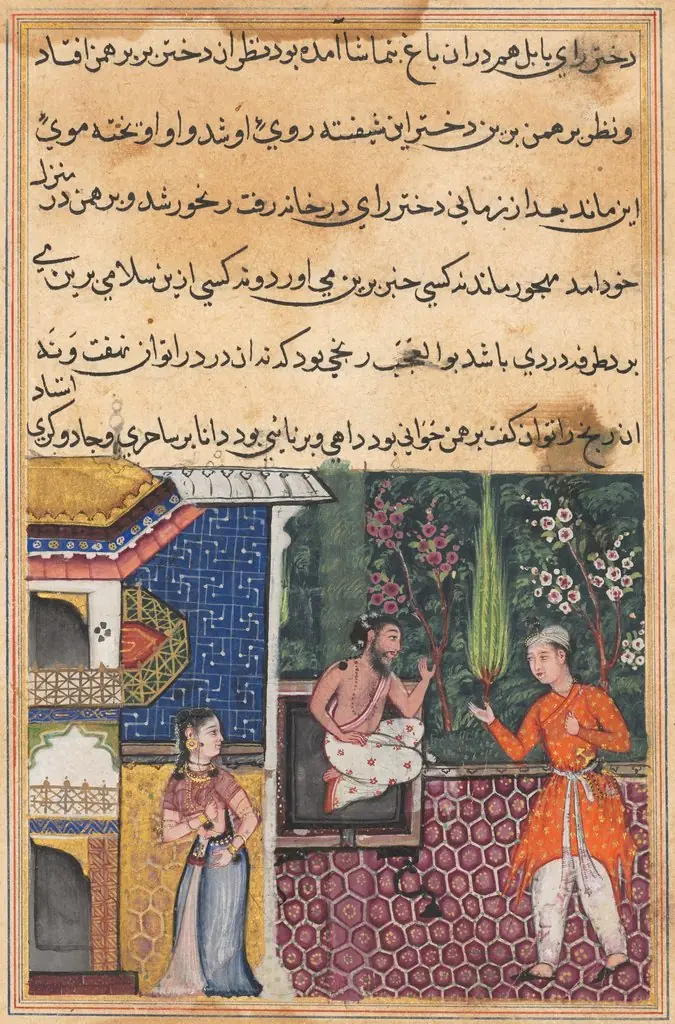 The Brahman gives an account of his falling in love with the king of Babylon’s daughter to his friend, the magician, from a Tuti-nama (Tales of a Parrot): Thirty-fifth Night
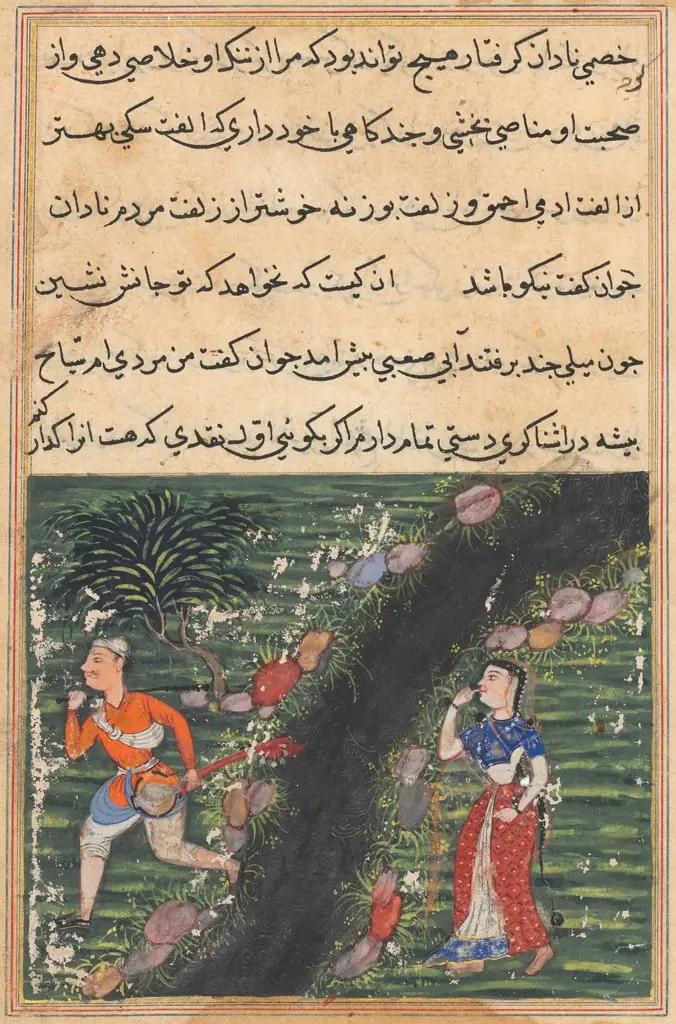 The vagabond crosses a stream with the possessions of the daughter-in-law of the king of Banaras and absconds, from a Tuti-nama (Tales of a Parrot): Sixteenth Night
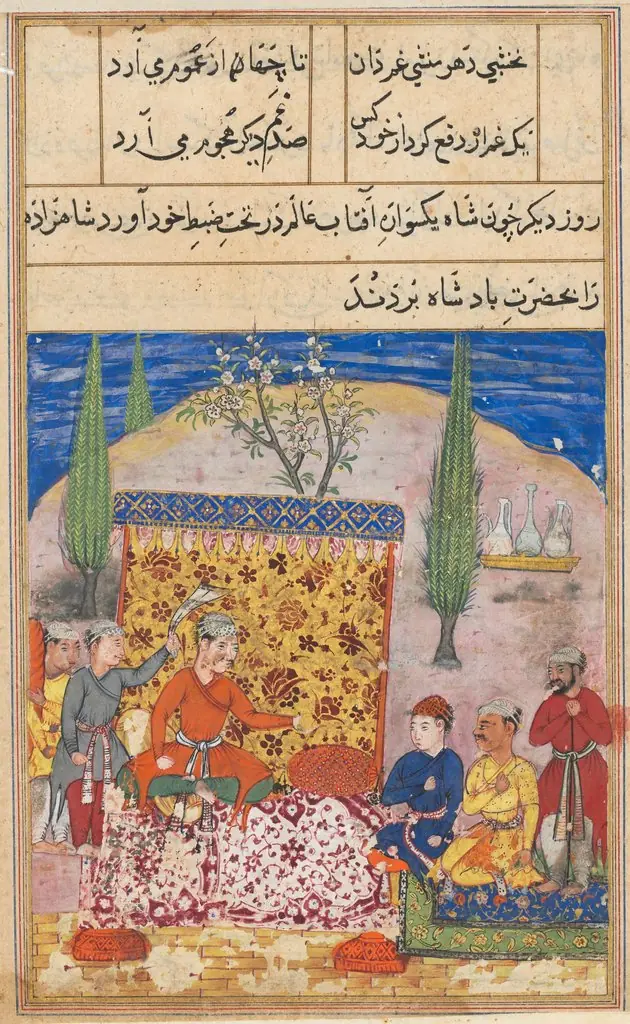 The young prince is presented to the king, his father, by his teacher, but refuses to speak, from a Tuti-nama (Tales of a Parrot): Eighth Night
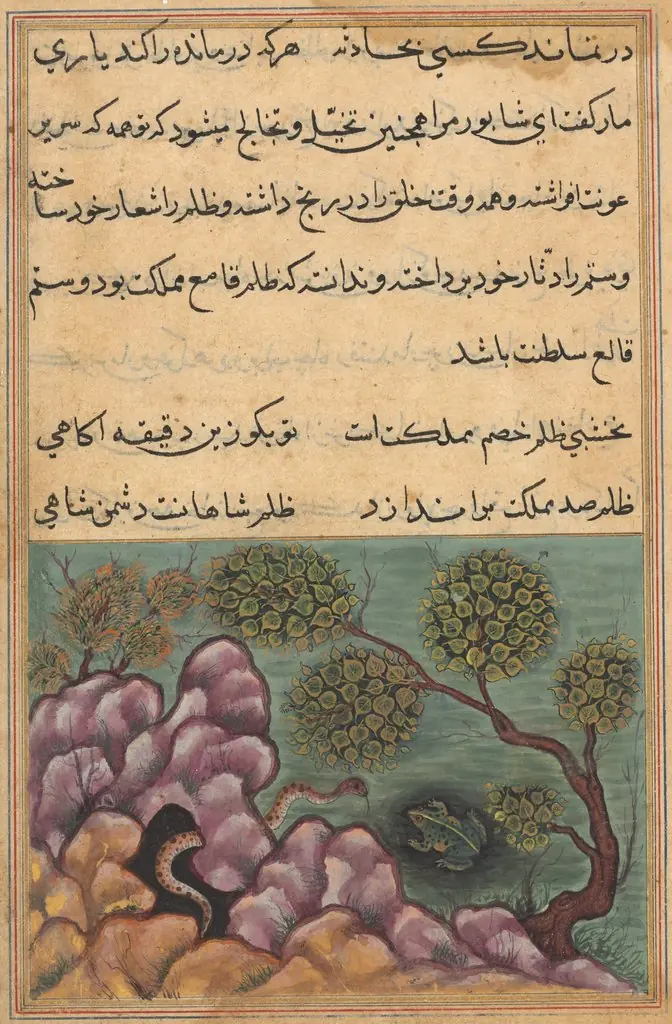 The dethroned frog Shapur seeks the help of the serpent, from a Tuti-nama (Tales of a Parrot): Twenth-sixth Night
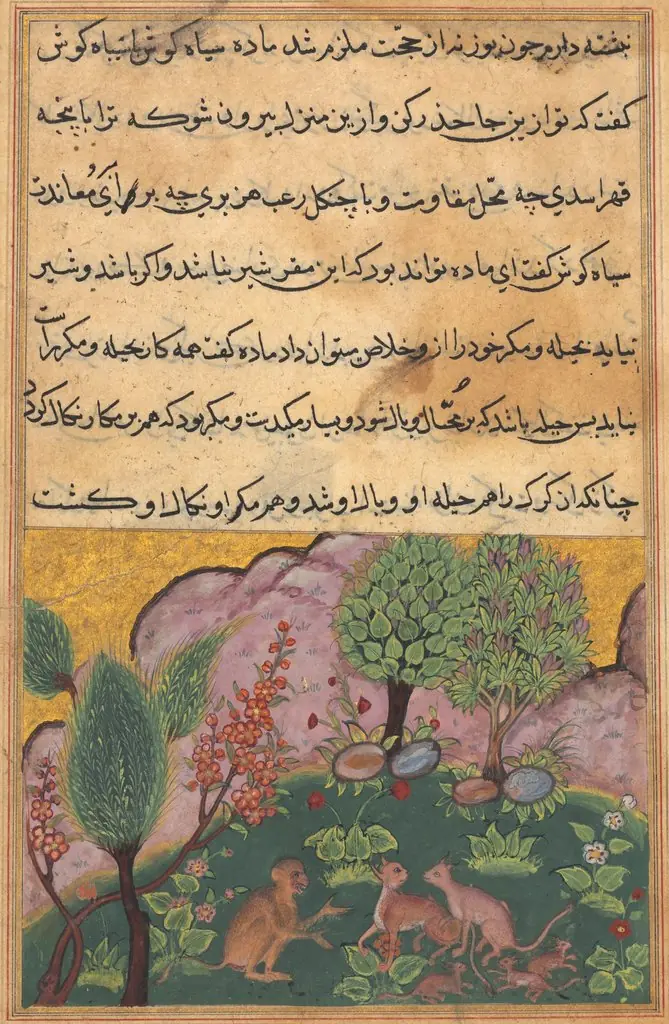 The monkey, serving as the lion’s chamberlain, converses with the lynx and its mate who have arrived with their cubs to settle in the lion’s domain, from a Tuti-nama (Tales of a Parrot): Twenty-ninth Night
- The sentinel in the employ of the Shah of Tabaristan prepares to sacrifice his son to the ghost of the Shah’s soul, from a Tuti-nama (Tales of a Parrot): Second Night