Artwork
The Emir slays the snake after giving it shelter, from a Tuti-nama (Tales of a Parrot): Forty-fifth Night
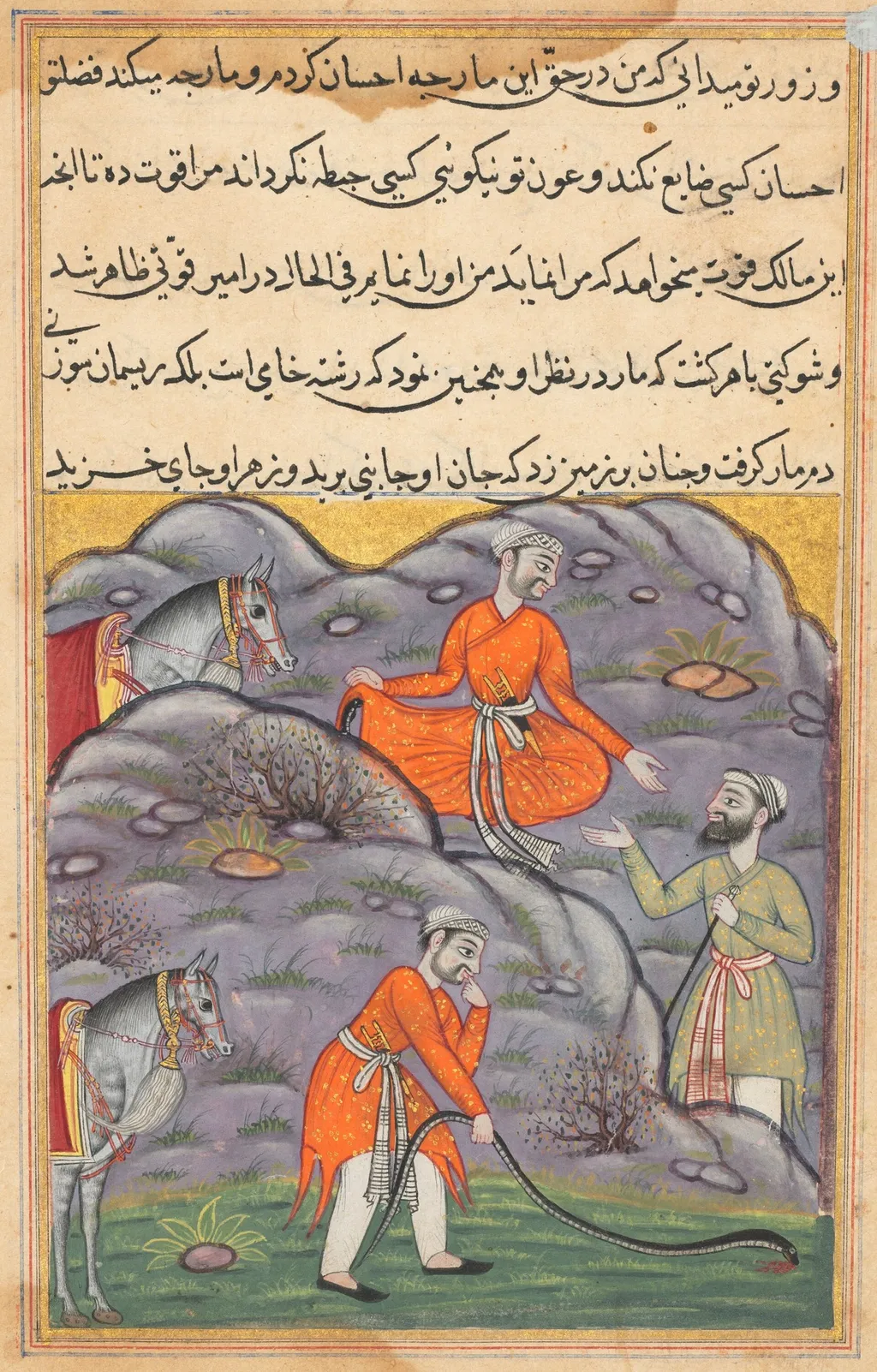
The Emir slays the snake after giving it shelter, from a Tuti-nama (Tales of a Parrot): Forty-fifth Night is an unspecified painting. It dates from 1560 and is held in the collection of the Cleveland Museum of Art. The work depicts three figures in bright orange garments within a stylised landscape of grass and rock.
About this work
History & Provenance
It was later acquired by the Cleveland Museum of Art, where it remains in the permanent collection as object 1962.
The painting was created circa 1560 during the Mughal Empire period and is attributed to an anonymous artist. It was later acquired by the Cleveland Museum of Art, where it remains in the permanent collection as object 1962.279.287.b. The work entered the museum’s holdings in 1962, as recorded in the accession ledger. Its history prior to the 20th century is not documented in the cited sources, indicating no verified ownership chain before its acquisition by the Cleveland Museum of Art.
Context
The painting depicting the Emir slaying the snake after granting it shelter, from the forty-fifth night of the Tuti-nama, reflects Mughal artistic production circa 1560. It is attributed to an unknown artist associated with Mughal imperial workshops and is housed in the Cleveland Museum of Art. Contemporary scholarship situates this work within the broader tradition of Persian miniature painting, emphasizing its narrative complexity and courtly context. The piece exemplifies the synthesis of Persian storytelling and Indian artistic sensibilities characteristic of early Mughal patronage.
Overview
The work depicts three figures in bright orange garments within a stylised landscape of grass and rock. One figure is captured in the act of striking a coiled serpent that resembles a dragon, while a second figure points toward the action and a third holds a horse nearby. A yellow border frames the scene, topped with Persian calligraphy, and the palette relies on flat, vivid greens, blues and golds.
Subject & Meaning
The composition illustrates a narrative episode from the Tuti‑nama, a collection of moral tales featuring a parrot. In this particular story, an emir, having offered refuge to a snake, is forced to kill it, symbolising the tension between hospitality and the danger of unguarded generosity.
Technique & Style
Executed with broad, uniform washes of colour, the painting employs a decorative approach typical of Persian manuscript illustration. Figures are rendered with minimal modelling, and patterns on the robes are reduced to simple motifs. The background features stylised foliage and a lightly clouded sky, emphasizing narrative clarity over naturalistic depth.
Artist & collection

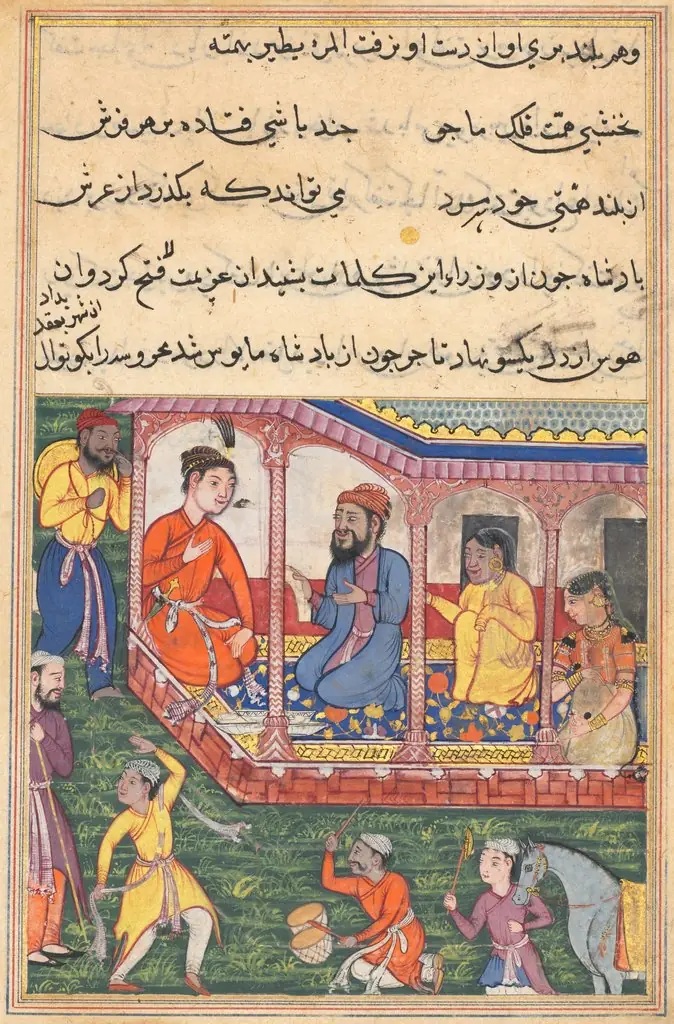 Mahrusa’s marriage to the prefect of the city, from a Tuti-nama (Tales of a Parrot): Thirty-sixth Night
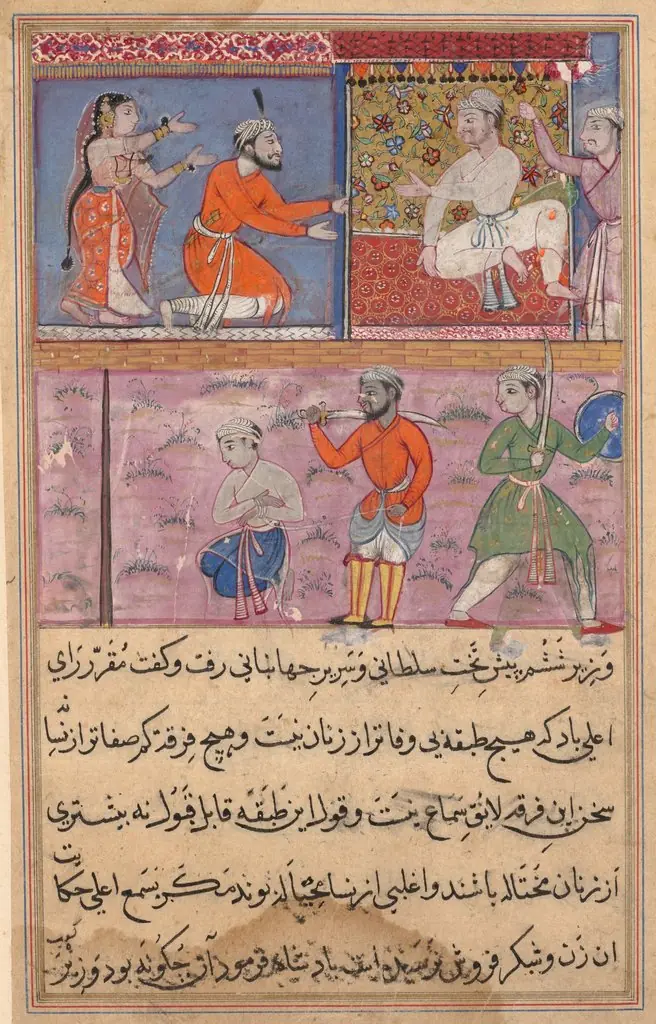 Page from Tales of a Parrot (Tuti-nama): text page
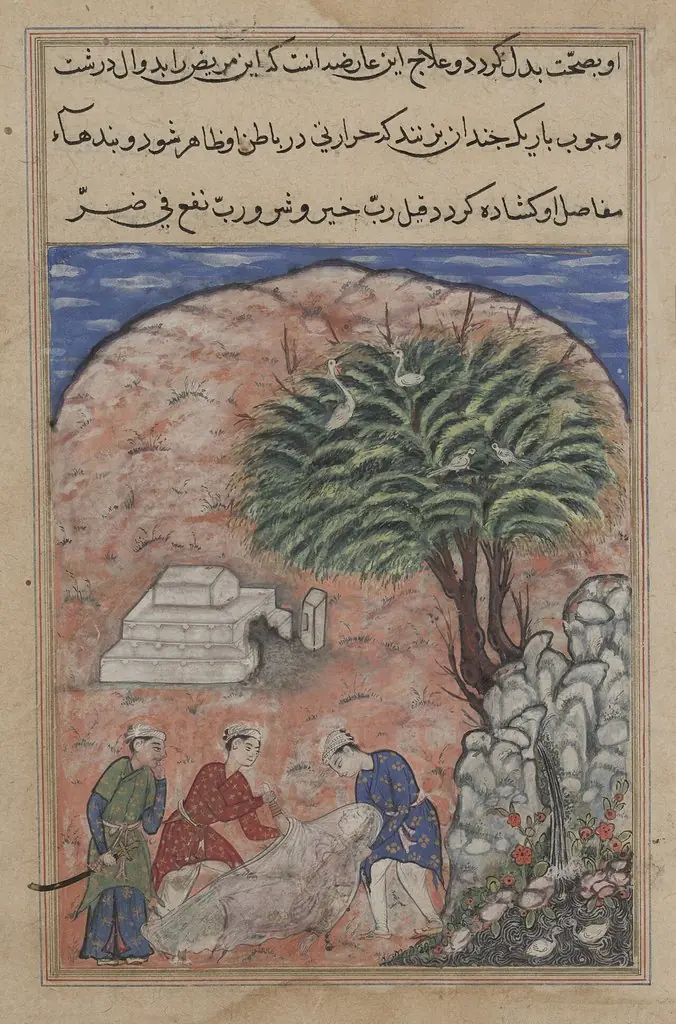 The suitors take the devotee’s daughter out of her tomb after breaking it open, when the physician discovers she is still alive, from a Tuti-nama (Tales of a Parrot): Twentieth Night
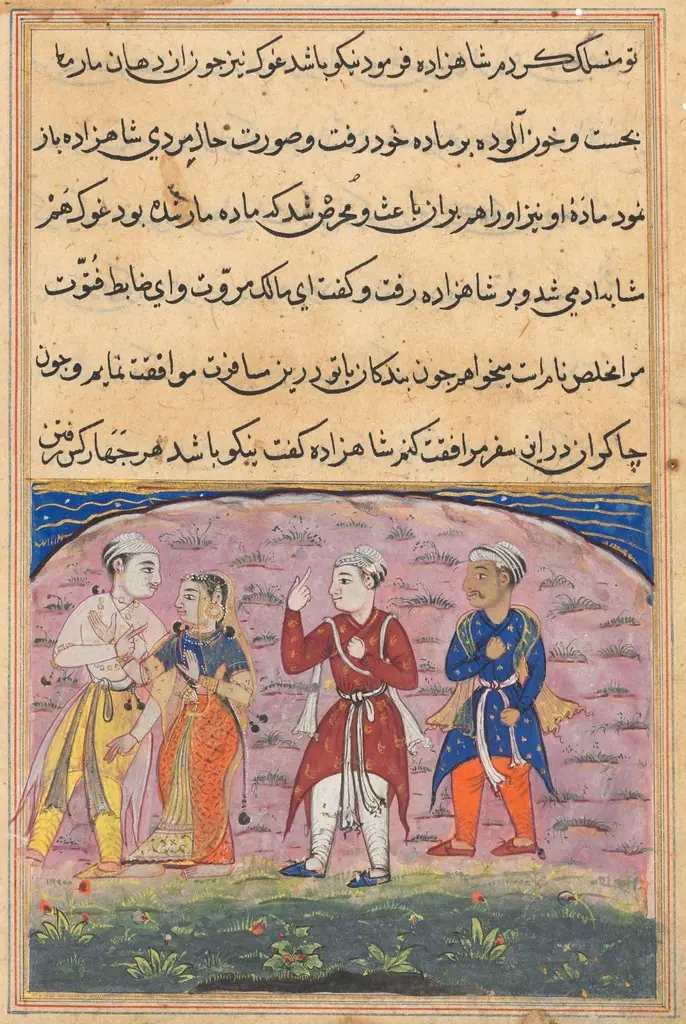 The prince and Nikfal are joined by Khalis and the Mukhlis who are the grateful snake and frog in human form, from a Tuti-nama (Tales of a Parrot): Eighteenth Night
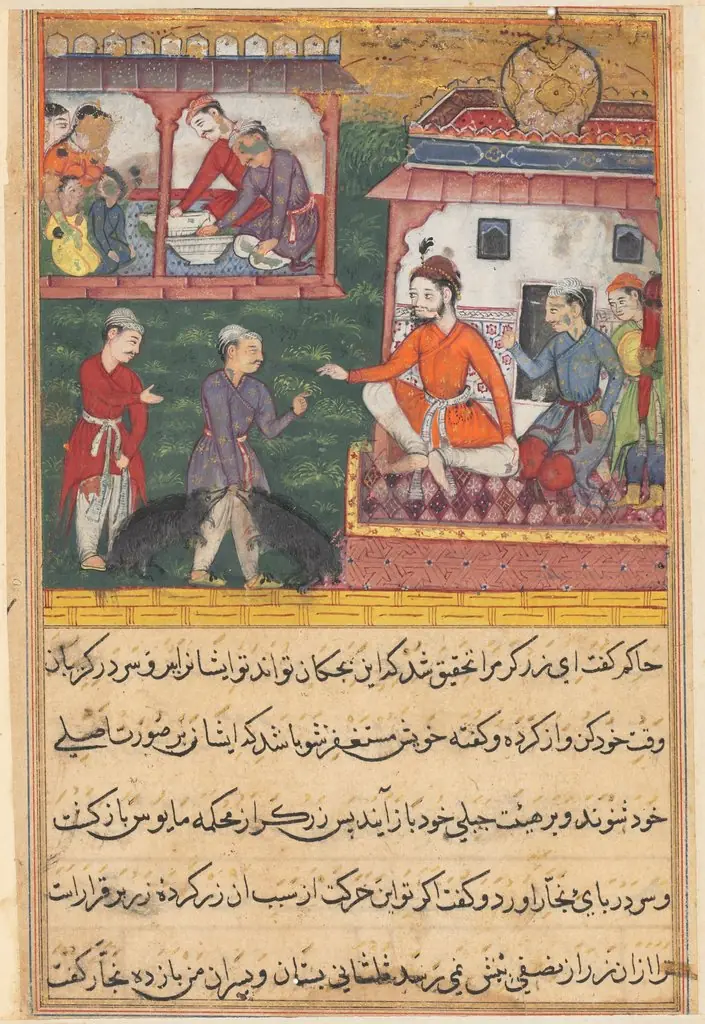 The goldsmith judged; the bear cubs trained by the carpenter as though they were his sons, from a Tuti-nama (Tales of a Parrot): Third Night
 The goldsmith judged; the bear cubs trained by the carpenter as though they were his sons, from a Tuti-nama (Tales of a Parrot): Third Night
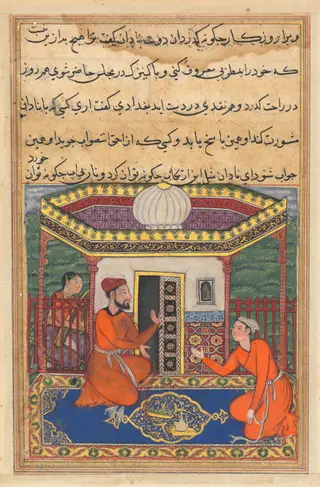 The young man of Baghdad solicits advice from a friend as his slave girl, who is adept at music, awaits, from a Tuti-nama (Tales of a Parrot): Forty-eighth Night
- The emir slays the snake after giving it shelter, from a Tuti-nama (Tales of a Parrot): Forty-fifth Night
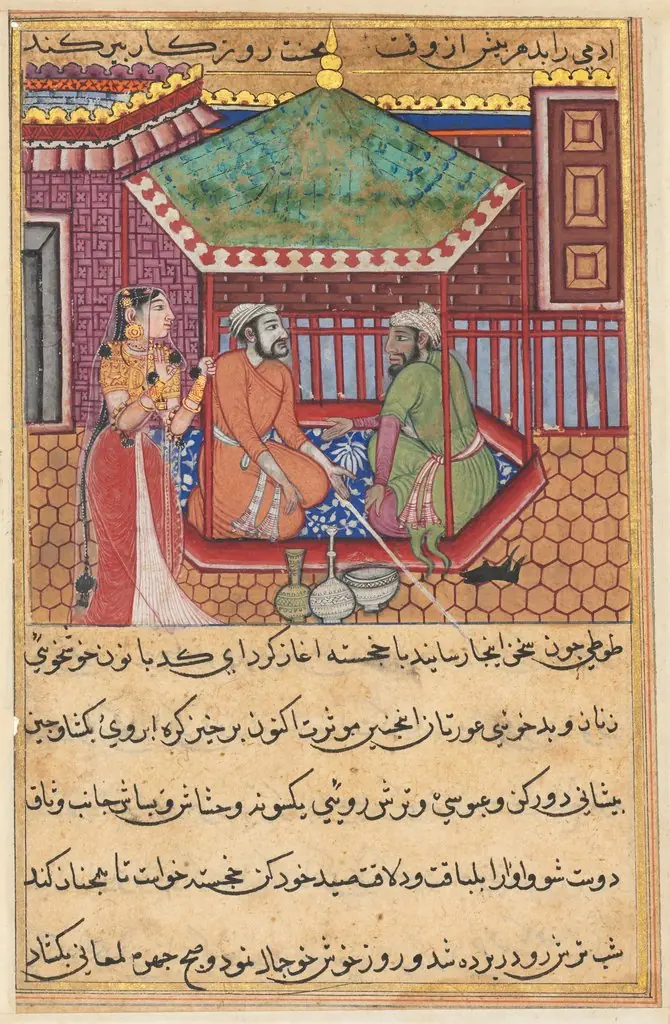 The eldest brother explains the reason for his youthful appearance, from a Tuti-nama (Tales of a Parrot): Forty-ninth Night
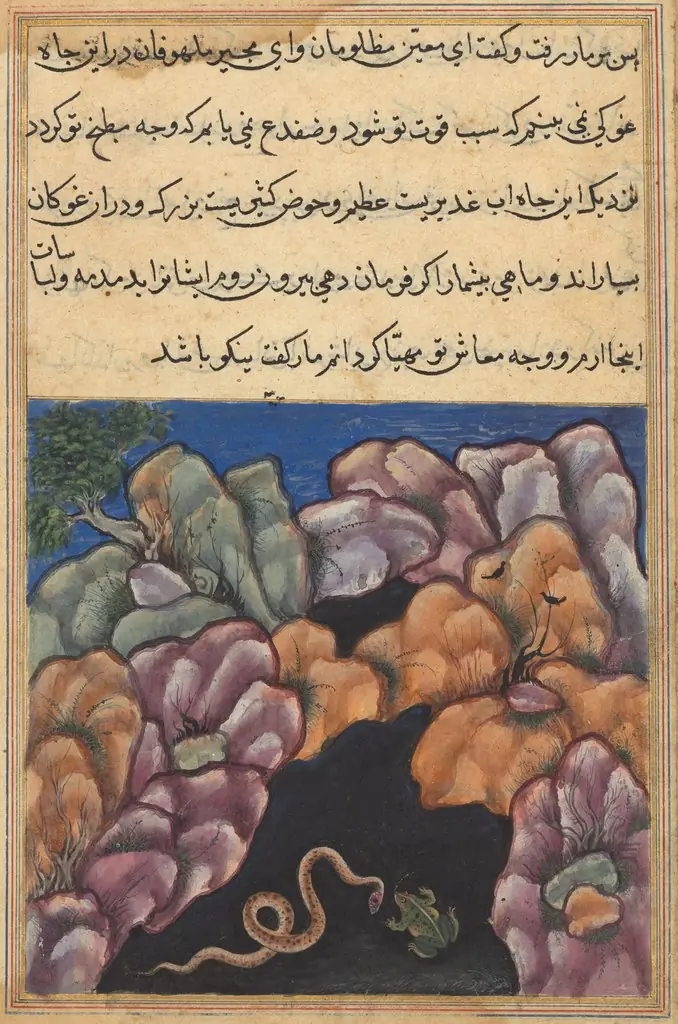 The snake enters into an argument with the frog, from a Tuti-nama (Tales of a Parrot): Twenty-sixth Night
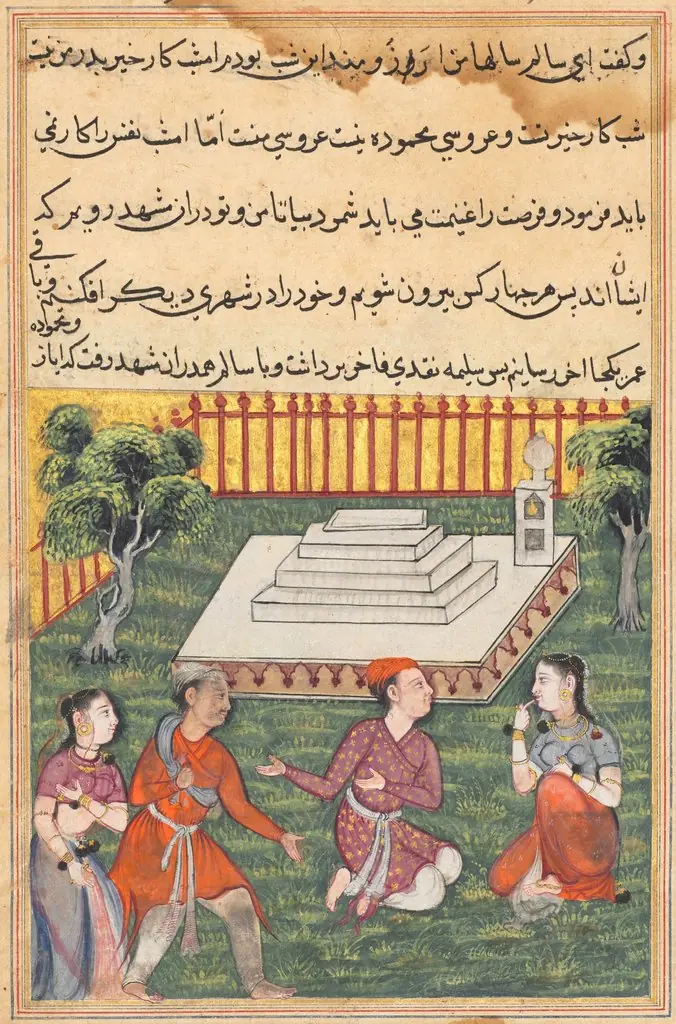 Salim and Salima return to Ayaz and Mahmuda in the sanctuary, from a Tuti-nama (Tales of a Parrot): Thirty-third Night
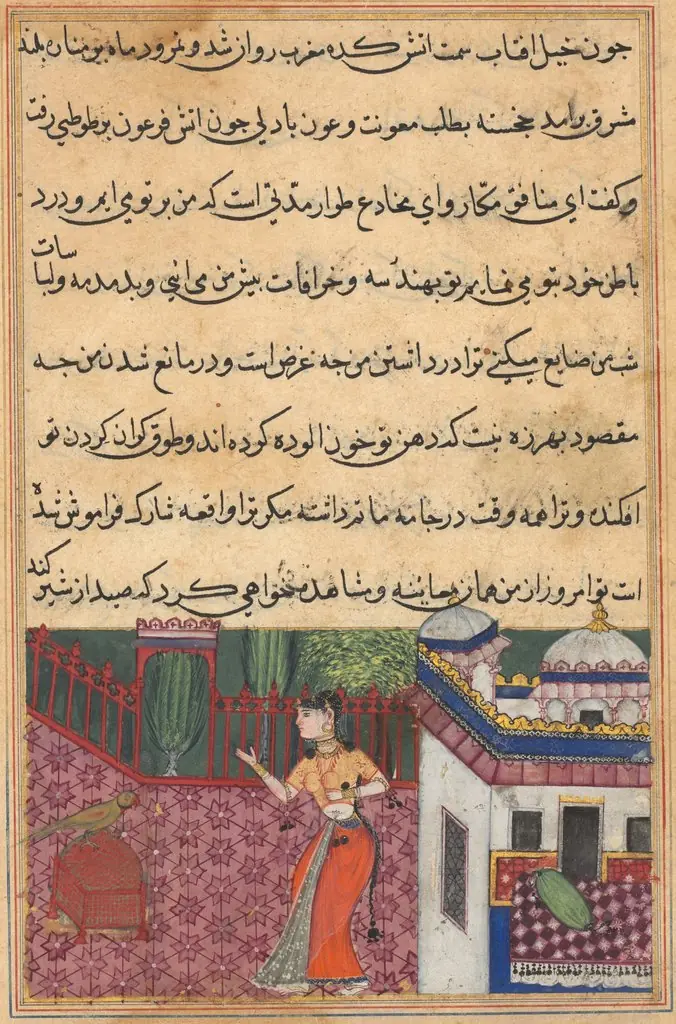 The parrot addresses Khujasta at the beginning of the thirty-third night, from a Tuti-nama (Tales of a Parrot)