Artwork
The Pathetic Song
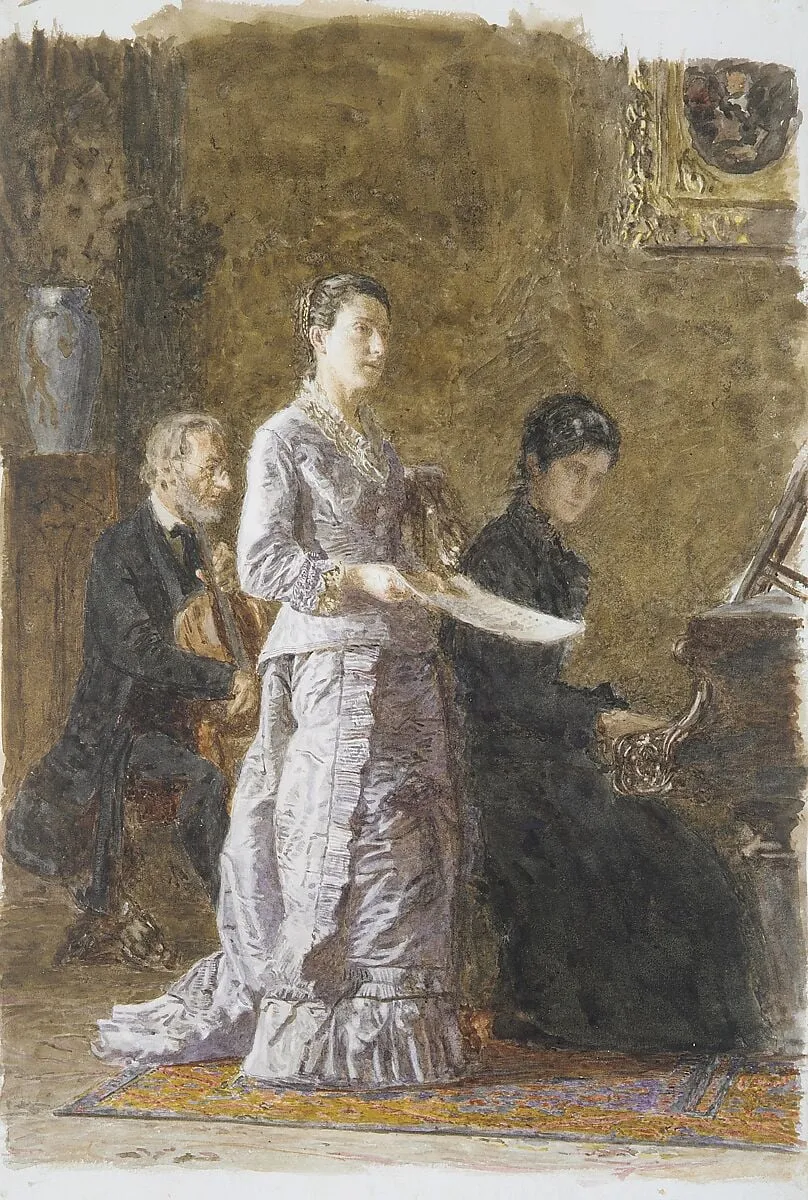
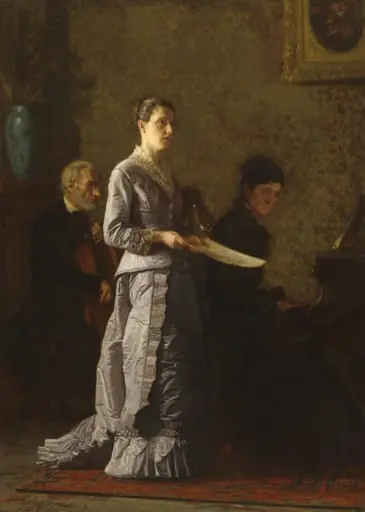
The Pathetic Song is a watercolor work on paper by the Impressionist artist Thomas Eakins. It dates from 1881 and is held in the collection of the Metropolitan Museum of Art.
About this work
Subject & Meaning
Critics interpret the scene as a meditation on the transient nature of sound and the fleeting bonds formed through shared musical experience.
The work depicts an intimate domestic scene centered on musical performance. A man seated at a piano sings while a woman stands beside him, her posture suggesting attentive listening or accompaniment. The composition emphasizes the emotional expression of the singers, aligning with Eakins’s focus on human interaction and the conveyance of feeling through music.
Critics interpret the scene as a meditation on the transient nature of sound and the fleeting bonds formed through shared musical experience. The muted palette and delicate handling of watercolor further underscore the introspective and poignant atmosphere of the moment captured.
Technique & Style
Executed in 1881, this work is a watercolor applied on off-white wove paper. The composition depicts a genre scene featuring a man and a woman engaged in singing, accompanied by a piano. As a watercolor on paper, the piece relies on the translucency of the pigment and the texture of the support to define its formal qualities.
History & Provenance
The Pathetic Song is held in the collection of the Metropolitan Museum of Art in New York. The work, created by Thomas Eakins in 1881, is cataloged under the accession number 1976.201.1. It is classified within the museum's American Wing. The provided sources do not contain information regarding a specific exhibition history for this watercolor.
Overview
Created in 1881, The Pathetic Song is a watercolor on off‑white wove paper by Thomas Eakins, a central figure in American realism. The composition captures a quiet interior scene in which a male figure sings at a piano while a female figure listens attentively. The work exemplifies Eakins’s interest in portraying ordinary moments drawn from his Philadelphia milieu.
Context
Eakins’s career was marked by a commitment to realism and direct observation, often depicting acquaintances from his teaching and artistic circles. The Pathetic Song reflects this practice, situating a modest musical episode within the broader social fabric of late‑nineteenth‑century Philadelphia, where private music-making was a common pastime.
Artist & collection
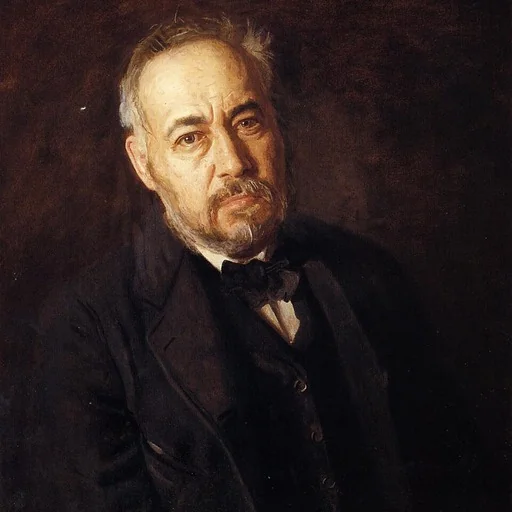
Artist
Thomas Cowperthwait Eakins (; July 25, 1844 – June 25, 1916) was an American realist painter, photographer, sculptor, and fine arts educator.