Artwork
Singing a Pathetic Song
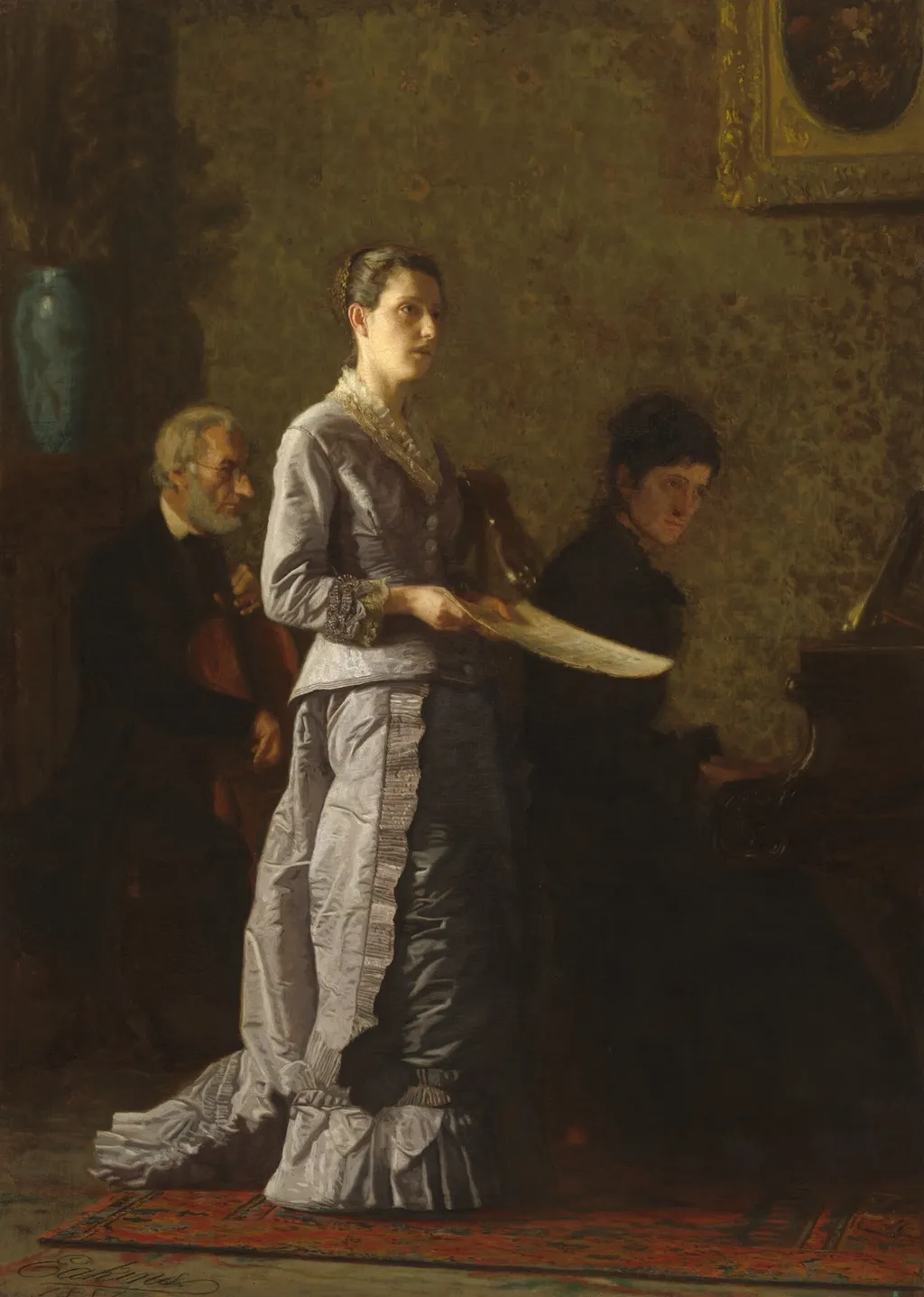
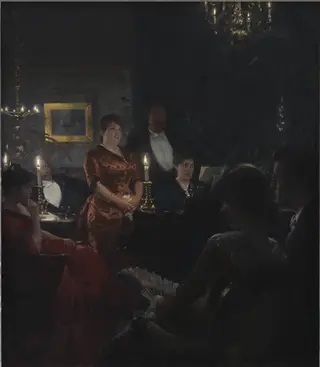
Singing a Pathetic Song is an oil painting by the Impressionist artist Thomas Eakins. It dates from 1881 and is held in the collection of the National Gallery of Art.
- Inscription
- Inscribed:lower left: Eakins. / 1881
About this work
Technique & Style
The work is executed in oil on canvas, a standard support for Eakins' easel paintings. Visually, it features a tightly rendered figure in a muted palette, with restrained brushwork that emphasizes anatomical precision and psychological intensity. The composition balances linear drawing with subtle tonal modeling, creating a somber mood that aligns with the title's theme of melancholy expression.
History & Provenance
The work was acquired by the museum in 2014, following its previous ownership by the Corcoran Gallery of Art, which purchased it on October 20, 1919.
Thomas Eakins completed the oil painting Singing a Pathetic Song in 1881. Four years later, Edward Hornor Coates of Philadelphia purchased the work directly from the artist. Ownership subsequently passed to Coates's son-in-law, the New York dealer John E.D. Trask.
On October 20, 1919, the Corcoran Gallery of Art in Washington acquired the canvas from Trask. The painting remained in the Corcoran's collection until 2014, when it was transferred to the National Gallery of Art.
Singing a Pathetic Song is currently held by the National Gallery of Art in Washington, D.C. The work was acquired by the museum in 2014, following its previous ownership by the Corcoran Gallery of Art, which purchased it on October 20, 1919. Prior to the Corcoran acquisition, the painting was owned by John E.D. Trask of New York, who acted as a dealer for Edward Hornor Coates of Philadelphia. Coates originally purchased the canvas directly from Thomas Eakins in 1885.
Overview
Singing a Pathetic Song, painted by Thomas Eakins in 1881, is an oil-on-canvas work that exemplifies the artist's commitment to psychological realism and his exploration of domestic intimacy. The composition centers on a young woman in a light-gray dress who stands holding sheet music, her expression conveying the emotional weight of the song she performs. Behind her, an older man in dark attire leans against a table, while a second man sits with his head bowed, creating a triangular arrangement that emphasizes the shared, somber atmosphere.
Eakins utilizes a dimly lit interior with dark walls and a red rug to focus attention on the figures and their subtle interactions. The painting reflects Eakins' interest in capturing unidealized human moments and the complex dynamics of family life, distinguishing it from the sentimental genre scenes popular in late 19th-century America. Executed during a period when the artist was deeply engaged in studying anatomy and light, the work demonstrates his rigorous approach to observation and his ability to infuse ordinary subjects with profound narrative depth.
Subject & Meaning
The central figure appears to be a vocalist, captured in a moment of concentration rather than overt emotion. The presence of the older male observers suggests a private gathering, perhaps a domestic recital, emphasizing the intimacy of music as a shared, contemplative experience. The subdued lighting and restrained gestures convey a sense of stillness and introspection.
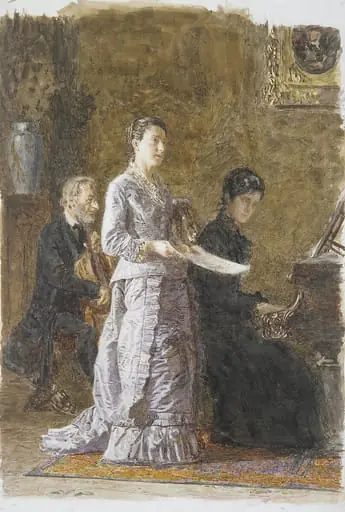
Own this work as a print
Artist & collection
Artist
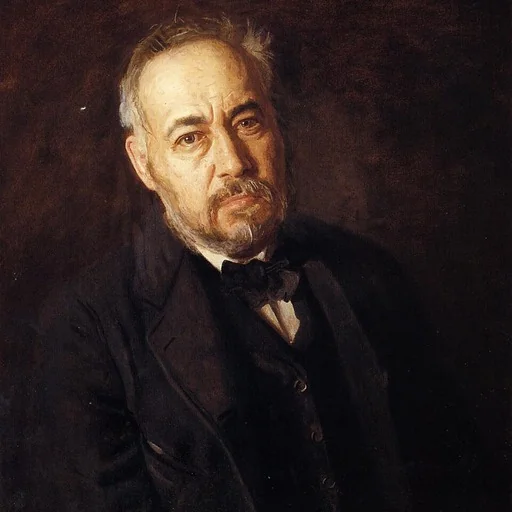
Thomas Cowperthwait Eakins (; July 25, 1844 – June 25, 1916) was an American realist painter, photographer, sculptor, and fine arts educator.