Artwork
Wooded Upland Landscape
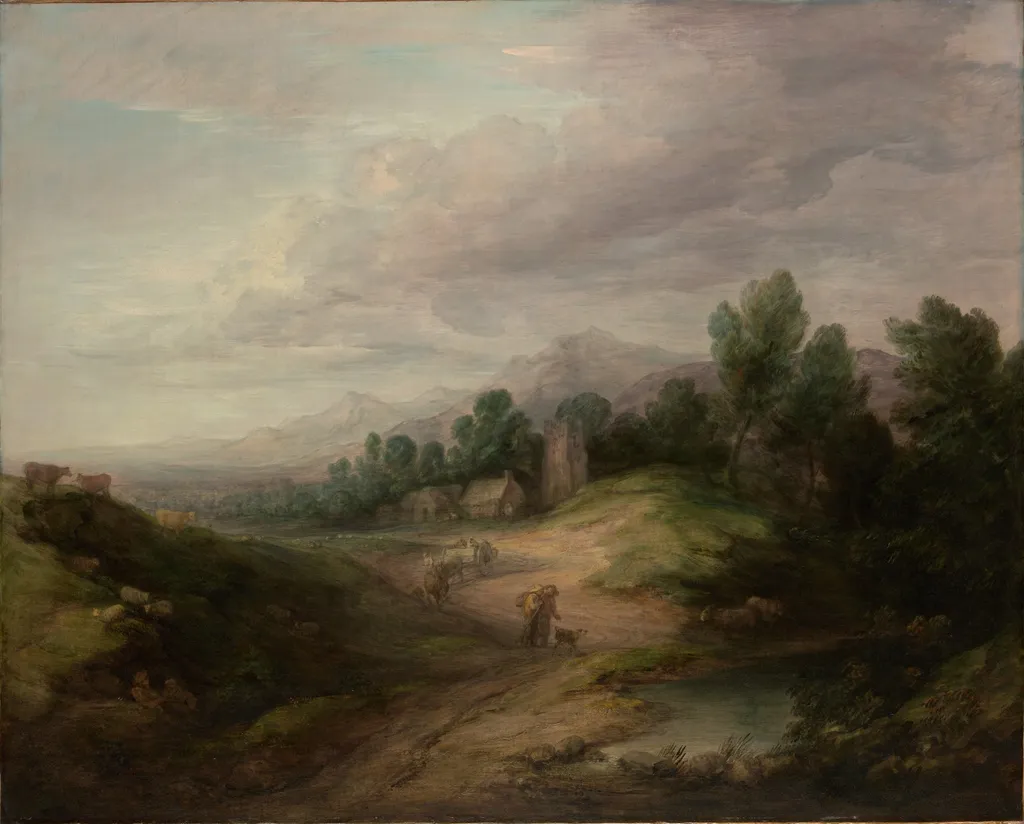
Wooded Upland Landscape is an oil painting by the Academic Art artist Thomas Gainsborough. It is held in the collection of the Metropolitan Museum of Art.
About this work
Subject & Meaning
Executed in 1783, Thomas Gainsborough's Wooded Upland Landscape presents a rural scene characterized by its specific inclusion of natural and agrarian elements.
Executed in 1783, Thomas Gainsborough's Wooded Upland Landscape presents a rural scene characterized by its specific inclusion of natural and agrarian elements. The composition prominently features trees within an upland setting, establishing the work firmly within the landscape painting genre. A wagon is depicted within this environment, serving as a key iconographic element that suggests human activity and transport amidst the natural world.
While the painting is classified under the movement of academic art, the provided records focus on these tangible visual components rather than elaborating on deeper allegorical symbolism or abstract philosophical meanings. The work represents a synthesis of botanical observation and rural life, capturing a specific moment of countryside transit through the medium of oil on canvas.
Technique & Style
Created in December 1783, Wooded Upland Landscape is an oil painting executed on a canvas support. The work measures 120.3 centimeters in height and 147.6 centimeters in width. Stylistically, the piece is classified within the landscape genre and associated with the academic art movement.
The composition depicts a rural scene featuring trees and a wagon, rendered through the application of oil paint. These formal qualities align with Thomas Gainsborough's approach to landscape painting during this period, utilizing traditional materials to construct a detailed naturalistic view.
History & Provenance
Thomas Gainsborough created the oil-on-canvas painting Wooded Upland Landscape in 1783. The work is dated specifically to December 23, 1783, placing its inception in the final year of the artist's life. Executed in the landscape genre and associated with academic art, the painting depicts a rural scene featuring trees and a wagon.
Currently held in the collection of the Metropolitan Museum of Art in New York, the work measures 120.3 cm in height and 147.6 cm in width. While the specific commission details and the full chain of ownership prior to its acquisition by the museum are not detailed in the provided records, the artwork's creation is firmly established as a late work by Gainsborough from late 1783.
Wooded Upland Landscape is held by the Metropolitan Museum of Art, as indicated by its inclusion in that institution's collection and its recorded location there. The painting, executed in oil on canvas in 1783, measures 120.3 by 147.6 centimeters. The provided sources do not supply a specific accession number or any documented details of past exhibitions, and so none can be reported here with confidence.
Context
Thomas Gainsborough's Wooded Upland Landscape (1783) exemplifies the academic landscape genre within late‑18th‑century British art. Executed in oil on canvas (120.3 × 147.6 cm) and housed in the Metropolitan Museum of Art, the work combines meticulous naturalistic detail, such as a prominent tree and a passing wagon, with the compositional balance favored by the academy. Its inclusion in Gainsborough’s mature oeuvre reflects a broader shift toward elevating landscape to a subject worthy of historical painting, a trend documented in scholarship on the artist’s transition from portraiture to genre scenes.
Contemporary criticism praised the painting’s technical virtuosity, while modern historians view it as a pivotal example of how British artists adapted continental models to domestic scenery, cementing Gainsborough’s role in the evolution of British landscape painting.
Legacy
The 1783 oil on canvas titled Wooded Upland Landscape by Thomas Gainsborough is recognized as a mature example of the academic landscape genre. Its inclusion in the Metropolitan Museum of Art’s collection has sustained scholarly attention and public visibility, allowing the work to serve as a reference point for studies of 18th‑century British landscape painting. The composition, featuring trees and a wagon within an expansive terrain, illustrates the technical proficiency and idealized naturalism characteristic of Gainsborough’s mature output, reflecting the standards of academic art.
Overview
Thomas Gainsborough's Wooded Upland Landscape, an oil painting from 1792, exemplifies the Rococo movement. This artwork presents a tranquil countryside vista, characterized by rolling hills and a winding dirt path. A few figures and a small wagon traverse the path, amidst scattered trees and bushes. The painting is part of The Metropolitan Museum of Art's collection.
Own this work as a print
Artist & collection

Artist
Thomas Gainsborough (; 14 May 1727 (baptised) – 2 August 1788) was an English painter, draughtsman and printmaker who specialised in portrait and landscape painting.


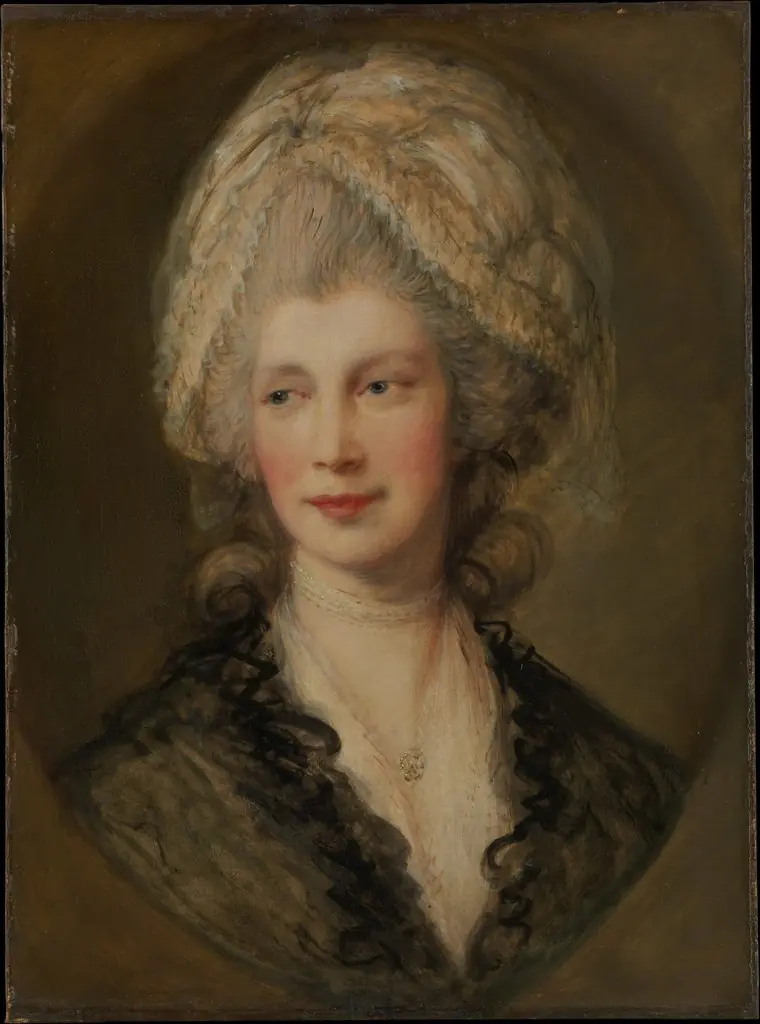
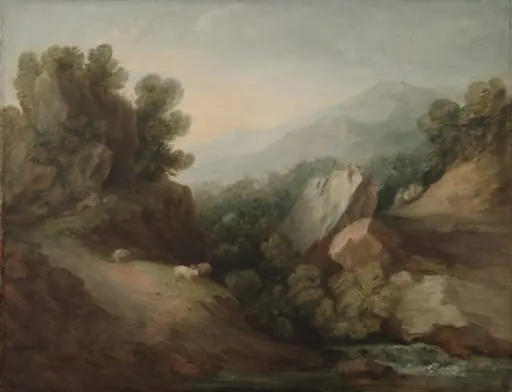
- Rocky, Wooded Landscape with a Dell and Weir
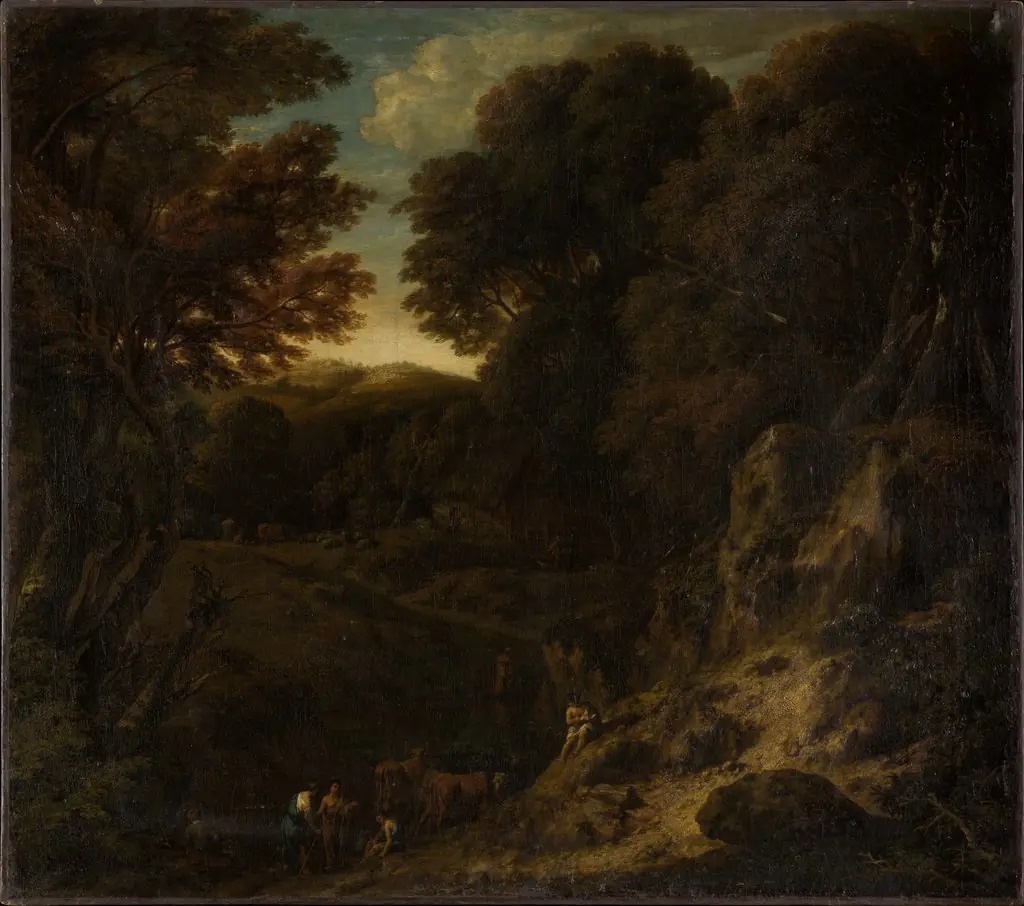 Italian Wooded Landscape with Cattle Pond
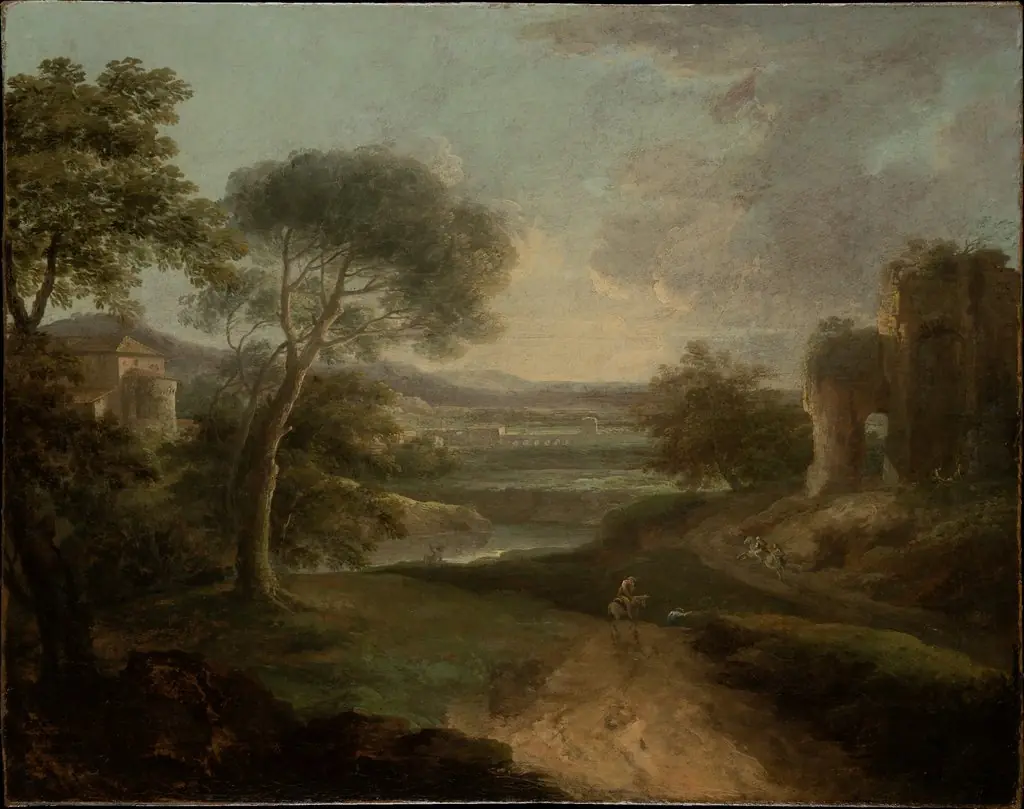 Landscape near Rome
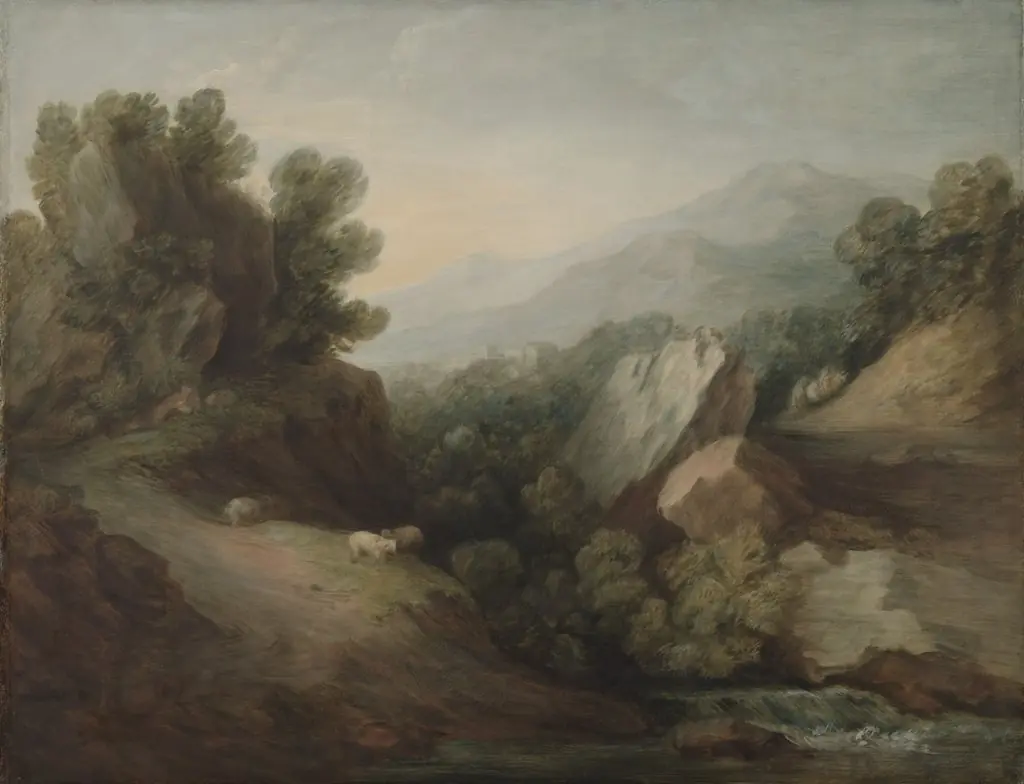 Rocky, Wooded Landscape with a Dell and Weir
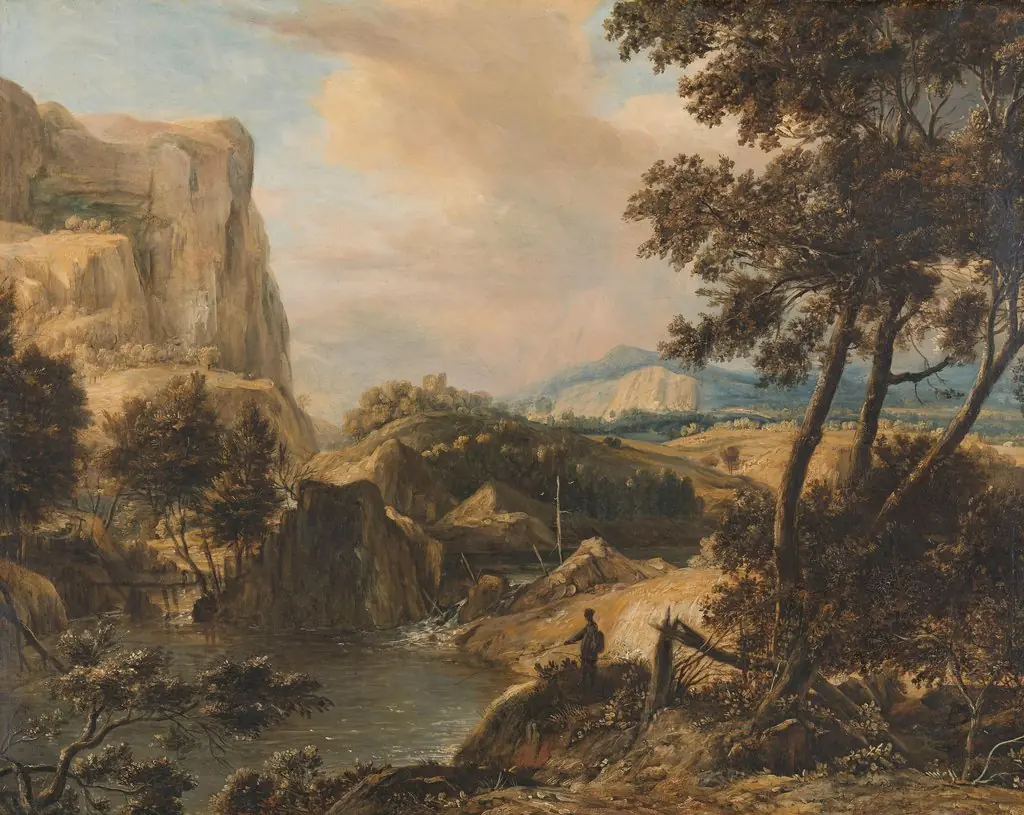 Mountainous landscape with fisherman
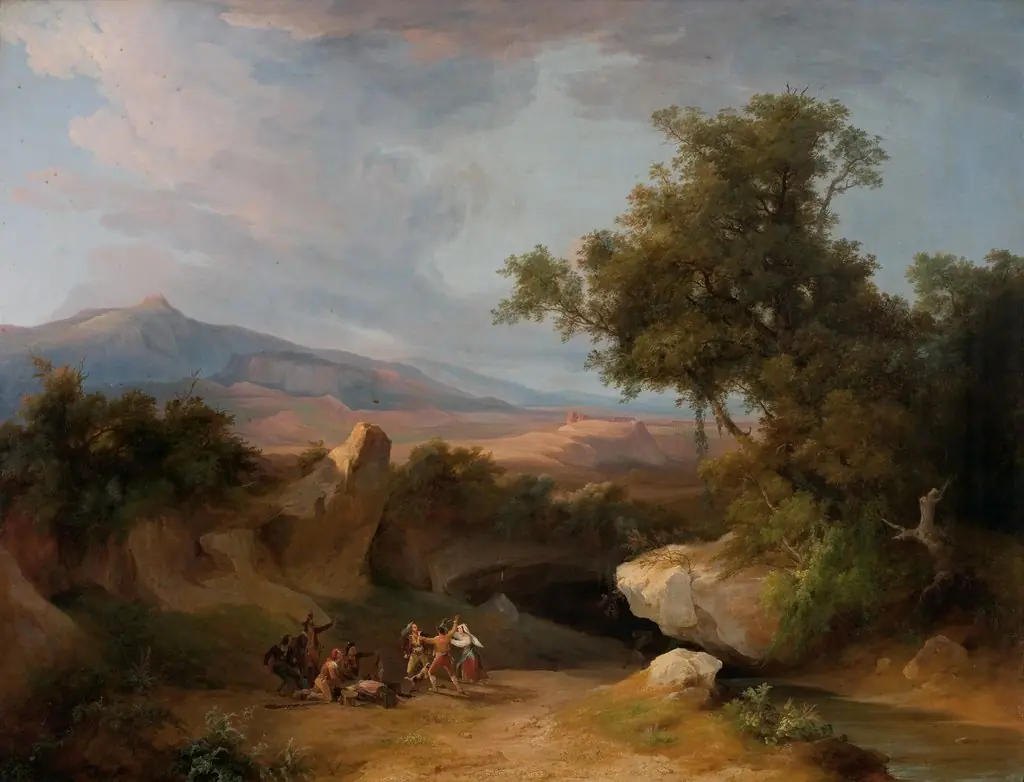 Bandits in Romagna
 Krajobraz
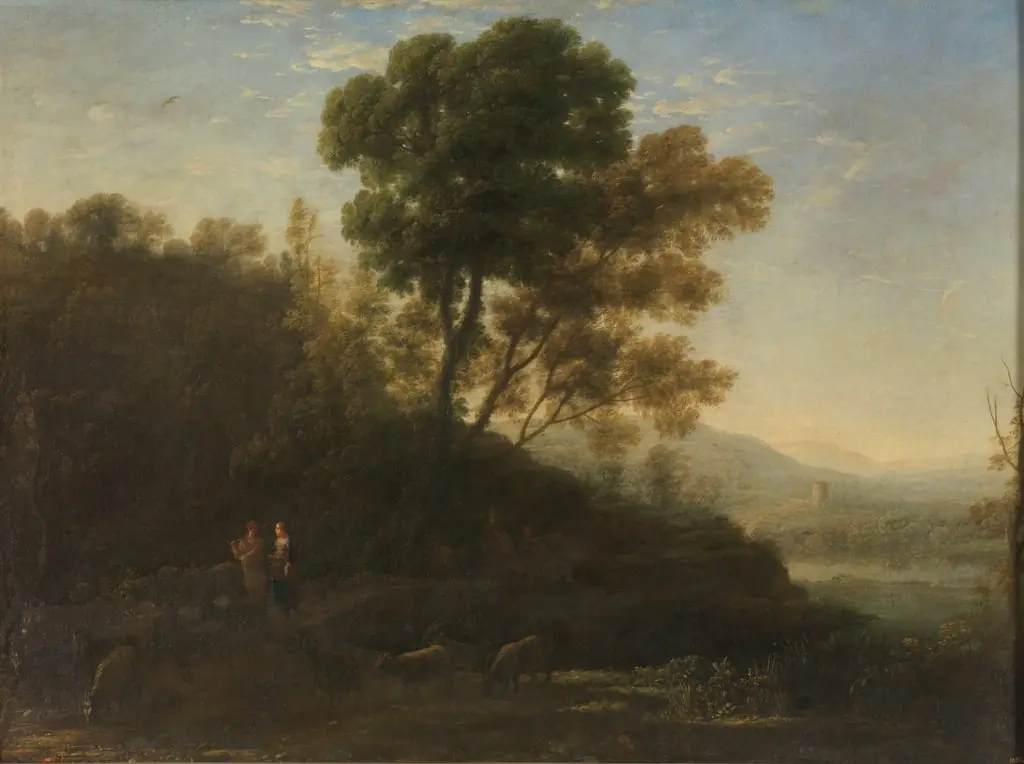 Setting out with the Herd
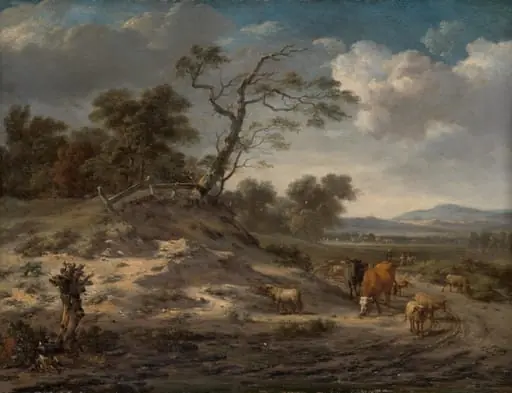 Landscape with Cattle on a Country Road
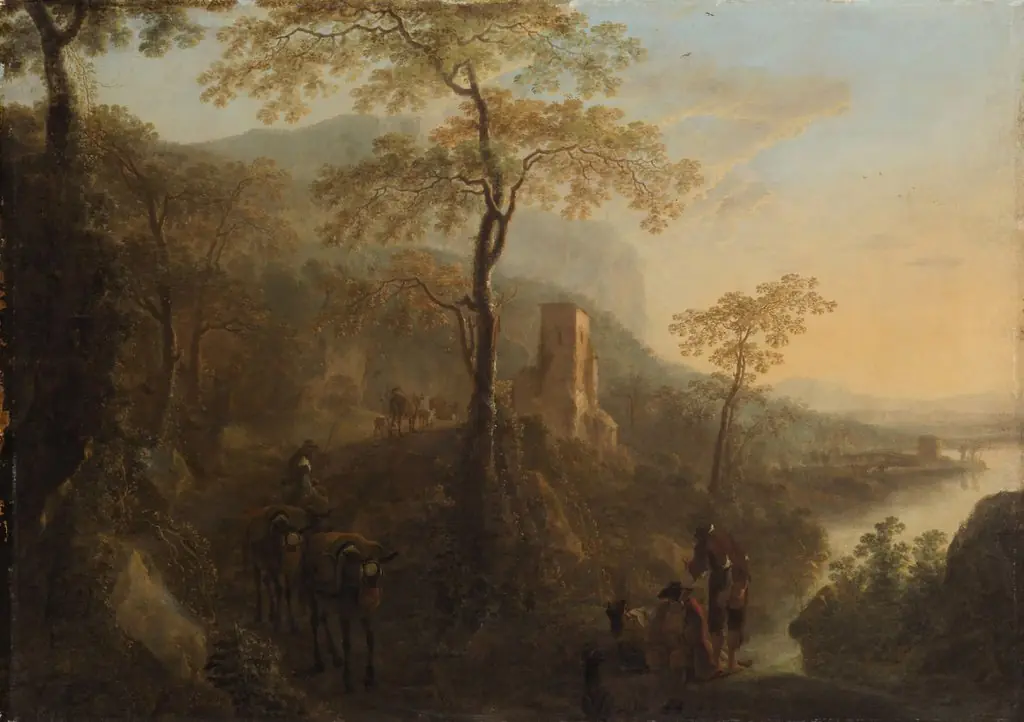 Italienische Landschaft
 Arcadian Landscape with an Obelisk
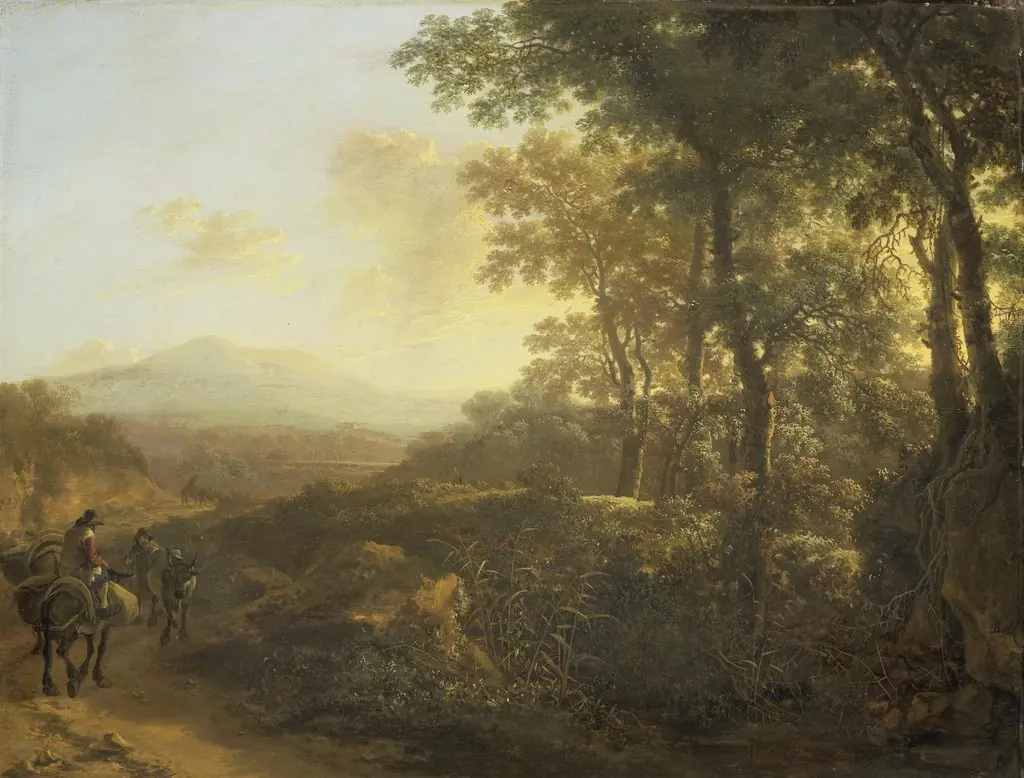 Italian landscape with mule driver