Artwork
Figure Studies (recto)
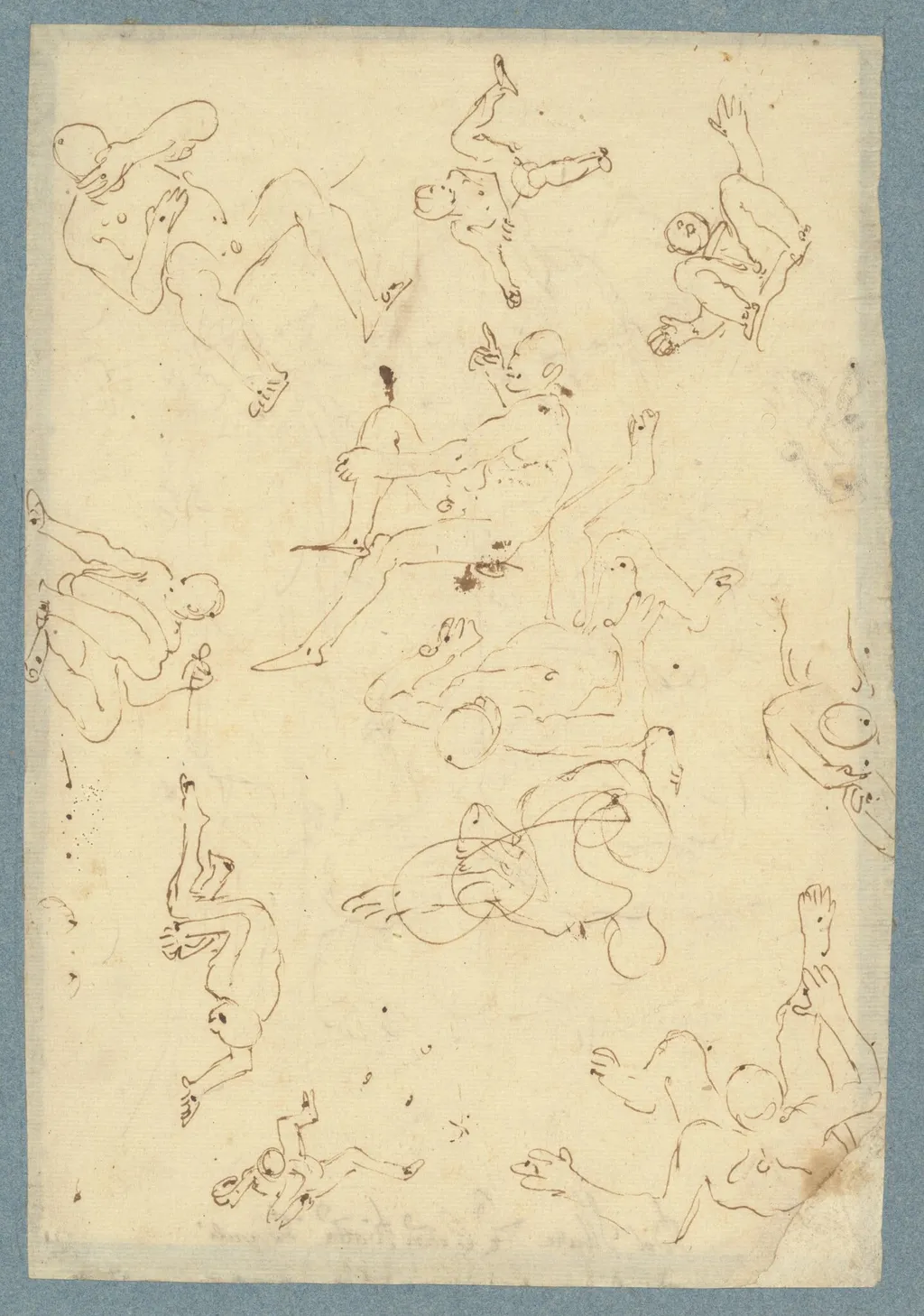
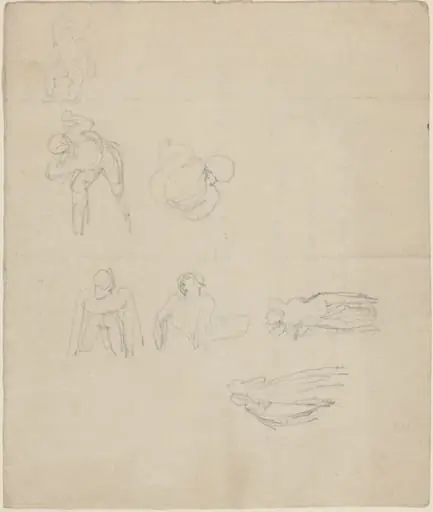
Figure Studies (recto) is an ink drawing by the Baroque artist Giovanni Battista Tiepolo. It dates from 1744 and is held in the collection of the National Gallery of Art.
About this work
Overview
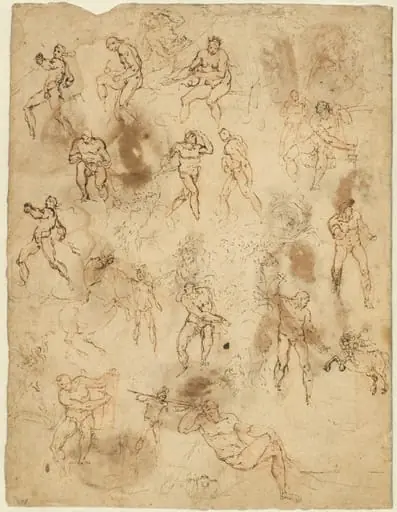
This sheet contains multiple figure studies, each rendered with rapid, unrefined strokes, reflecting their function as working notes rather than finished works.
Created around 1744, Figure Studies is a sheet of preparatory drawings by Giovanni Battista Tiepolo, executed in pen and brown ink on laid paper. As a Venetian artist active across Europe, Tiepolo produced numerous sketches to explore form and movement. This sheet contains multiple figure studies, each rendered with rapid, unrefined strokes, reflecting their function as working notes rather than finished works.
Subject & Meaning
The drawings depict nude figures in dynamic, unconventional poses, twisting, falling, or reclining, with no narrative context. These are not idealized forms but anatomical investigations, capturing the body in motion. The lack of detail suggests the artist prioritized gesture and balance over finish, using the sheet as a tool to internalize human mechanics for larger compositions.
Technique & Style
Tiepolo employed loose, fluid pen lines to suggest volume and weight with minimal strokes. The ink flows freely, often hesitating or overlapping, revealing the immediacy of his hand. The absence of shading or contour refinement emphasizes spontaneity.
This approach aligns with the Venetian tradition of drawing as a means of visual experimentation rather than presentation.
History & Provenance
The drawing likely originated in Tiepolo’s studio during a period of active commissioning, possibly for fresco projects in Italy or later in Germany. Its survival as a standalone sheet indicates it was preserved for its artistic value, though its original context within a larger project remains undocumented. It entered public collections in the 19th or early 20th century.
Context
In mid-18th-century Venice, artists relied heavily on figure studies to prepare for grand decorative schemes. Tiepolo’s sketches reflect a broader practice among Rococo painters who valued movement and expressive anatomy. Unlike the rigid poses of earlier traditions, these drawings embrace asymmetry and instability, mirroring the era’s fascination with naturalistic motion.
Legacy
This sheet exemplifies the role of sketching in Tiepolo’s creative process, influencing later generations of artists who valued preparatory work as a window into artistic thought. While not widely exhibited, such drawings are now recognized as vital records of 18th-century studio practice, offering insight into how monumental works were conceived from humble, fleeting marks.
![Figure Studies [recto]](https://artifactworldgallery.com/img/perino-del-vaga--figure-studies-recto--c7d34665e14a7057-w320.webp)
Own this work as a print
Artist & collection

Artist
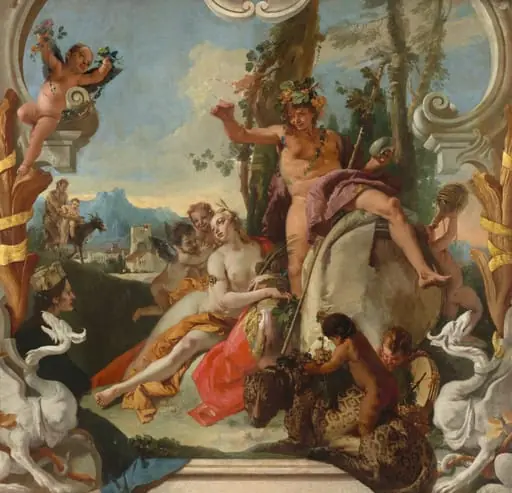
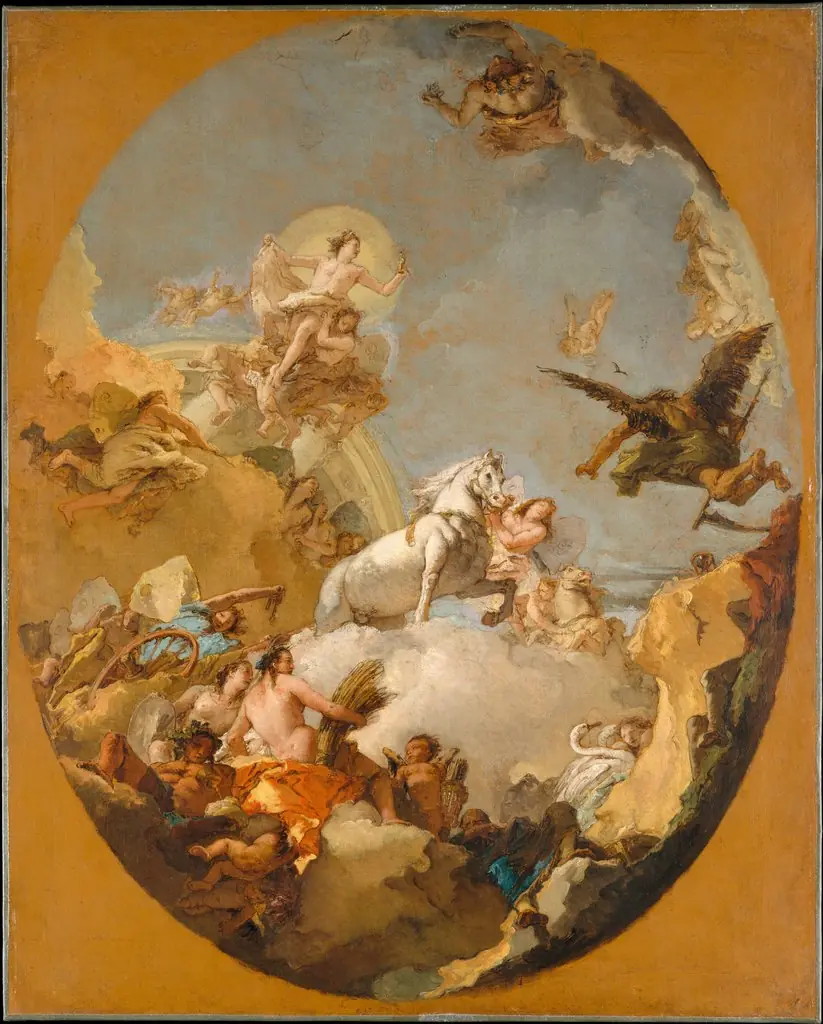
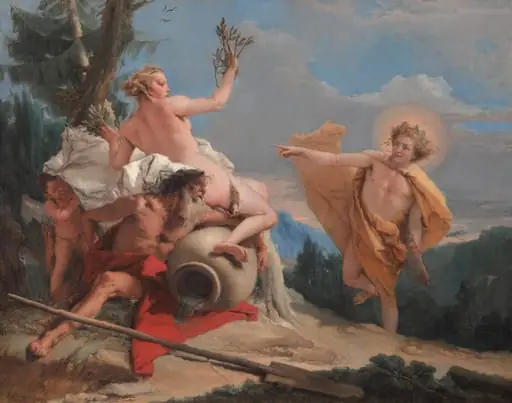
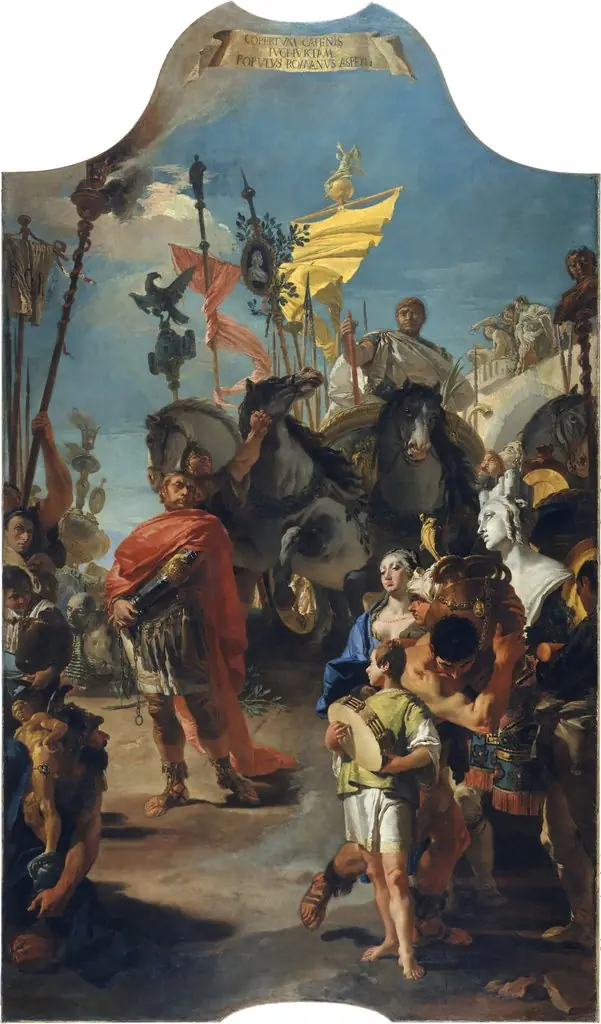
Giovanni Battista Tiepolo, also known as Giambattista Tiepolo, was an Italian painter and printmaker from the Republic of Venice who painted in the Rococo style, considered an important member of the 18th-century Venetian school.


![Figure Studies [verso], by Giovanni Battista Cipriani](https://artifactworldgallery.com/img/giovanni-battista-cipriani--figure-studies-verso--9d89c1dfd297f554-w320.webp)