Artwork
Old Man with an Open Book
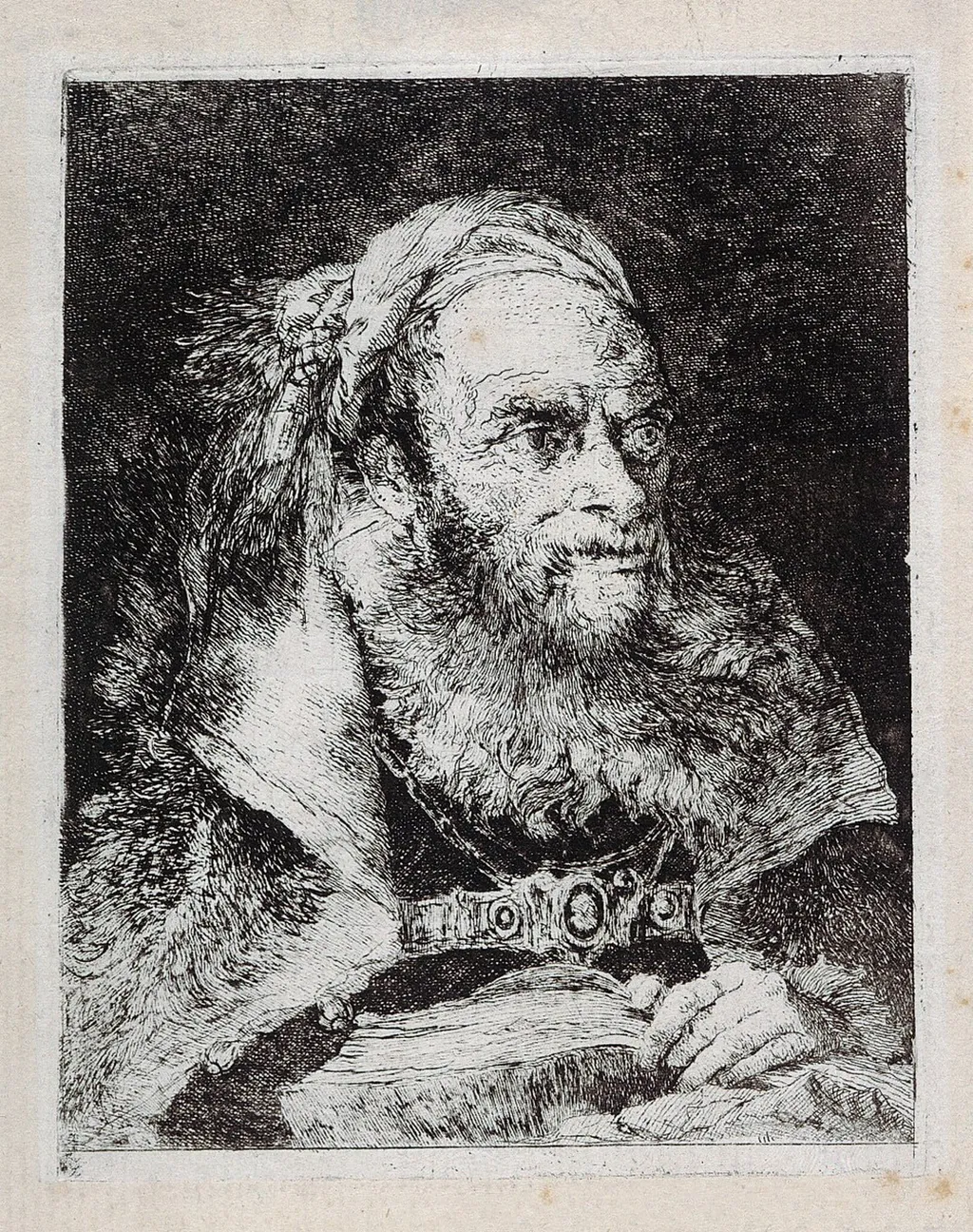
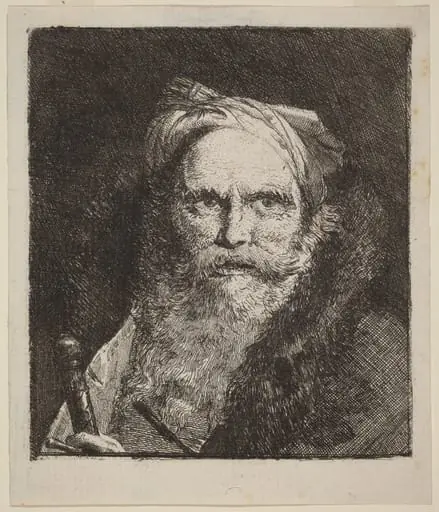
Old Man with an Open Book is an ink print by the Romanticist artist Giovanni Domenico Tiepolo. It dates from 1770 and is held in the collection of the National Gallery of Art.
About this work
Overview
Its modest scale and monochromatic tone emphasize the dignity of the individual over theatrical narrative.
Created in 1770, Old Man with an Open Book is an etching on laid paper by Giovanni Domenico Tiepolo, a prolific printmaker and the younger son of Giovanni Battista Tiepolo. The work belongs to a series of intimate character studies produced in his later years, reflecting his shift from grand decorative painting toward quiet, observational subjects. Its modest scale and monochromatic tone emphasize the dignity of the individual over theatrical narrative.
Subject & Meaning
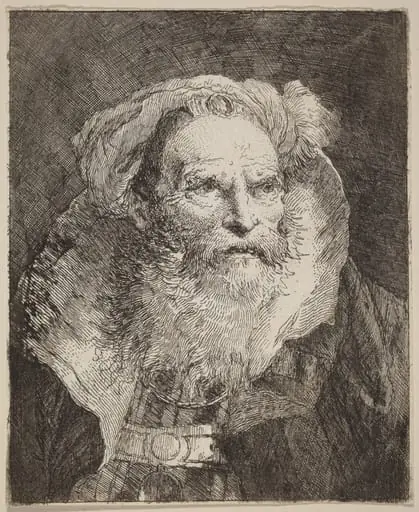
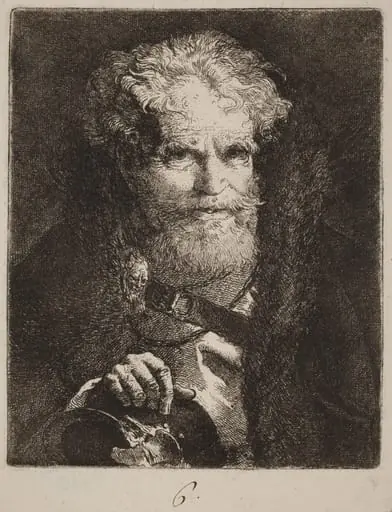
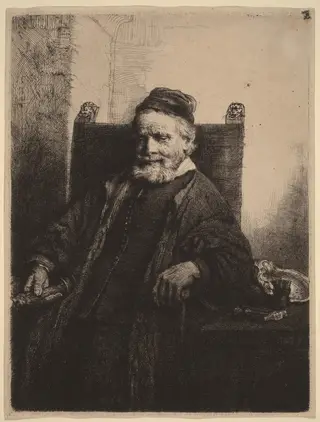
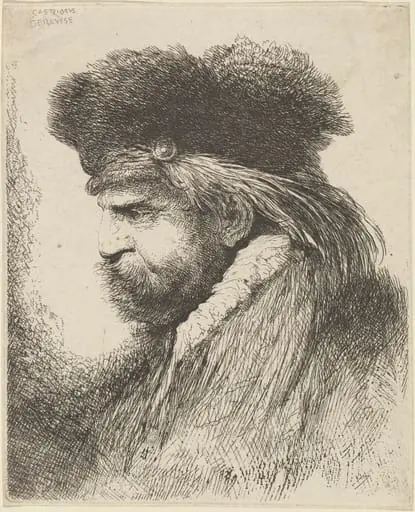
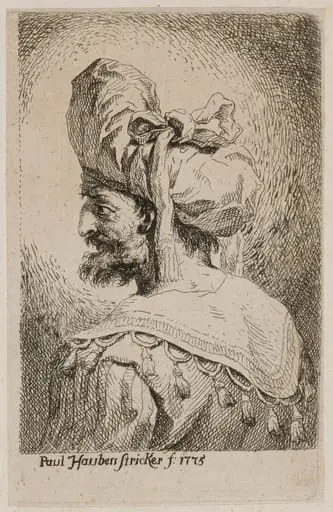
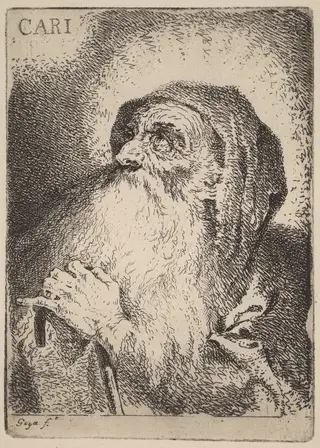
The figure is an elderly man with a long white beard, draped in a heavy cloak and wearing a turban-like head covering. He is deeply engrossed in reading, his gaze fixed on the open book in his hands. The serious expression and stillness suggest contemplation, perhaps scholarly or spiritual.
The costume, though not historically specific, evokes an archetypal wise figure, inviting reflection on knowledge, age, and solitude.
Technique & Style
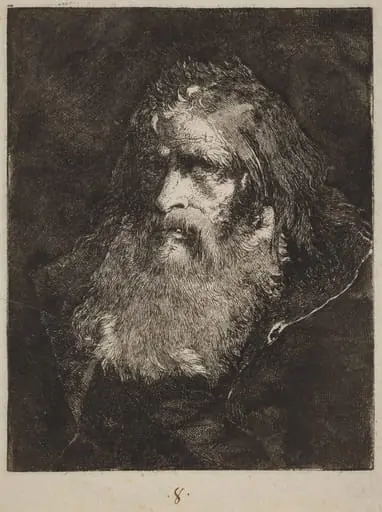
Tiepolo employed fine, controlled etching lines to model the folds of fabric and the texture of the beard, demonstrating his mastery of tonal gradation. The dark, unmodeled background isolates the figure, heightening focus on his form and expression. The use of laid paper, with its subtle watermark texture, enhances the tactile quality of the print, reinforcing the intimacy of the scene without overt embellishment.
History & Provenance
The print was made during Tiepolo’s time in Venice, following his return from Würzburg and before his later years in Zianigo. It was likely produced for private collectors rather than public display, part of a broader trend among 18th-century artists to explore personal, non-commissioned subjects. No definitive early provenance is recorded, but it appears in several 19th-century European print collections.
Context
While Tiepolo trained in the grand Baroque tradition of his father, his later works reflect a quieter, more introspective sensibility aligned with emerging Neoclassical values. This etching resonates with contemporary interest in individual psychology and the dignity of ordinary life, paralleling developments in literature and philosophy of the Enlightenment, even as it avoids overt political or moral messaging.
Legacy
Tiepolo’s etchings, including this one, influenced later generations of printmakers who valued expressive line and psychological depth over spectacle. Though not widely exhibited in his lifetime, his character studies gained recognition in the 19th century as precursors to modern observational drawing. The work remains a quiet testament to his skill in transforming simple subjects into enduring visual meditations.
Own this work as a print
Artist & collection
Artist
Giovanni Domenico Tiepolo (August 30, 1727 – March 3, 1804) was an Italian painter and printmaker in etching. He was the son of artist Giovanni Battista Tiepolo and elder brother of Lorenzo Baldissera Tiepolo.