Artwork
Venus and Music
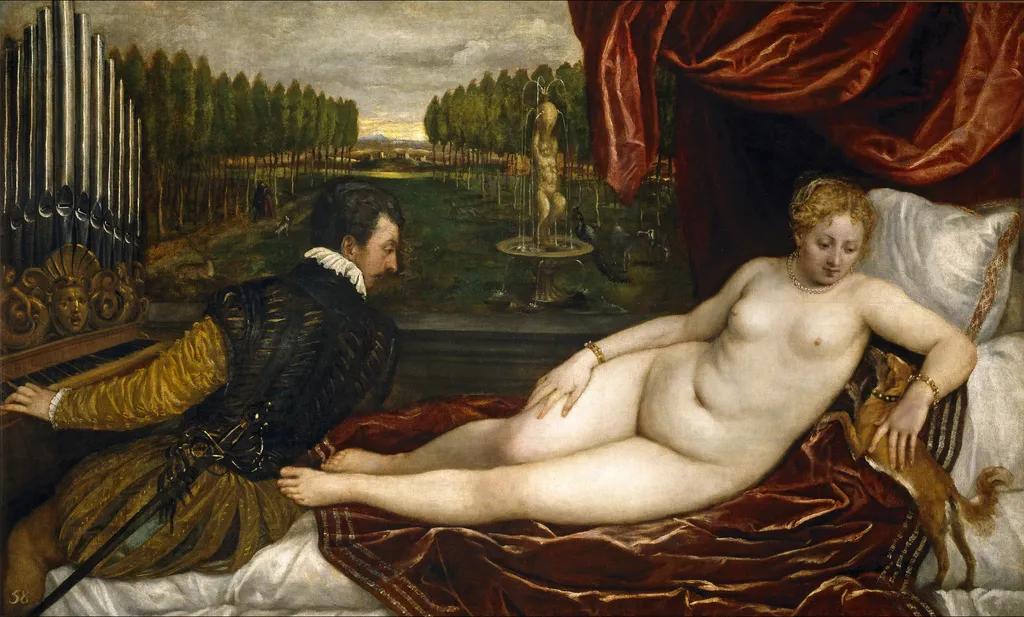
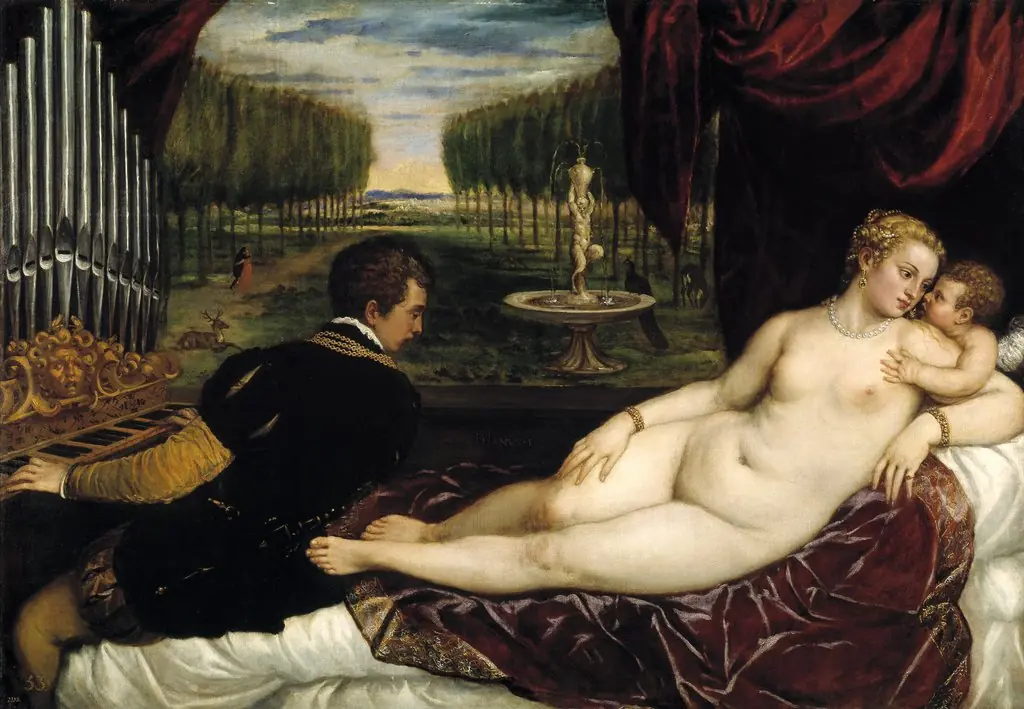
Venus and Music is an oil painting by the Mannerist artist Titian. It dates from 1550 and is held in the collection of the Museo del Prado.
About this work
Subject & Meaning
The scene fuses eroticism with refined music, set against a garden landscape.
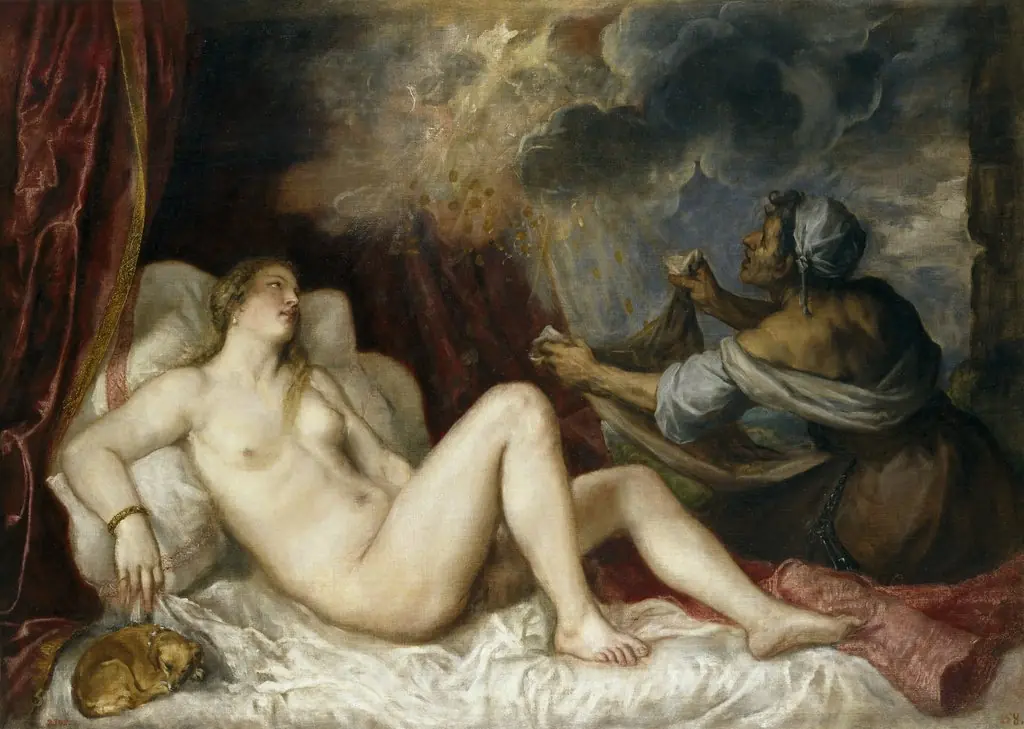
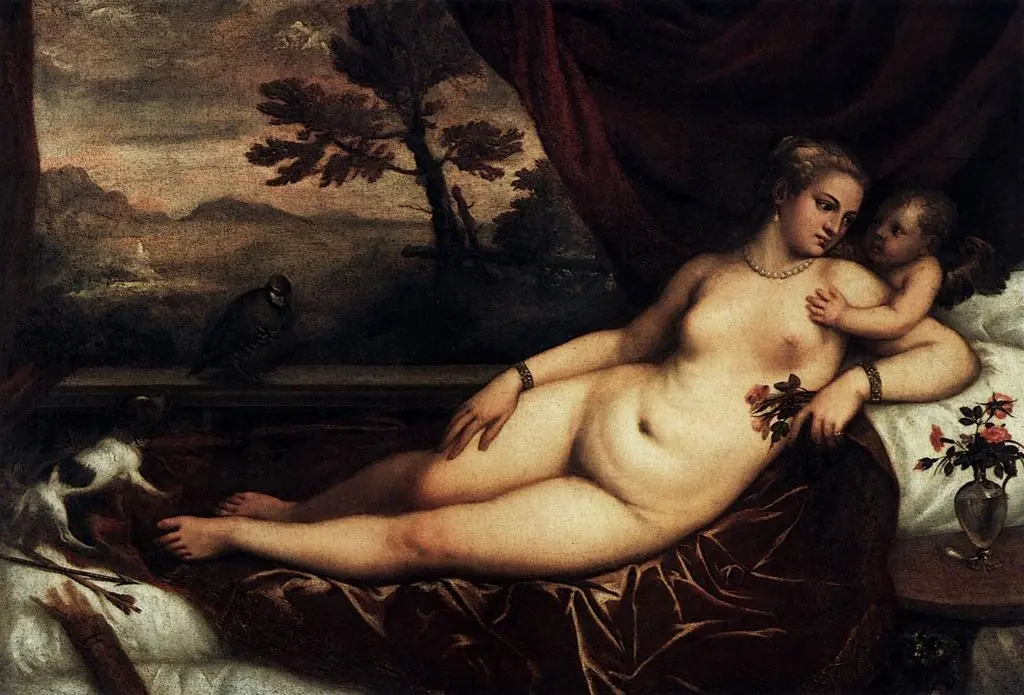
The painting depicts a reclining Venus, nude and adorned with jewelry, lying on a bed in a loggia while a musician plays an organ beside her and a small dog rests at her feet. The scene fuses eroticism with refined music, set against a garden landscape. Beyond its sensual surface, scholars interpret the work as an allegory of the senses, especially the triumph of sight over hearing: the musician turns from his instrument to gaze at Venus, embodying Neoplatonic ideas about beauty apprehended through the eyes.
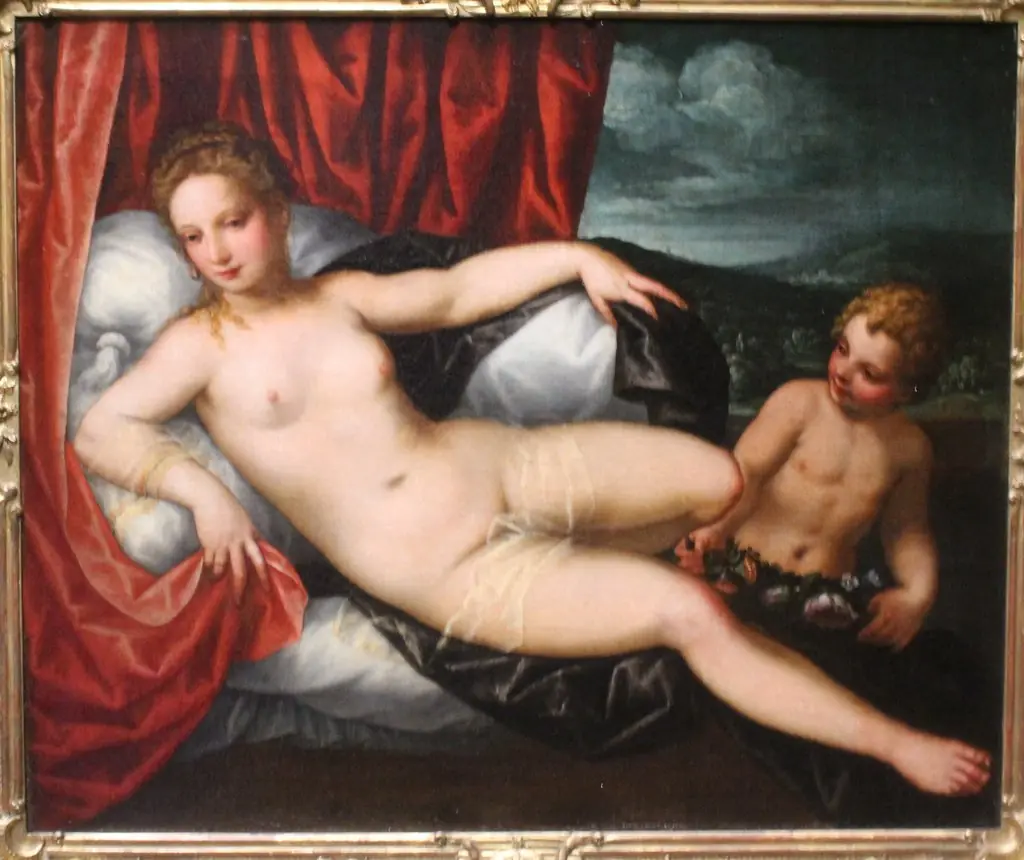
The presence of Cupid in some versions confirms the female figure as Venus, though the luxurious setting and Venus's jewelry also echo contemporary depictions of courtesans, blending mythological and worldly themes.
Technique & Style
Executed in oil on canvas (138 × 222.4 cm), the painting belongs to Titian’s series of reclining nudes featuring a musician. The composition places Venus full-length on pillows, with the organist seated at the end of the bed; a large red drape fills the upper left, while a landscape with palace gardens appears through a loggia or window. Stylistically, the figure is described as “rich, heavy and a trifle coarse,” with a “brutal directness” that, after restorations removing delicate texture, yields an “un-aphrodisiac” effect.
The handling is conventionalized, especially in the body’s repeated pose across versions. The barely submerged eroticism is offset by the formal arrangement of musician, dog, and drapery.
History & Provenance
Painted by Titian around 1550, Venus and Music is part of a series of reclining Venus compositions produced from the late 1540s onward, and this version is considered the earliest. It was initially owned by the jurist Francesco Assonica, who may have commissioned the work. The painting later entered the collection of King Charles I of England.
Following Charles I's execution, it was purchased at his sale by Luis de Haro on behalf of King Philip IV of Spain, and by 1626 it was documented in the Royal Alcázar of Madrid. Today it resides in the Museo del Prado.
Context
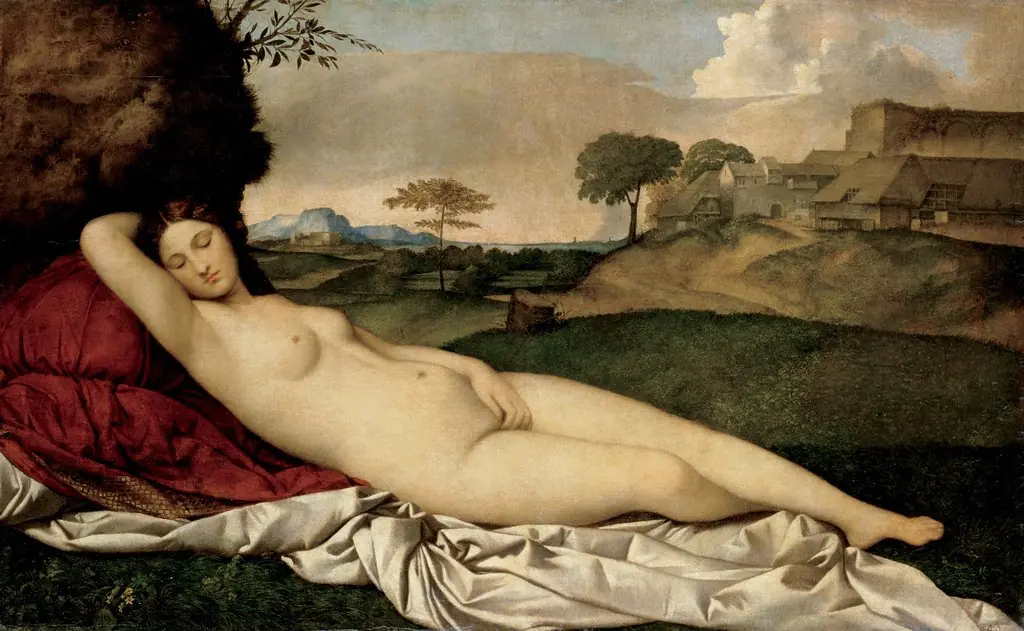
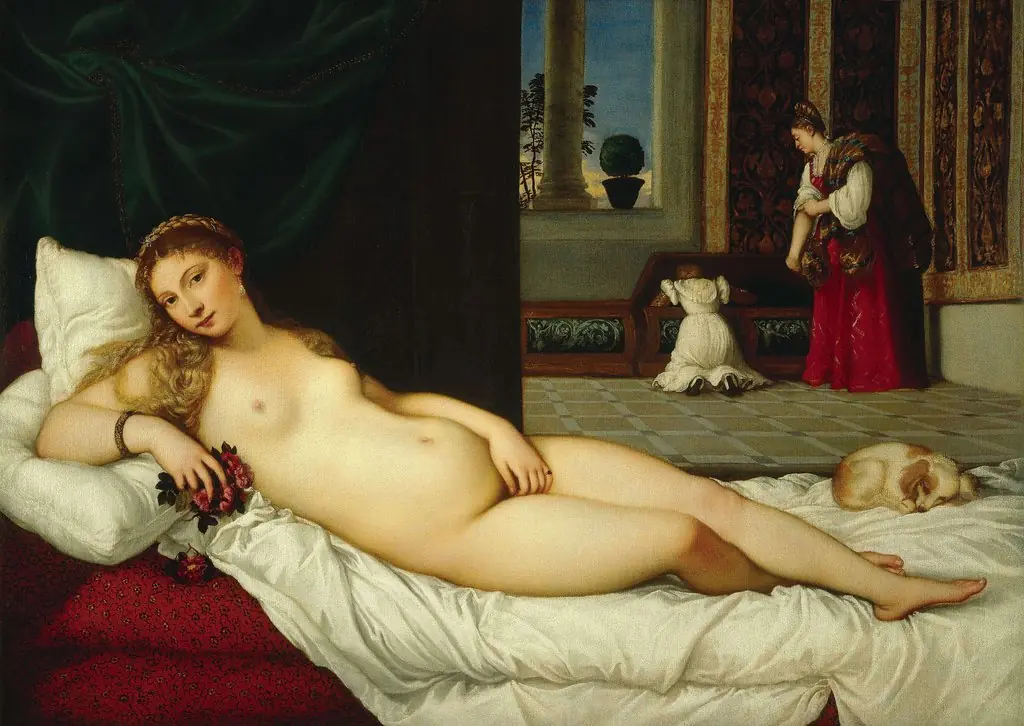
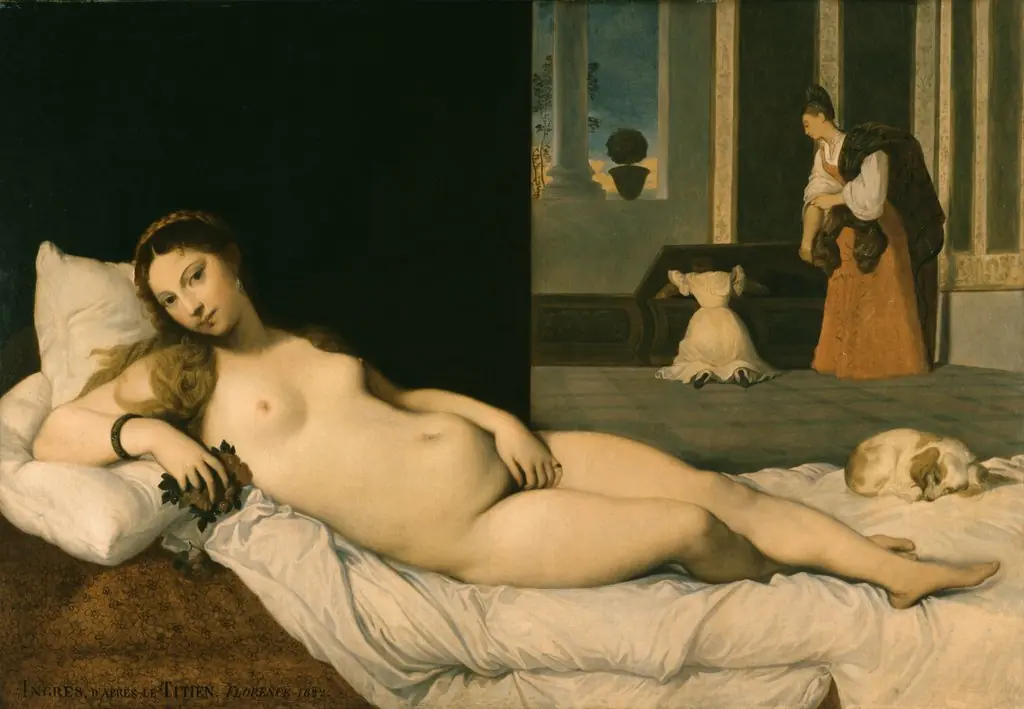
The Venus and Musician series represents the culmination of Titian's exploration of the reclining female nude in the Venetian tradition, building upon his earlier Dresden Venus and Venus of Urbino. Critically, the paintings have been interpreted as both erotic allegories and courtesan pictures, with the naked Venus adorned in luxurious jewelry and the musician as a potential client. Art historian Kenneth Clark described the nude as 'entirely Venetian' and 'rich, heavy and a trifle coarse,' noting their conventionalized and un-aphrodisiac quality after restoration.
Conversely, Erwin Panofsky read the organist's abandonment of playing as a Neoplatonic triumph of sight over hearing. The series also reflects Titian's workshop practice, with multiple versions of varying autograph status, and has been central to debates about 20th-century Neoplatonic interpretations, which many critics resist in Titian's case.
Overview
The series known as "Venus and Music" comprises multiple oil paintings created by the Venetian Renaissance artist Titian and his workshop. Dating from the late 1540s onwards, these works consistently depict the goddess Venus in a reclining pose, accompanied by a male musician. The various iterations of this theme are often distinguished by the specific instrument played, leading to titles such as "Venus with an Organist" or "Venus with a Lute-player."
Own this work as a print
Artist & collection

Artist
Tiziano Vecellio (Italian:; c. 1488/1490 – 27 August 1576), Latinized as Titianus, hence known in English as Titian ( TISH-ən), was an Italian Renaissance painter. The most important artist of Renaissance Venetian…


 Studied in the Mythology in Art course