Artwork
Portrait of Isabella of Portugal
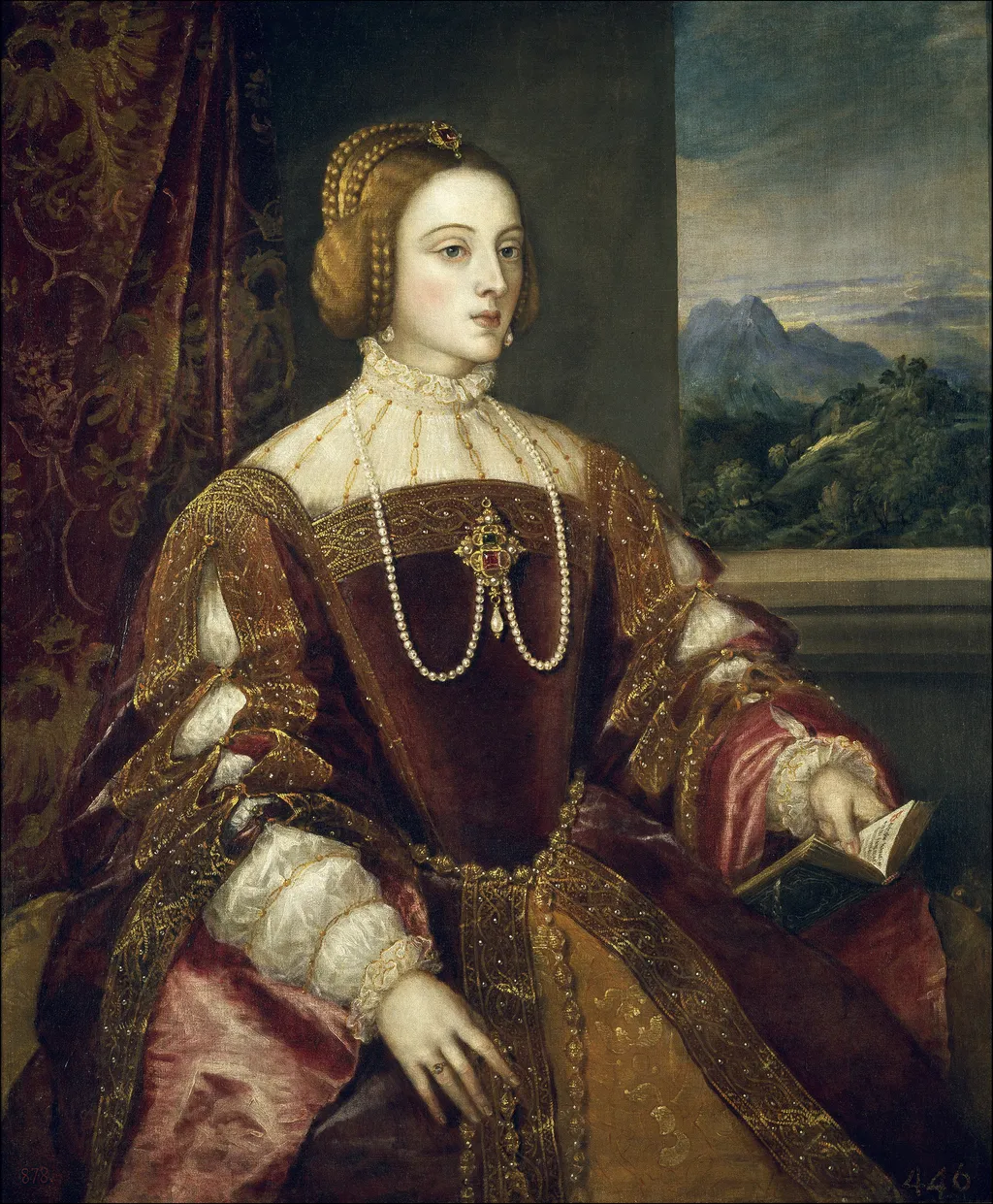
Portrait of Isabella of Portugal is an oil painting by the High Renaissance artist Titian. It dates from 1548 and is held in the collection of the Museo del Prado.
About this work
Subject & Meaning
She wears a red and gold brocaded dress adorned with pearls, gemstones, and a rigid braided headdress, holding an open book that may be a missal or prayer book.
Isabella of Portugal, Holy Roman Empress and wife of Charles V, is depicted in Titian's 1548 Portrait of Isabella of Portugal. She wears a red and gold brocaded dress adorned with pearls, gemstones, and a rigid braided headdress, holding an open book that may be a missal or prayer book. The composition follows a classical scheme with the figure seated near a window revealing a landscape, using contrasting greens and blues in the background against warm interior tones to convey depth and imperial majesty.
The portrait reflects both personal devotion by Charles V and imperial iconography, as the emperor carried the painting with him and later displayed it in royal collections before its placement in the Museo del Prado.
Technique & Style
The technique and style of the Portrait of Isabella of Portugal reflect Titian's mature Venetian approach, characterized by rich coloration and nuanced modeling. Executed in oil paint on canvas, the work employs a classical compositional scheme in which the figure is positioned beside an opening that reveals a landscape, enhancing spatial depth and providing a chromatic contrast to the warm interior tones. The subject is depicted with a rigid, fashionable hairstyle of braids, wearing a red and gold brocaded dress adorned with jeweled accessories including a pearl necklace with a chest clasp and dangling gemstone teardrop, a right-hand ring, and a jeweled headdress.
She holds an open book in her left hand, likely a devotional text such as a missal, and gazes distantly, conveying a sense of imperial majesty. The painting demonstrates Titian's characteristic handling of fabric textures and jewelry rendering, as well as his use of color contrasts to define form and mood.
History & Provenance
Following the death of Empress Isabella of Portugal in 1539, Emperor Charles V, who possessed no portrait he considered worthy of her, commissioned Titian, one of his preferred painters, to create one. Having never seen the deceased empress, Titian worked from an earlier portrait showing her in a black dress, now lost to the 1604 fire at the Palacio del Pardo. That source painting has been attributed variously to unknown or second-rank masters, including the Spanish painter Diego de Arroyo, the Flemish artists Scrouts and Vermeyen, or the Austrian Seisenegger.
Radiographic analysis reveals that Titian reused an already-painted canvas bearing an earlier female figure. He first depicted Isabella with a slightly aquiline nose, presenting the work at court in 1545; Charles then requested retouching, prompting Titian to relocate to Augsburg in 1548 to revise it.
Charles's attachment to the portrait is documented by its accompaniment on his retirement to the Monastery of Yuste. The painting subsequently resided at the Monasterio de las Descalzas Reales in Madrid, then at the Alcázar of Madrid and the Royal Palace, before entering the Museo del Prado.
The painting is held in the Museo del Prado in Madrid, where it is located in Hall 056 of the Royal Palace of Madrid. It entered the collection from the Spanish Royal Collection, having been owned by Ferdinand VII of Spain.
The work's documented exhibition history traces its movement through several royal and monastic settings. After accompanying Emperor Charles V on his retirement to the Monastery of Yuste, it was displayed in the Monasterio de las Descalzas Reales in Madrid, then moved to the Alcázar of Madrid and subsequently to the Royal Palace, before finally entering the Prado.
Context
The Portrait of Isabella of Portugal, painted by Titian in 1548, was created after the death of Isabella, Holy Roman Empress, based on a now-lost earlier portrait. It entered the Spanish royal collection and was later housed in the Museo del Prado, Madrid. The work reflects imperial iconography, using a classical composition with a window opening onto a landscape to convey depth and contrast.
The subject is depicted in rich red and gold brocade with jeweled adornments, holding an open book, and rendered with a sense of majesty. Technical analysis shows Titian reused a canvas, initially painting the figure with an aquiline nose before revising it after Charles V requested adjustments. The painting has been part of several royal collections and spaces, including the Monastery of the Descalzas Reales and the Palacio Real, before its current location at the Prado.
Legacy
The portrait of Isabella of Portugal became a significant reference in imperial portraiture, influencing later depictions of European royalty. Its iconographic scheme, featuring a seated figure beside a window revealing a landscape, was emulated in Baroque and Neoclassical state portraits, particularly in works commissioned by Habsburg successors seeking to evoke dynastic grandeur. The painting's journey through royal collections, including holdings at the Alcázar and eventual placement in the Museo del Prado, cemented its status as a canonical example of Titian's court output.
Contemporary accounts, such as Pietro Aretino’s 16th-century commentary, noted its initial reception as 'trivial' yet personally cherished by Charles V, who transported it during his retirement to Yuste. This emotional resonance contributed to its enduring reputation as a symbol of Habsburg devotion, later inspiring reinterpretations by artists like Rubens, whose copy of the composition, though now lost, was documented in the 18th-century inventories of the House of Alba.
Overview
Titian’s portrait of Isabella of Portugal, painted in 1548, presents the former Holy Roman Empress in oil on canvas. The work measures roughly a life‑size half‑figure and exemplifies the Venetian master’s mature approach to court portraiture. Currently displayed in Madrid’s Museo del Prado, the painting forms part of the museum’s extensive collection of 16th‑century European art.
Own this work as a print
Artist & collection

Artist
Tiziano Vecellio (Italian:; c. 1488/1490 – 27 August 1576), Latinized as Titianus, hence known in English as Titian ( TISH-ən), was an Italian Renaissance painter. The most important artist of Renaissance Venetian…



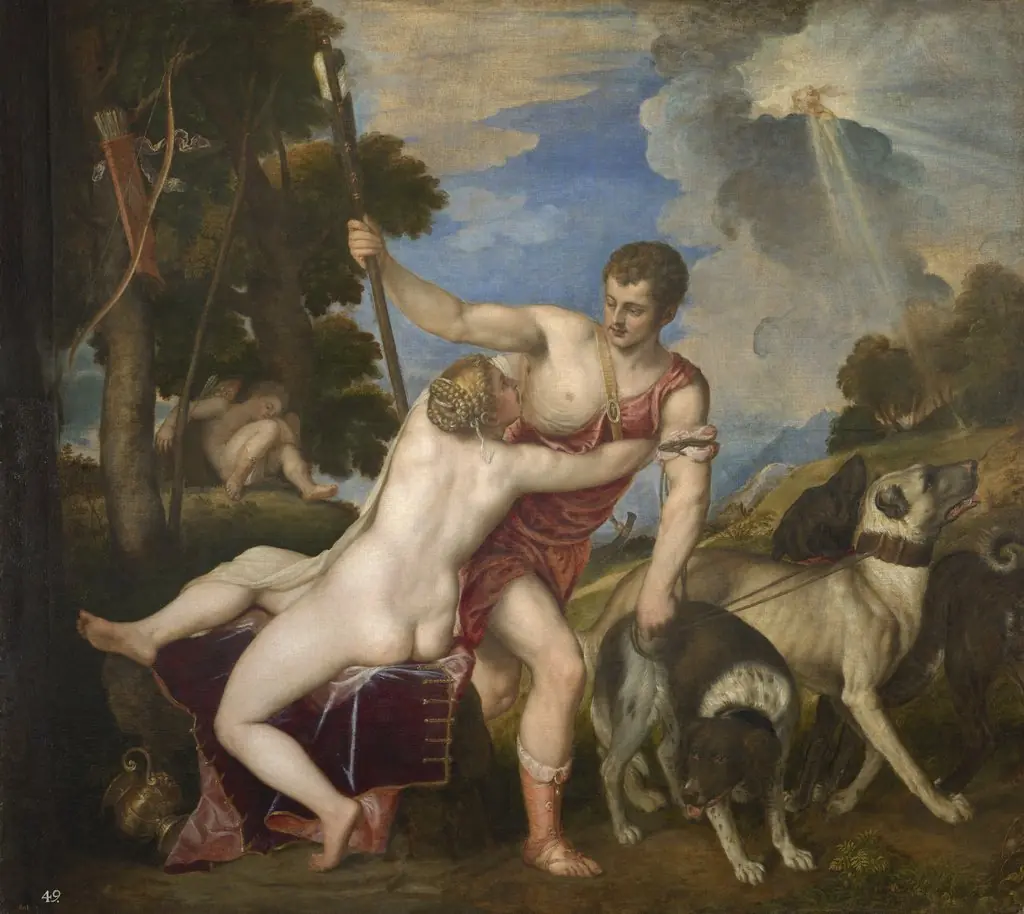
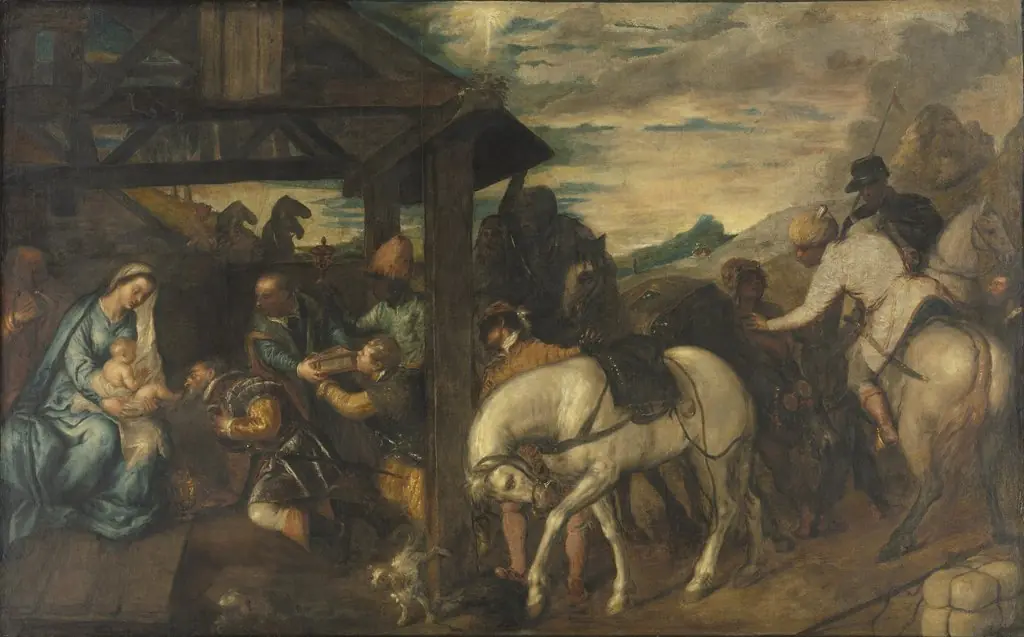

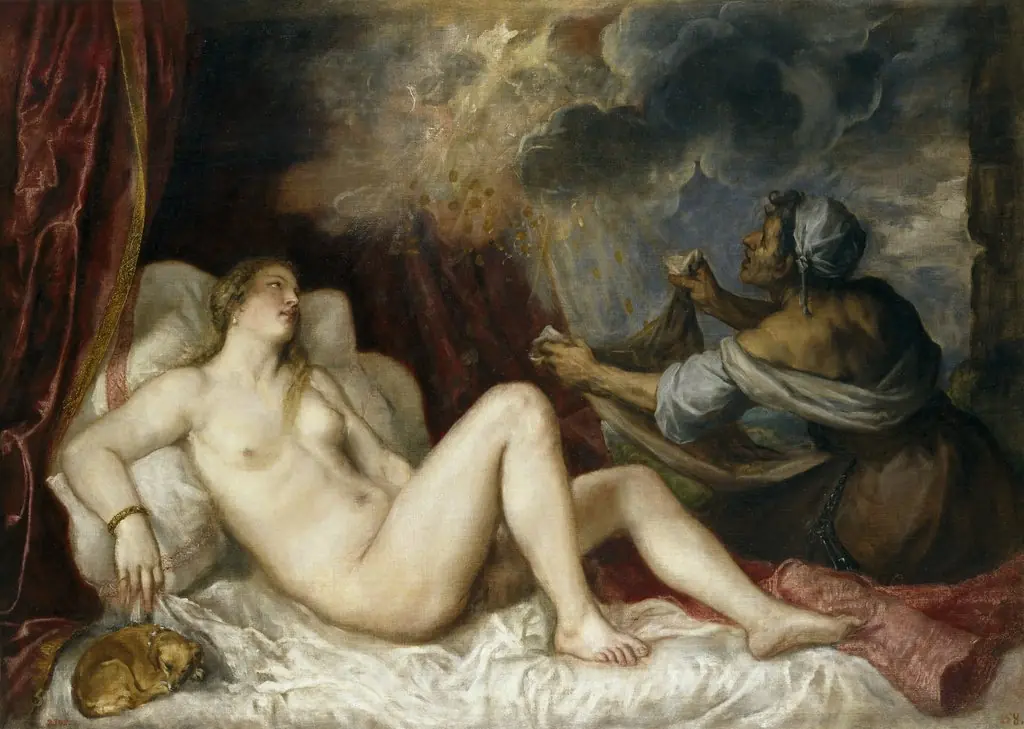
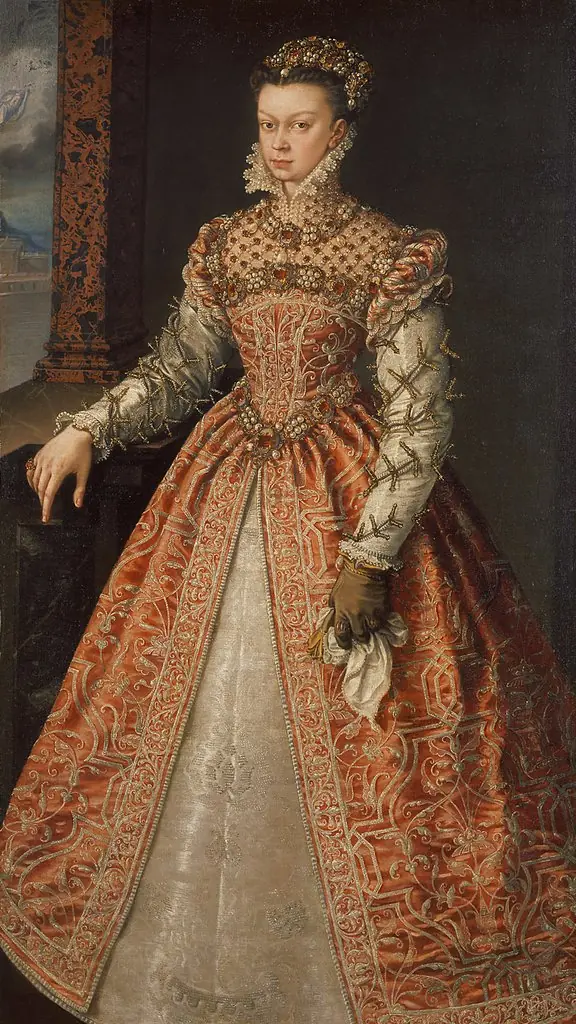
- Portrait of Elisabeth of Valois (1545-1568), Queen of Spain
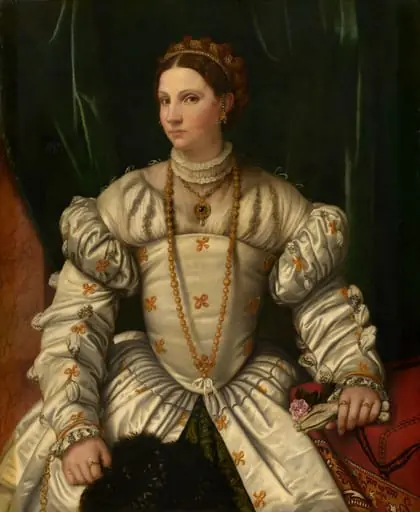 Portrait of a Lady in White
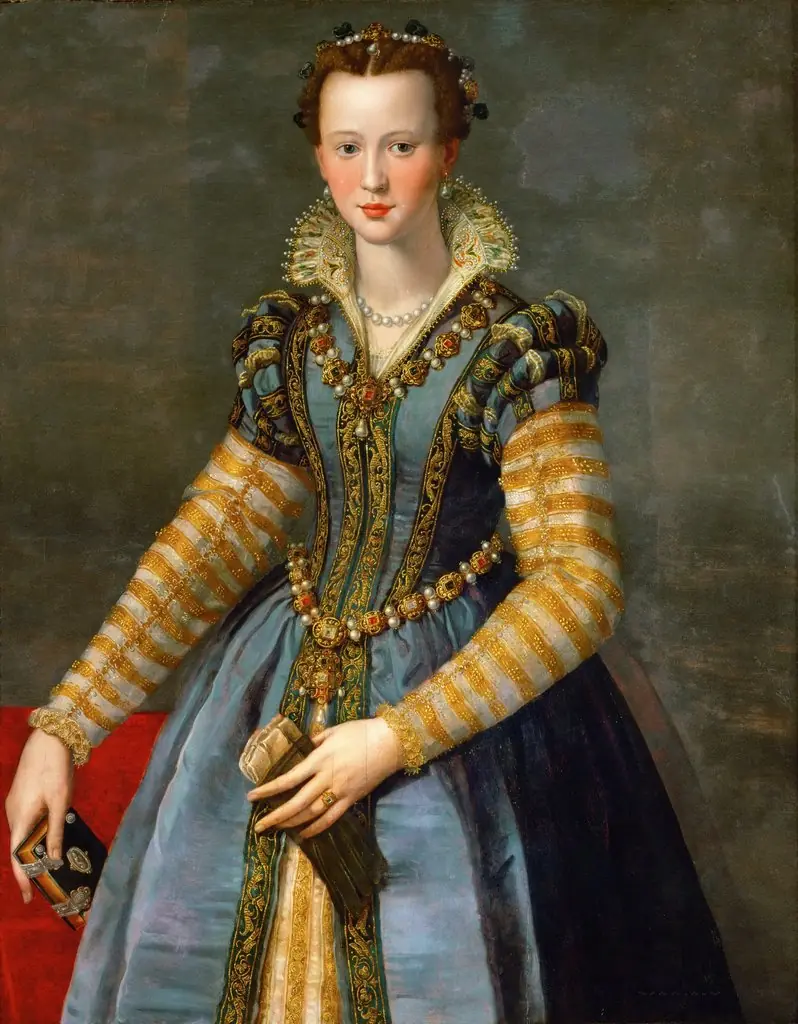 Portrait of a lady, traditionally identified as Maria de' Medici
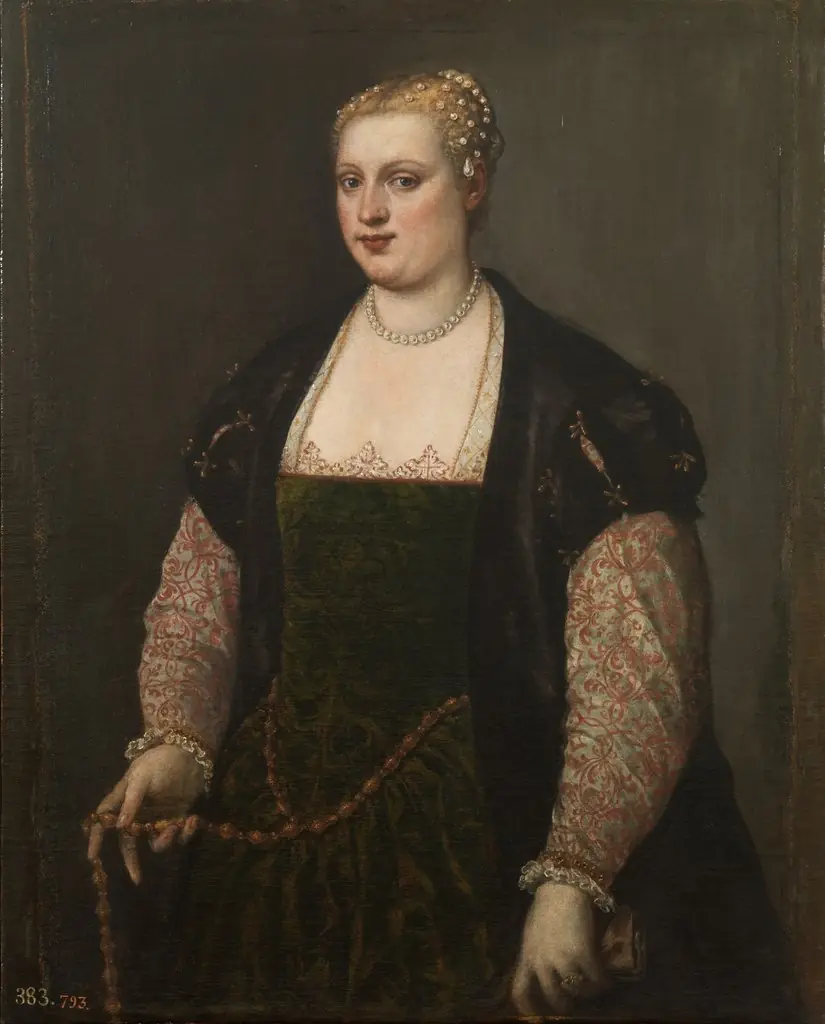 Portrait of a Woman
 Portrait of Eleonora (Dianora) Medici of Toledo
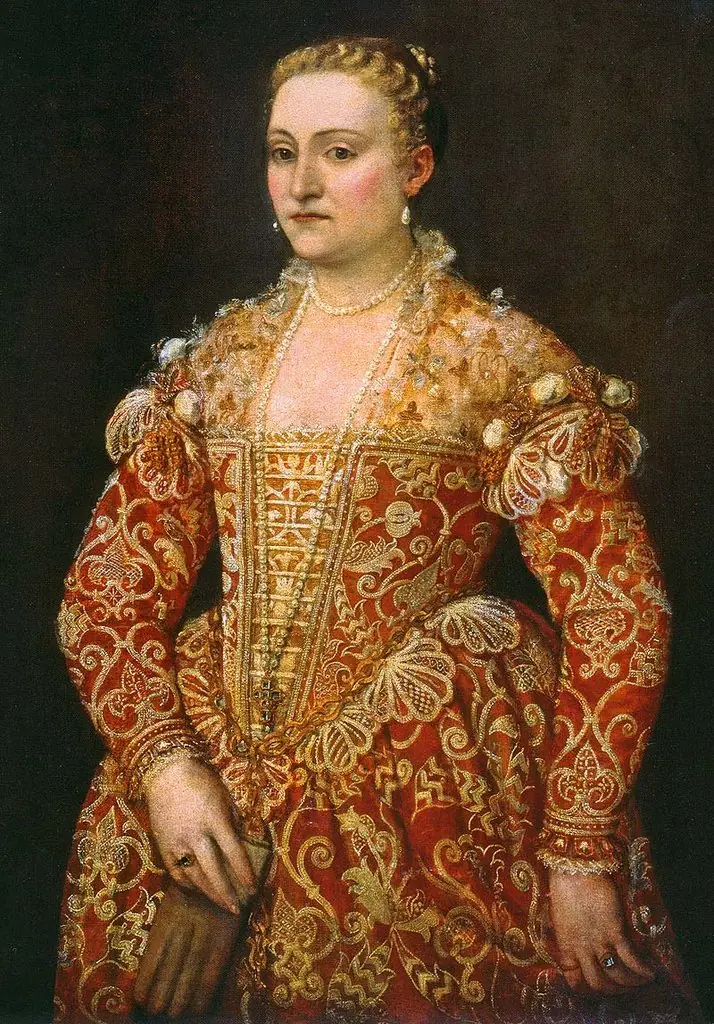 Portrait of a Lady
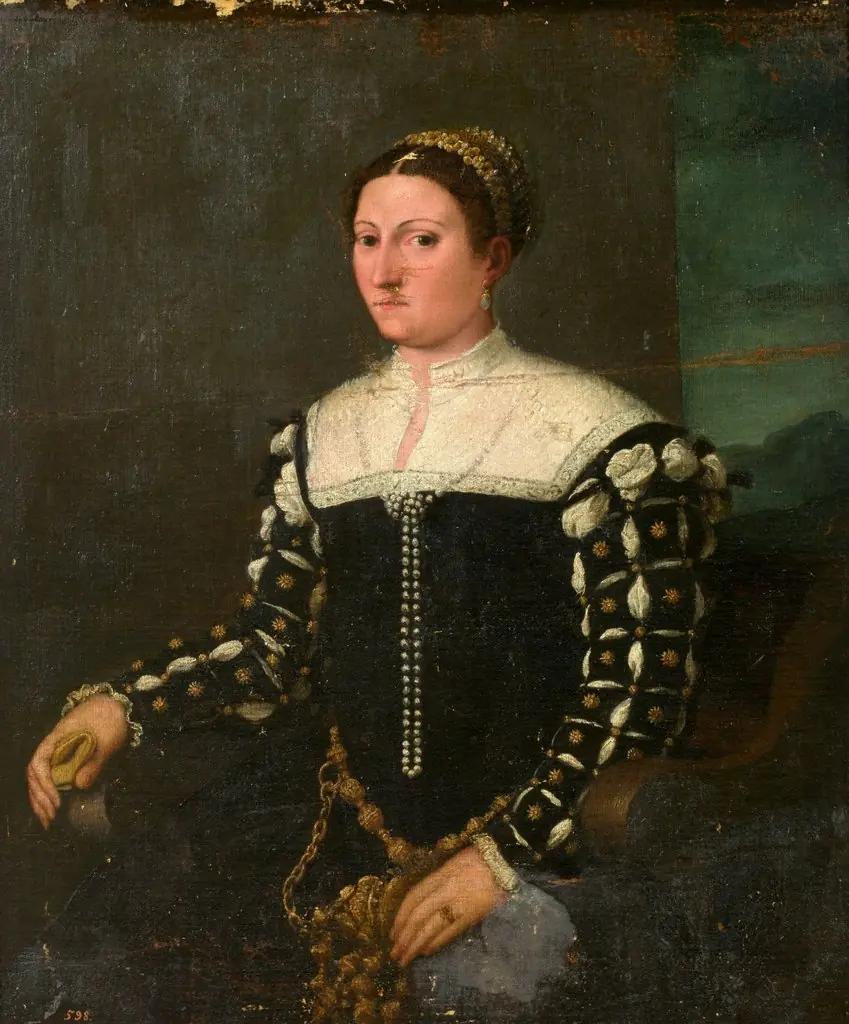 Portrait of an unknown woman
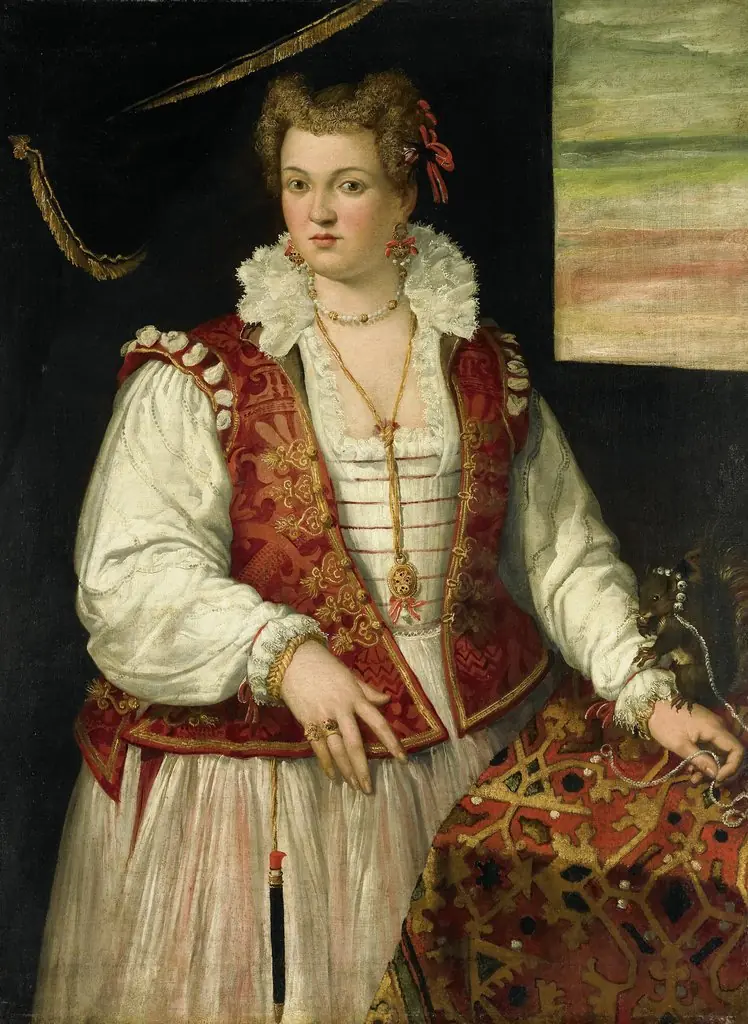 Portrait of a Woman with a Squirrel
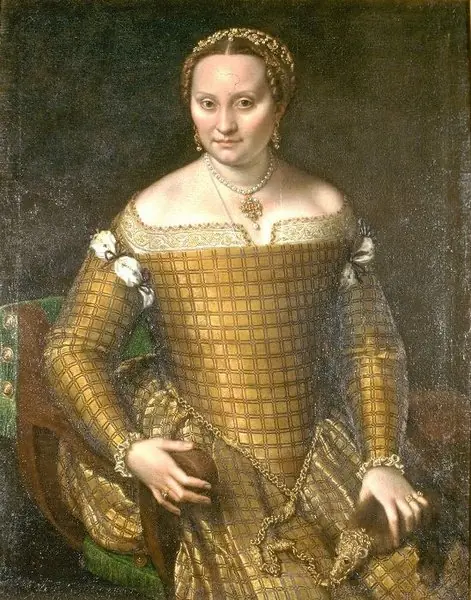 Portrait of Bianca Ponzoni Anguissola