Artwork
Portrait of Pope Paul III
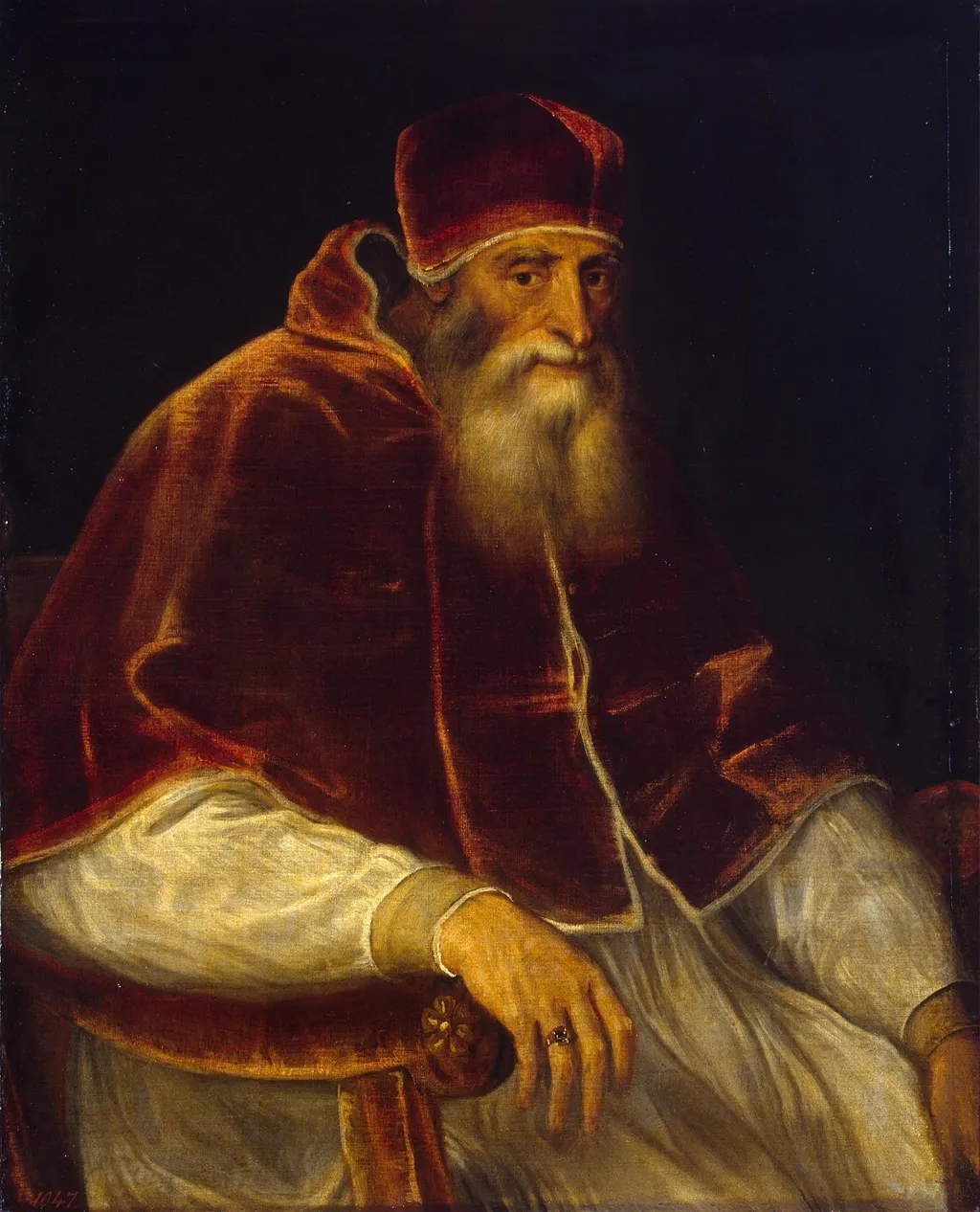
Portrait of Pope Paul III is an oil painting by the Mannerist artist Titian. It dates from 1545 and is held in the collection of the Hermitage Museum. Created in 1545, this oil painting portrays Pope Paul III in a solemn, half‑length format.
About this work
Subject & Meaning
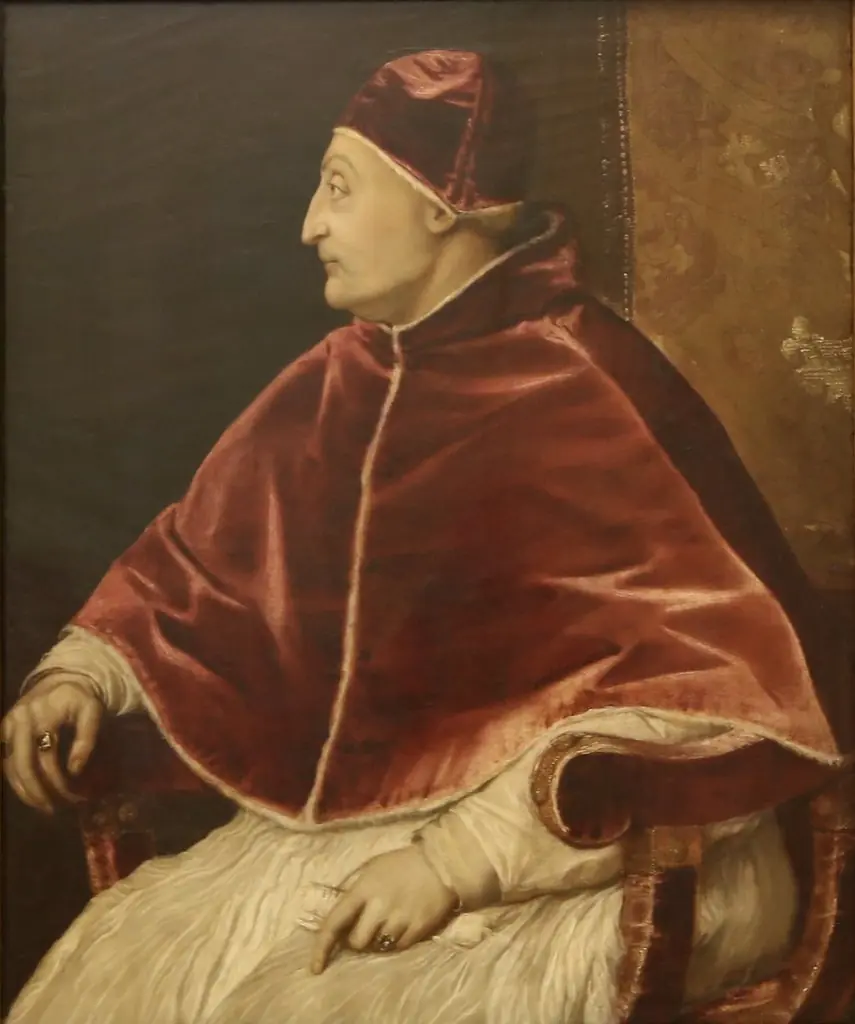
The aged face, deep-set eyes, pronounced cheekbones, and a long beard, conveys both authority and fatigue, aligning with the pope’s seventies at the time.
The sitter is Alessandro Farnese, who became Pope Paul III in 1534. Titian’s portrait of 1545 renders the pontiff in three-quarter view, seated and turned slightly to the left, with his right hand resting on the armrest and his left hand holding a folded paper. The aged face, deep-set eyes, pronounced cheekbones, and a long beard, conveys both authority and fatigue, aligning with the pope’s seventies at the time.
The red mozzetta and camauro, along with the white rochet beneath, identify his high ecclesiastical rank, while the paper likely alludes to administrative duties or doctrinal decrees. The restrained palette and close focus emphasize psychological presence over worldly display.
Technique & Style
The portrait is executed in oil paint on canvas, measuring 98 cm in height and 79 cm in width. It was completed in 1545 and belongs to the Venetian school, reflecting Titian’s characteristic handling of the medium. The composition focuses sharply on the sitter, Pope Paul III, rendered with a restrained yet incisive realism that captures both the subject’s authority and age.
The brushwork is fluid yet deliberate, with delicate modeling in the face and hands that conveys texture and volume without excessive detail. The palette is subdued, dominated by earthy tones and subtle contrasts, underscoring the psychological intensity of the portrait.
The painting’s condition, as maintained in the Hermitage Museum’s holdings, aligns with its documented history and conservation record.
History & Provenance
The portrait was painted in 1545, as indicated by Titian’s documented activity that year and the work’s consistent placement within his mature Venetian period. It entered the Hermitage Museum’s holdings as part of its core collection, where it remains housed in Gallery 221. The painting’s early history is not explicitly documented in surviving records, but stylistic analysis aligns it with Titian’s direct execution rather than his workshop alone, suggesting it was created for a high-ranking patron or institution.
The work’s subject, Pope Paul III, and its iconography closely follow the official portrait type established in Titian’s earlier likeness of the pontiff, reinforcing its identification as a commissioned image from the mid-sixteenth century.
The painting is held in the collection of the Hermitage Museum, where it is displayed in Hall 221. Created in 1545, the work is attributed to Titian and his workshop. The Hermitage houses this oil-on-canvas portrait as part of its holdings of Venetian school art.
No specific inventory or accession number is provided in the available records, nor is there documentation of a prior exhibition history within the provided sources.
Overview
Created in 1545, this oil painting portrays Pope Paul III in a solemn, half‑length format. The composition centers the pontiff against an unlit backdrop, emphasizing his aged features and the rich red of his vestments. The work is part of the collection of the State Hermitage Museum in St. Petersburg.
Context
Produced during the Mannerist phase of Titian’s career, the portrait reflects the period’s interest in heightened drama and psychological depth. It aligns with contemporary depictions of high‑ranking clergy, combining realistic detail with a stylised treatment of light and texture that influenced subsequent generations of portrait painters.
Own this work as a print
Artist & collection
Artist
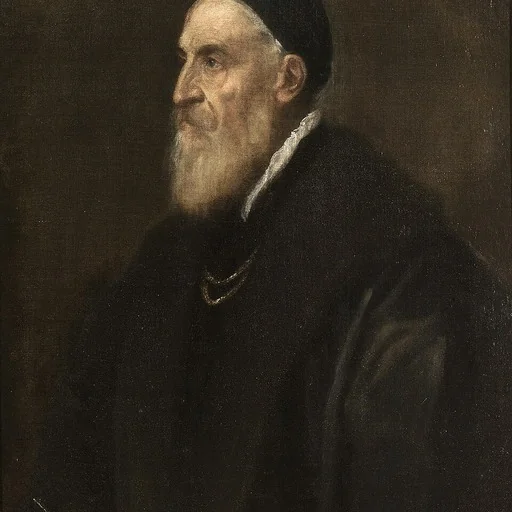
Tiziano Vecellio (Italian:; c. 1488/1490 – 27 August 1576), Latinized as Titianus, hence known in English as Titian ( TISH-ən), was an Italian Renaissance painter. The most important artist of Renaissance Venetian…