Artwork
Adieu
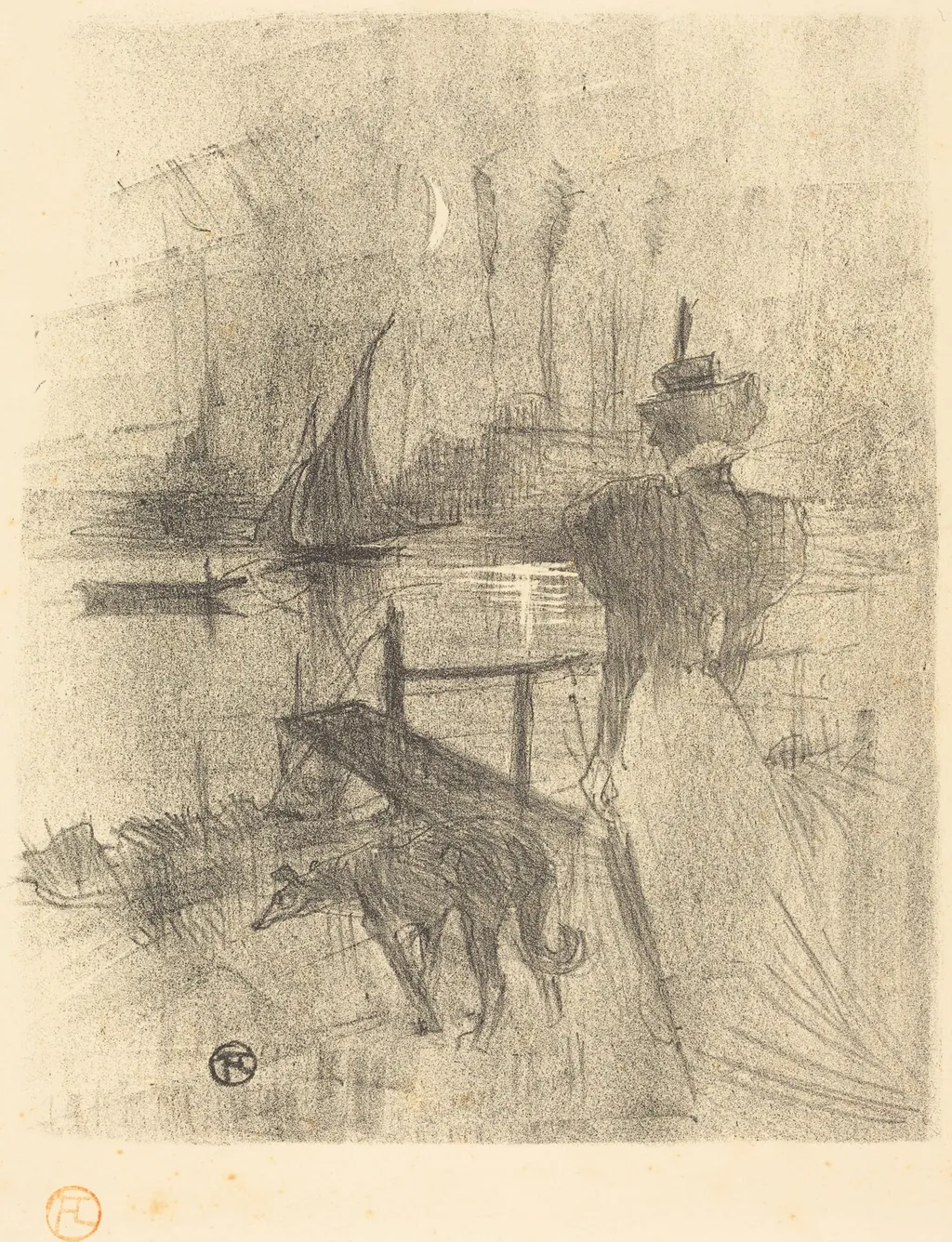
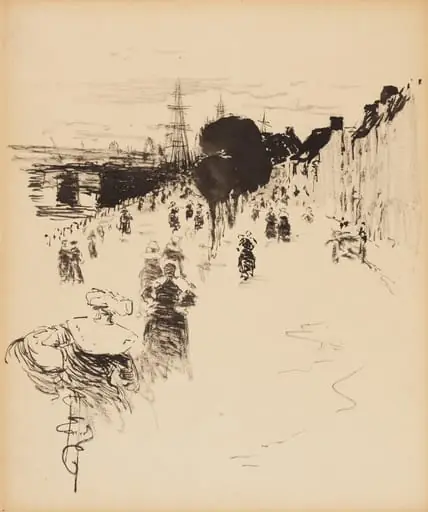
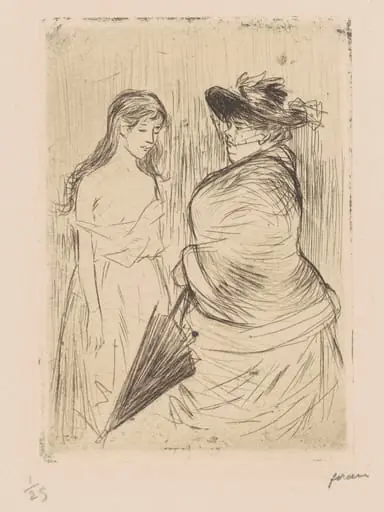
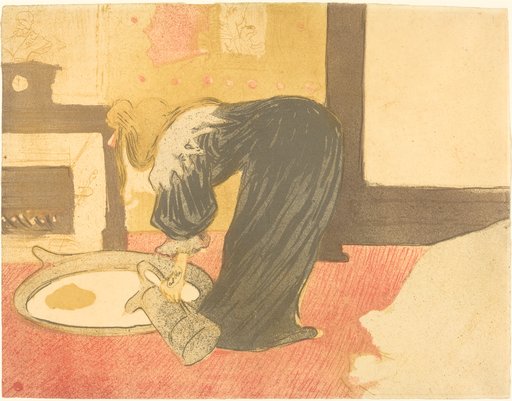
Adieu is an ink print by the Impressionist artist Henri de Toulouse-Lautrec. It dates from 1895 and is held in the collection of the National Gallery of Art.
About this work
Overview
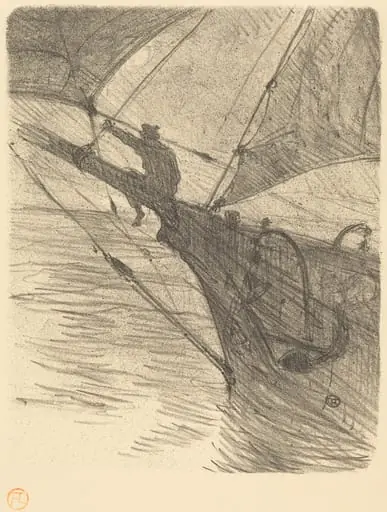
Henri de Toulouse-Lautrec’s 1895 lithograph titled “Adieu” presents a solitary figure on a waterfront. Rendered entirely in black ink on velin paper, the composition captures a woman in a long, dark dress with a light‑collared hat feathered atop her head, accompanied by a medium‑sized dog. Small sailing vessels drift in the background, lending a muted, contemplative mood to the scene.
Subject & Meaning
The central figure appears poised on a pier, gazing toward the water, suggesting a moment of farewell or reflection. The presence of the dog, attentive yet still, reinforces the intimacy of the encounter, while the distant boats hint at departure and the passage of time, inviting viewers to consider themes of parting and quiet observation.
Technique & Style
Executed as a black‑only lithograph, the work relies on bold line work and tonal contrasts to define form and atmosphere. The velin paper’s textured surface enhances the depth of the ink washes, while the simplified palette underscores the melancholic tone characteristic of Toulouse‑Lautrec’s printmaking during this period.
Context
Created during the artist’s most prolific years, “Adieu” reflects Toulouse‑Lautrec’s fascination with Parisian social life beyond the cabarets for which he is best known. The image’s focus on a solitary, everyday scene aligns with his broader interest in capturing fleeting moments of urban existence in the late nineteenth‑century French capital.
Own this work as a print
Artist & collection
Artist
Comte Henri Marie Raymond de Toulouse-Lautrec-Montfa (24 November 1864 – 9 September 1901), known as Toulouse-Lautrec (French: ), was a French painter, printmaker, draughtsman, caricaturist, and illustrator.