Artwork
At La Gaiete Rochechouart: Nicolle (A La Gaieté Rochechouart: Nicolle)
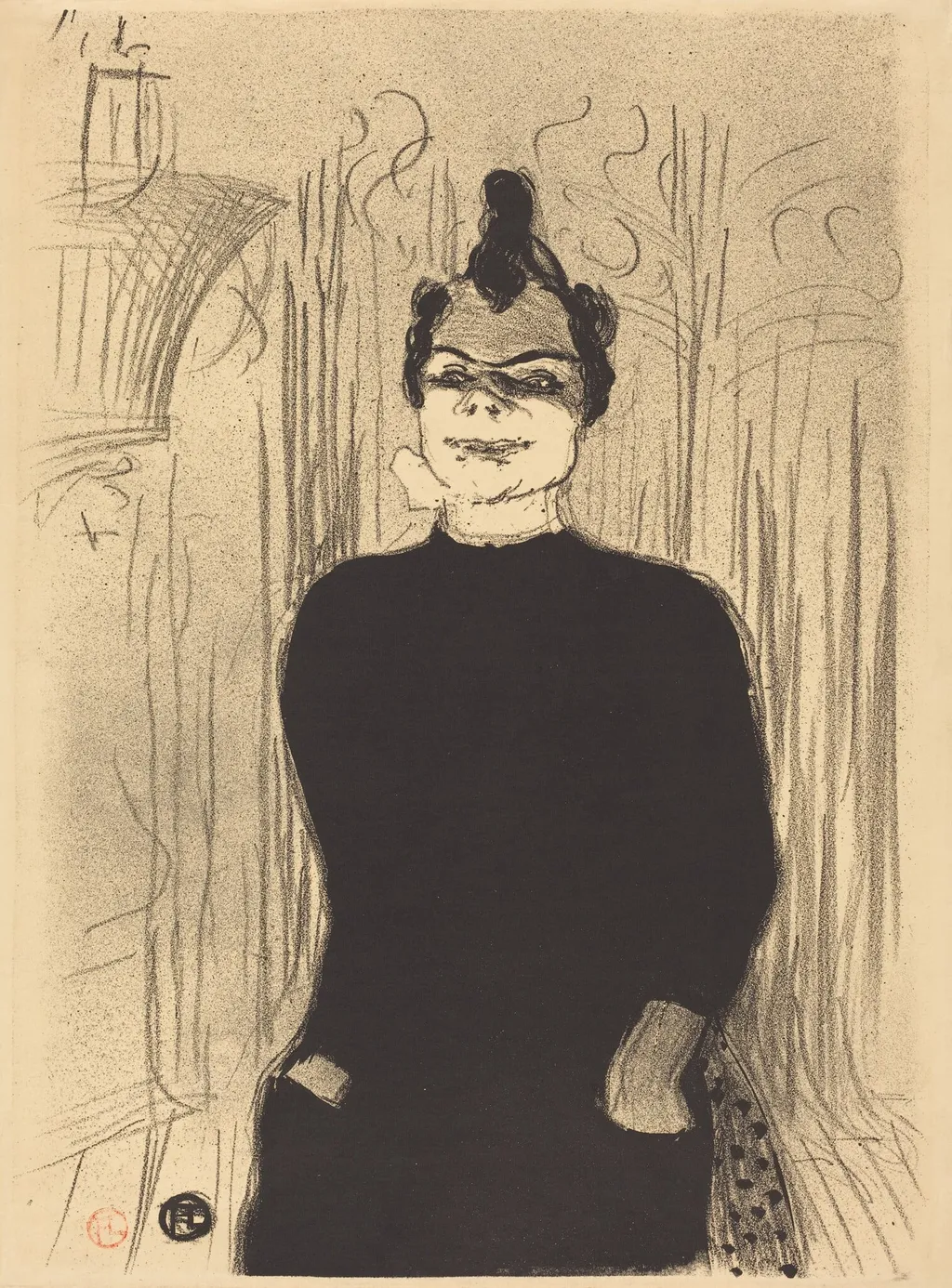
At La Gaiete Rochechouart: Nicolle (A La Gaieté Rochechouart: Nicolle) is an ink print by the Impressionist artist Henri de Toulouse-Lautrec. It dates from 1893 and is held in the collection of the National Gallery of Art.
About this work
Overview
Henri de Toulouse-Lautrec produced the lithograph At La Gaiete Rochechouart: Nicolle in 1893. Executed in black on velin paper, the work is a single‑plane print that captures a fleeting moment in a Parisian setting. Its compact format and stark monochrome emphasize line over colour, typical of the artist’s print output during the early 1890s.
Subject & Meaning
Behind her, a loosely sketched façade and gestural foliage suggest an urban backdrop, perhaps a street or interior of the La Gaiete Rochechouart venue.
The image centers on a woman dressed in a dark gown and a tall, conical hat, her face rendered indistinct while her hands are tucked into her pockets. Behind her, a loosely sketched façade and gestural foliage suggest an urban backdrop, perhaps a street or interior of the La Gaiete Rochechouart venue. The composition conveys a sense of anonymity and the transient nature of nightlife spectatorship.
Technique & Style
Toulouse-Lautrec employed rapid, sketch‑like lines characteristic of his lithographic practice, allowing the paper’s texture to record the immediacy of his hand. The black ink on velin, a soft, felt‑like paper, enhances the contrast between bold outlines and delicate hatching, creating a dynamic sense of movement while preserving the spontaneity of a quick study.
History & Provenance
Created during the artist’s most productive period of documenting Parisian entertainment venues, the print reflects his personal familiarity with the La Gaiete Rochechouart, a popular gathering place for performers. The work entered private collections shortly after its production and has since appeared in several exhibitions of Toulouse-Lautrec’s graphic oeuvre, confirming its attribution and dating to 1893.
Context
At the time of its creation, Toulouse-Lautrec was immersed in the bohemian circles of Montmartre, where lithography served as a rapid means to disseminate images of cabarets, dancers, and patrons. The piece aligns with his broader interest in portraying the theatrical world’s fleeting gestures, offering a visual record of the social atmosphere that defined late‑19th‑century Paris.
Own this work as a print
Artist & collection
Artist
Comte Henri Marie Raymond de Toulouse-Lautrec-Montfa (24 November 1864 – 9 September 1901), known as Toulouse-Lautrec (French: ), was a French painter, printmaker, draughtsman, caricaturist, and illustrator.

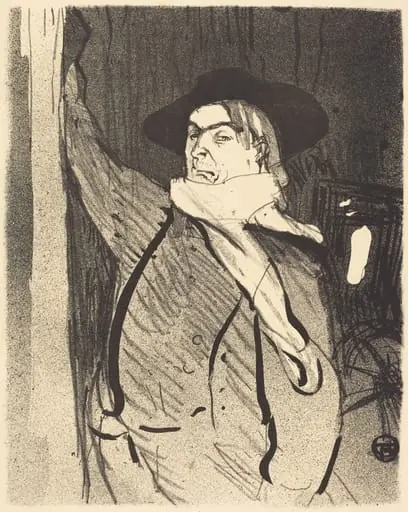 Aristide Bruant
 Woman in a Cape (La Femme à la Pelerine)
 A Spectator (Une spectatrice)
 Tired Soldier I
 A Spectator (Une spectatrice)
 On the Stage (Sur la scène)
 Pflegerin (Nurse)
 Brandes and Le Bargy in "Cabotins" (Brandès et Les Bargy dans "Cabotins")
 Frauenbildnis (Portrait of a Woman)
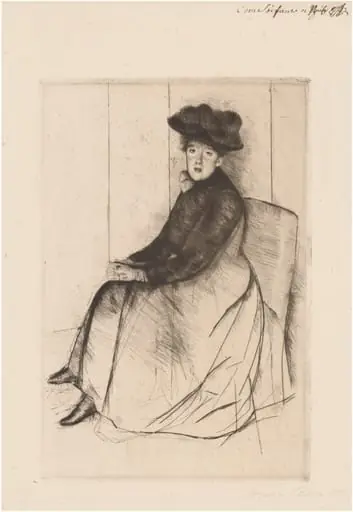 Reflection
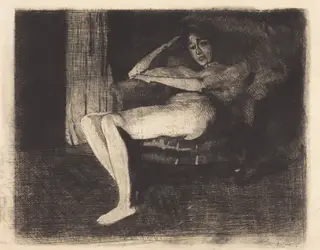 Intimate Fantasy (Féerie intime)
- At the Gaieté Rochechouart: Nicolle