Artwork
Hussars
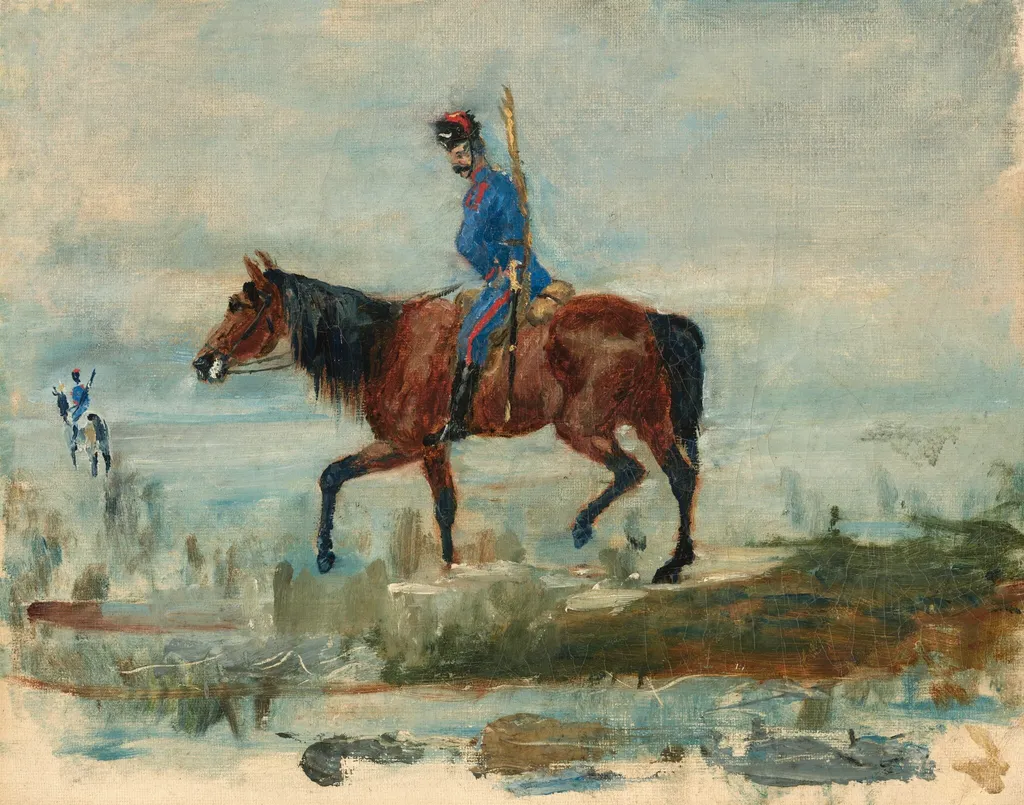
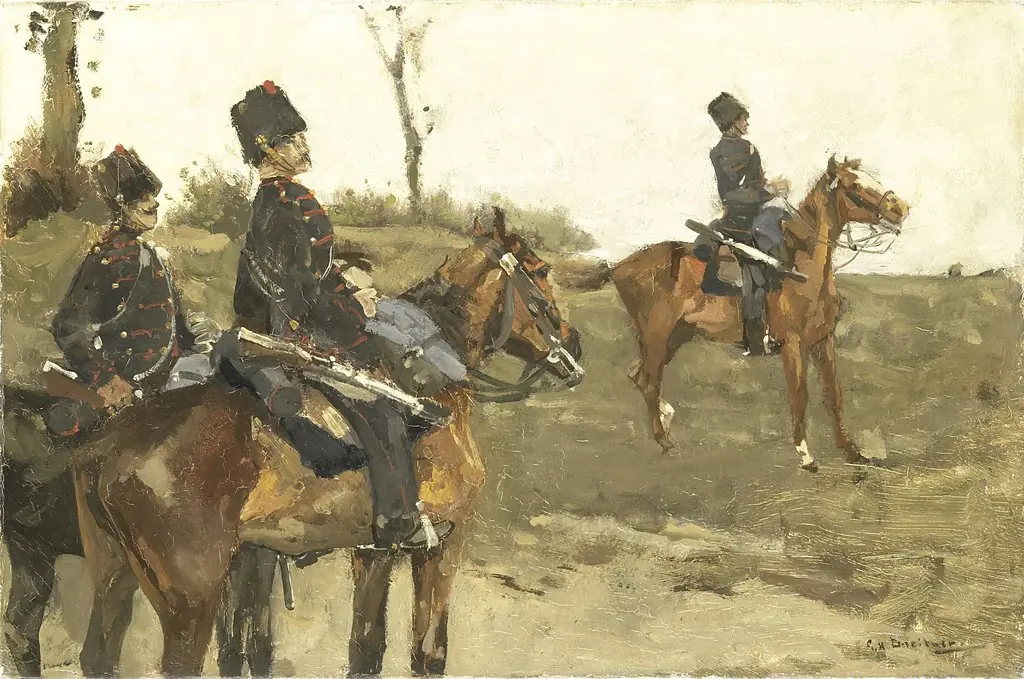
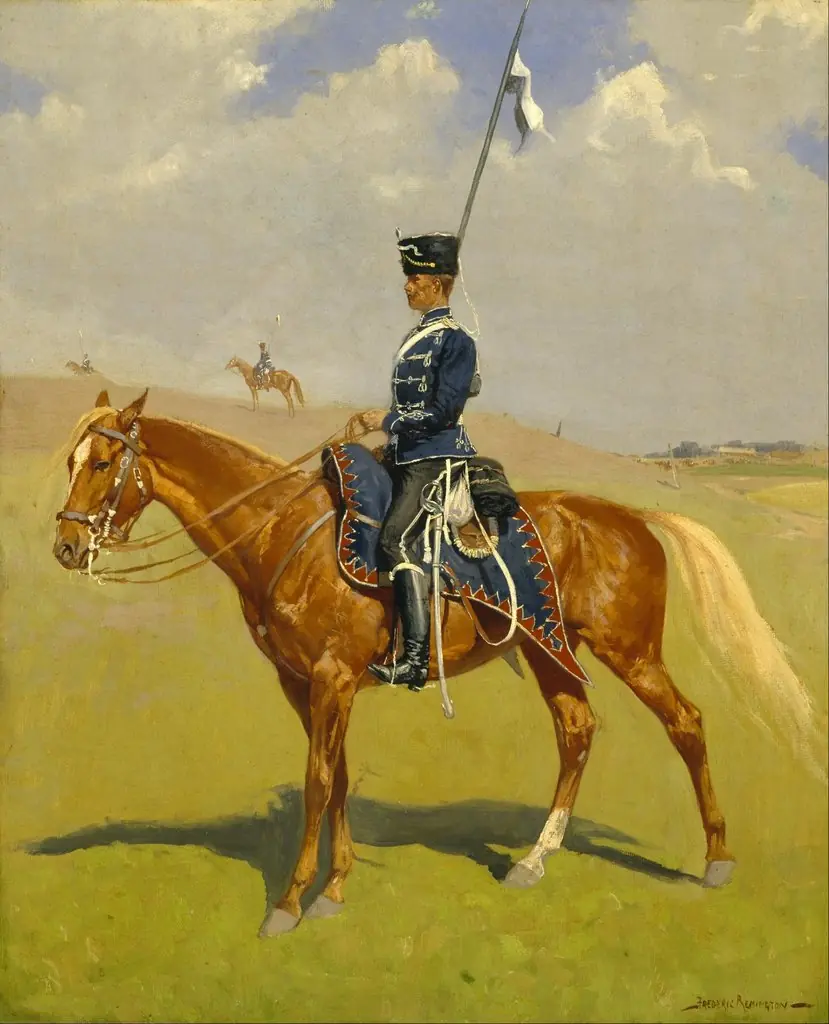
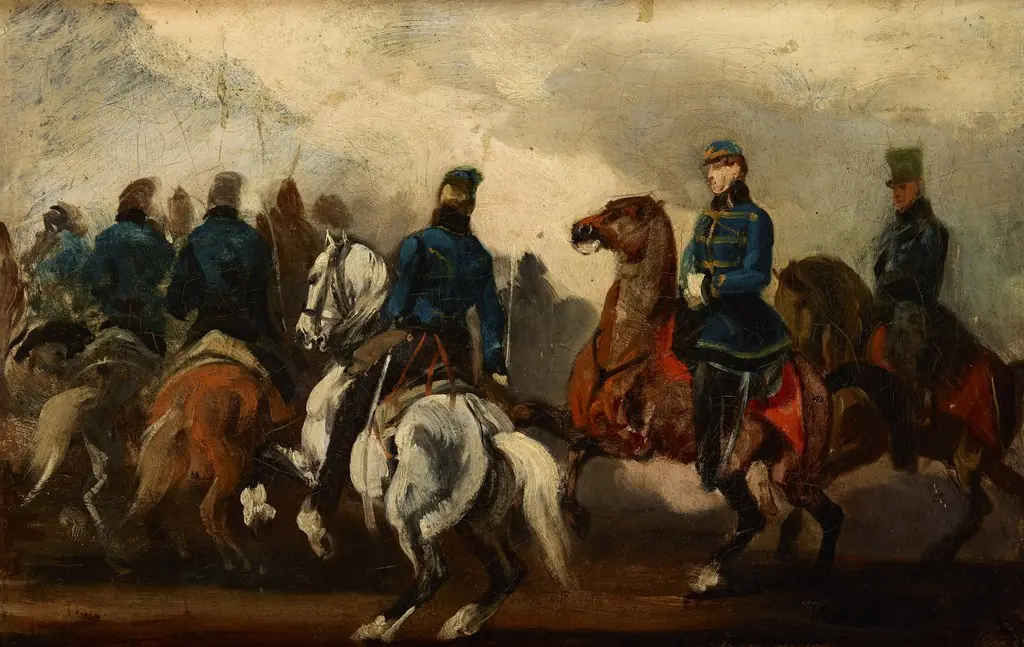
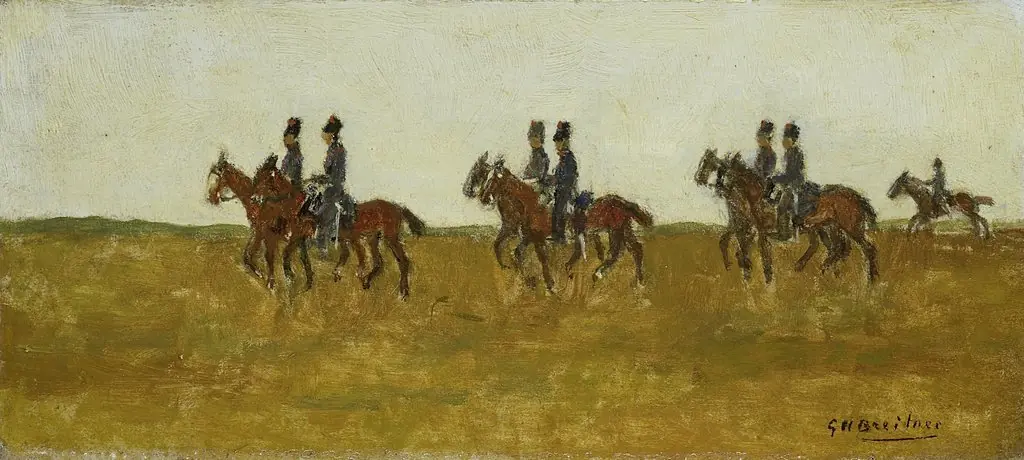
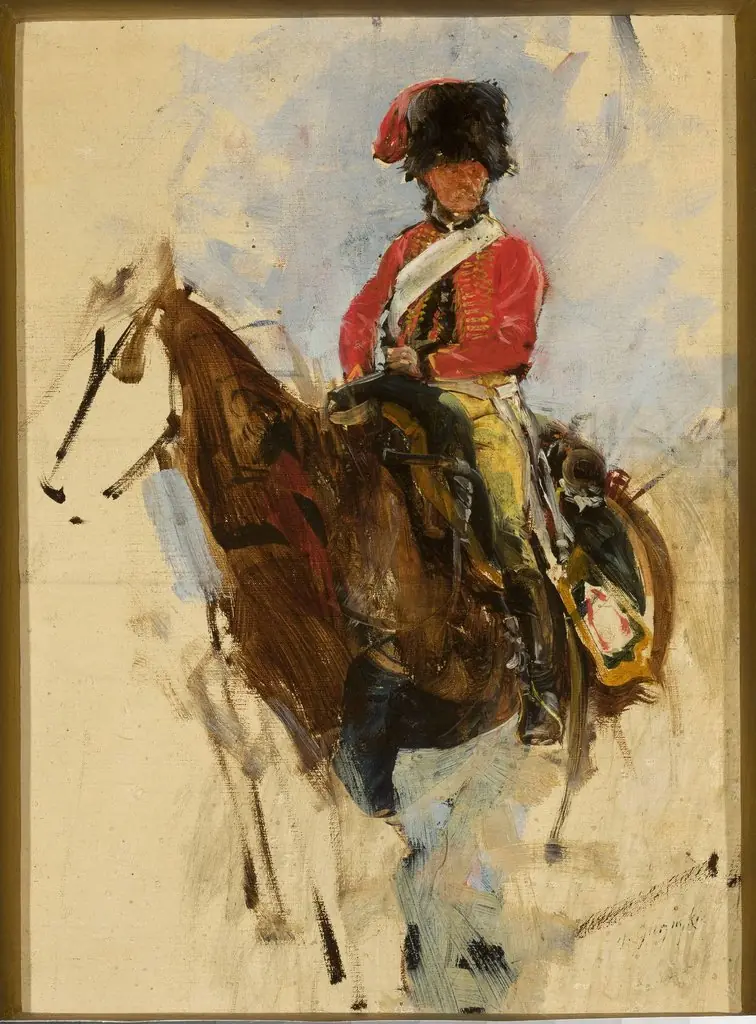
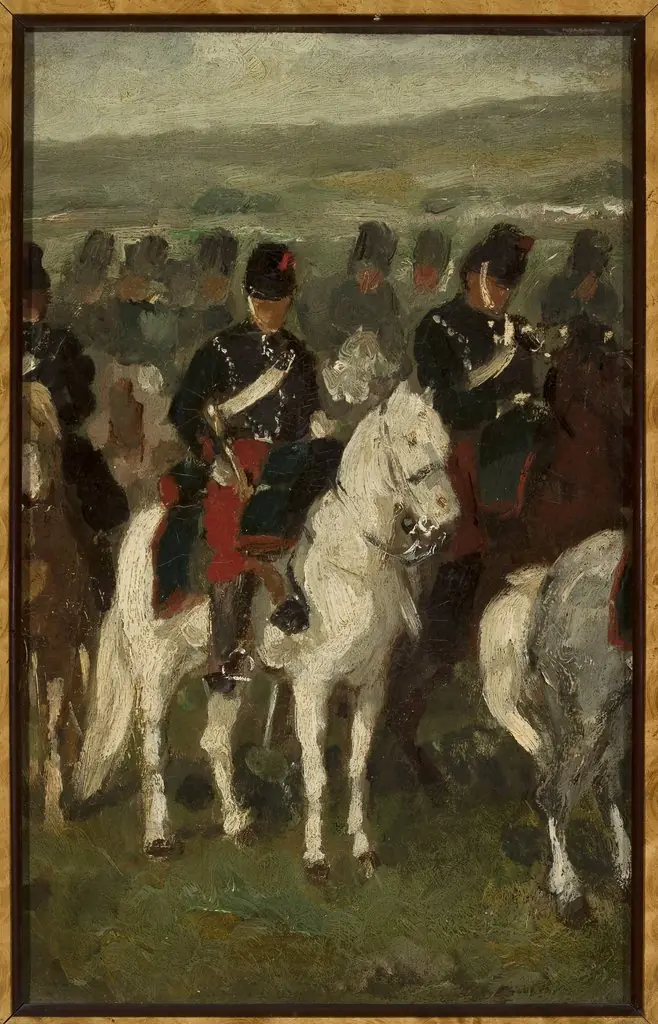
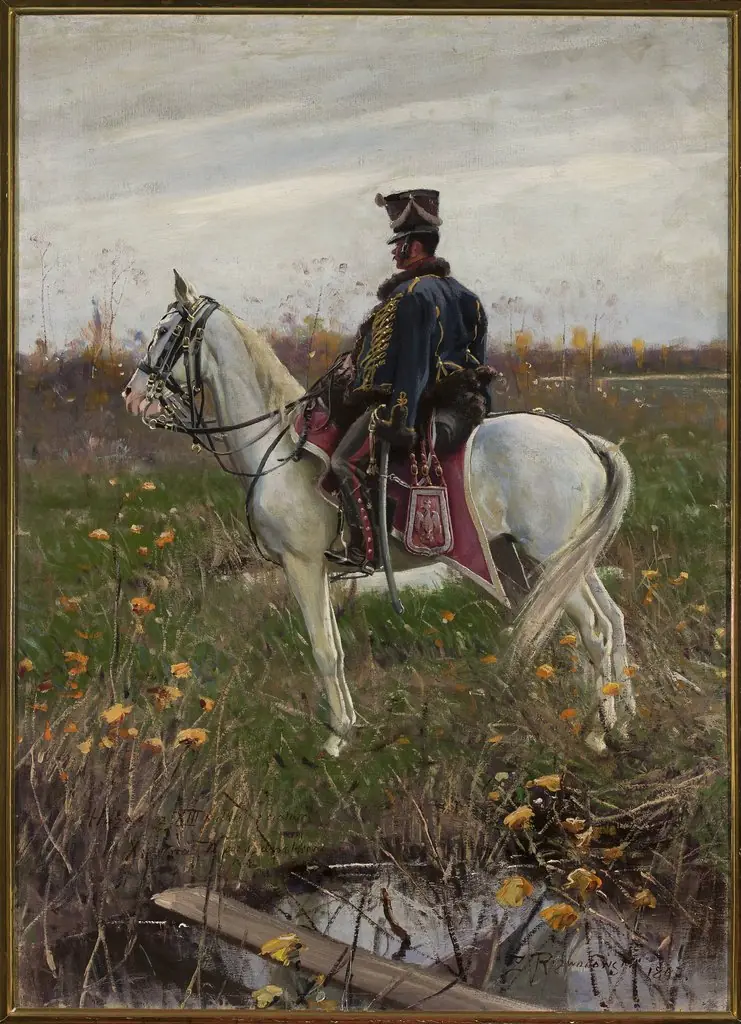
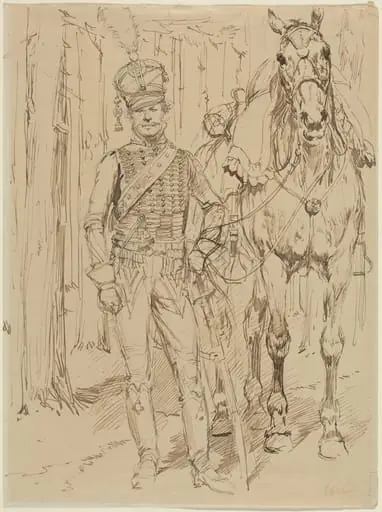
Hussars is an oil painting by the Impressionist artist Henri de Toulouse-Lautrec. It dates from 1878 and is held in the collection of the National Gallery of Art.
About this work
Technique & Style
The hussar subject is rendered in a restrained palette of muted browns and blacks, punctuated by the figure's white collar and the red cuffs of the uniform.
The painting employs oil on canvas, executed in Lautrec's early figural style with crisp contours and flat, decorative color areas. The hussar subject is rendered in a restrained palette of muted browns and blacks, punctuated by the figure's white collar and the red cuffs of the uniform. Handling is precise, with careful attention to the cut of the military coat and the sheen of the helmet, indicating a focus on the sitter's social identity over painterly bravura.
No specific condition information is provided in the cited sources.
History & Provenance
Painted in 1878, Toulouse-Lautrec's Hussars entered the artist's family circle early in its history; it is recorded in the corpus as belonging to the Comtesse de Toulouse-Lautrec. By the early twentieth century the work had passed to M. Salavin in Paris. It subsequently entered a private collection before being acquired by Mr. and Mrs. Paul Mellon, Upperville, Virginia.
In 1994 the Mellons donated the painting to the National Gallery of Art, Washington, D.C., where it remains in the permanent collection.
Henri de Toulouse-Lautrec's painting Hussars is held in the collection of the National Gallery of Art in Washington, D.C. The work entered the museum's holdings in 1994 as a gift from Mr. and Mrs. Paul Mellon of Upperville, Virginia. Prior to this donation, the painting was part of the Mellon family collection. Its provenance traces back through M. Salavin in Paris to the Comtesse de Toulouse-Lautrec. The National Gallery of Art maintains the work as part of its permanent collection.
Overview
Painted by Henri de Toulouse-Lautrec in 1878, Hussars is an oil-on-canvas portrait. This early work depicts a cavalry soldier, a hussar, in an informal setting. The painting reflects a departure from academic conventions, aligning with the emerging Post-Impressionist movement.
It offers a more personal and less idealized representation of its subject, foreshadowing the artist's later focus on individual character rather than grand narratives.
Subject & Meaning
The artwork portrays a cavalry officer in a bright red uniform, seated casually with his shoulders slumped and black boots propped on a table. This relaxed, almost weary posture, combined with his face half-obscured by shadow, contrasts sharply with traditional heroic military portraiture. The depiction suggests a focus on the human experience of the soldier rather than an idealized image of martial valor, presenting a more intimate view.
Context
This painting dates to an early period in Henri de Toulouse-Lautrec's career, preceding his later fame for documenting Parisian nightlife, including its brothels and marginalized communities. Born into French aristocracy, Toulouse-Lautrec's artistic development in the late 1870s shows an early inclination towards individualized portraiture. Hussars represents a foundational step in his artistic journey, distinct from the themes that would define his mature output.
Own this work as a print
Artist & collection
Artist
Comte Henri Marie Raymond de Toulouse-Lautrec-Montfa (24 November 1864 – 9 September 1901), known as Toulouse-Lautrec (French: ), was a French painter, printmaker, draughtsman, caricaturist, and illustrator.