Artwork
Dance at Bougival
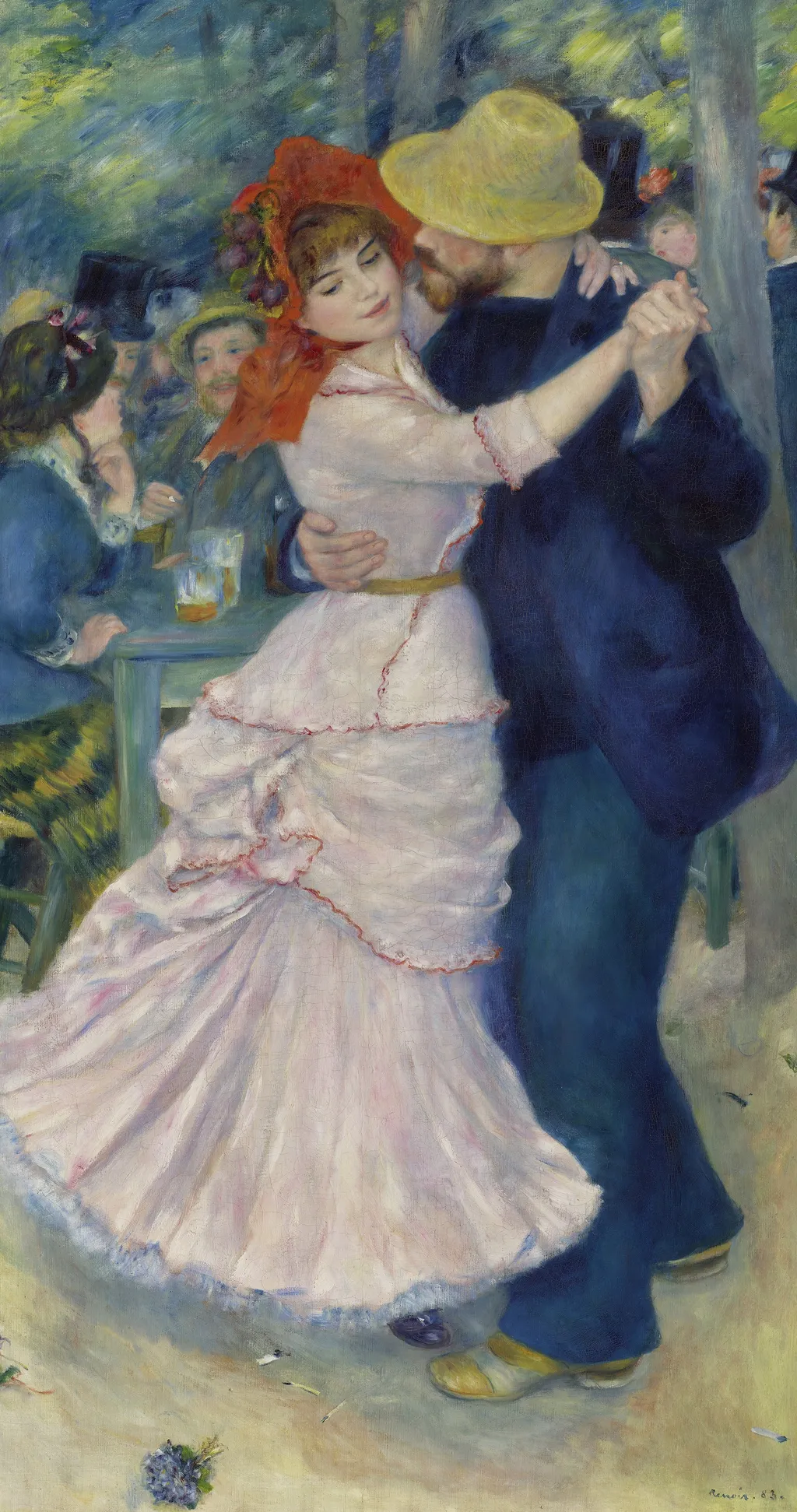
Dance at Bougival is an oil painting by the Impressionist artist Pierre-Auguste Renoir. It dates from 1892 and is held in the collection of the Museum of Fine Arts Boston.
About this work
Subject & Meaning
Painted in 1883, this work depicts an informal outdoor dance in the French village of Bougival, featuring a couple in motion surrounded by café patrons.
Painted in 1883, this work depicts an informal outdoor dance in the French village of Bougival, featuring a couple in motion surrounded by café patrons. The central figures are widely identified as Renoir's friends, the artist Suzanne Valadon and Paul Lhote, though some scholarship suggests the male model may be Hippolyte-Alphonse Fournaise or that the female figure combines features of Valadon and Renoir's wife, Aline Charigot. Iconographically, the painting contrasts the woman's pale pink dress and vibrant red hat against the man's deep blue suit, set within a rustic environment of yellow-green tones.
As part of a commissioned triptych including dances in the city and country, this scene represents a specific stratum of Parisian leisure, capturing a whimsical, lively moment of social interaction. The work signifies a transitional phase in Renoir's career, blending Impressionist light with a renewed classical interest in figure definition.
Technique & Style
The 1883 work is an oil‑on‑canvas painting measuring about 182 × 98 cm. It is executed on a stretched canvas with loose brushwork that conveys movement and captures light on the figures. Renoir employed a pastel palette, using contrasting colors such as a deep blue suit and a pink dress, and required little preparatory sketching before applying paint. The surface remains in stable condition within the Museum of Fine Arts, Boston.
Stylistically the piece reflects Renoir’s shift toward a more classical composition while retaining Impressionist vibrancy, blending his Italian training with contemporary genre scenes.
History & Provenance
Painted in 1883, Dance at Bougival was created during a highly productive period between January and April of that year, when Pierre-Auguste Renoir produced three related dance paintings for the dealer Paul Durand-Ruel. Originally titled La danse à la campagne, the work depicts an informal outdoor dance scene in the village of Bougival. The painting entered the collection of the Museum of Fine Arts, Boston, in 1937, having previously been owned by the collector François Depeaux.
Depeaux acquired the piece in 1894 from Durand-Ruel. The museum purchased the canvas for $150,000. Prior to its arrival in Boston, the work was exhibited in London shortly after its completion and later in New York in 1886, where it received critical acclaim before traveling to Paris in 1892.
Dance at Bougival is held in the collection of the Museum of Fine Arts, Boston, where it is recorded under accession no. 37.375. The painting was purchased by the museum in 1937 for $150,000. It has been exhibited internationally, including at the Kyoto National Museum in the traveling exhibition Discovering the Impressionists: Paul Durand-Ruel and the New Painting.
The work was also shown in London shortly after its creation and in New York in the spring of 1886, where it received notable praise.
Context
Dance at Bougival is widely regarded as Renoir’s culminating Impressionist statement on Parisian leisure, marking both an apex and a turning point in his oeuvre. Completed in 1883 as part of a commissioned trio for dealer Paul Durand-Ruel, the painting’s lively brushwork and luminous palette epitomize the movement’s plein-air ethos while signaling Renoir’s imminent stylistic shift. Critics such as Colin B. Bailey interpret the work as the close of a decade-long immersion in Impressionism, noting its synthesis of outdoor immediacy with classical figural ambition learned in Italy.
The composition’s near-life-size dancers, rendered in pastel tones punctuated by vibrant hat hues, exemplify Renoir’s technical assurance during this prolific three-month period. Scholars also highlight its transitional role: while retaining Impressionist colorism, the painting introduces the more deliberate draftsmanship and structured modeling that would define his post-Impressionist ‘aigre’ phase. Its inclusion in major early exhibitions, praised in London and New York by the Academy and other journals, cemented its status as a defining work of the era.
Legacy
Dance at Bougival has been widely celebrated as one of the Museum of Fine Arts, Boston’s most beloved works since its acquisition, reflecting its enduring popular appeal and status as a touchstone of Impressionist genre painting. Its influence extends beyond museum walls through major exhibitions: it was prominently featured in Discovering the Impressionists: Paul Durand-Ruel and the New Painting at the Kyoto National Museum, underscoring its role in narratives of Impressionist dissemination. Critical and public reception has consistently emphasized the painting’s dynamic composition and lifelike energy, qualities that have cemented its reputation as a defining example of Renoir’s late Impressionist phase.
While later critics have situated the work within broader discussions of Parisian leisure culture, its legacy endures primarily as a consummate expression of the movement’s synthesis of classical form and luminous color.
Overview
Pierre-Auguste Renoir's 1883 oil-on-canvas work, Dance at Bougival, captures a lively moment. This painting, depicting a social scene, is housed in the Museum of Fine Arts in Boston, Massachusetts. It remains a notable example of Renoir's Impressionist style, showcasing his characteristic approach to depicting contemporary life and leisure.
Artist & collection
Artist
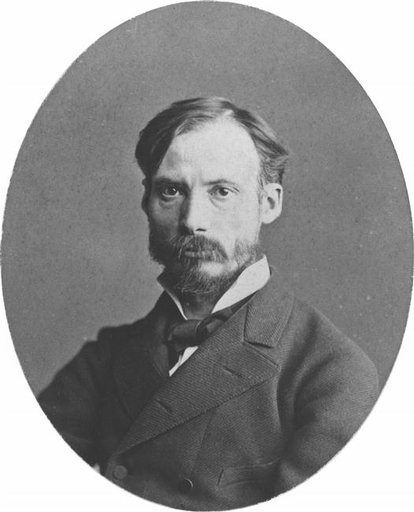
Pierre-Auguste Renoir was a French artist who was a leading painter in the development of the Impressionist style.