Artwork
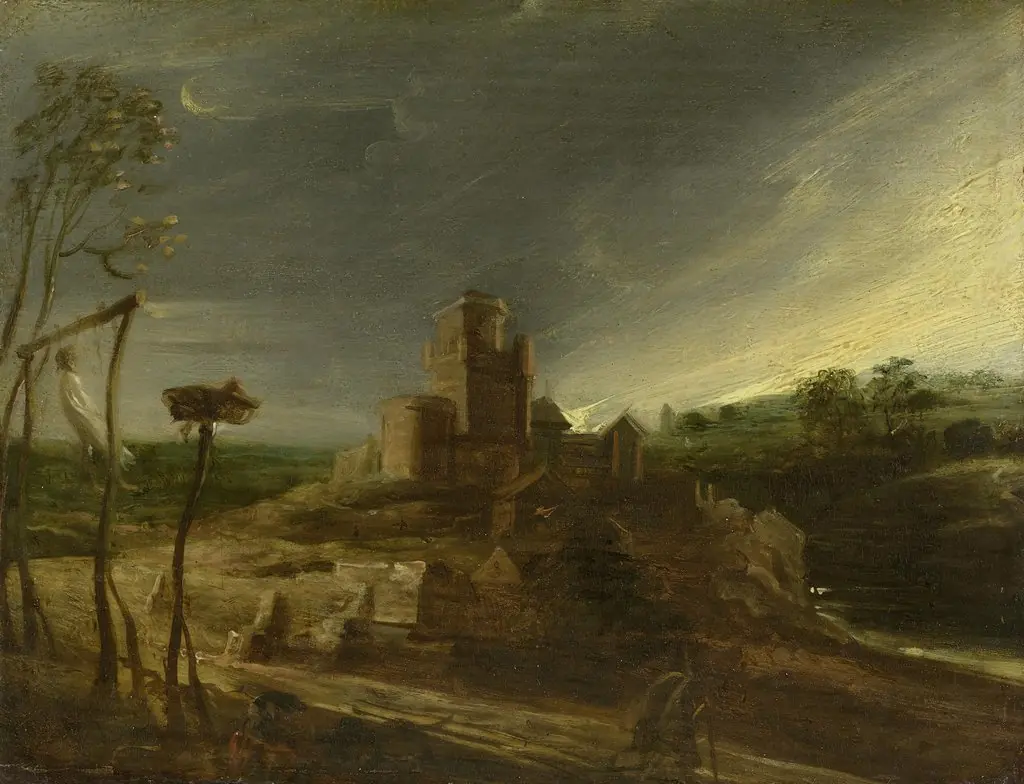
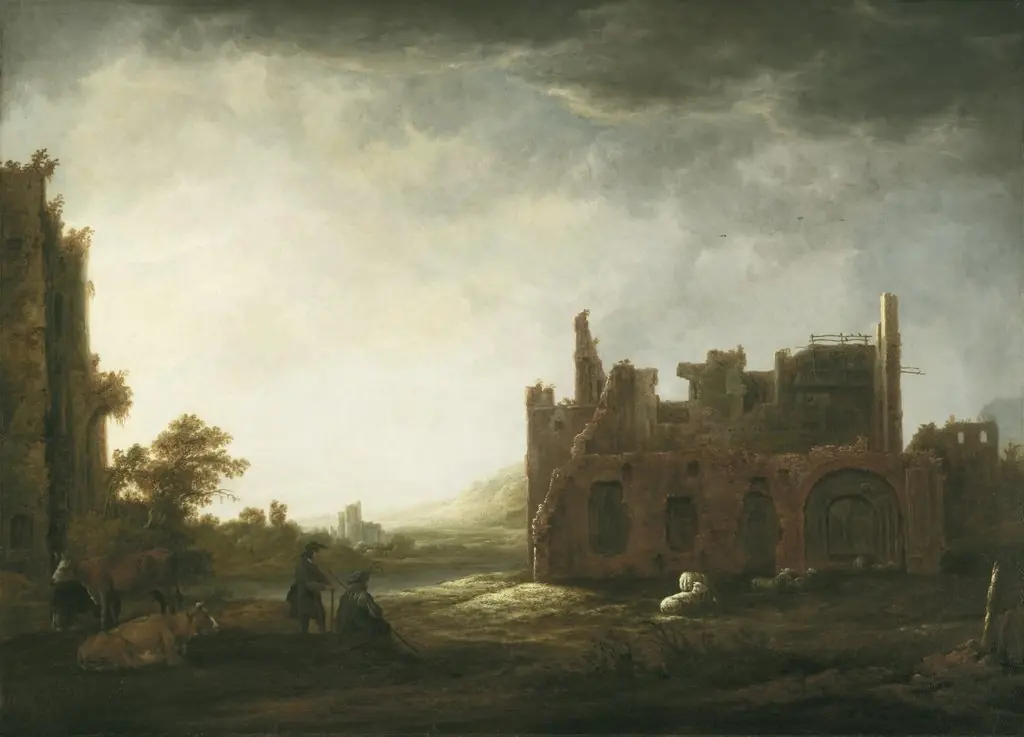
Landscape with Castle
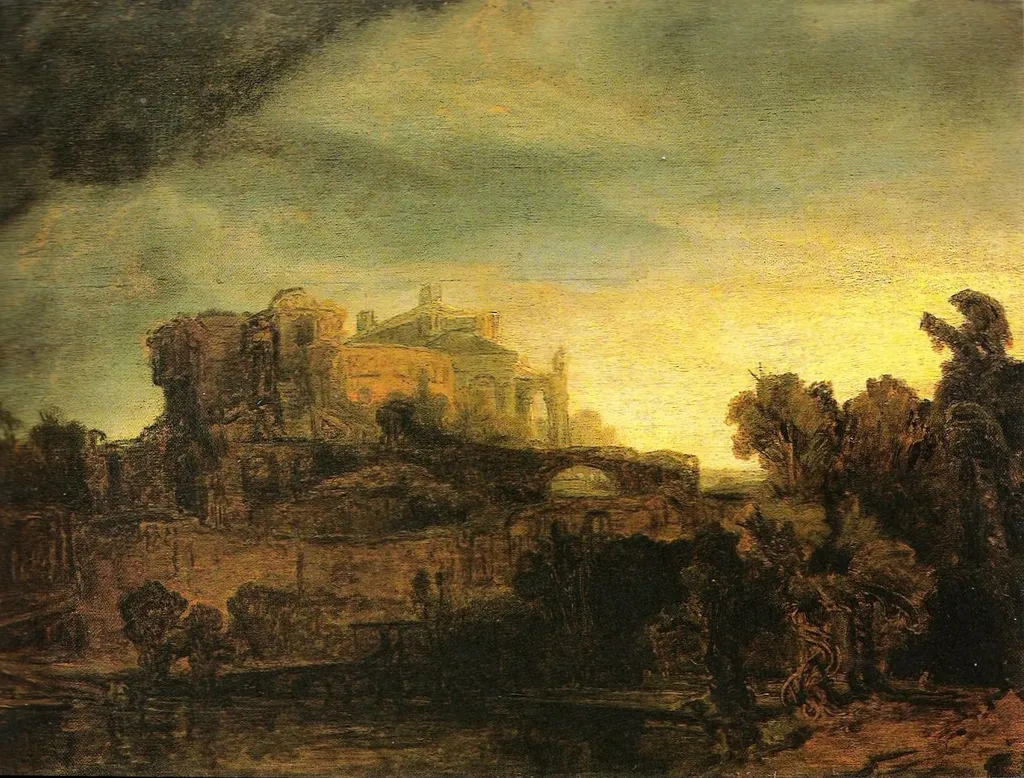
Landscape with Castle is an oil painting by Rembrandt van Rijn. It dates from 1625 and is held in the collection of the Führermuseum.
About this work
Art historians have debated its exact date, offering a range of possibilities from the early 1640s to the mid‑1650s.
Landscape with Castle is a 1641 work by Rembrandt. It’s a wood painting that shows a scene with a castle set in a landscape.
Art historians have debated its exact date, offering a range of possibilities from the early 1640s to the mid‑1650s. The painting is part of the collection at the State Hermitage Museum.
If you’re curious about more works in the same setting, check out the subject landscape.
Subject & Meaning
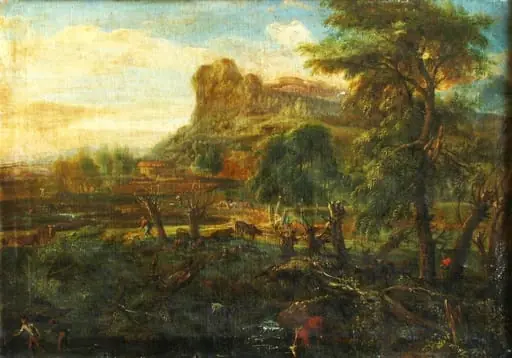
The painting shows a wooded landscape dominated by a large imagined castle on a hill, a motif that symbolizes a generic, timeless setting rather than a specific location. Art historians agree on Rembrandt’s authorship but dispute the date, ranging from the early 1640s to the mid‑1650s, with most attributions clustering around 1640‑1642 and later proposals near 1652‑1654. The work entered a Dutch private collection in 1692, passed through the hands of Jan Pieter van Suchtelen and later Pavel Stroganov before being seized by the Soviet state, sold secretly in the 1930s, and eventually acquired by Adolf Hitler for his Führermuseum.
After World War II it was restituted to the original owner and donated to the Louvre in 1948.
Technique & Style
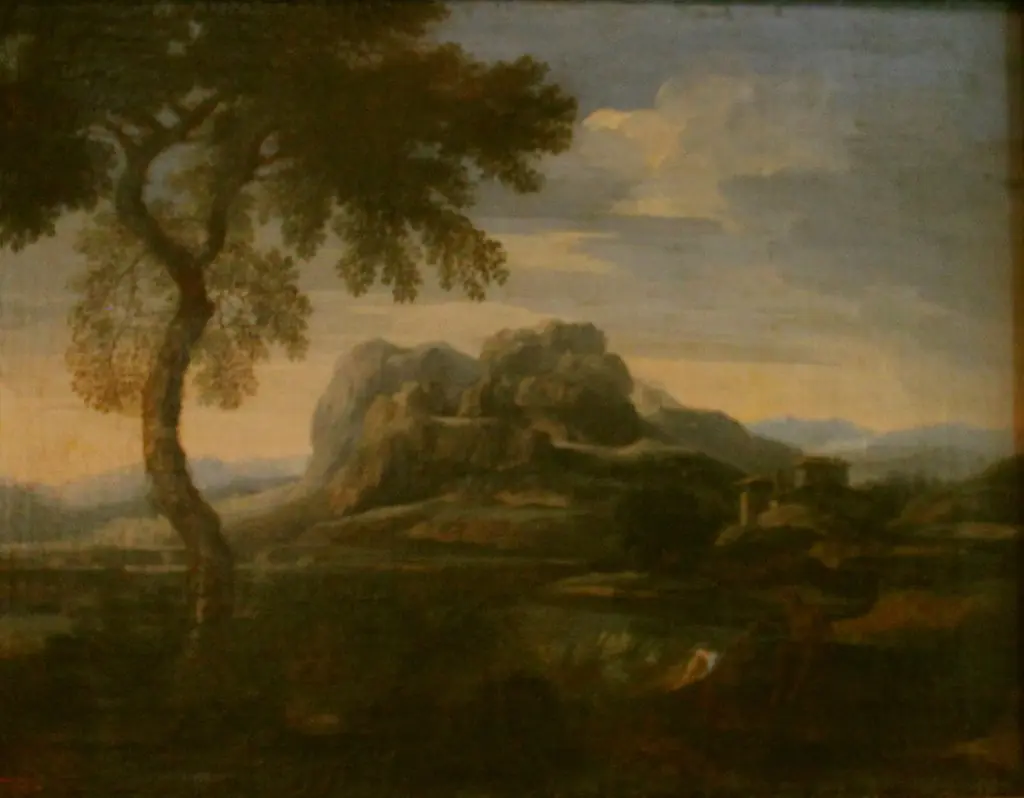
Landscape with Castle is executed in oil paint on a wooden panel support. The composition depicts a wooded landscape dominated by an imaginary castle situated on a hill, accompanied by broad-leaved trees and a bridge. While the specific handling of the brushwork is not detailed in available records, the work is formally classified as a landscape painting.
The piece bears the inventory number of the Führermuseum on its reverse side, a remnant of its history during the Second World War before its eventual donation to the Louvre.
History & Provenance
The painting’s earliest documented appearance is in the 1692 inventory of Geertruyt Brasser in Delft, described as “a castle by Rembrandt.”
By the eighteenth century it belonged to Jan Pieter van Suchtelen, a Russian general of Dutch origin. In 1859 his heirs sold it to Pavel Stroganov in St Petersburg. After Stroganov’s death in 1911, the work passed to his great‑niece’s children, Vladimir and Aleksandra Shcherbatov, who were murdered by the Bolsheviks in 1920.
Nationalized in 1917, it was transferred to the Hermitage by 1925. In about 1932 the Soviet authorities sold it secretly, likely through Wildenstein & Company, to the Parisian collector Étienne Nicolas, who first recorded it in 1935.
In 1942 Nicolas sold the work, alongside Rembrandt’s Portrait of Titus, to Adolf Hitler via the Berlin dealer Karl Haberstock for sixty million francs, intending it for the Führermuseum in Linz. After the war it was restituted to Nicolas and, in 1948, donated to the Louvre, where it remains (inv. RF 1948‑35).
The painting is held in the Louvre, Paris, with inventory number RF 1948-35. It entered the museum’s holdings in 1948 as a gift from Étienne Nicolas.
Its exhibition history includes display in the Führermuseum’s planned Linz installation during the Second World War, evidenced by an inventory number on the reverse. After restitution, it was returned to Nicolas and subsequently donated to the Louvre in 1948.
Context
Landscape with a Castle is unanimously attributed to Rembrandt, though art historians have proposed widely varying dates for its creation, ranging from the early 1640s to 1654. Scholars such as Abraham Bredius, Horst Gerson, and Christian Tümpel favor a date around 1640, while others like Rein van Eysinga and Frederik Schmidt-Degener argue for the early 1650s. The work depicts an imaginary castle on a hill rather than a specific real-world location, reflecting Rembrandt's engagement with the landscape genre during his early to middle career.
Its scholarly significance is further underscored by its complex 20th-century provenance, which includes its seizure by the Soviet state, its sale to Étienne Nicolas, and its acquisition by Adolf Hitler for the planned Führermuseum before being returned to France and donated to the Louvre in 1948.
Overview
Landscape with Castle is a painting on wood, attributed to Rembrandt, depicting a castle within a landscape setting. The exact date of creation is uncertain, with scholarly estimates spanning from the early 1640s to the mid-1650s.
Legacy
Despite its tumultuous history, Landscape with Castle remains a significant part of Rembrandt's oeuvre, valued for its representation of his landscape technique. However, its current location, as per the latest provided information, seems to be inaccurately noted between the State Hermitage Museum and post-WWII return to France, highlighting a need for clarification in its present whereabouts.
Artist & collection

Artist
Rembrandt Harmenszoon van Rijn, known mononymously as Rembrandt, was a Dutch Golden Age painter, printmaker, and draughtsman.