Artwork
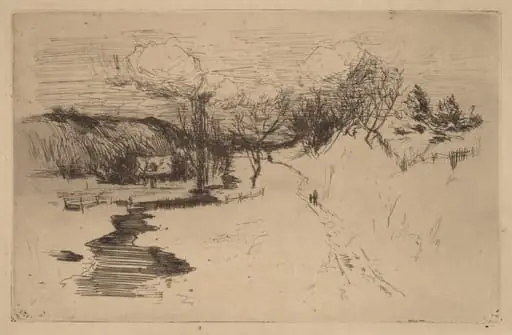
Autumn Avondale
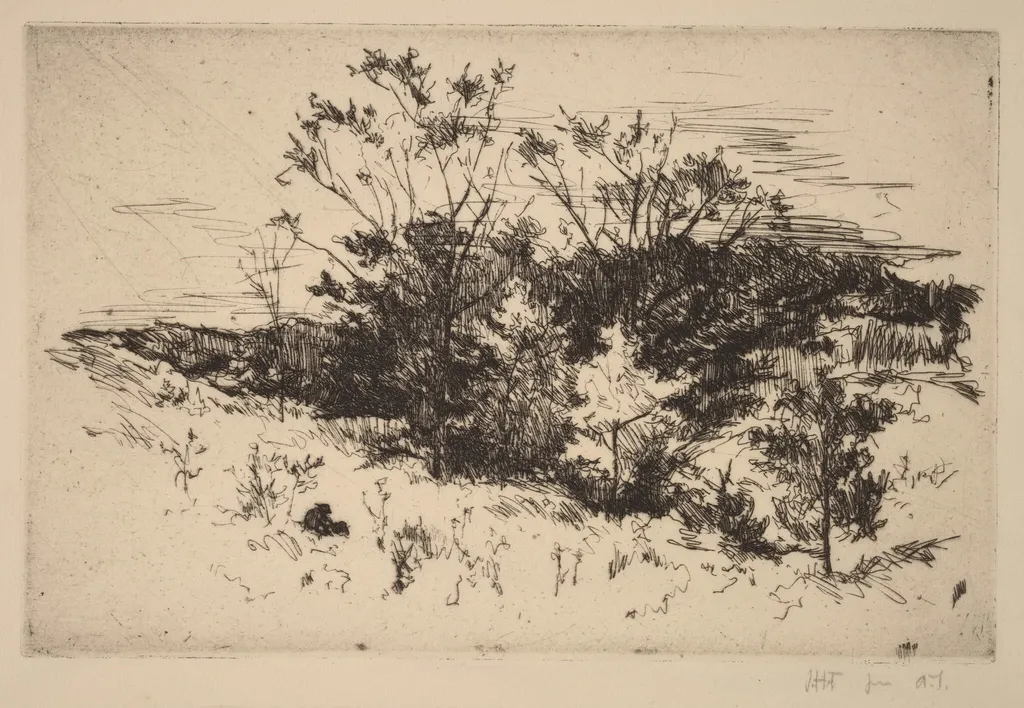
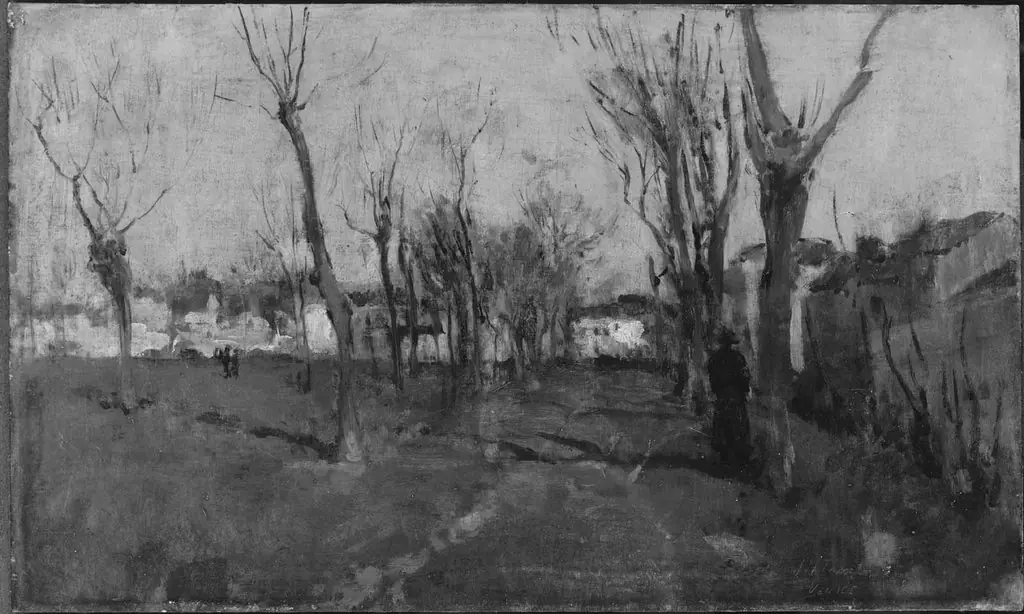
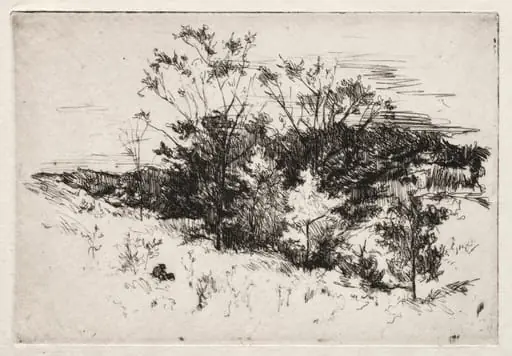
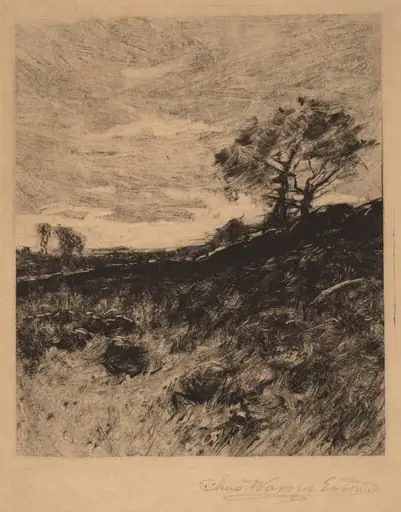
Autumn Avondale is an ink print by the Impressionist artist John Henry Twachtman. It dates from 1880 and is held in the collection of the National Gallery of Art.
- Inscription
- Inscribed:lower right in graphite: J.H.T. (not deciphered) A.T.; lower left corner in graphite by unknown hand: T22
- Markings
- Marked:RCK stamp
About this work
Overview
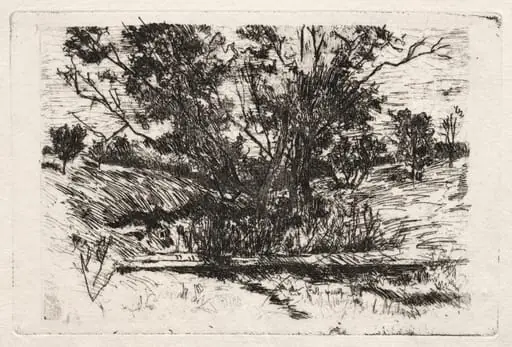
Autumn Avondale is a black-and-white etching by John Henry Twachtman, dated around 1880. Executed on wove paper, the print captures a solitary tree in late season, its branches starkly outlined against an empty field. The work belongs to the printmaking tradition of the American Barbizon school, emphasizing quiet naturalism over dramatic composition.
Subject & Meaning
The subject is a bare deciduous tree in autumn, stripped of foliage and standing alone in a muted landscape. The absence of human presence or architectural elements focuses attention on the tree’s skeletal form and the scattered debris beneath it. The composition suggests transience, evoking the quiet decay of the season without sentimentality.
Technique & Style
Twachtman employed etching to create a textured, linear surface by incising lines into a metal plate. The ink was applied unevenly, resulting in scratchy, overlapping strokes that mimic the spontaneity of a sketch. The roughness of the lines and the blurred edges reflect an intentional departure from polished engraving, favoring immediacy and tactile presence.
History & Provenance
Created during Twachtman’s formative years in Connecticut, the print reflects his engagement with European print traditions and American landscape observation. It was likely produced for private circulation among artists and collectors rather than mass publication. Its survival in museum collections underscores its role in documenting late 19th-century American printmaking practices.
Context
In the 1880s, American artists were turning away from grand historical narratives toward intimate, everyday scenes. Twachtman’s etching aligns with this shift, echoing the tonal subtleties of French Barbizon painters. His focus on seasonal change and unidealized nature positioned him as a bridge between European realism and emerging American Impressionism.
Legacy
Autumn Avondale exemplifies Twachtman’s contribution to elevating etching as a medium for personal expression in American art. Its unpolished aesthetic influenced later printmakers who valued emotional resonance over technical refinement. The work remains a quiet testament to the artist’s sensitivity to nature’s ephemeral qualities.
Own this work as a print
Artist & collection
Artist
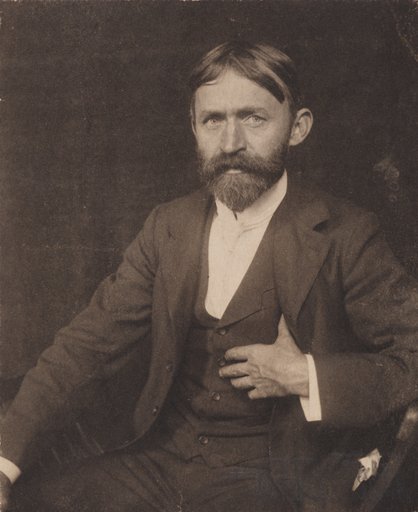
John Henry Twachtman was an American painter best known for his impressionist landscapes, though his painting style varied widely through his career.