Artwork
叭々鳥図屏風|Mynah Birds
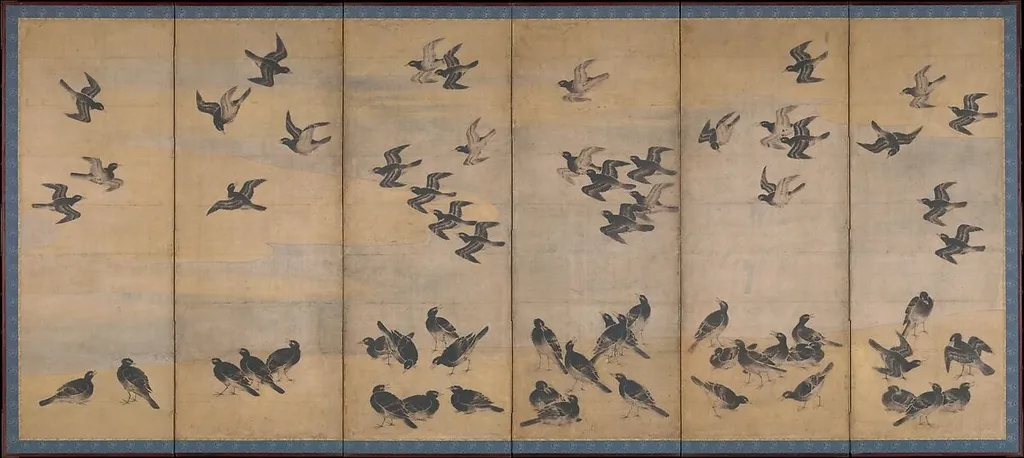
叭々鳥図屏風|Mynah Birds is an ink painting by the Baroque artist Unknown. It dates from 1617 and is held in the collection of the Metropolitan Museum of Art. A pair of six-panel folding screens depicts mynah birds in varying states of motion and rest.
About this work
Overview
The birds are distributed across a pale background marked by subtle gold lines, suggesting atmospheric space rather than a defined landscape.
A pair of six-panel folding screens depicts mynah birds in varying states of motion and rest. Executed in ink, color, and gold on paper, the work balances naturalistic detail with decorative abstraction. The birds are distributed across a pale background marked by subtle gold lines, suggesting atmospheric space rather than a defined landscape.
The screens were designed for intimate, domestic display, meant to be folded and arranged within a room rather than mounted as wall art.
Subject & Meaning
Mynah birds, often associated with vitality and communication in East Asian visual culture, are rendered in flight and repose. The contrast between dynamic airborne forms and grounded, still figures may imply a rhythm of movement and stillness, perhaps evoking natural cycles or contemplative balance. No narrative or symbolic text accompanies the imagery, leaving interpretation open to the viewer’s observation of the birds’ behavior and placement.
Technique & Style
The artist employed ink washes and layered pigments to differentiate the birds’ plumage, creating tonal variation without outlines. Gold lines, faintly drawn, suggest light or spatial depth without overwhelming the composition. Cross-hatching and controlled brushwork define feathers and branches, emphasizing texture through line rather than solid color. The style blends observational precision with decorative restraint, typical of late Muromachi-period bird-and-flower painting.
History & Provenance
The screens likely originated in Japan during the late 15th or early 16th century, a period when folding screens were commonly commissioned for aristocratic residences. Their survival suggests they were carefully preserved, possibly within temple or noble households. No documented provenance is available prior to modern museum acquisition, but their material and format align with known works from Kyoto-based ateliers of the time.
Context
Folding screens in this era often served as room dividers or backdrops for tea ceremonies and private study. Bird-and-flower themes were popular in ink painting, reflecting Zen-influenced appreciation for nature’s quiet moments. Unlike Western bird studies focused on taxonomy, these works emphasized harmony, movement, and the aesthetic potential of spontaneous brushwork within a structured format.
Legacy
The screens exemplify a tradition of bird painting that influenced later Edo-period artists and continue to inform contemporary interpretations of Japanese ink aesthetics. Their restrained use of gold and emphasis on tonal gradation distinguish them from more ornate decorative screens. Today, they are studied for their technical economy and the way they transform everyday natural subjects into meditative compositions.
Artist & collection









- Mynah Birds
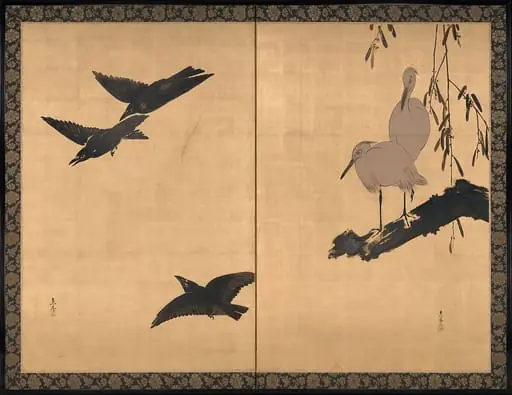 柴田是真筆 烏鷺図屏風|Egrets and Crows
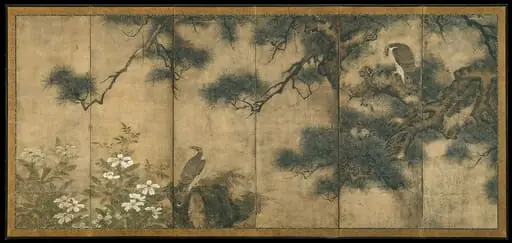 三谷等宿筆 伝三谷等宿筆 松と椿に鷹・柳と椿に小禽図屏風|Hawks with Pine Trees and Camellias; Small Birds with Willows and Camellias
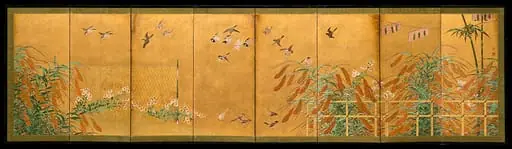 伝狩野山楽筆 粟に小禽図屏風|Autumn Millet and Small Birds
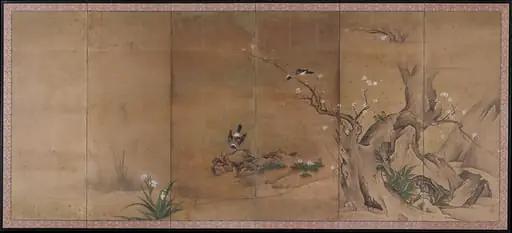 狩野山卜筆四季花鳥図屏風|Birds and Flowers of the Four Seasons
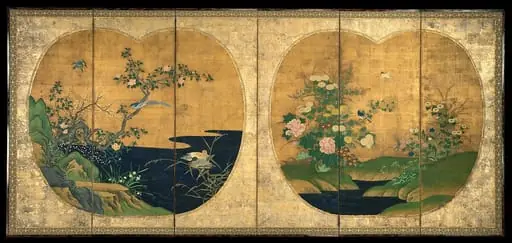 狩野周信筆 秋冬花鳥図屏風|Birds and Flowers of Autumn and Winter
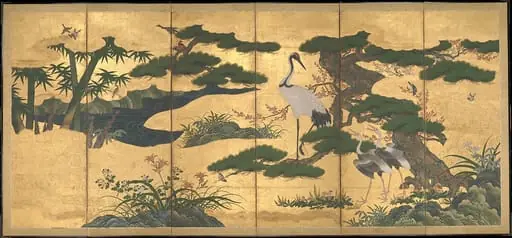 四季花鳥図屏風|Birds and Flowers of the Four Seasons
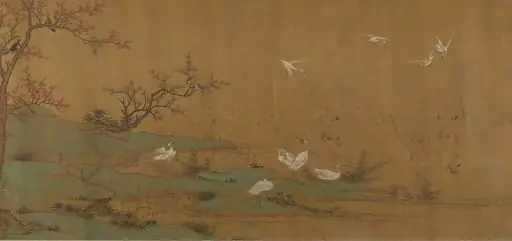 明 佚名 舊傳刁光 叢簧集羽 卷|River Scene with Birds and Bamboo