Artwork
伝狩野山楽筆 粟に小禽図屏風|Autumn Millet and Small Birds
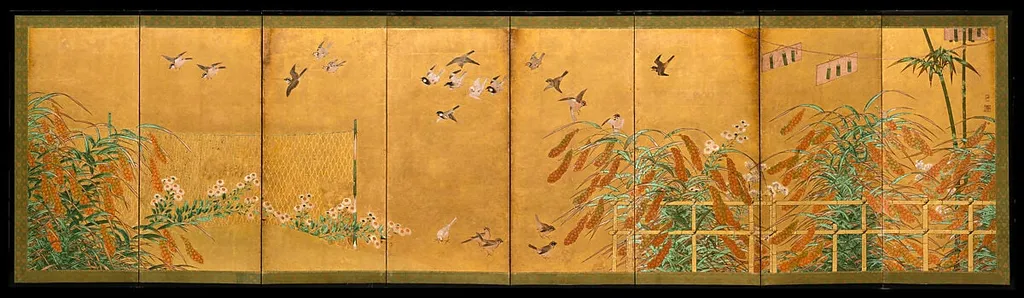
伝狩野山楽筆 粟に小禽図屏風|Autumn Millet and Small Birds is an ink painting by the Kanō school artist Kanō Sanraku. It dates from 1597 and is held in the collection of the Metropolitan Museum of Art. Autumn Millet and Small Birds is a pair of eight-panel folding screens, created in 1597, attributed to the Japanese artist Kano Sanraku.
About this work
Overview
Autumn Millet and Small Birds is a pair of eight-panel folding screens, created in 1597, attributed to the Japanese artist Kano Sanraku. The work is characterized by a dominant gold background, set with multiple, varied scenes across its panels.
Subject & Meaning
The screens juxtapose plant life with dynamic depictions of small birds in various states of flight and repose, conveying a sense of impending movement and energy amidst natural serenity.
Technique & Style
Executed in ink, color, and gold on gilt paper, the piece exemplifies traditional Japanese screen painting techniques, with the gold background unifying the diverse panel compositions.
History & Provenance
Attributed to Kano Sanraku, the screens are dated to 1597. They are currently part of the collection at The Metropolitan Museum of Art.
Context
Created during the late 16th century, the work reflects the aesthetic preferences of the period, blending natural imagery with the opulence of gold leaf, likely intended for a wealthy patron or noble setting.
Legacy
While specific influence or direct descendants in art history are not broadly highlighted, the piece remains a notable example of late 16th-century Japanese screen painting, showcasing the Kano school's influence during this era.
Artist & collection
Artist
Kanō Sanraku (狩野 山楽; 1559 – September 30, 1635) was a Japanese painter also known as Kimura Heizō (his birth name), Shūri, Mitsuyori, and Sanraku.

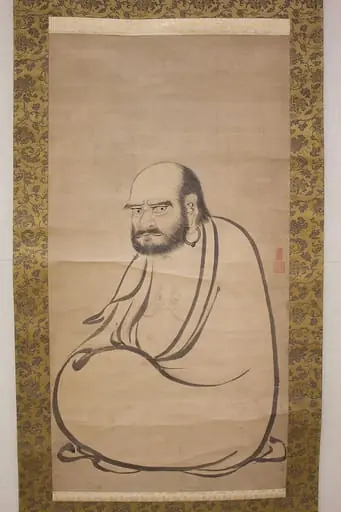
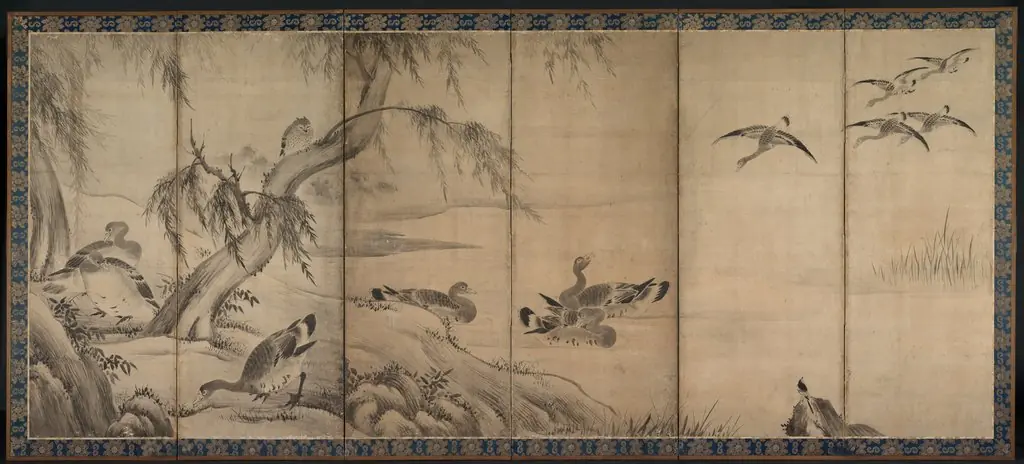
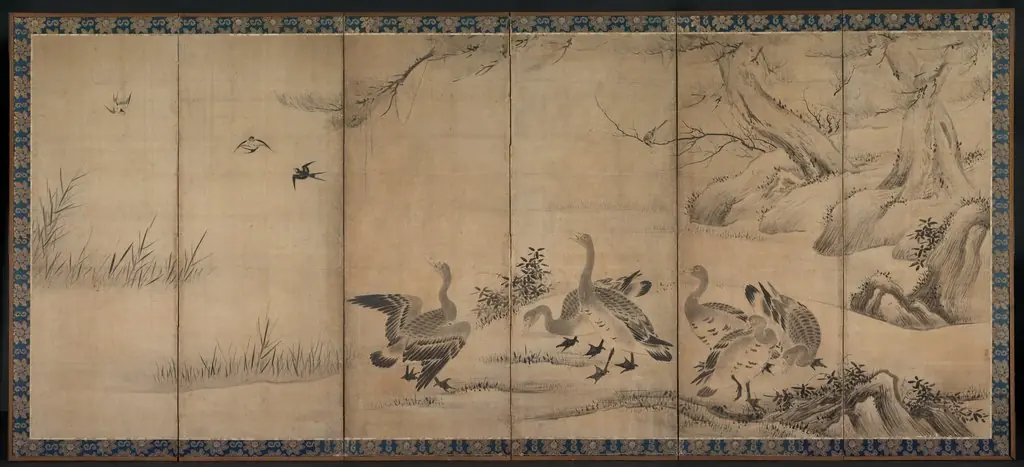
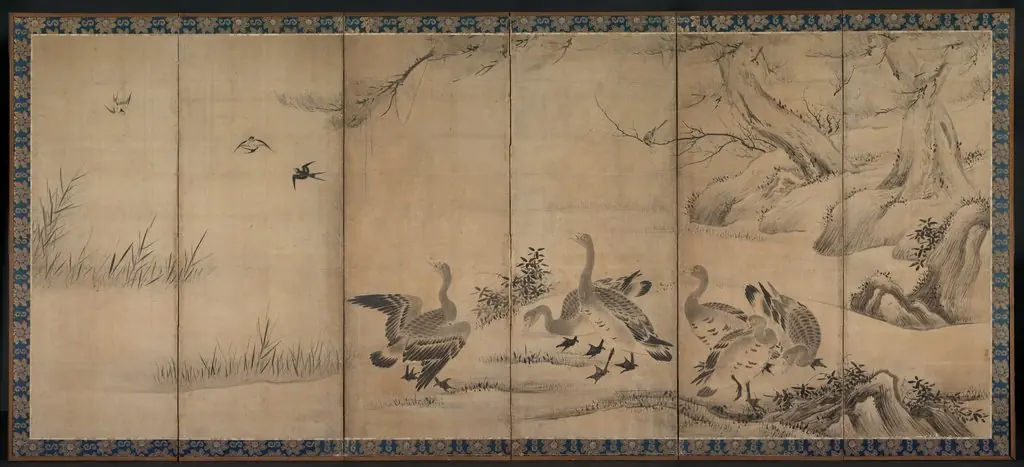
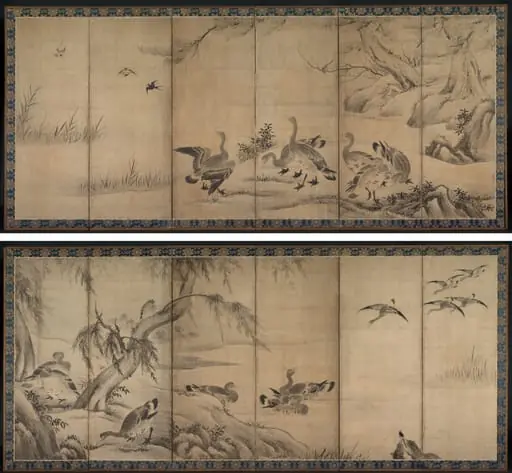
- 狩野周信筆 秋冬花鳥図屏風|Birds and Flowers of Autumn and Winter
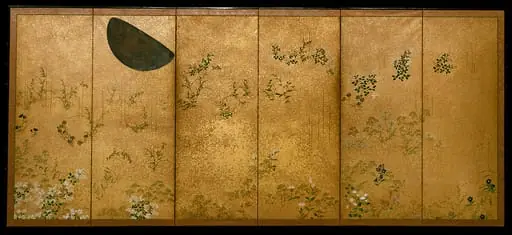 俵屋宗達工房 月に秋草図屏風|Moon and Autumn Grasses
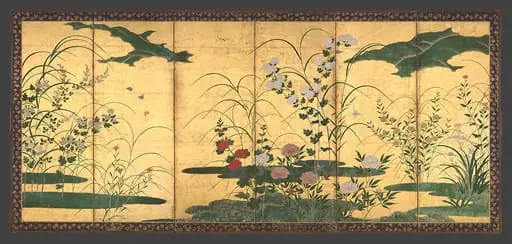 四季花草図屏風|Flowers and Grasses of the Four Seasons
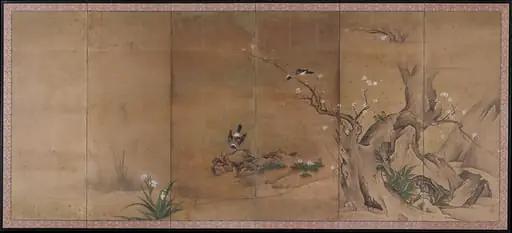 狩野山卜筆四季花鳥図屏風|Birds and Flowers of the Four Seasons
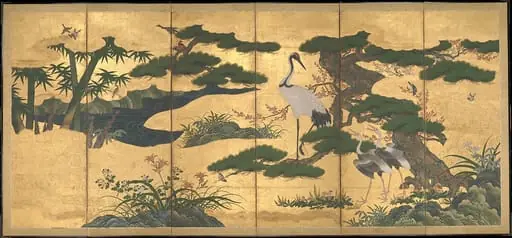 四季花鳥図屏風|Birds and Flowers of the Four Seasons
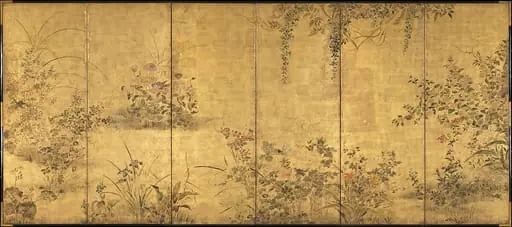 四季花野菜図屏風|Flowering Plants and Vegetables of the Four Seasons
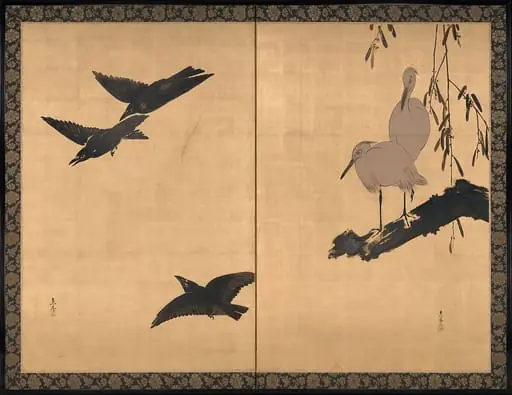 柴田是真筆 烏鷺図屏風|Egrets and Crows
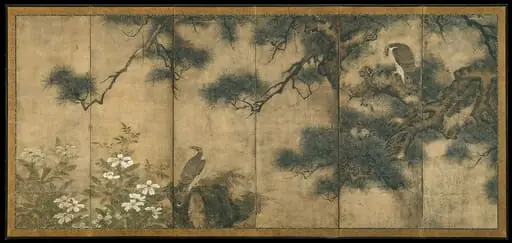 三谷等宿筆 伝三谷等宿筆 松と椿に鷹・柳と椿に小禽図屏風|Hawks with Pine Trees and Camellias; Small Birds with Willows and Camellias