Artwork
Untitled
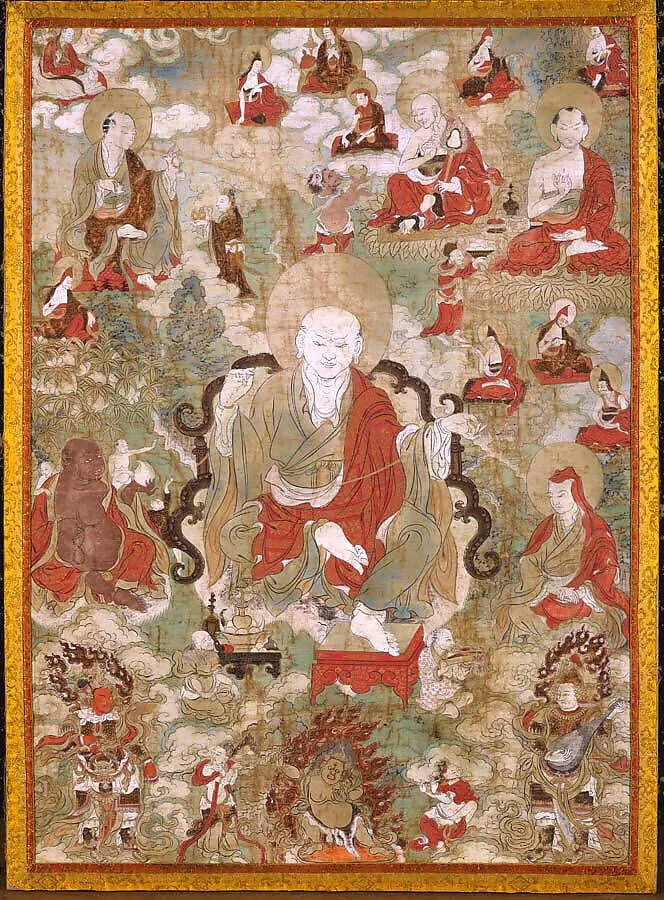
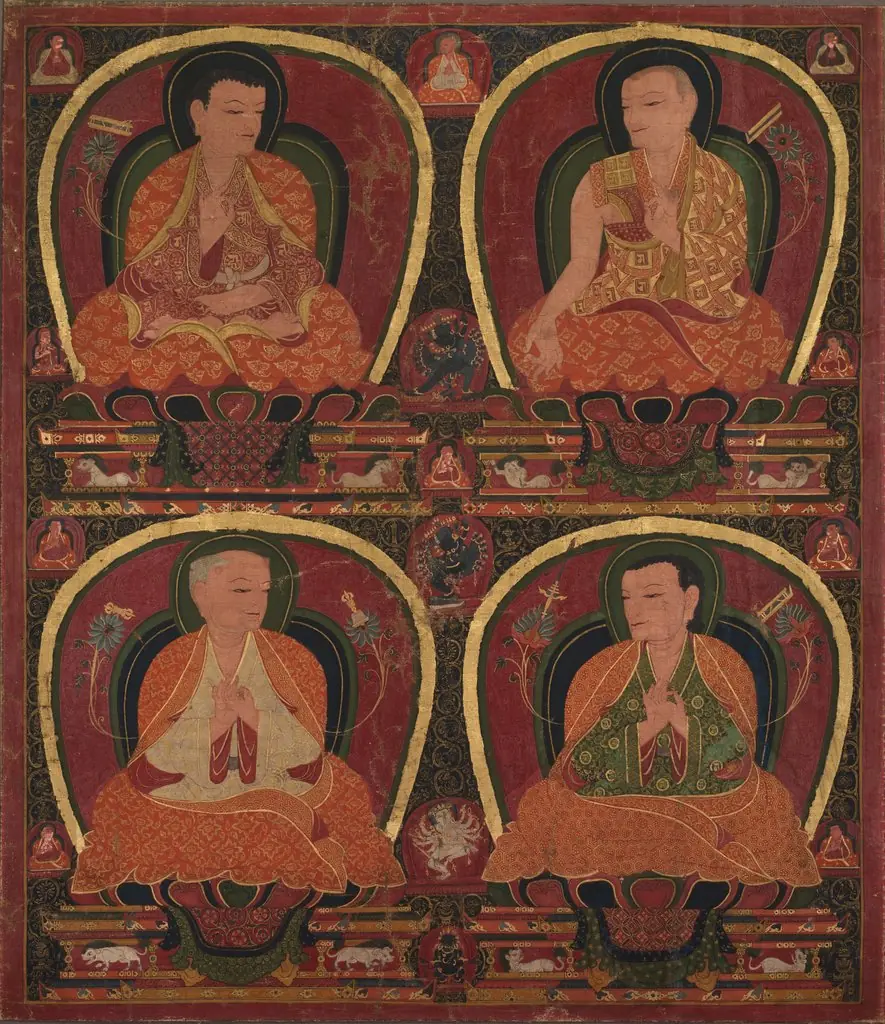
Untitled is a watercolor painting. It dates from 1506 and is held in the collection of the Metropolitan Museum of Art. The work is the side panel of a three‑part painted ensemble, executed in watercolor on linen and framed as a single unit.
About this work
Technique & Style
The panel is held in the collection of the Metropolitan Museum of Art, where it is catalogued as a painting by an anonymous maker dating to 1506.
The work is a side panel of a triptych of framed paintings, executed in watercolor on linen. Its religious subject matter is conveyed through a depiction of a man. The medium and support place it within the tradition of water-based painting on textile, while its function as a wing of a larger altarpiece structure shaped its format and handling.
The panel is held in the collection of the Metropolitan Museum of Art, where it is catalogued as a painting by an anonymous maker dating to 1506.
History & Provenance
The work, an untitled watercolor on linen depicting a man, was created in 1506 in China. It originated as a side panel of a triptych of framed religious paintings. The artist remains anonymous, and no specific commission or creator is identified in the available records. The piece is currently held in the collection of the Metropolitan Museum of Art.
The work titled Untitled, dating to 1506, is a watercolor on linen side panel from a framed triptych attributed to an anonymous artist. It is catalogued in the Metropolitan Museum of Art under accession number 30.76.191. The museum’s collection records indicate that the piece was created in China and portrays a man.
No exhibition history is documented in the available sources. The work remains part of the museum’s permanent collection.
Overview
The work is the side panel of a three‑part painted ensemble, executed in watercolor on linen and framed as a single unit. It depicts a group of male figures engaged in a narrative linked to Buddhist tradition, set against a visual language that references Chinese motifs. The panel functions as part of a larger triptych, each section contributing to a cohesive thematic whole.
Subject & Meaning
The scene portrays men participating in a Buddhist episode, likely drawn from a sutra or hagiographic account. Their gestures and arrangement suggest a ritual or teaching moment, while the inclusion of Chinese stylistic cues points to an attempt to locate the story within an East Asian cultural framework.
Context
During the medieval era, artistic representations of Buddhist themes were rare in Western art. This piece reflects a unique synthesis of religious narrative and Chinese visual elements, highlighting the broader currents of cultural contact that began to emerge through commerce and diplomatic missions.
Artist & collection

- Untitled
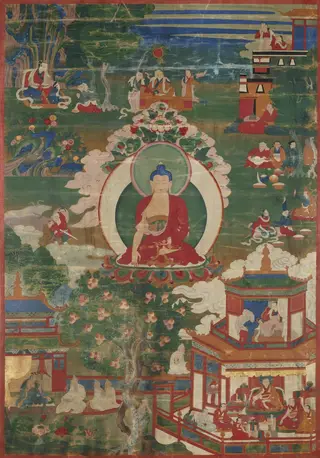 Buddha Shakyamuni and Narrative Scenes
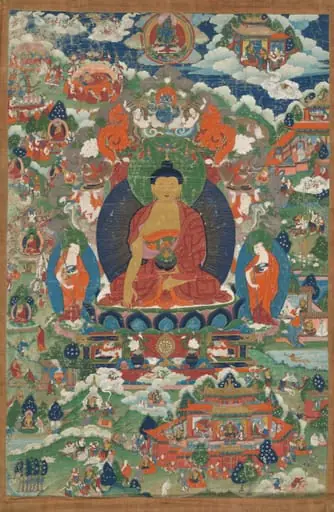 Shakyamuni Buddha with scenes from his life story
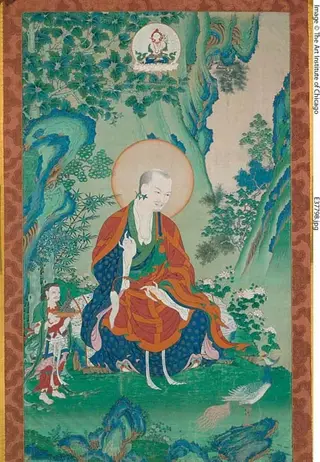 Painted Banner (Thangka) of Vajriputra, One of the Sixteen Great...
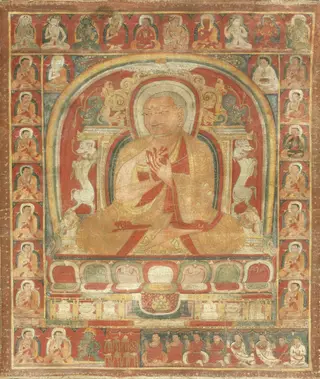 An Abbot and His Lineage
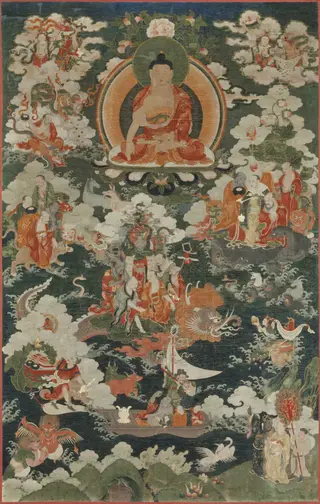 Buddha Shakyamuni and the Eighteen Arhats
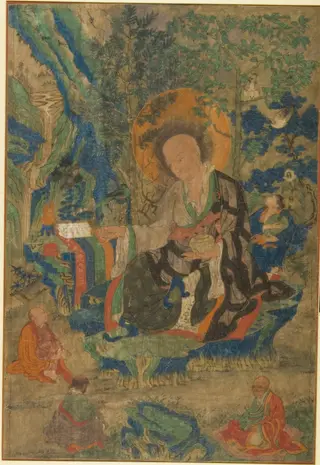 The Arhat Pindola Bharadhvaja
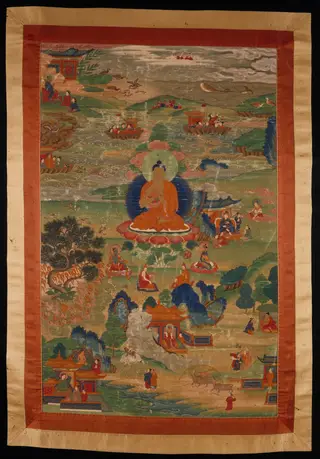 Previous Birth Stories of the Buddha
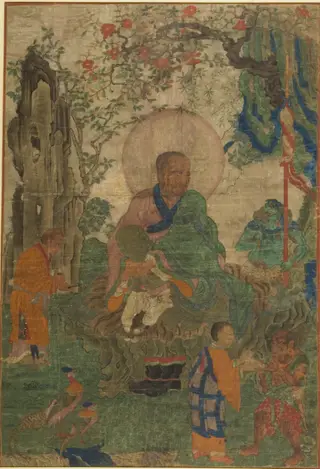 The Arhat Kalika
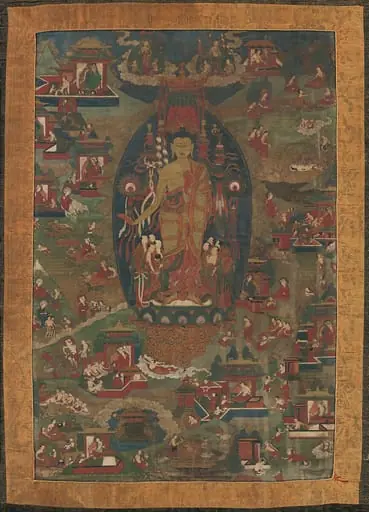 Untitled
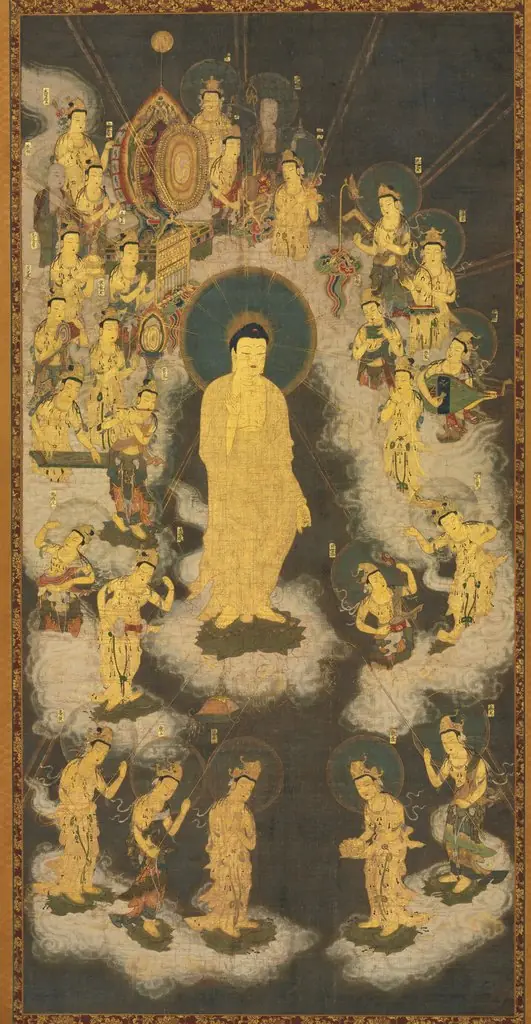 Welcoming Descent of Amida (Amida Raigō)
 Four Seated Masters