Artwork
釈迦三尊十六善神像|Shaka (Shakyamuni), the Historical Buddha, with Two Attendant Bodhisattvas and Sixteen Benevolent Deities
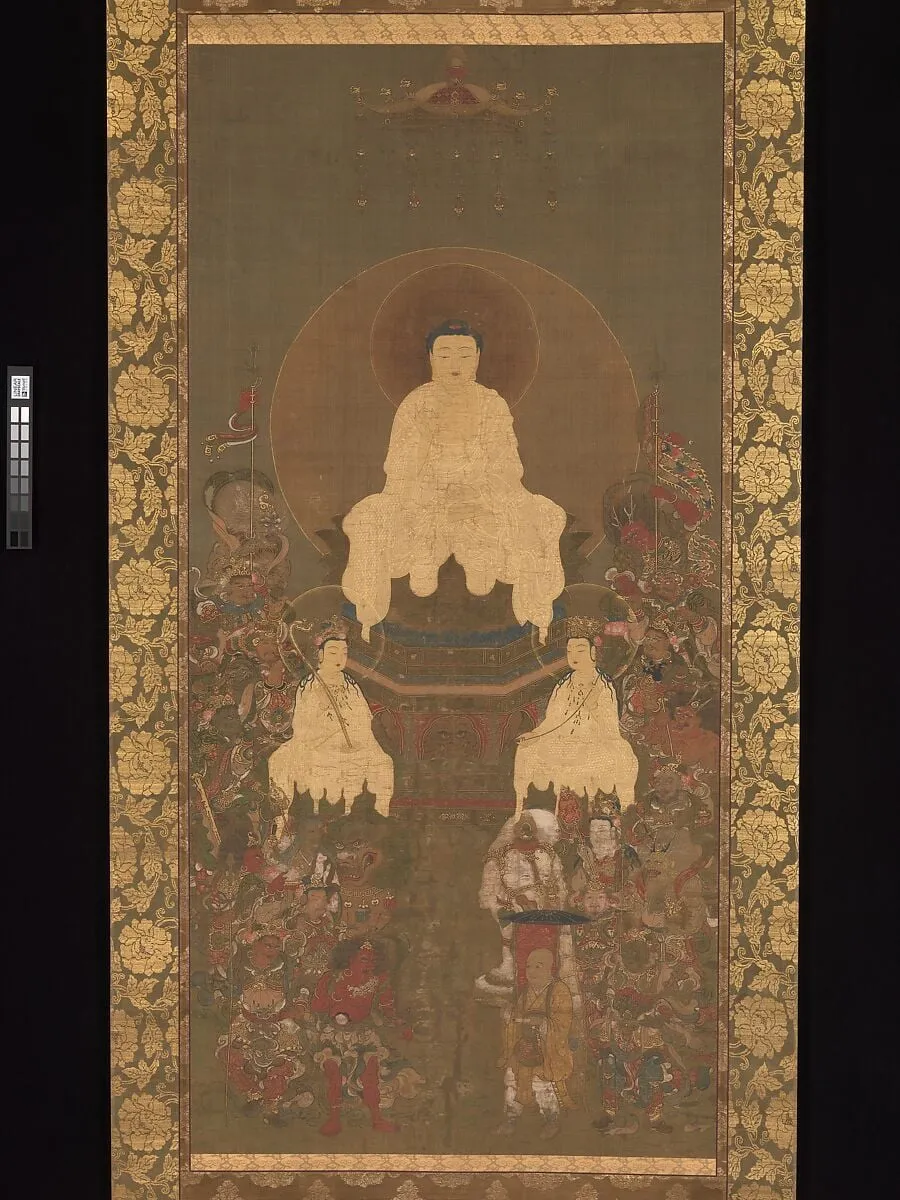
釈迦三尊十六善神像|Shaka (Shakyamuni), the Historical Buddha, with Two Attendant Bodhisattvas and Sixteen Benevolent Deities is an ink painting. It dates from 1379 and is held in the collection of the Metropolitan Museum of Art.
- Accession no.
- 2012.18
- Credit line
- Purchase, Sue Cassidy Clark Gift, in honor of Donald Keene, 2012
About this work
Subject & Meaning
Iconographic elements such as an elephant, a lion, a monk, and additional deities are present, reflecting standard motifs in Buddhist painting.
This hanging scroll depicts Shaka (Shakyamuni), the historical Buddha, flanked by two attendant bodhisattvas and sixteen benevolent deities, as stated in its title. Iconographic elements such as an elephant, a lion, a monk, and additional deities are present, reflecting standard motifs in Buddhist painting. The composition forms a protective assembly, likely intended for ritual veneration, emphasizing the Buddha's central role and the safeguarding function of the accompanying benevolent deities within Japanese religious practice.
Technique & Style
The painting is a hanging scroll executed in ink, color, gold, and cut gold (kirikane) on silk, a sumptuous technique typical of Japanese Buddhist icon painting of the late fourteenth century. The use of cut gold, small, individually applied sheets of gold leaf, creates a luminous, patterned effect, especially in the deities' halos and garments, while gold wash and outlines enhance the sacred aura. The silk support is consistent with the refined hanging-scroll format used for portable veneration.
The composition is formal and hieratic, with the central Buddha flanked by two attendant bodhisattvas and the sixteen benevolent deities. The anonymous artist adhered to established iconographic conventions, prioritizing clarity and devotional impact over naturalism. The condition is typical of a work of this age, with no specific damage noted in the sources.
History & Provenance
This hanging scroll was created in Japan in 1379. The artist is not recorded. The work is now in the collection of the Metropolitan Museum of Art. No further details about its commission, original ownership, or provenance chain are available in the provided sources.
Overview
This anonymous hanging scroll from Japan's Nanbokuchō period served as a central devotional object during ritual recitations of the Great Perfection of Wisdom Sutra. Created in the late fourteenth century, the painting depicts the historical Buddha Shaka (Shakyamuni) at its core, flanked by two attendant bodhisattvas. A retinue of sixteen protective deities surrounds this central triad, emphasizing the sacred narrative and its guardians. The work is executed on silk, employing various pigments and precious metals.
Context
This scroll illustrates the enduring influence of Chinese Buddhist visual traditions on medieval Japanese art. During the Nanbokuchō period, the adoption and adaptation of iconic forms and narrative elements from continental Asia remained a significant aspect of religious painting. The work thus serves as an example of how established iconographic models were integrated into Japanese devotional practices and artistic expression during the late fourteenth century.
Artist & collection

- 釈迦三尊十大弟子像|Shaka (Shakyamuni), the Historical Buddha, with Two Attendant Bodhisattvas and the Ten Great Disciples
 Shakyamuni with the Sixteen Benevolent Deities
 釈迦三尊像|Shaka (Shakyamuni) Triad
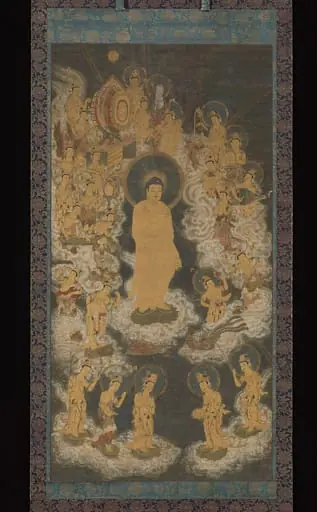 阿弥陀聖衆来迎図 |Welcoming Descent of Amida and Bodhisattvas
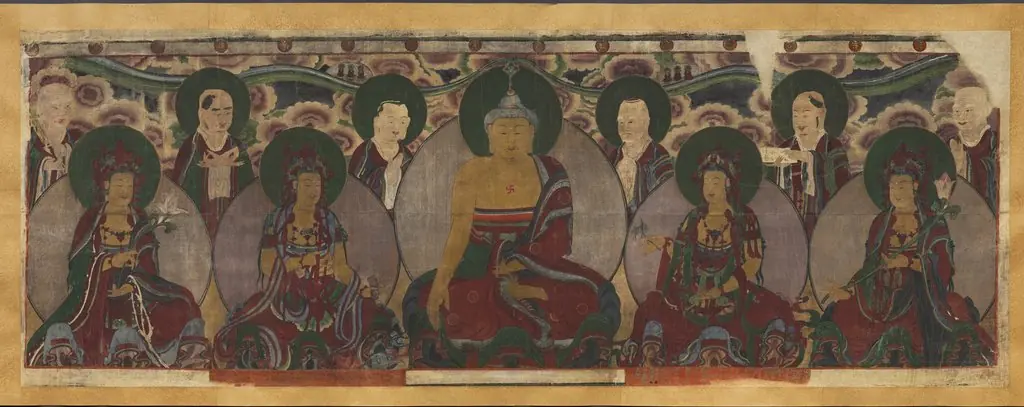 Assembly of Buddhist Deities
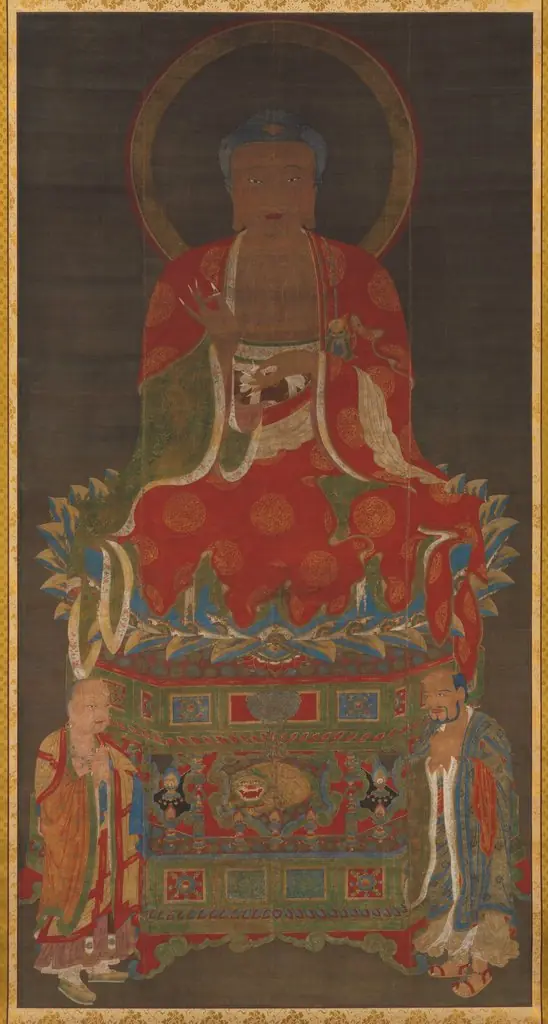 Shakyamuni with two attendants
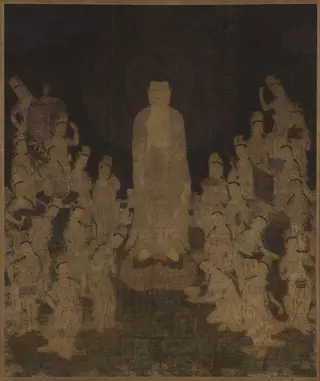 Welcoming Descent of Amida with Twenty-Five Bodhisattvas
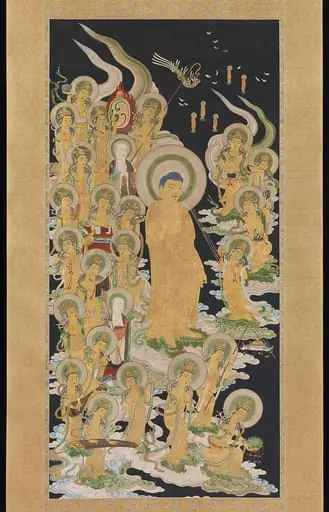 阿弥陀二十五菩薩来迎図|Buddha and Attendants
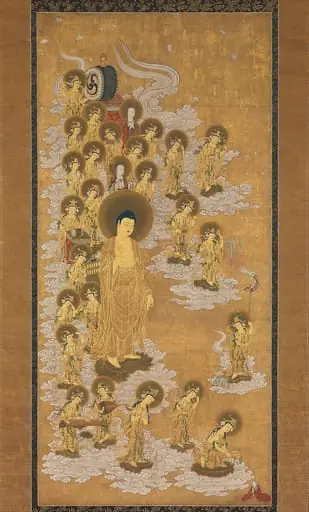 阿弥陀二十五菩薩来迎図|Welcoming Descent of Amida Buddha and Twenty-five Bodhisattvas
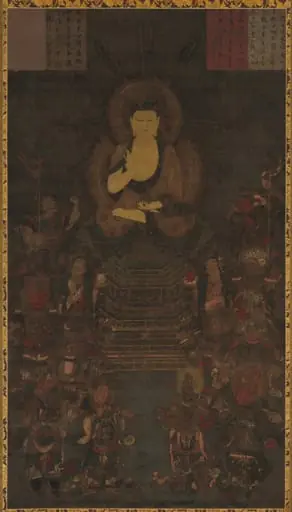 Medicine Master Buddha and the Twelve Divine Generals
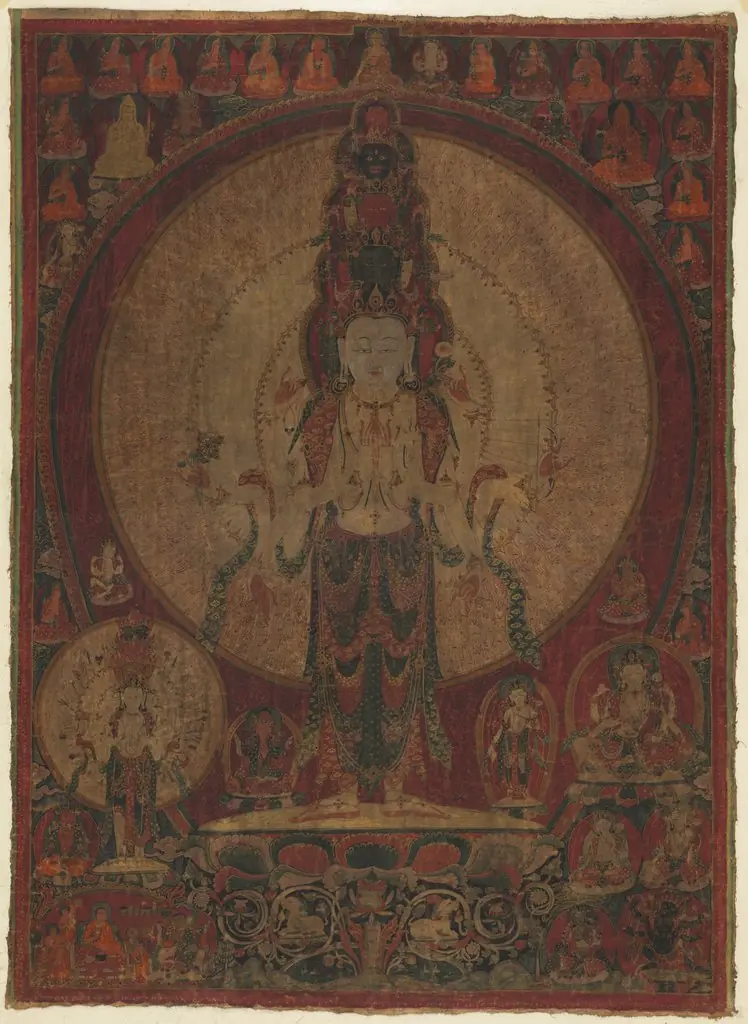 Eleven-Headed, Thousand-Armed Bodhisattva of Compassion (Avalokiteshvara)
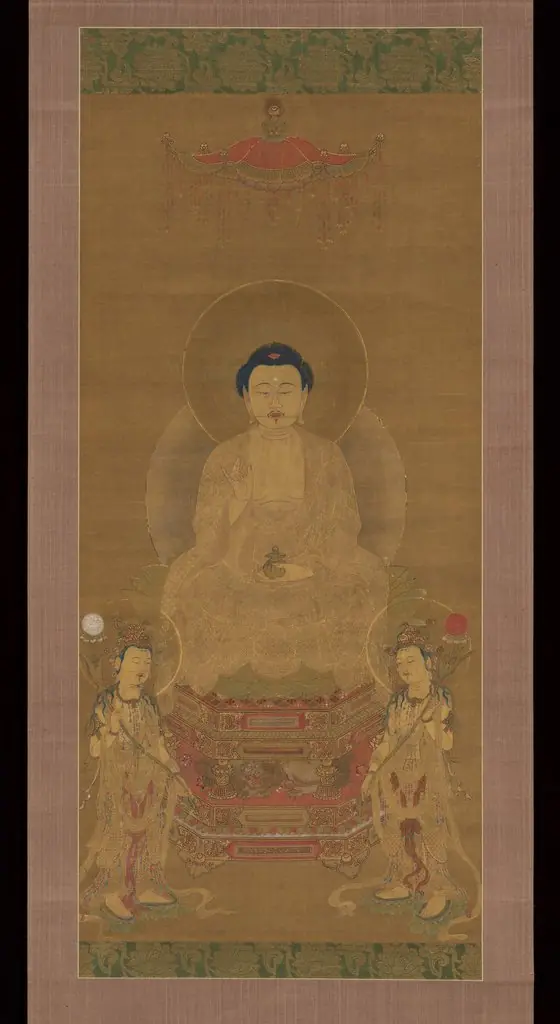 Triad of the Medicine Master Buddha Yakushi (Bhaisajya Buddha)
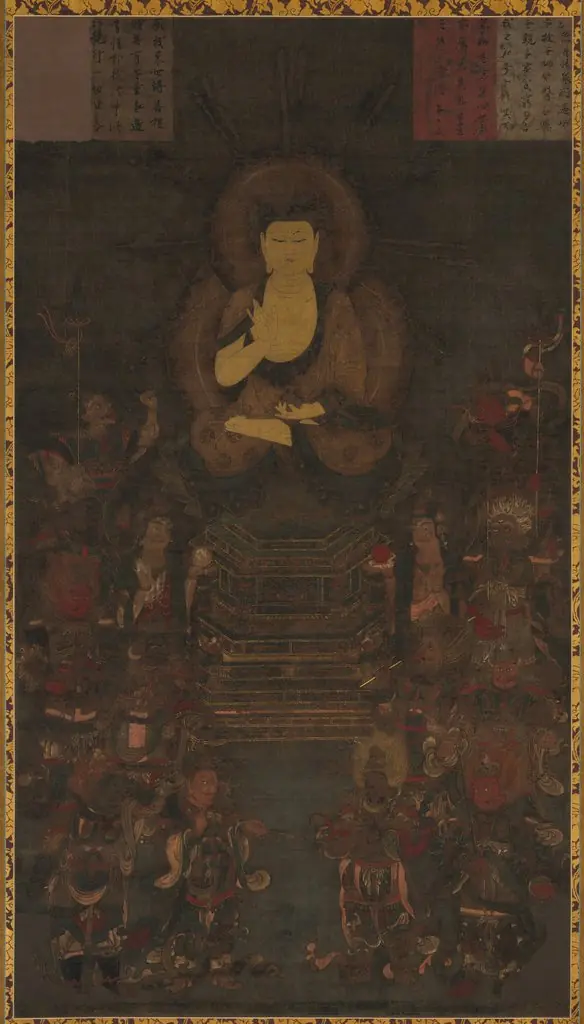 Medicine Master Buddha and the Twelve Divine Generals
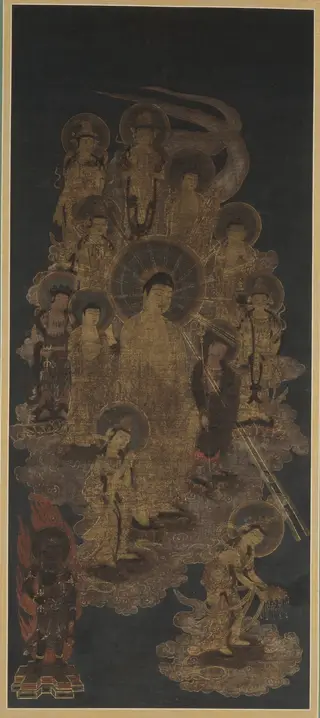 Thirteen Buddhas Welcoming the Dying Believer to the Western Pure Land
 Untitled
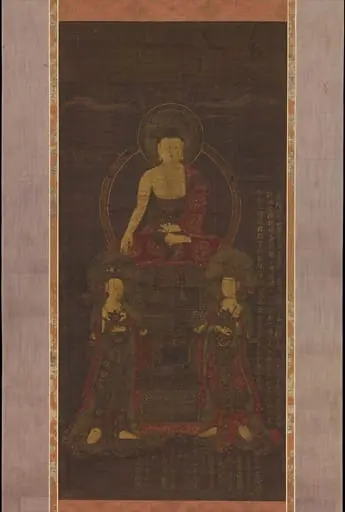 석가삼존도 조선|釋迦三尊圖 朝鮮|Shakyamuni triad
 Untitled
 Untitled
 Untitled
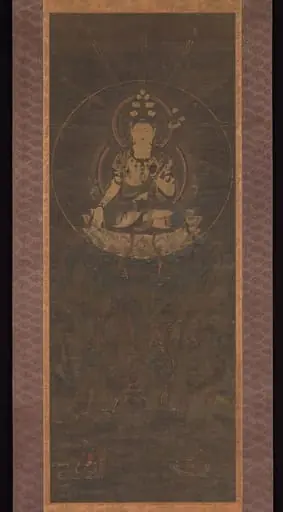 十一面観音影向図|Eleven-Headed Kannon on Mount Fudaraku
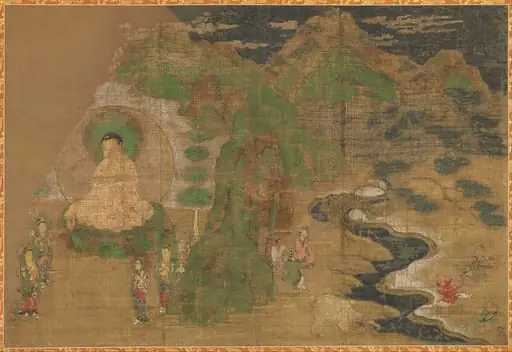 仏伝図|Scene from the Life of the Buddha