Artwork
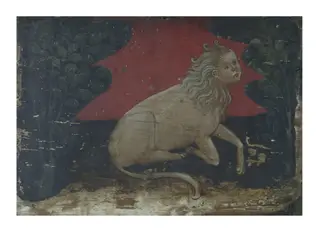
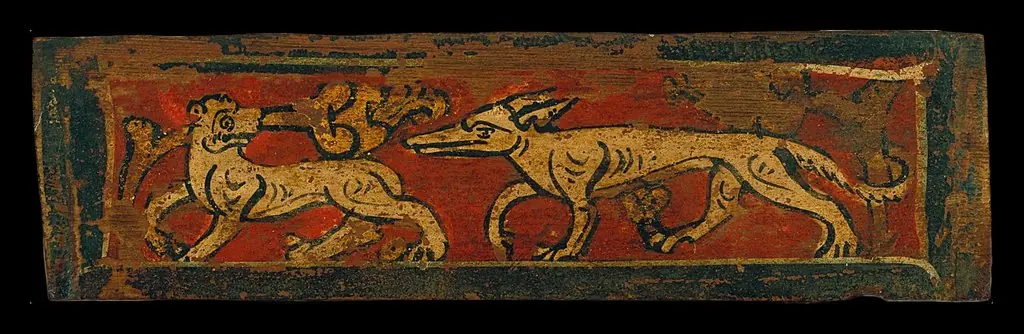
A Human-Headed Lion in a Landscape (panel from a painted ceiling)
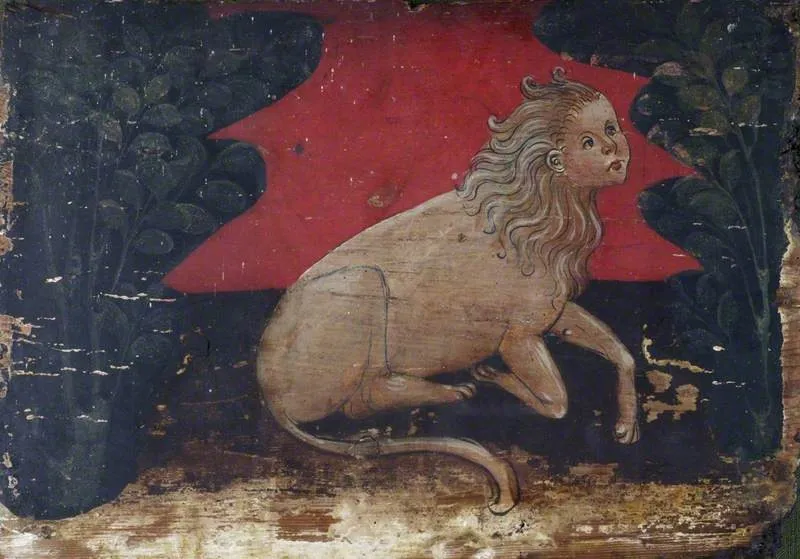
A Human-Headed Lion in a Landscape (panel from a painted ceiling) is a tempera painting by the Northern Renaissance artist Unknown. It dates from 1470 and is held in the collection of the Victoria and Albert Museum.
About this work
Overview
The panel portrays a lion whose head bears human features, a face framed by long hair and a beard, set against a vivid red backdrop flanked by dark green foliage. The animal’s tawny body is captured in a dynamic crouch, front paws bent and hind limbs stretched, suggesting imminent movement. The composition is rendered in tempera on a ceiling panel, forming part of a larger decorative scheme.
Subject & Meaning
By merging a human visage with a lion’s form, the image evokes a hybrid creature that may symbolize a blend of intellect and strength. The neutral expression and slightly furrowed brow temper any overt aggression, hinting at a contemplative or protective role within the surrounding narrative of the ceiling’s overall program.
Technique & Style
Executed in temperate egg tempera, the work relies on fast‑drying pigment mixed with a binding medium, producing a matte finish and precise detailing. The bright red ground and contrasting green foliage demonstrate a keen awareness of color juxtaposition, while the careful modeling of musculature and hair reflects the disciplined hand typical of medieval and early Renaissance ceiling decorations.
Context
This panel belongs to a larger painted ceiling, indicating it functioned as a component of an extensive visual program, likely in a domestic or ecclesiastical setting. Such ceiling cycles often combined mythological or allegorical figures to convey moral or protective themes, integrating the panel’s hybrid lion into a broader decorative narrative.
Artist & collection