Artwork
A Lady with Three Suitors
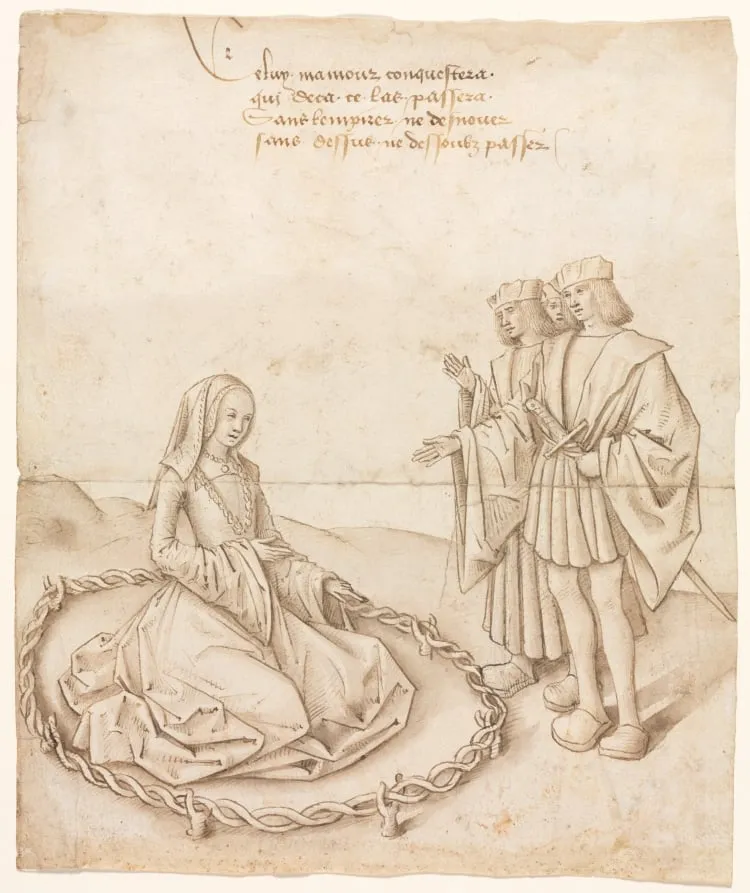
A Lady with Three Suitors is a drawing by the Renaissance artist Unknown. It dates from 1500 and is held in the collection of the Cleveland Museum of Art. The drawing depicts a well‑dressed woman flanked by three aristocratic men, separated by a thin ribbon fence.
- Accession no.
- 1956.40
- Credit line
- John L. Severance Fund
About this work
The words say the man who wins her love must pass the barrier without breaking it, going under it, or jumping over it.
You see a woman in a tall headdress standing between three men in fancy French clothes. A ribbon fence separates them, and words in old French float above her head.
The fence isn’t just decoration, it’s a riddle. The words say the man who wins her love must pass the barrier without breaking it, going under it, or jumping over it. The clothes match what nobles wore in France around 1500, so the scene feels like a game from a royal court.
Look up more about France, 16th century to see how people played with love and rules back then.
Overview
The drawing depicts a well‑dressed woman flanked by three aristocratic men, separated by a thin ribbon fence. Above the scene, an Old French verse poses a riddle about how a suitor might win her affection without breaking, passing under, or leaping over the barrier. The composition combines portraiture with a textual puzzle, reflecting courtly preoccupations with love and wit.
Subject & Meaning
The inscription frames the image as a love riddle, a genre popular in late medieval and early Renaissance courts. The woman appears to address the three men, challenging them to conquer her love by navigating the symbolic fence according to the poem’s rules. This interplay of visual and verbal elements underscores the era’s ideal of courtly love as a game of intellect as well as desire.
Technique & Style
Rendered in fine pen work, the drawing captures the elaborate costumes of French nobility at the turn of the sixteenth century. The figures wear high headdresses, padded doublets, and richly trimmed garments characteristic of the reign of Charles VIII. The linear treatment of the ribbon fence and the floating text demonstrate a careful balance between decorative detail and narrative clarity.
History & Provenance
The work belongs to a tradition of manuscript‑like love riddles collected in the late medieval period, though its exact origin remains undocumented. Stylistic cues place its creation around 1500, coinciding with the height of French court fashion. The drawing has been preserved in a private collection before entering a museum’s holdings, where it is displayed as an example of courtly visual literature.
Artist & collection









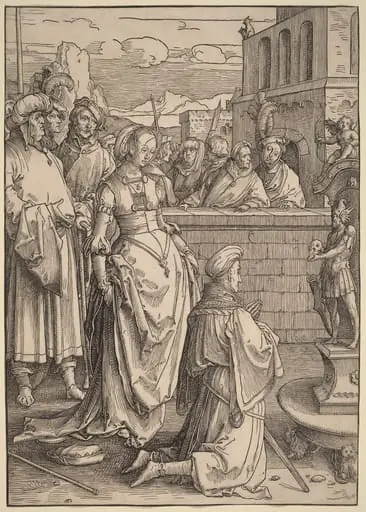
- Solomon's Idolatry
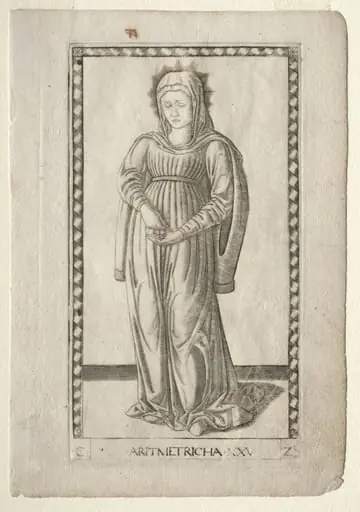 Arithmetic (from the Tarocchi, series C: Liberal Arts, #25)
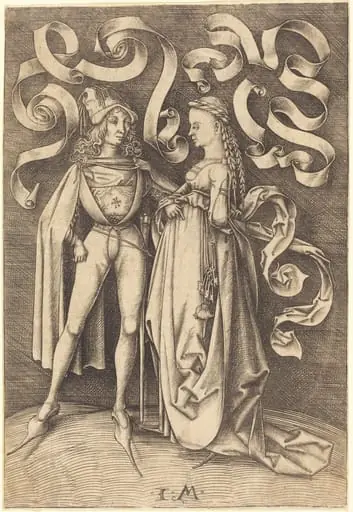 The Knight and the Lady
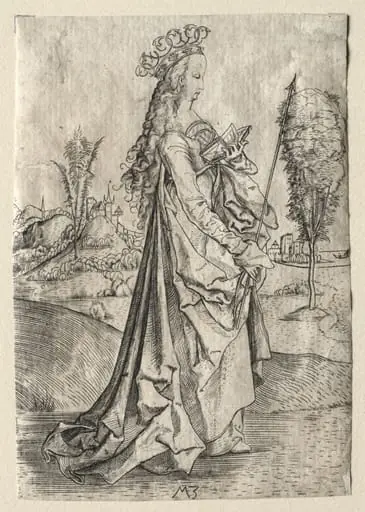 St. Ursula
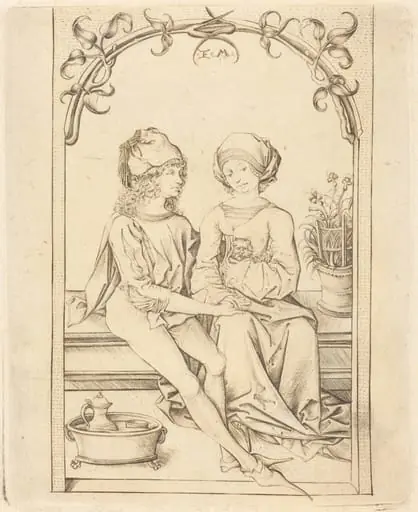 The Lovers
![Hope, Reaching for Heaven, Stands among Sad and Happy Men, Joys, and Fear [fol. 19 recto], by French early 16th Century](https://artifactworldgallery.com/img/french-early-16th-century--hope-reaching-for-heaven-stands-among-sad-and-happy-men-joys--be22f2c7f44a28d1-w320.webp) Hope, Reaching for Heaven, Stands among Sad and Happy Men, Joys, and Fear [fol. 19 recto]
Hope, Reaching for Heaven, Stands among Sad and Happy Men, Joys, and Fear [fol. 19 recto]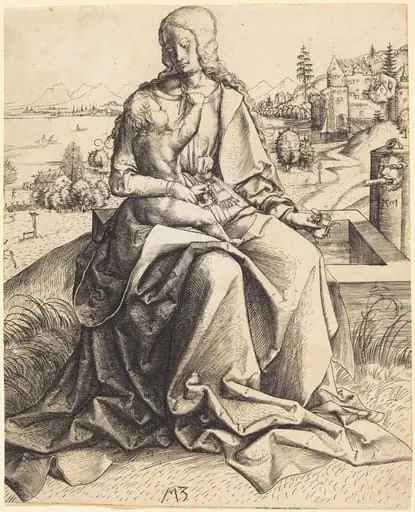 Madonna and Child at a Fountain
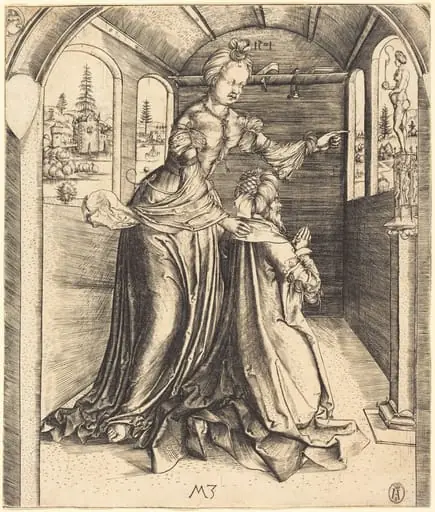 Solomon Worshipping False Gods
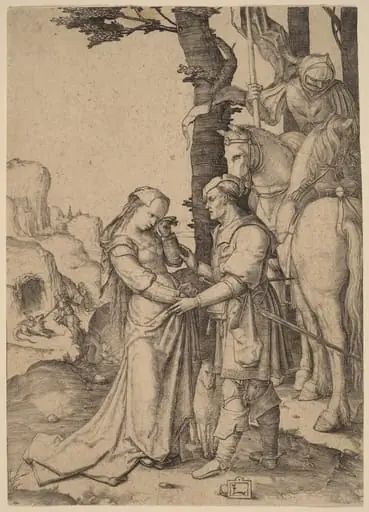 Saint George Liberating the Princess
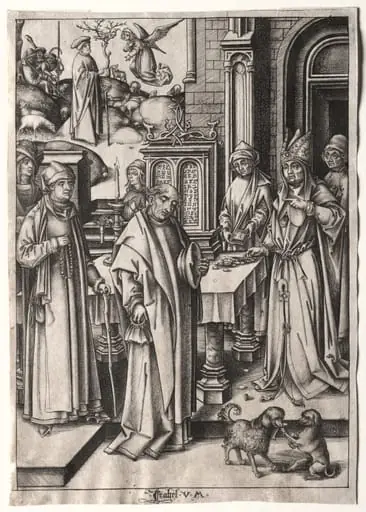 Life of the Virgin: High Priest Rejecting the Offering of Joachim
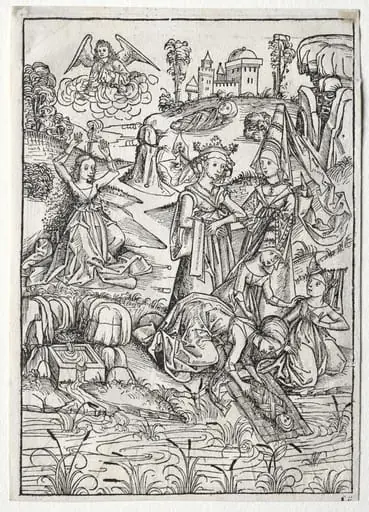 Der Schatzbehalter: Moses Found by Pharaoh's Daughter (recto)
!["Friendship Is Equality; A Friend Is Another Self" [fol. 10 recto], by French early 16th Century](https://artifactworldgallery.com/img/french-early-16th-century--friendship-is-equality-a-friend-is-another-self-fol-10-recto--fdd7de86f6112da1-w320.webp) "Friendship Is Equality; A Friend Is Another Self" [fol. 10 recto]
"Friendship Is Equality; A Friend Is Another Self" [fol. 10 recto]