Artwork
A prince conversing with a woman while taking refreshments on a terrace (recto)
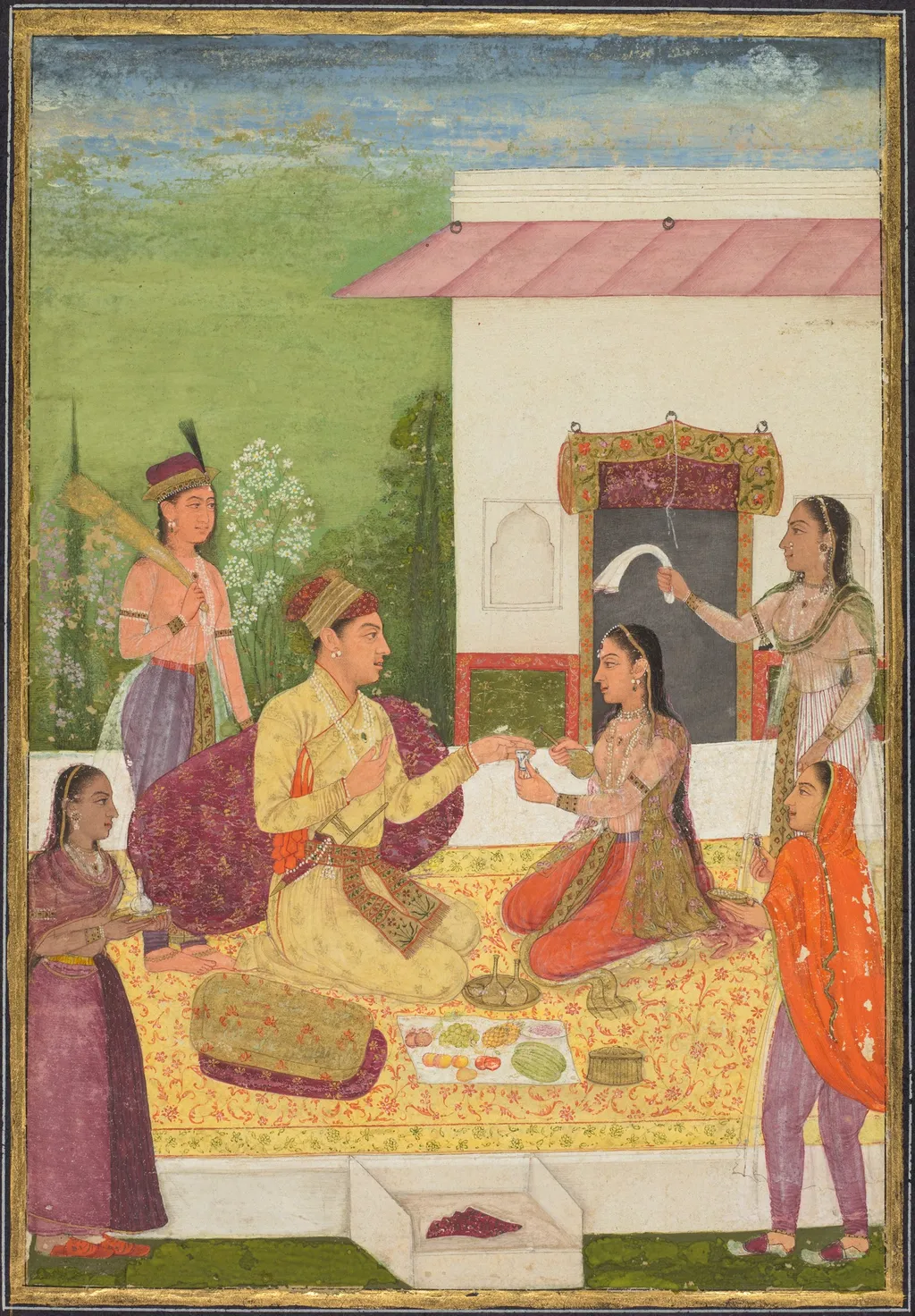
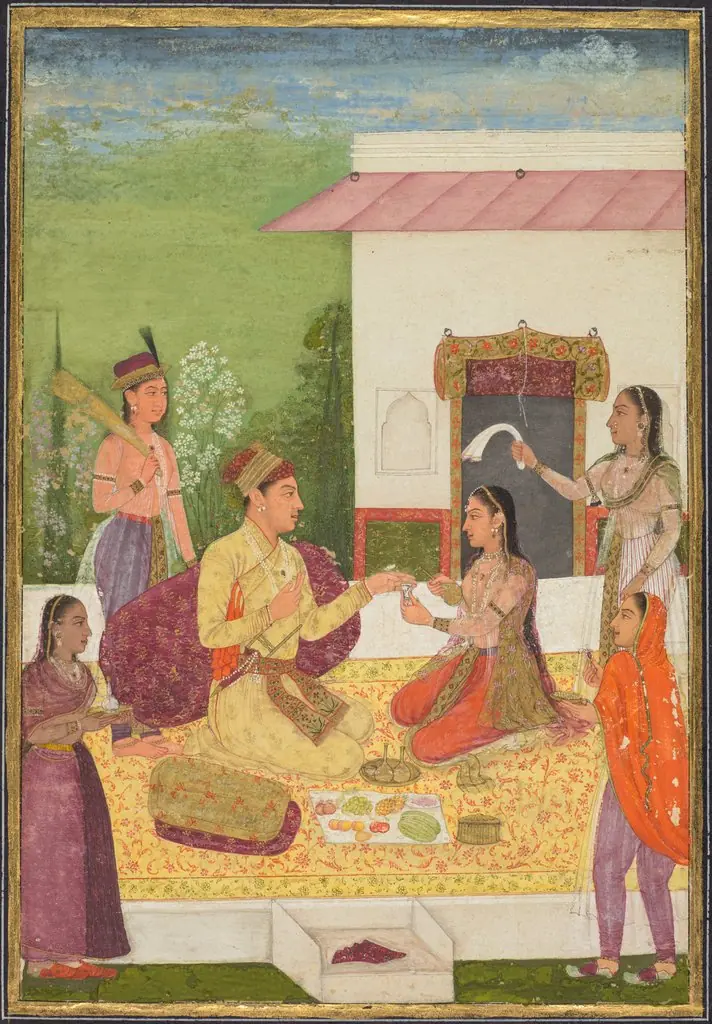
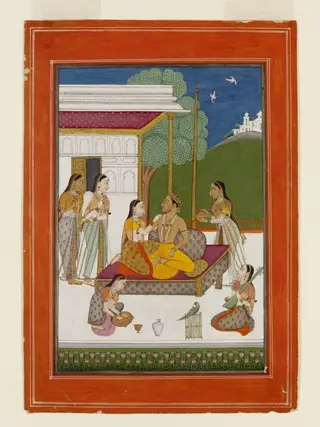
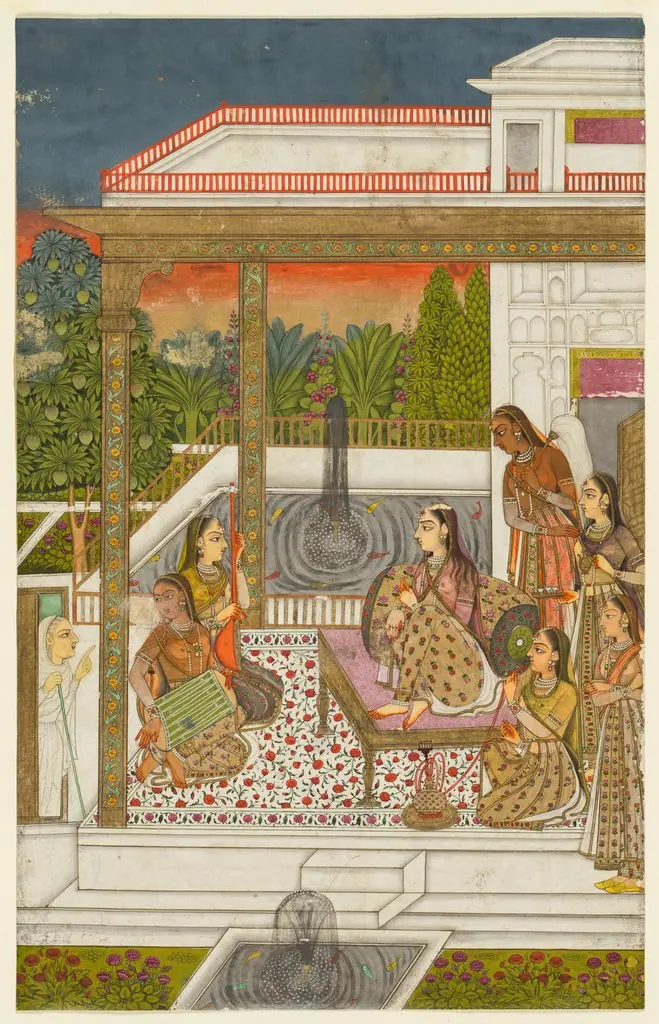
A prince conversing with a woman while taking refreshments on a terrace (recto) is an unspecified painting. It dates from 1715 and is held in the collection of the Cleveland Museum of Art. The work depicts a sunlit terrace populated by five figures.
About this work
History & Provenance
The work is classified as a painting and bears the title 'A prince conversing with a woman while taking refreshments on a terrace (recto)'.
The work is classified as a painting and bears the title 'A prince conversing with a woman while taking refreshments on a terrace (recto)'. It is dated to 1715 (specifically 1715-01-01) and was produced in the Mughal Empire by an unidentified artist. The painting is now part of the Cleveland Museum of Art’s collection, registered under accession number 2013.335.a. No further information regarding its original commission, earlier owners, or exhibition record is provided in the sources.
The painting A prince conversing with a woman while taking refreshments on a terrace (recto), dated to 1715, is held in the collection of the Cleveland Museum of Art in Cleveland. The work is cataloged under the accession number 2013.335.a. Created within the Mughal Empire by an unknown artist, the piece remains part of the museum's permanent holdings.
Overview
The work depicts a sunlit terrace populated by five figures. At its centre, a man dressed in a yellow robe sits cross‑legged, extending a folded sheet of paper to a kneeling woman in red. Flanking them are two standing women, one clad in purple, the other in orange, and a second man, wearing a maroon turban, who leans against a column.
A low table bears fruit, a basket and a small tray, while the backdrop features a green wall, a red tiled roof and an ornate canopy.
Subject & Meaning
The interaction between the seated man and the kneeling woman suggests a formal exchange, perhaps the delivery of a letter or poetic composition, indicated by the folded paper. The composition of attendants and the leisurely setting on a terrace imply a scene of courtly or aristocratic leisure, with the surrounding figures serving as witnesses to the private communication.
Technique & Style
The painter employs a vivid palette of reds, yellows, greens and purples, rendering the fabrics with meticulous attention to texture and ornamentation. Fine brushwork delineates jewelry and intricate patterns on the clothing, while the bright lighting enhances the three‑dimensionality of the figures and the architectural elements of the terrace.
Artist & collection

- A prince conversing with a woman while taking refreshments on a terrace (recto); Calligraphy (verso)
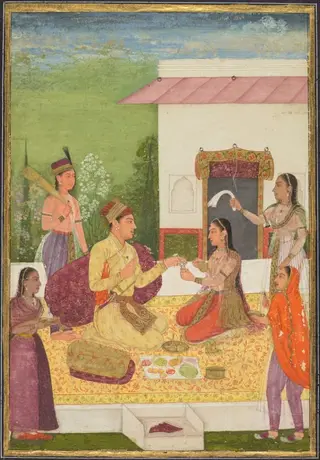 A prince conversing with a woman while taking refreshments on a terrace (recto)
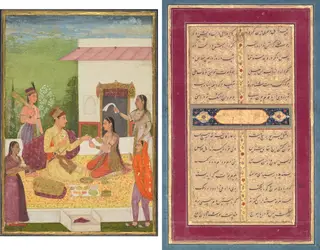 A prince conversing with a woman while taking refreshments on a terrace (recto); Calligraphy (verso)
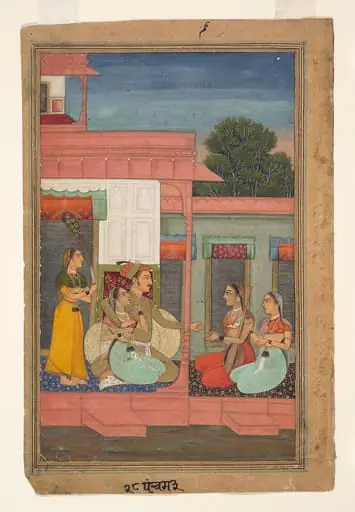
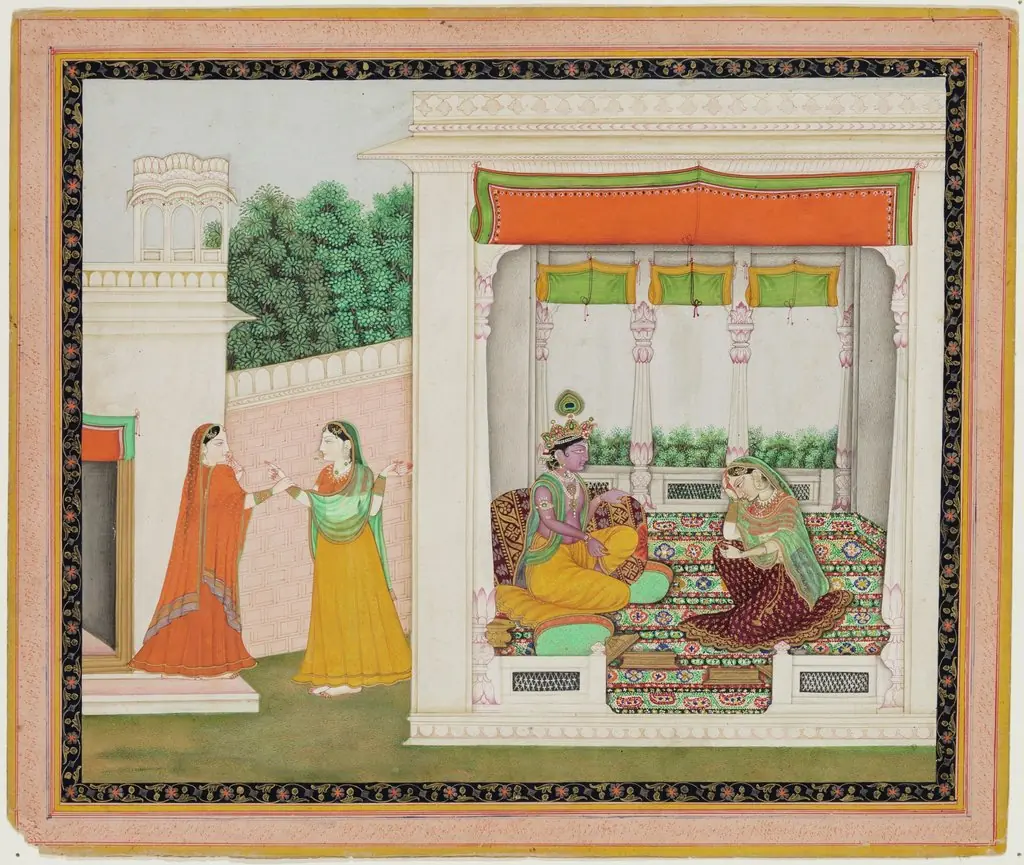
 A princess with attendants on a terrace