Artwork
A Sage with Tiger
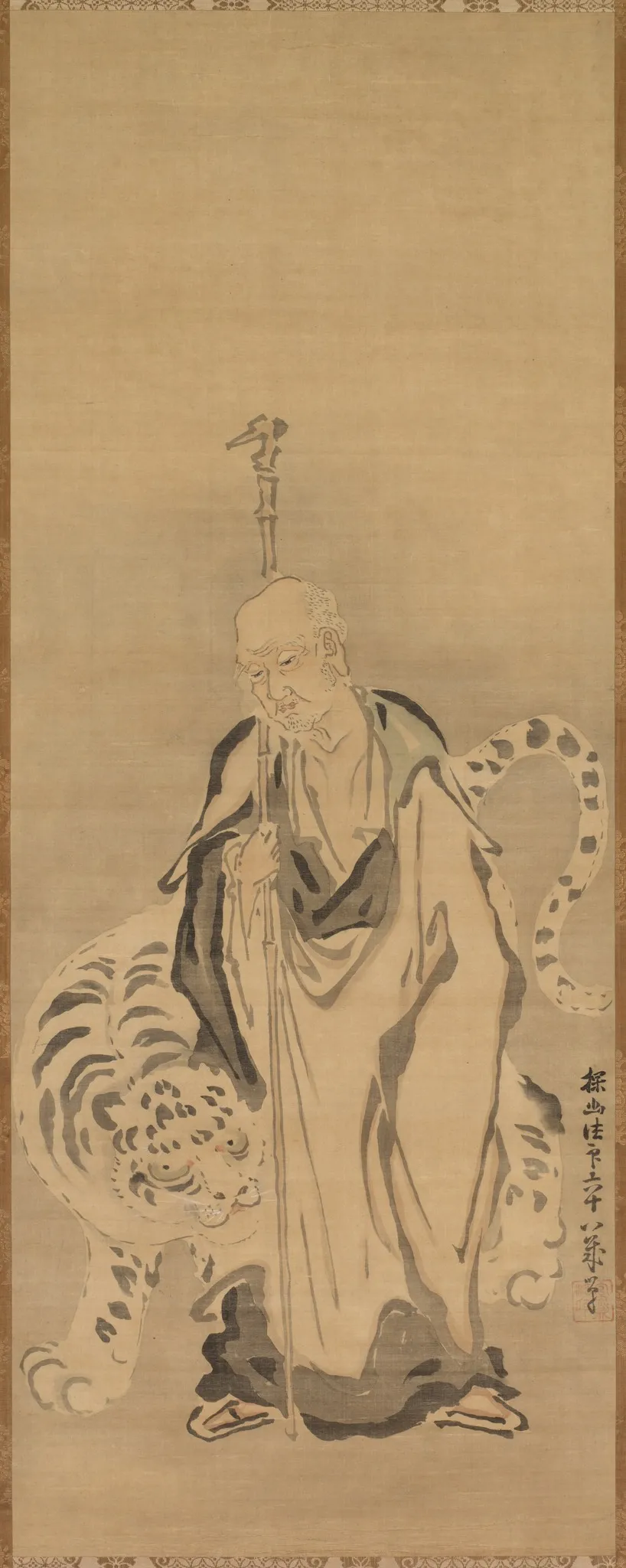
A Sage with Tiger is an unspecified painting. It dates from 1649 and is held in the collection of the Cleveland Museum of Art.
About this work
History & Provenance
It was created in Japan and entered the Cleveland Museum of Art’s collection in 1992, where it bears the accession number 1992.
A Sage with Tiger is a mid‑17th‑century Japanese painting attributed to Kano Tan’yū (1602–1674). The work is dated to 1649, with Wikidata noting a possible range of 1649–1661. It was created in Japan and entered the Cleveland Museum of Art’s collection in 1992, where it bears the accession number 1992.80.2. No earlier ownership records or commission details are provided in the sources.
A Sage with Tiger is held in the collection of the Cleveland Museum of Art in Cleveland, United States. The work carries the accession number 1992.80.2 within the museum's records. Although the artwork is dated to either 1649 or 1661, the source material does not provide specific details regarding its exhibition history or past display locations.
Context
The painting known as A Sage with Tiger has been discussed in scholarship as an example of early Edo-period Japanese art that blends spiritual symbolism with naturalistic detail. It is attributed to the Kano school, with stylistic analysis linking it to Kano Tan’yū (1602–1674), a prominent figure in the development of decorative painting during the Kan'ei era. The work’s composition reflects broader trends in 17th-century Japanese visual culture, where sages and tigers were recurring motifs symbolizing wisdom and strength.
Its presence in the Cleveland Museum of Art collection highlights its significance within the transnational reception of Japanese art in Western institutions.
Overview
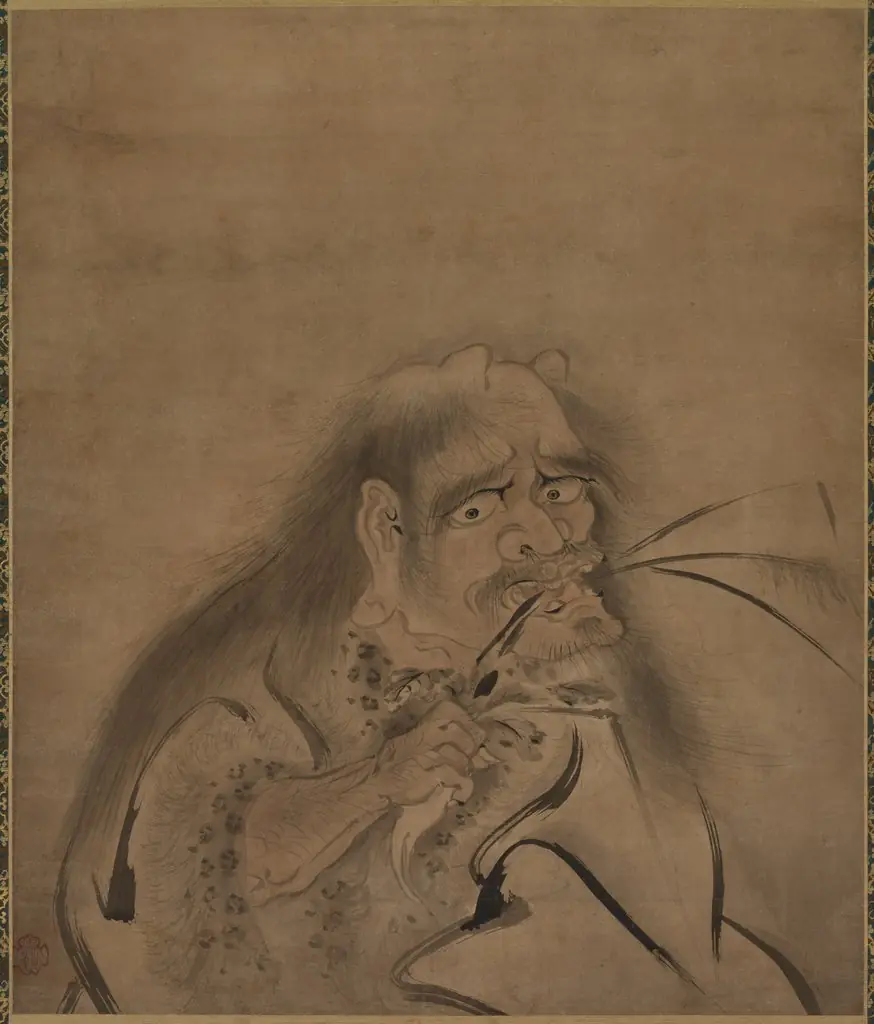
The work portrays an aged scholar with a flowing white beard and hair, clad in a long robe, standing beside a tiger whose head is lowered in a restful pose. The figure holds a staff in his right hand and a longer pole in his left. The background is a muted beige, while the figures are rendered primarily in shades of gray, black, and white, conveying a calm, harmonious atmosphere.
Subject & Meaning
The composition juxtaposes human wisdom and animal strength, suggesting a unity between the learned sage and the powerful tiger. The scholar’s serene demeanor and the tiger’s relaxed posture imply mutual respect and a balanced relationship, a theme often associated with Daoist ideals of harmony between mankind and nature.
Technique & Style
Executed with restrained brushwork, the painting relies on subtle tonal variations rather than vivid color. The artist employs soft, layered strokes to model the folds of the robe and the tiger’s fur, allowing light and shadow to suggest form. The limited palette of grays and muted beige enhances the tranquil mood and emphasizes the contemplative quality of the scene.
Artist & collection