Artwork
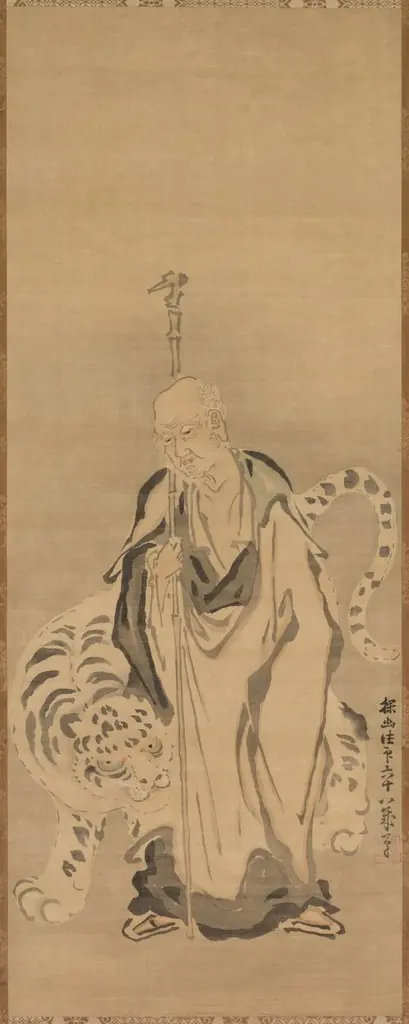
A Sage with Tiger
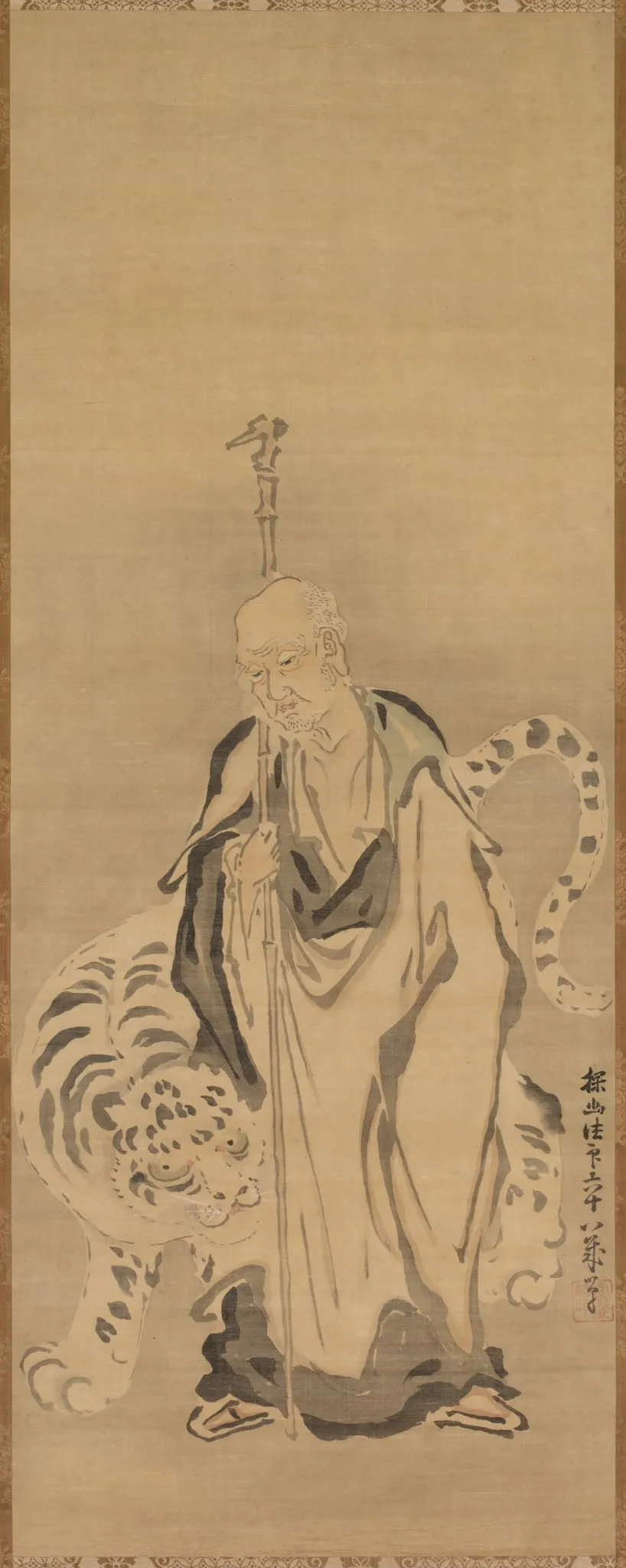
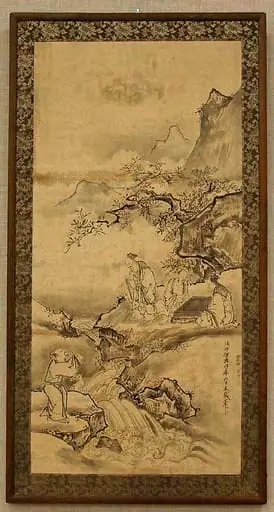
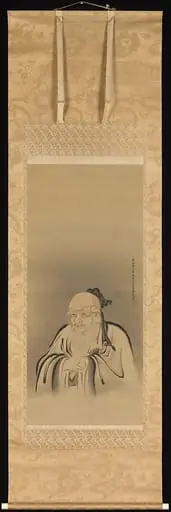
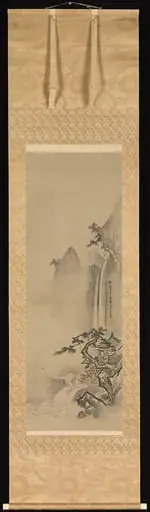
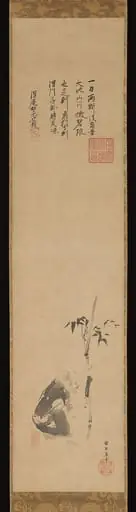
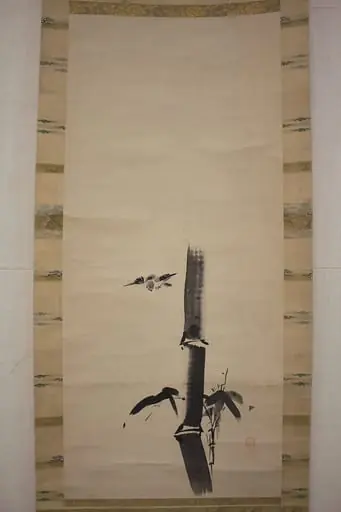
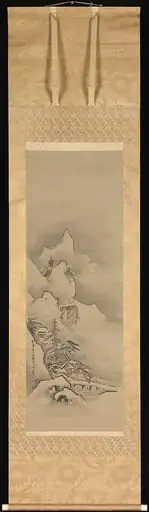
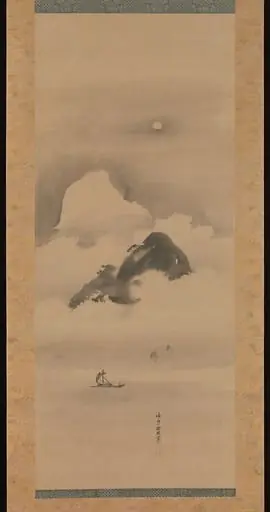
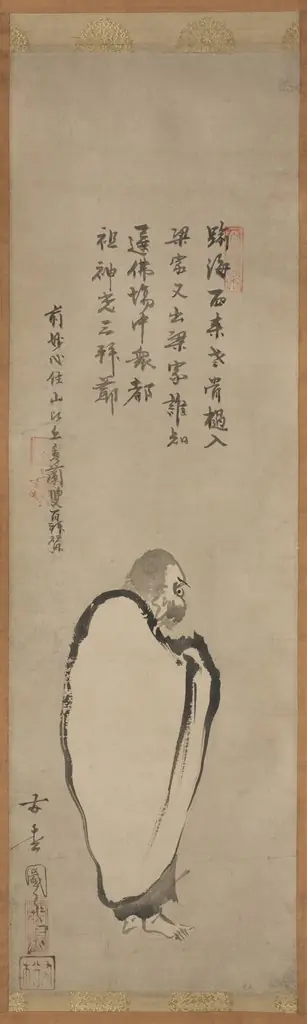
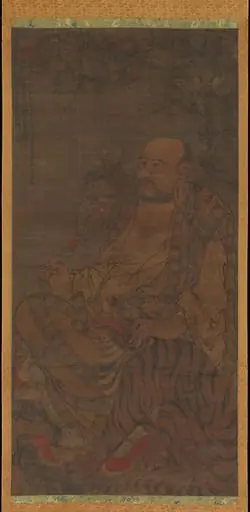
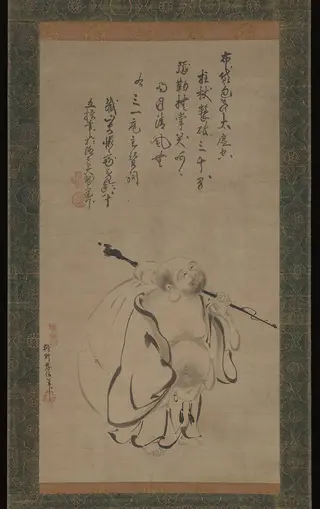
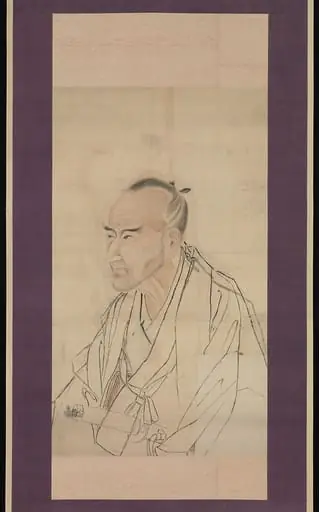
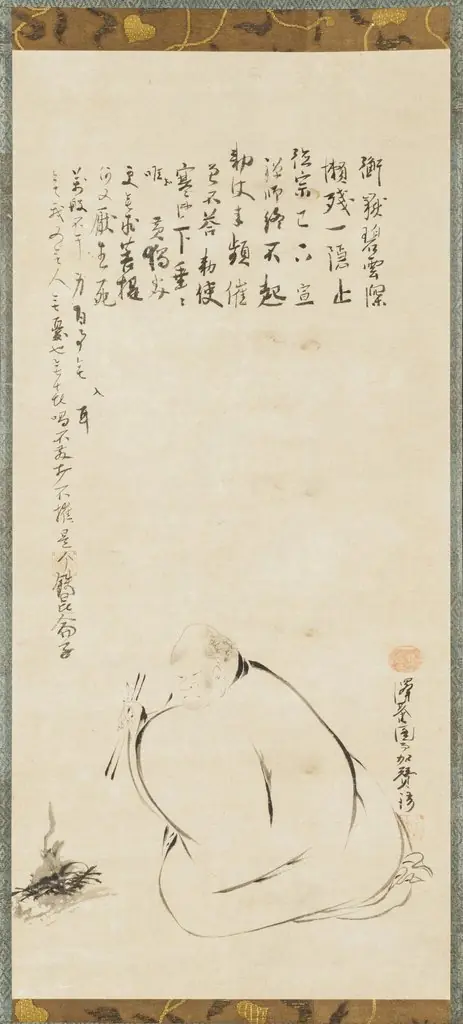
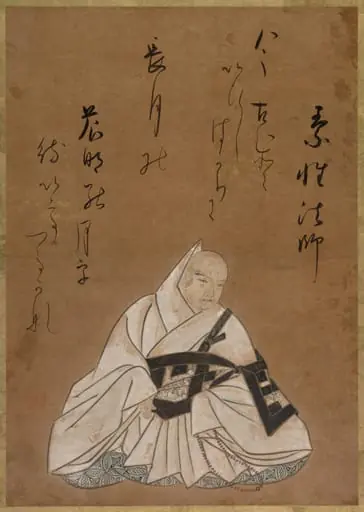
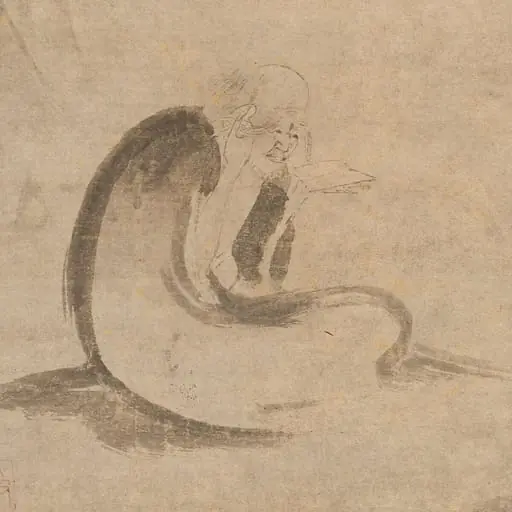
A Sage with Tiger is an unspecified painting by the Baroque artist Kano Tan'yū. It dates from 1661 and is held in the collection of the Cleveland Museum of Art. Painted in 1661 by Kanō Tan’yū, this ink-on-paper work depicts a sage accompanied by a tiger.
- Accession no.
- 1992.80.2
- Credit line
- Bequest of Harley C. Lee and Elizabeth K. Lee
About this work
Overview
Painted in 1661 by Kanō Tan’yū, this ink-on-paper work depicts a sage accompanied by a tiger. As a leading figure of the Kanō school, Tan’yū synthesized Chinese artistic traditions with Japanese sensibilities. The painting reflects the school’s formal approach to subject and composition, rooted in scholarly and spiritual themes. It is now part of The Cleveland Museum of Art’s collection.
Subject & Meaning
The figure of the sage, likely a Daoist or Zen ascetic, embodies wisdom and detachment, while the tiger, often a symbol of untamed nature or spiritual power, rests calmly beside him. Their coexistence suggests harmony between human insight and wild forces, a common motif in East Asian contemplative art. The scene invites reflection rather than narrative, aligning with Zen ideals of quiet mastery.
Technique & Style
Tan’yū employed monochrome ink washes with controlled brushwork, characteristic of the Kanō school’s adaptation of Chinese ink painting. Forms are rendered with precision yet retain a sense of spontaneity, especially in the tiger’s fur and the sage’s flowing robes. The composition is balanced and restrained, avoiding ornamentation in favor of atmospheric depth and structural clarity.
History & Provenance
Created during the early Edo period, the painting was likely made for a patron within the shogunate’s cultural circle. The Kanō school, as official painters to the Tokugawa regime, produced works for temples and elite residences. This piece entered The Cleveland Museum of Art’s collection in the 20th century, following its passage through private Japanese holdings.
Context
In 17th-century Japan, the Kanō school dominated official art, blending Chinese literati aesthetics with local tastes. Religious and philosophical themes, especially those drawn from Daoism and Buddhism, were favored by patrons seeking cultural legitimacy. Tan’yū’s work exemplifies this synthesis, positioning the sage-tiger motif within a broader East Asian tradition of spiritual allegory.
Legacy
Tan’yū’s influence extended through generations of Japanese painters who adopted his stylistic discipline. While later artists moved toward more personal or decorative modes, this painting remains a reference point for the Kanō school’s intellectual rigor. Its preservation in a major Western institution underscores its role in cross-cultural art historical dialogue.
Artist & collection