Artwork
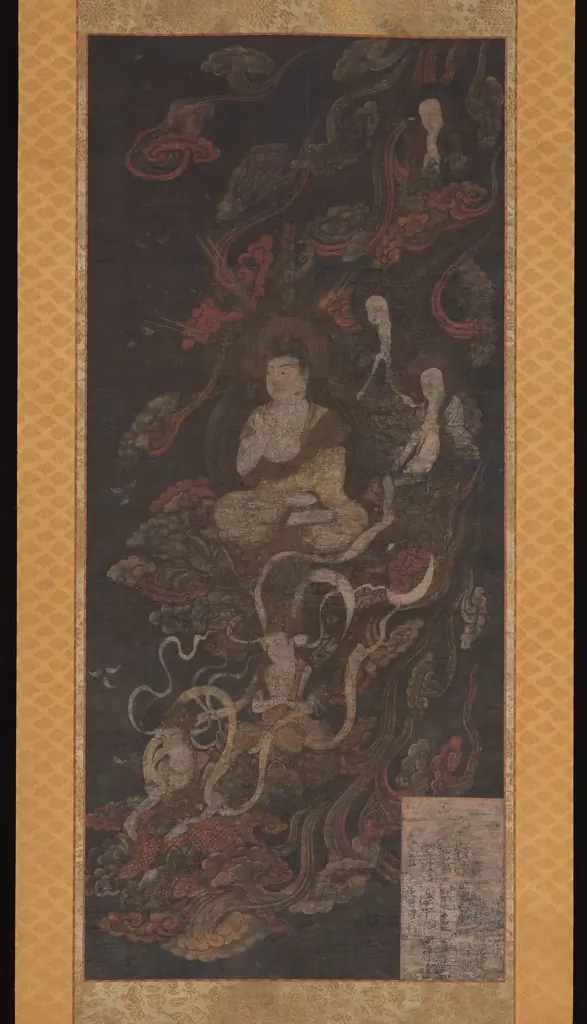
請雨経曼荼羅図像|Iconographic Drawing of a Rainmaking Mandala
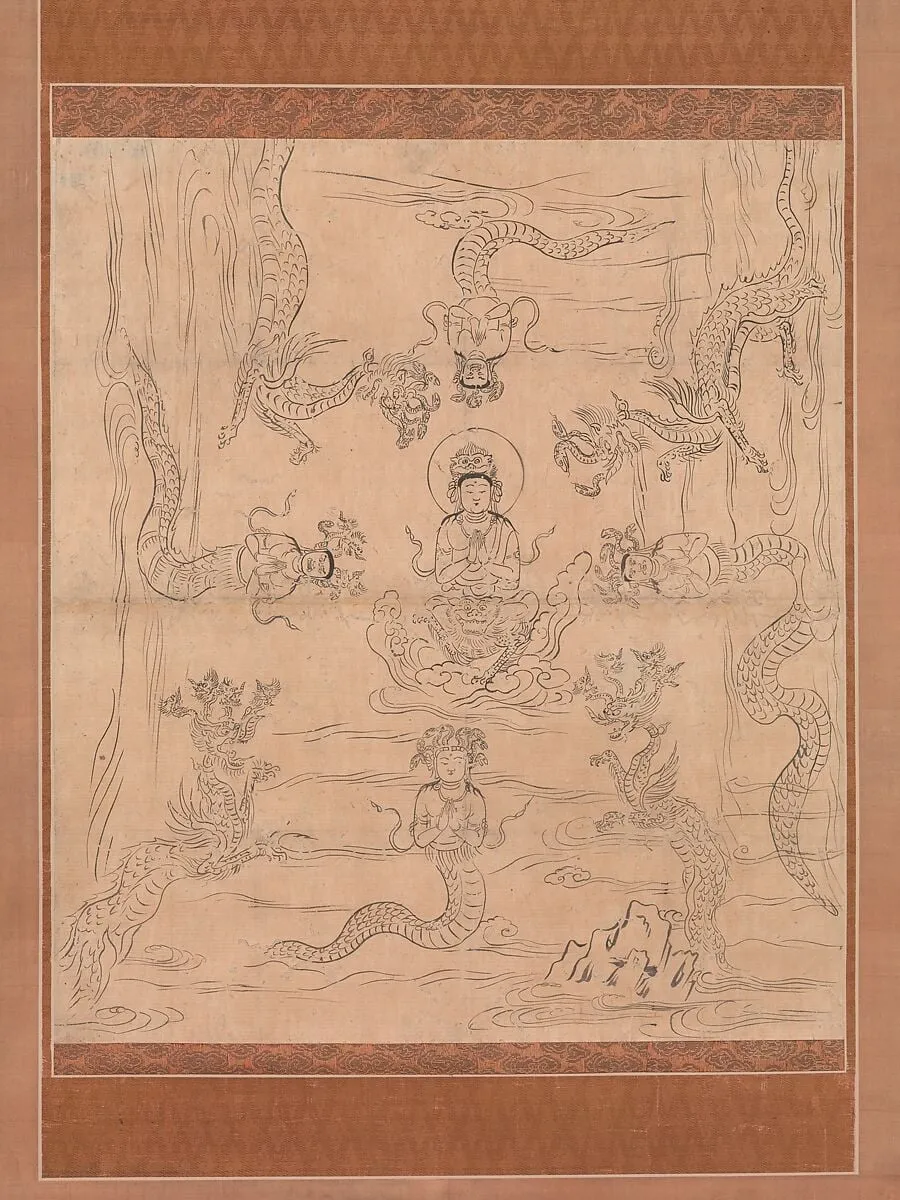
請雨経曼荼羅図像|Iconographic Drawing of a Rainmaking Mandala is an ink painting. It dates from 1142 and is held in the collection of the Metropolitan Museum of Art. This ink-on-paper hanging scroll, titled Iconographic Drawing of a Rainmaking Mandala, depicts a complex circular composition.
- Accession no.
- 1975.268.9
- Credit line
- The Harry G. C. Packard Collection of Asian Art, Gift of Harry G. C. Packard, and Purchase, Fletcher, Rogers, Harris Brisbane Dick, and Louis V. Bell Funds, Joseph Pulitzer Bequest, and The Annenberg Fund Inc. Gift, 1975
About this work
Subject & Meaning
The work portrays a Bodhisattva flanked by a dragon and another mythical creature, forming a rain-making mandala.
The work portrays a Bodhisattva flanked by a dragon and another mythical creature, forming a rain-making mandala. The Bodhisattva, a compassionate Buddhist figure, embodies the benevolent power invoked to summon precipitation. The dragon, traditionally associated with water and clouds in East Asian iconography, signals the arrival of rain, while the accompanying mythical creature reinforces the auspicious, supernatural nature of the scene.
Together they illustrate a ritual visual formula meant to beseech divine aid for agricultural fertility, reflecting the painting's religious function as a devotional aid for rain-making prayers in twelfth-century Japan.
Technique & Style
The work is executed as a hanging scroll using ink on paper, a format typical of Heian-period Buddhist visual aids. Ink lines define a rainmaking mandala in which a Bodhisattva is flanked by a dragon and other mythic beings, reflecting a symbolic program intended to invoke precipitation. The composition balances central figure placement with flowing secondary motifs, employing delicate brushwork and gradations of black ink to suggest volume without color. The piece is held in the Metropolitan Museum of Art collection.
History & Provenance
The Iconographic Drawing of a Rainmaking Mandala is dated to 1142 and was produced by an anonymous artist in Japan. The work is a hanging scroll in ink on paper. It is presently part of the collection of the Metropolitan Museum of Art in New York; earlier ownership history and any original commission are not documented in the available references.
Legacy
The painting 請雨経曼荼羅図像, dated 1142 and attributed to an anonymous Japanese hand, is part of the Metropolitan Museum of Art's collection. Its depiction of a Bodhisattva accompanied by a dragon and other mythic figures exemplifies Heian-period Buddhist iconography and has been referenced in scholarly analyses of rain-making mandalas. The work's presence in a major Western museum has shaped contemporary understanding of early Japanese religious art, influencing studies of mandala development and ritual symbolism.
Overview
This ink-on-paper hanging scroll, titled Iconographic Drawing of a Rainmaking Mandala, depicts a complex circular composition. It features a central, serene Buddha figure surrounded by a multitude of smaller entities, including dragons, deities, and sacred beings. The artwork was created for use in specific Buddhist rituals aimed at invoking rain, serving a practical and spiritual function within its original context.
Context
This drawing functioned as a ritual object, integral to ceremonies performed to pray for rain during periods of drought. Such mandalas were not merely decorative but served as visual aids for meditation and invocation, guiding practitioners through complex spiritual processes. The presence of numerous bodhisattvas and other enlightened beings within the composition reflects their significant role in Mahayana Buddhist cosmology, where they often assist sentient beings.
Artist & collection

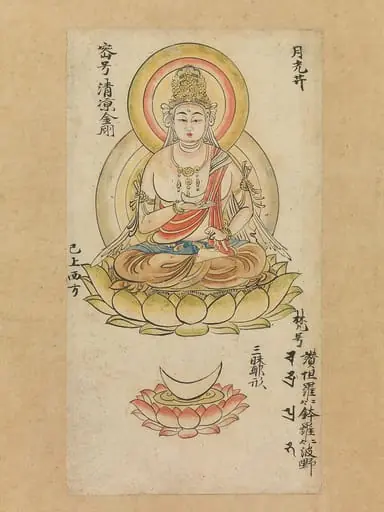 伝託磨為遠筆 月光菩薩像 「金胎仏画帖」断簡|Gakkō Bosatsu, from “Album of Buddhist Deities from the Diamond World and Womb World Mandalas” (“Kontai butsugajō”)
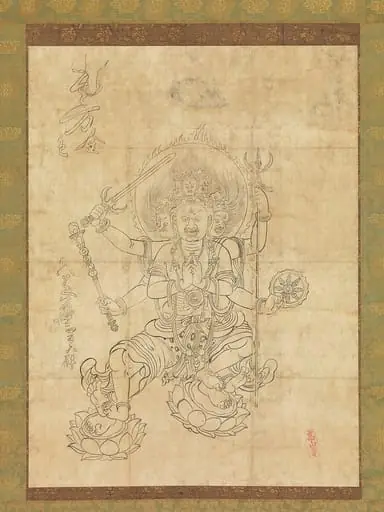 大威徳明王|Daiitoku Myōō
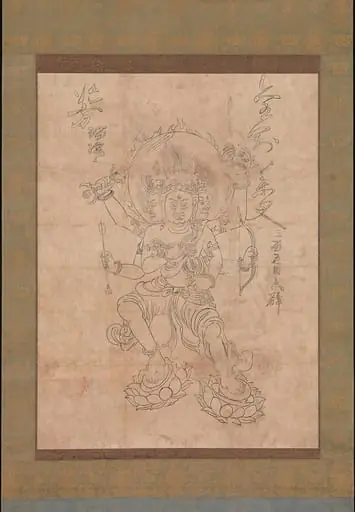 金剛夜叉明王|Kongōyasha Myōō
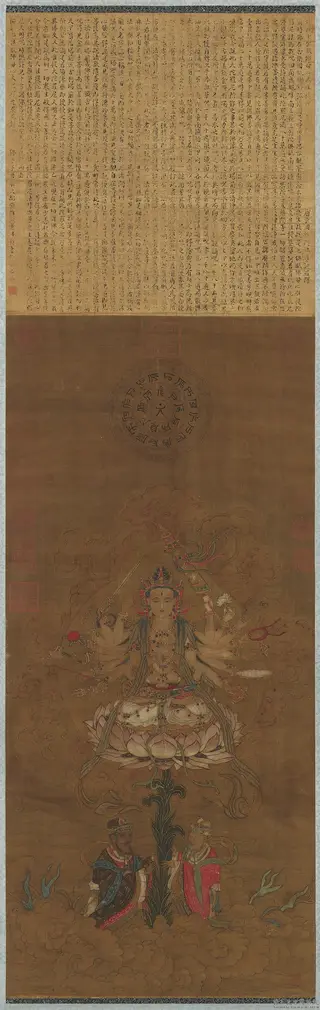 Cundi Bodhisattva
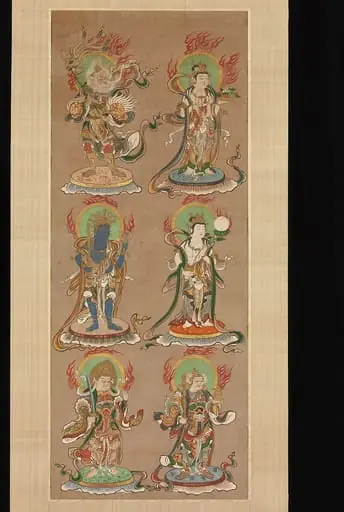 十二天像|Twelve Deva Kings (Jūniten)
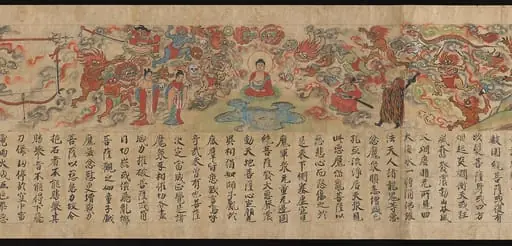 『過去現在絵因果経』 断簡 (松永本)|Scene from The Illustrated Sutra of Past and Present Karma (Kako genzai e-inga-kyō; Matsunaga Version)
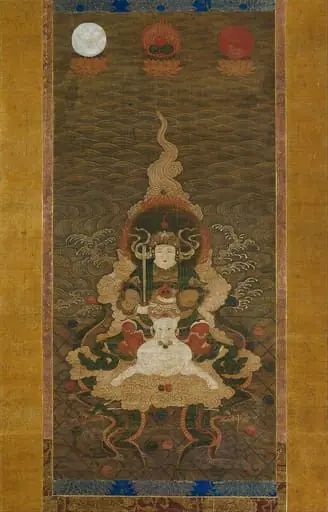 荼枳尼天像|Dakini
 Welcoming Descent of Amida, the Buddha of Infinite Light, and His Holy Retinue