Artwork
大威徳明王|Daiitoku Myōō
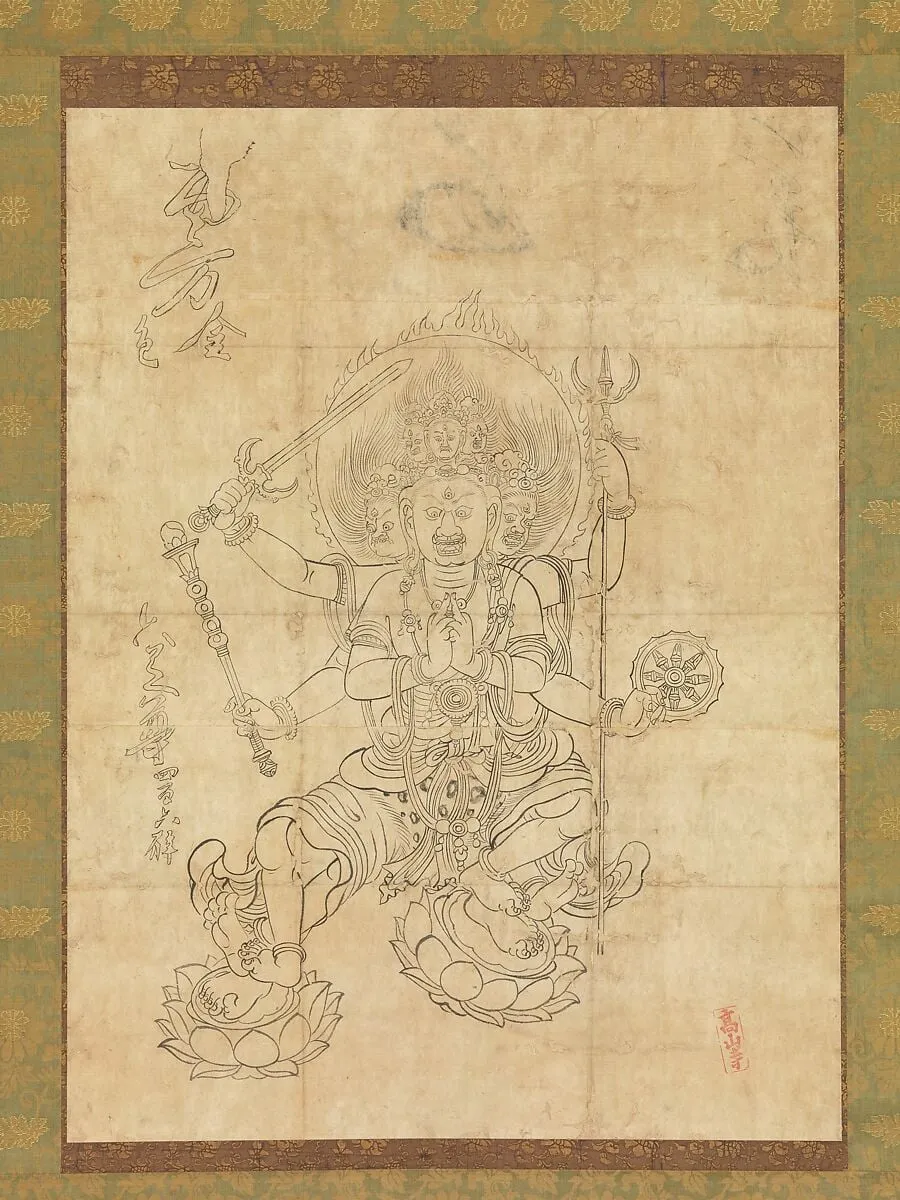
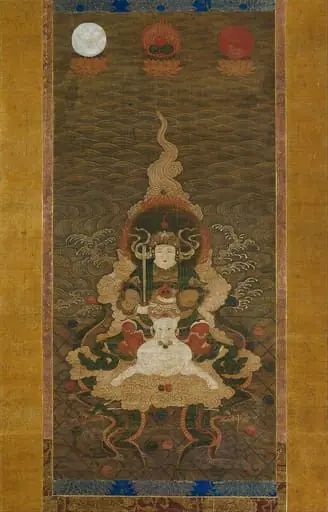
大威徳明王|Daiitoku Myōō is an ink painting. It dates from 1142 and is held in the collection of the Metropolitan Museum of Art. This hanging scroll, rendered in ink on paper, depicts Daiitoku Myōō (大威徳明王), a significant figure within Japanese Buddhist iconography.
- Accession no.
- 1975.268.13
- Credit line
- The Harry G. C. Packard Collection of Asian Art, Gift of Harry G. C. Packard, and Purchase, Fletcher, Rogers, Harris Brisbane Dick, and Louis V. Bell Funds, Joseph Pulitzer Bequest, and The Annenberg Fund Inc. Gift, 1975
About this work
Subject & Meaning
The painting depicts Daiitoku Myōō, a wrathful Buddhist king figure rendered as a man in the religious iconographic tradition.
The painting depicts Daiitoku Myōō, a wrathful Buddhist king figure rendered as a man in the religious iconographic tradition. Consistent with the deity's standard symbolism, the figure is shown with attributes including a sword, signaling the protective, fearsome power associated with this Wisdom King in esoteric Buddhism. The work portrays the deity as a sovereign, kingly presence rather than a serene buddha, emphasizing Daiitoku Myōō's role as a fierce guardian figure within the Buddhist pantheon. Its religious subject matter places the image firmly within the devotional function of Japanese Buddhist painting.
Technique & Style
Created in 1142 in Japan, this religious painting depicts the Buddhist deity Daiitoku Myōō. The work is executed as a hanging scroll, utilizing ink on paper as its primary medium and support. The image portrays a kingly male figure wielding a sword, consistent with iconographic traditions for this deity.
The piece is attributed to an anonymous artist, reflecting the common practice of unsigned religious works from this period. It is held in the collection of the Metropolitan Museum of Art.
History & Provenance
Created in Japan in 1142 during the late Heian period, this hanging scroll depicting Daiitoku Myōō was executed by an anonymous artist using ink on paper. The work is classified as religious art within the Buddhist tradition. The specific commission and earlier ownership history are not documented in available records. The piece is currently held in the collection of the Metropolitan Museum of Art.
Legacy
The hanging scroll of Daiitoku Myōō, painted in 1142, is held in the collection of the Metropolitan Museum of Art, underscoring its recognized significance in the study of Heian-period Buddhist art. The piece exemplifies the fusion of martial and spiritual themes that defined the period's devotional imagery, rendering a wrathful king wielding a sword amid esoteric Buddhist iconography. Its preservation in a major public institution has contributed to ongoing scholarly attention to early Japanese religious painting.
Overview
This hanging scroll, rendered in ink on paper, depicts Daiitoku Myōō (大威徳明王), a significant figure within Japanese Buddhist iconography. As a painting, it presents a powerful and protective deity, characterized by a formidable appearance. The artwork serves to visually manifest the deity's role and attributes, common in devotional art.
Artist & collection

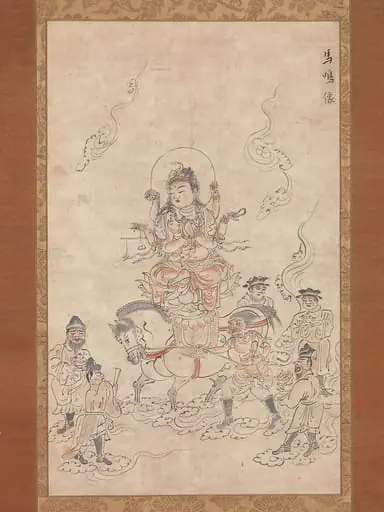 馬鳴菩薩図像|Iconographic Drawing of the Bodhisattva Memyō (Ashvaghosha)
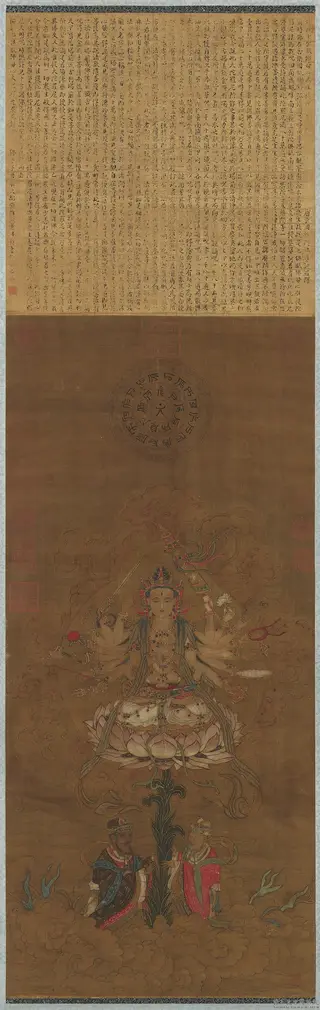 Cundi Bodhisattva
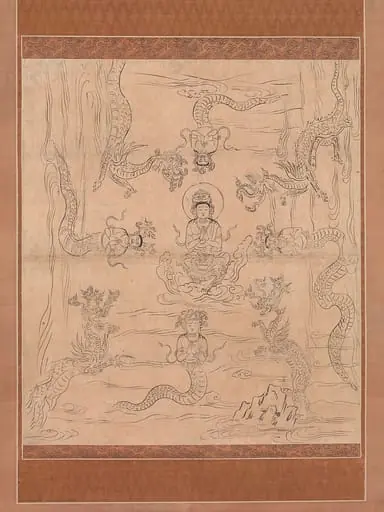 請雨経曼荼羅図像|Iconographic Drawing of a Rainmaking Mandala
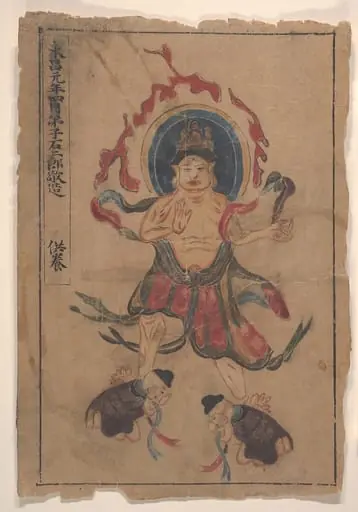 唐(?) 佚名 佛畫八幅 散頁|Eight Buddhist Paintings
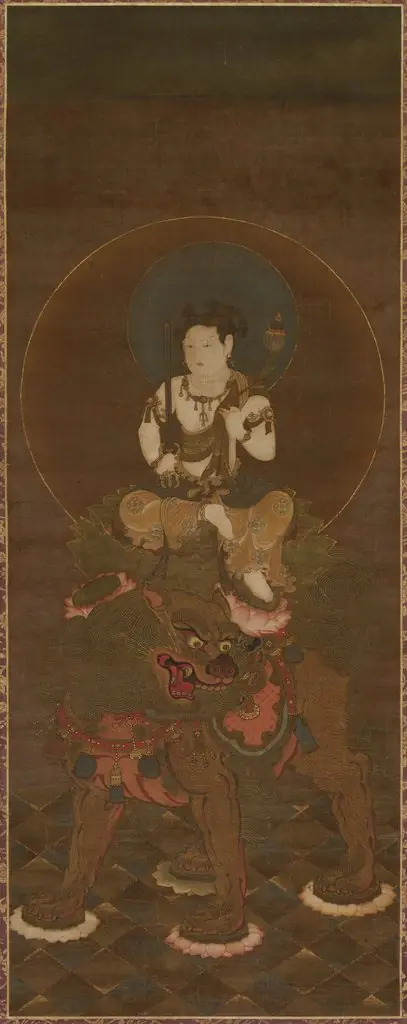 Monju with Five Hair Knots
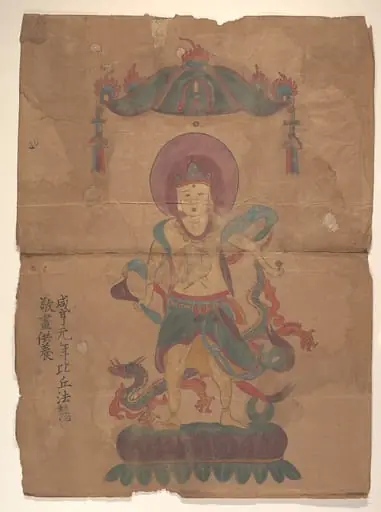 唐 法慧等 菩薩像二幅|Two Buddhist Paintings
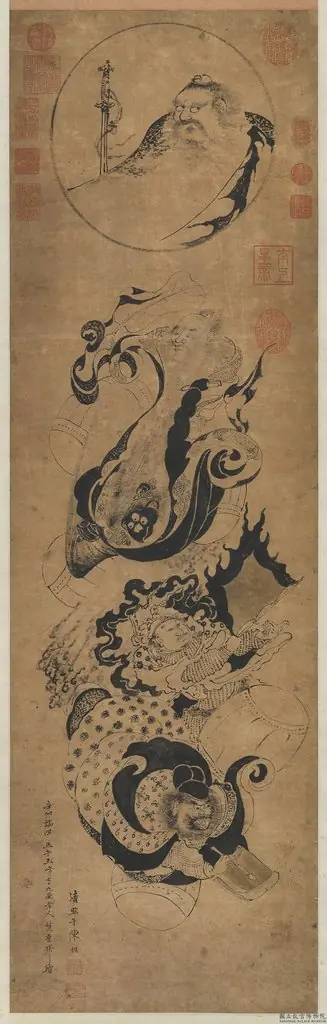 Portrait of the Heavenly Master
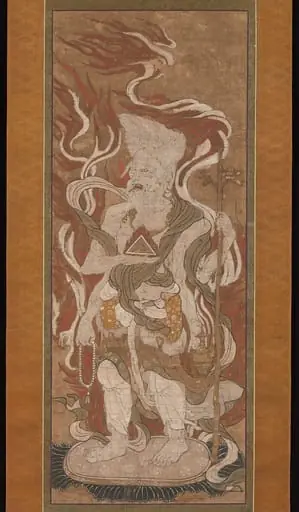 十二天像(火天)|One of the Twelve Devas: Katen
 荼枳尼天像|Dakini