Artwork
Alhaiya Raga
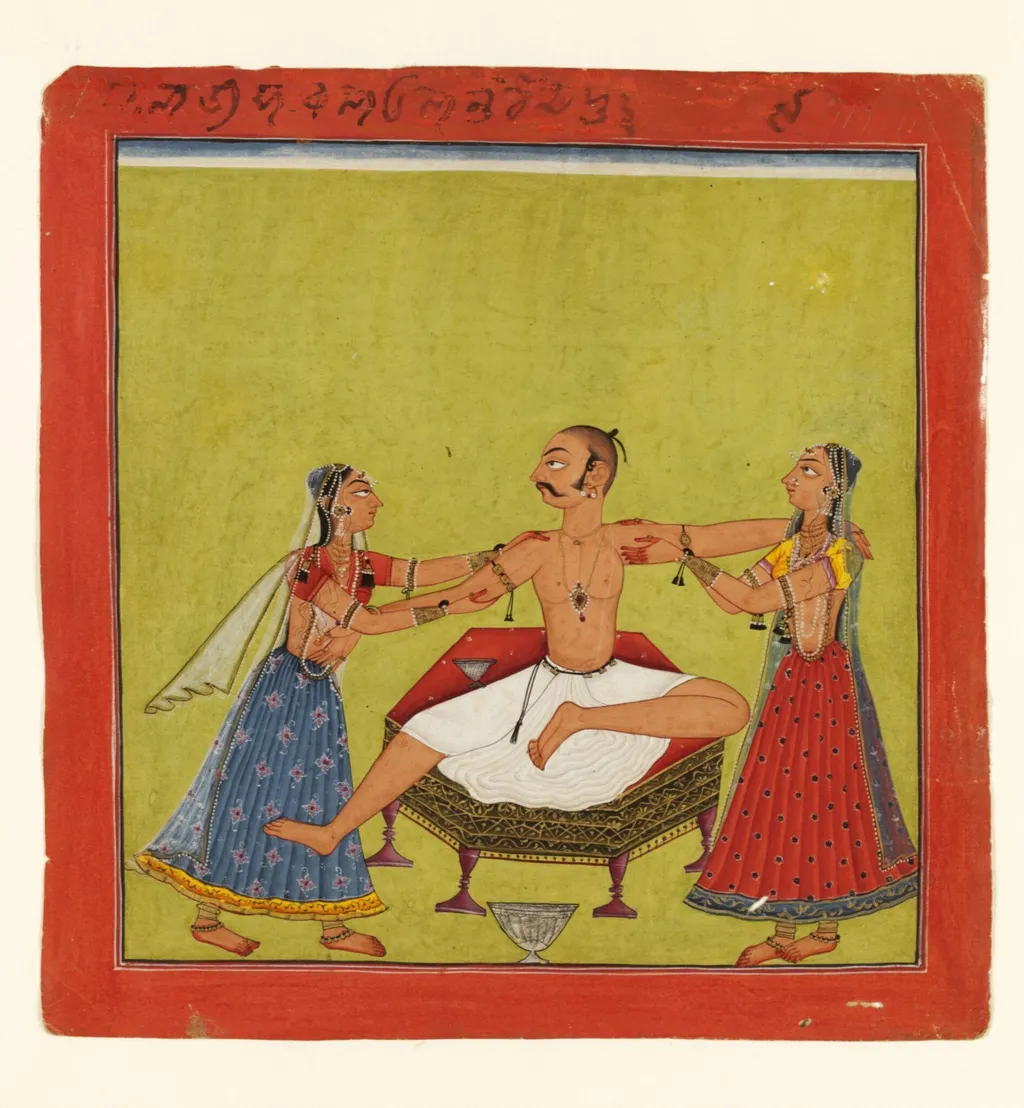
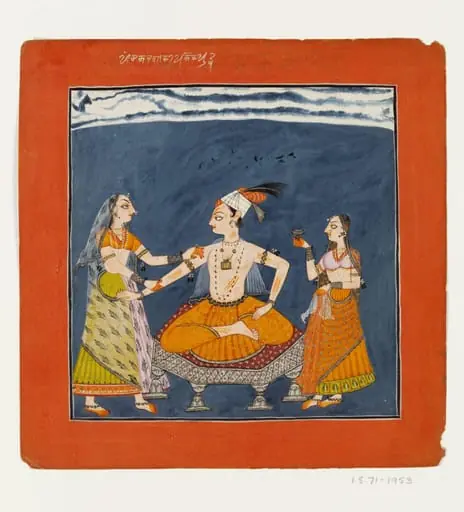
Alhaiya Raga is a paint painting by the Baroque artist Unknown. It dates from 1710 and is held in the collection of the Victoria and Albert Museum. The work depicts a nude‑torso male figure seated on a vivid red stool, clad only in a white dhoti.
About this work
Overview
The upper border bears an inscription in Takri script naming the musical mode Alhaiya Vilaval, identified as a son of the Bhairava raga.
The work depicts a nude‑torso male figure seated on a vivid red stool, clad only in a white dhoti. His arms are outstretched and each is being gently massaged by a female attendant. The upper border bears an inscription in Takri script naming the musical mode Alhaiya Vilaval, identified as a son of the Bhairava raga.
The piece forms a single leaf from a larger ragamala series, where each raga is visualised through a specific human activity.
Subject & Meaning
The composition translates the abstract concept of the Alhaiya Vilaval raga into a tangible scene of personal care, suggesting the soothing, contemplative qualities associated with the mode. By pairing the male figure with attendants performing a therapeutic gesture, the image conveys a sense of relaxation and balance, aligning the visual narrative with the musical character of the raga, which is traditionally linked to the Bhairava lineage.
Technique & Style
Rendered in a muted palette, the painting employs delicate gradations of tone reminiscent of the sfumato technique, softening edges to create a tranquil atmosphere. The figures are outlined with fine brushwork, while the Takri inscription is executed in a contrasting, precise hand, integrating textual and pictorial elements. The overall style reflects the courtly aesthetic of North Indian ragamala illustrations, emphasizing harmony between form and function.
History & Provenance
This leaf originates from a dispersed ragamala manuscript, a genre that flourished in the 17th and 18th centuries to visually catalogue Indian musical modes. Though the original codex is fragmented, the individual page has been preserved in a private collection before entering a museum repository in the early 2000s. Its Takri lettering situates the work within the western Himalayan cultural sphere, where the script was commonly used for devotional and artistic texts.
Artist & collection