Artwork
元 廣勝寺 藥師佛法會圖壁畫|Buddha of Medicine Bhaishajyaguru (Yaoshi fo)
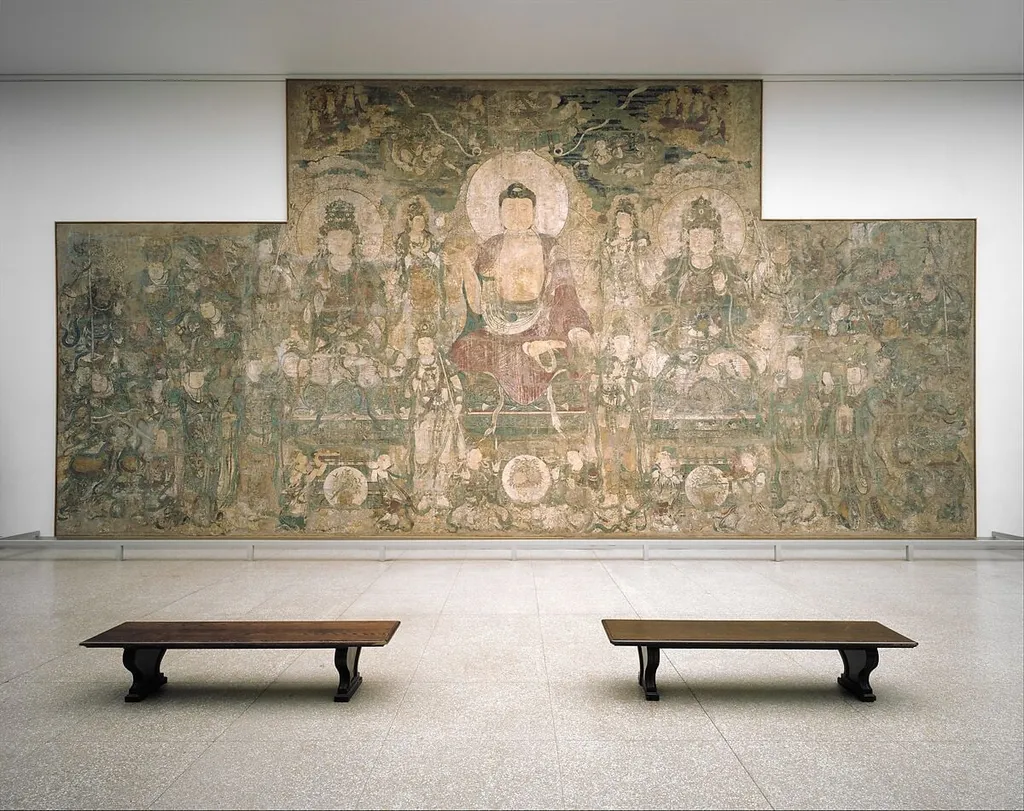
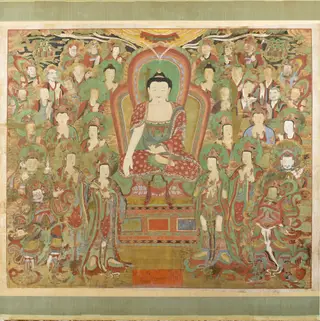
元 廣勝寺 藥師佛法會圖壁畫|Buddha of Medicine Bhaishajyaguru (Yaoshi fo) is an unspecified painting. It dates from 1319 and is held in the collection of the Metropolitan Museum of Art. This monumental wall painting, dating from China's Yuan dynasty, depicts the Pure Land of Bhaishajyaguru, the Buddha of Medicine.
About this work
In 1928, a monk named Zhenda at Guangsheng Temple in Shanxi province sold this wall painting for 1,600 silver dollars to fund urgent repairs. Nearly fifty feet long, it now fills a whole gallery wall at the Metropolitan Museum of Art: a colossal Yuan-dynasty image of Bhaishajyaguru, the Buddha of Medicine, robed in red and green and flanked by solar and lunar bodhisattvas.
Subject & Meaning
Unlike traditional Indian representations, all figures here wear Chinese dress; the central Buddha dons a red robe and holds a medicine bowl in his left hand.
The mural depicts the Buddha of Medicine, Bhaishajyaguru (Yaoshi fo), seated in his imagined heaven or Pure Land, representing both physical and spiritual healing as well as salvation and the prevention of disasters in Mahayana Buddhism. Unlike traditional Indian representations, all figures here wear Chinese dress; the central Buddha dons a red robe and holds a medicine bowl in his left hand. He is flanked by the bodhisattvas Avalokitesvara and Cintamanicakra, accompanied by four secondary bodhisattvas and the attendants Candraprabha and Suryaprabha, who hold moon and sun disks, respectively.
Six small predecessor Buddhas appear in the upper section, referencing the Saptatathāgatapūrvapranidhānavisēsa Sūtra. Flanking the assembly are twelve warrior generals, six per side, symbolizing the Buddha's vow to aid others.
Technique & Style
The mural is executed in water-based pigment applied over a preparatory ground of clay mixed with straw, built directly onto the eastern gable wall of the Main Hall at Guangsheng Lower Monastery. The composition, measuring 751.8 cm in height and 1511.3 cm in length, is notable for its high level of detail. Stylistically, the robust, full-faced figures are characteristic of the Buddhist and Daoist imagery associated with the fourteenth-century painter Zhu Haogu, though the artist of this specific work has not been identified.
The figures are rendered in Chinese robes and dress rather than the Indian attire traditionally used for Bhaisajyaguru, with the central Buddha wearing a red robe. The painting is dated circa 1319, during China's Yuan dynasty.
History & Provenance
The Buddha of Medicine Bhaishajyaguru (Yaoshi fo) wall painting was created in 1319 for the eastern gable wall of the Main Hall at Guangsheng Lower Monastery (Guangsheng Si), Zhaocheng County, Shanxi Province, during the Yuan dynasty. It was prepared by applying water-based pigments over a foundation of clay mixed with straw. While the artist remains unidentified, stylistic features, robust, full-faced figures, have been linked to the painter Zhu Haogu, active in Buddhist and Daoist imagery in the fourteenth century.
The mural remained in situ until the 1920s, when monks sold it to fund temple renovations. It was acquired by Arthur M. Sackler and given to the Metropolitan Museum of Art in 1965. Measuring approximately 751.8 by 1511.3 cm, it is distinct from related murals from the same monastery now in the University of Pennsylvania Museum and the Nelson-Atkins Museum of Art.
Context
The wall painting from Guangsheng Lower Monastery, dated 1319, is a Yuan-period Buddhist mural that depicts the Buddha of Medicine Bhaiṣajyaguru surrounded by bodhisattvas and heavenly warriors in Chinese attire. Scholars note its high level of detail, its use of a clay-straw ground, and its water-based pigments, and they link its stylistic vigor to the late-Yuan painter Zhu Haogu, though the original hand remains unknown. Critical studies emphasize the work’s role in illustrating the transmission of Indian Buddhist iconography into Chinese visual culture and its significance for understanding monastic patronage and the circulation of murals to Western collections.
Its acquisition by the Metropolitan Museum of Art and the dispersal of the monastery’s murals in the 1920s underscore its importance in the global reception of East Asian Buddhist art.
Legacy
The mural's legacy is closely tied to its modern reception and institutional prominence. The work was historically misidentified as the Assembly of Śākyamuni Buddha, an error that shaped its early scholarly reception before its correct identification as the Paradise of Bhaisajyaguru was established. Following its sale by monks in the 1920s, the mural entered Western museum collections, significantly elevating its international profile; it was ultimately gifted to the Metropolitan Museum of Art in 1965, where it remains a major holding and a key example of Yuan-dynasty Buddhist wall painting.
Overview
This monumental wall painting, dating from China's Yuan dynasty, depicts the Pure Land of Bhaishajyaguru, the Buddha of Medicine. Originally adorning a monastery in Shanxi province, its immense scale and vibrant imagery now command an entire gallery wall at the Metropolitan Museum of Art. The work offers a profound glimpse into the religious art of the period, presenting a colossal vision centered on the revered healing Buddha.
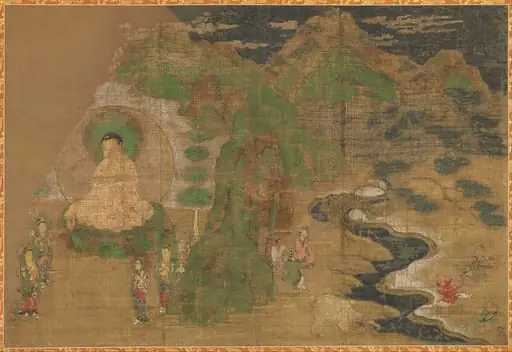
Artist & collection

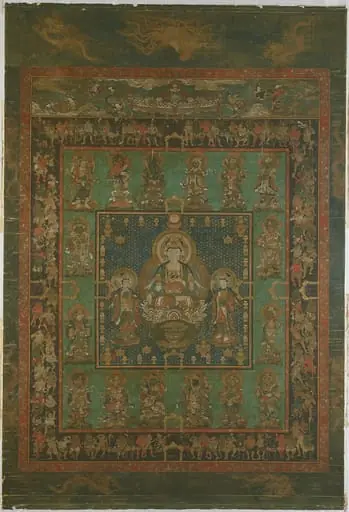 般若菩薩曼荼羅図|Mandala of the Bodhisattva Hannya (Prajnaparamita)
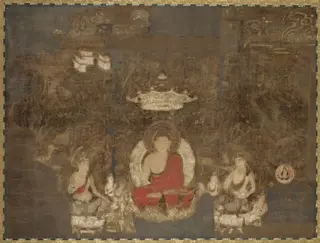 Shaka, the Historical Buddha, Preaching on Vulture Peak
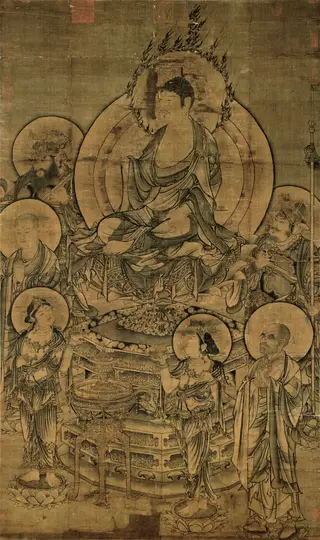 The Buddha Preaching the Law
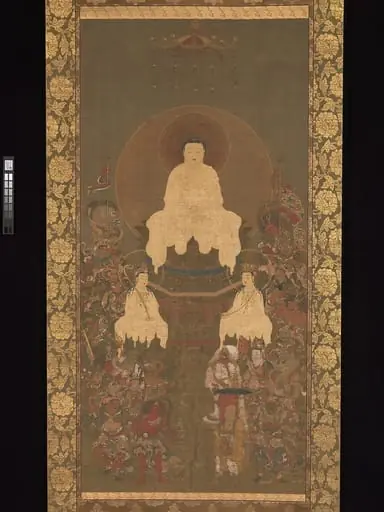 釈迦三尊十六善神像|Shaka (Shakyamuni), the Historical Buddha, with Two Attendant Bodhisattvas and Sixteen Benevolent Deities
 Untitled
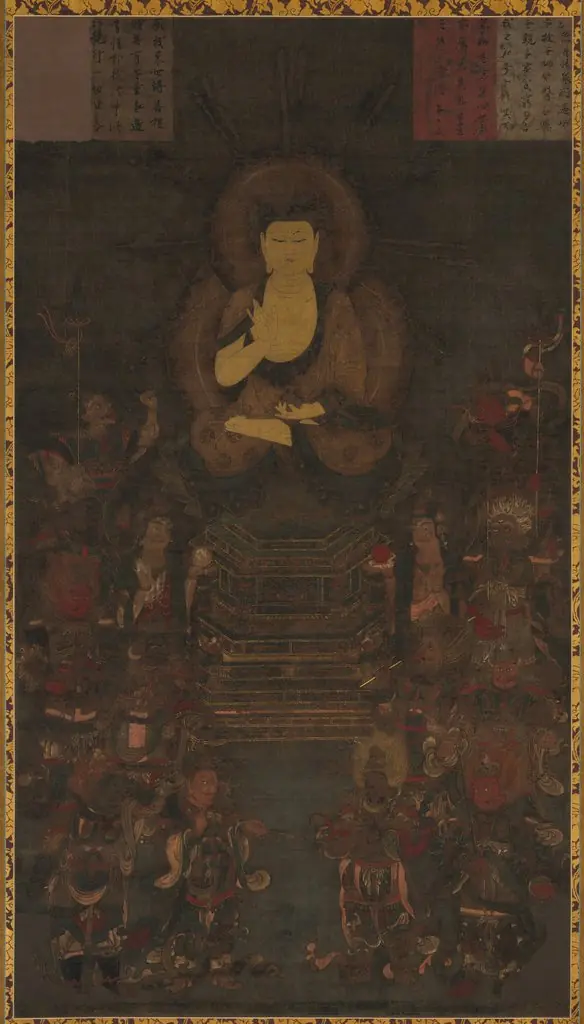 Medicine Master Buddha and the Twelve Divine Generals
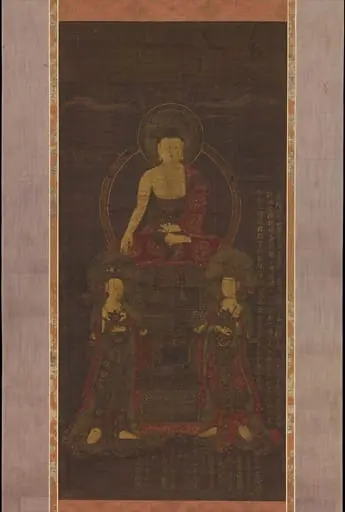 석가삼존도 조선|釋迦三尊圖 朝鮮|Shakyamuni triad
 Preaching Sakyamuni Buddha