Artwork
Buddhist Deities
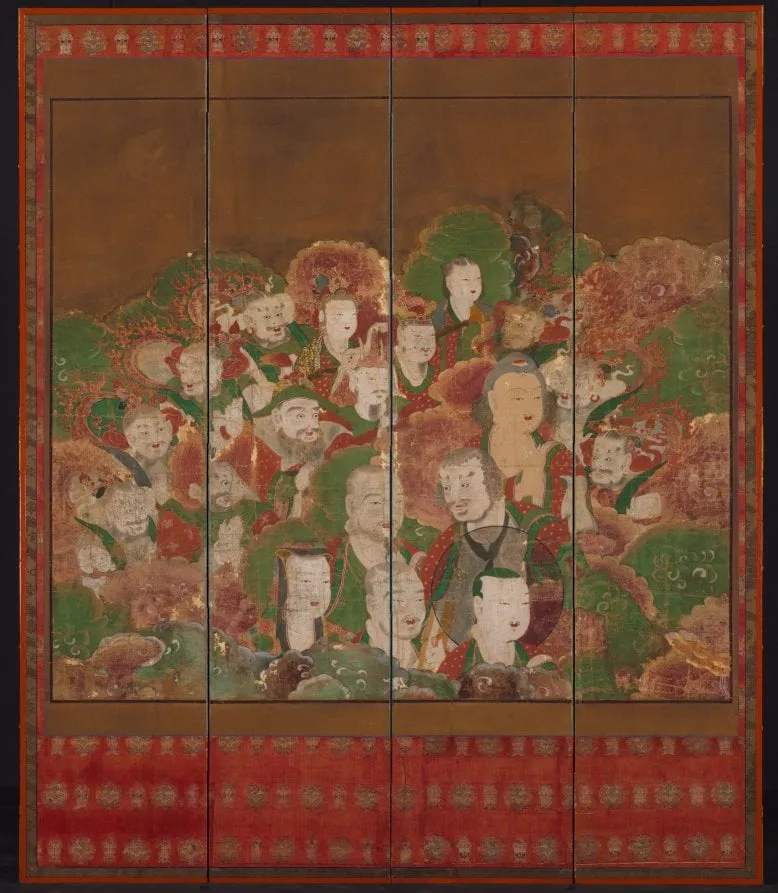
Buddhist Deities is an unspecified painting by the Baroque artist Unknown. It dates from 1800 and is held in the collection of the Cleveland Museum of Art. This artwork is a remnant of a large ceremonial banner, later reconfigured into a four-panel folding screen.
- Accession no.
- 1999.119
- Credit line
- Gift of Mitsuru Tajima in memory of Robert P. Bergman
About this work
You see a row of colorful Buddhist gods and goddesses standing side by side, each holding different objects.
You see a row of colorful Buddhist gods and goddesses standing side by side, each holding different objects. Their robes are bright reds, blues, and greens, and their faces look calm and serious.
This painting was once part of a much bigger banner, cut down and turned into a folding screen. On the back, you can find pages from a Buddhist text written in gold on dark blue paper. It’s like a secret layer hiding behind the artwork.
To see more art like this, look up korea, joseon dynasty (1392–1910).
Overview
This artwork is a remnant of a large ceremonial banner, later reconfigured into a four-panel folding screen. The front displays a procession of Buddhist deities, while the reverse preserves fragments of sacred sutras inscribed in gold ink on indigo-dyed paper. The transformation reflects practical reuse of religious materials, common in Joseon-era Korea, where spiritual objects were repurposed without losing their devotional significance.
Subject & Meaning
The figures are celestial beings from Mahayana Buddhist tradition, each identified by distinctive attributes held in their hands, vajras, lotuses, scrolls, or vessels. Their serene expressions and aligned postures suggest a unified cosmic order. The arrangement implies ritual procession or divine assembly, intended to invoke protection and spiritual presence during ceremonies or meditation.
Technique & Style
The deities are rendered with precise brushwork and vivid mineral pigments, emphasizing rich reds, blues, and greens against a muted background. Gold outlines define drapery and ornaments, enhancing luminosity. The figures are stylized rather than naturalistic, following iconographic conventions that prioritize symbolic clarity over individual expression, typical of Joseon religious painting.
History & Provenance
Originally part of a monumental textile banner used in temple rituals, the work was later dismantled and mounted onto a folding screen, likely during the 18th or 19th century. The sutra fragments on the reverse, written in gold on indigo paper, indicate the material’s dual function as both image and scripture. This reuse suggests economic constraints or shifting devotional practices in late Joseon.
Context
During the Joseon dynasty, Confucian orthodoxy suppressed Buddhist institutions, yet private devotion persisted. Small-scale religious objects like this screen allowed lay practitioners to maintain spiritual practice discreetly. The integration of sutra text with painted imagery reflects a syncretic approach, where visual and textual sacredness coexisted in domestic or monastic settings.
Legacy
This object exemplifies the adaptive preservation of Buddhist art under political suppression. Its survival as a folded screen, rather than a discarded fragment, underscores the enduring value placed on sacred imagery and script. Today, it serves as a material witness to the quiet resilience of Buddhist practice in Korea during centuries of institutional decline.
Artist & collection









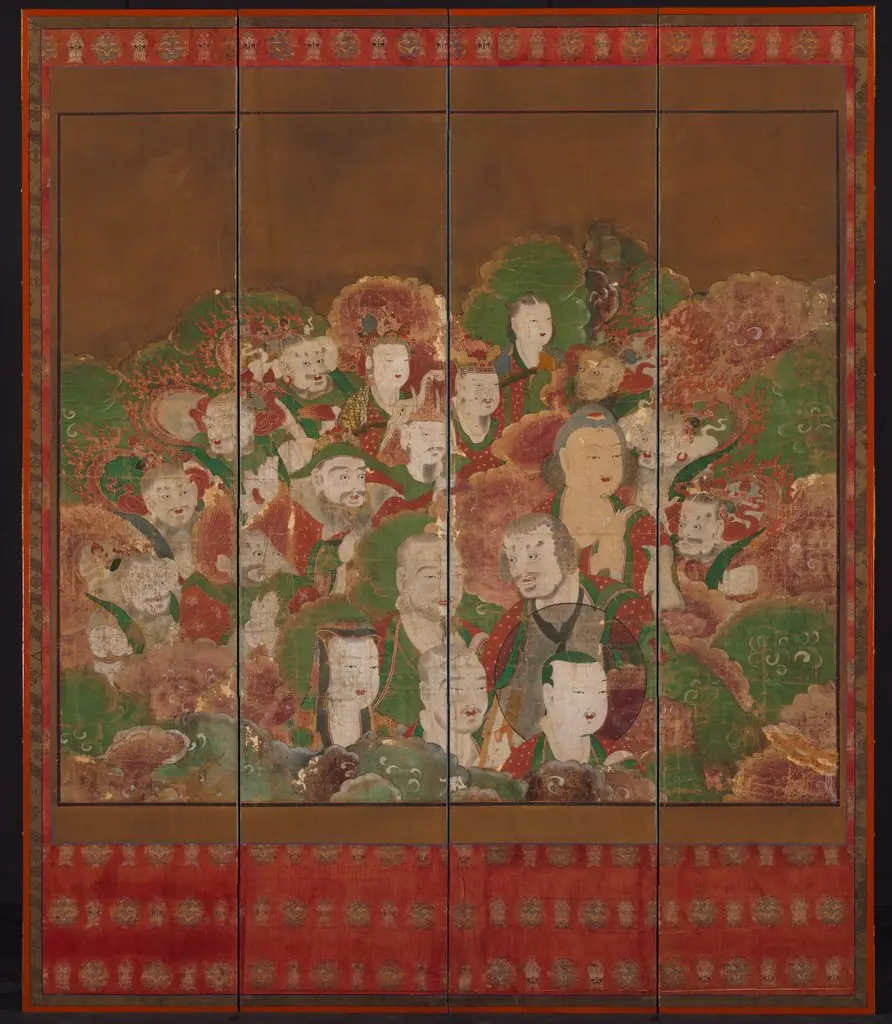
- Buddhist Deities
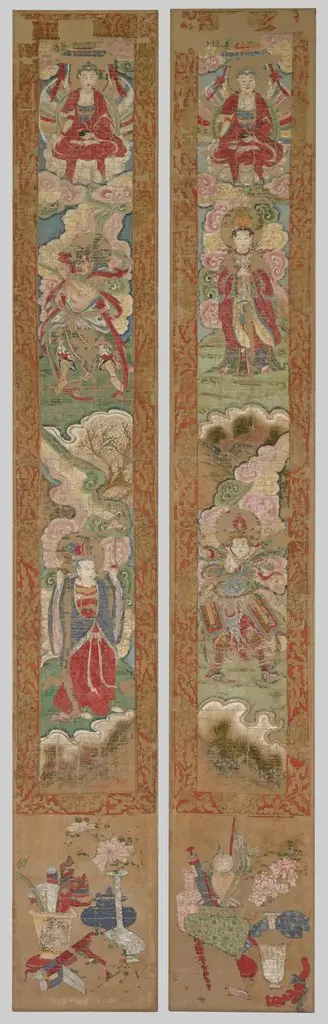 Buddhist Panel
 Buddhist Panel
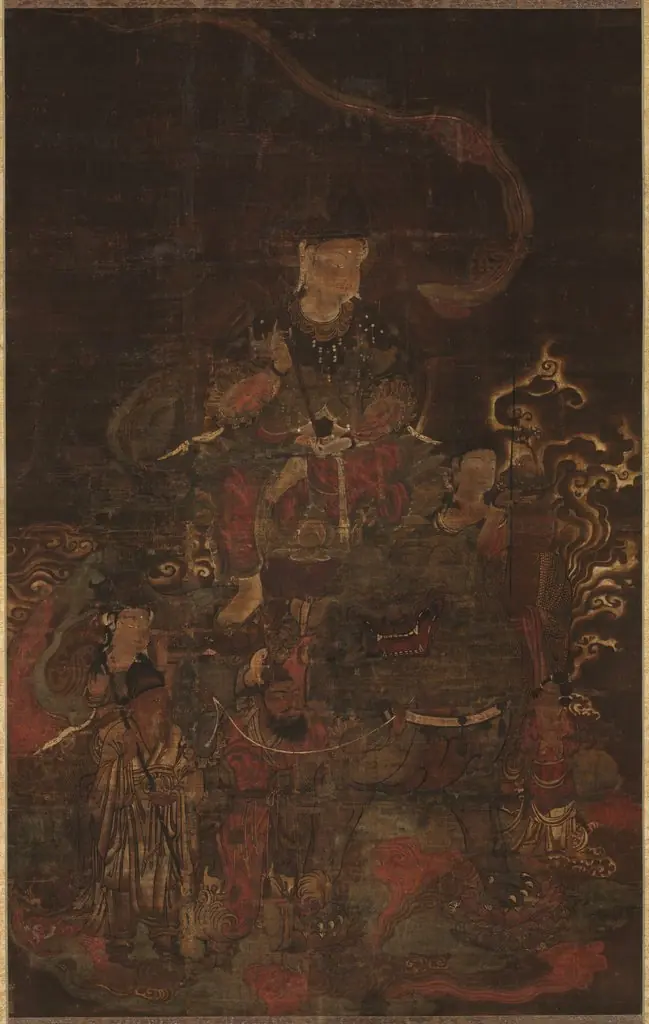 Monju Riding Lion with Attendants
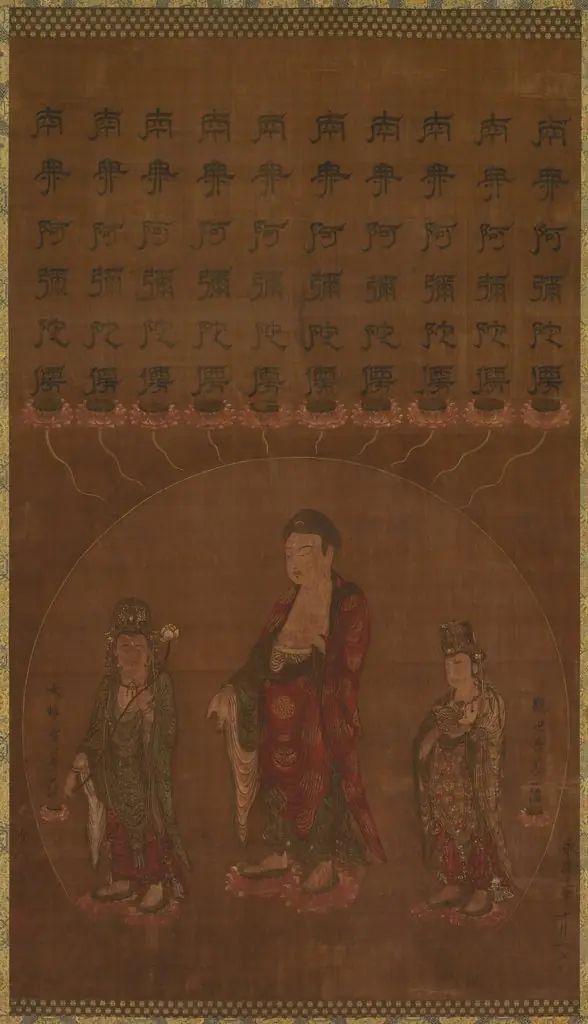 Buddha Amitābha with Two Attending Bodhisattvas
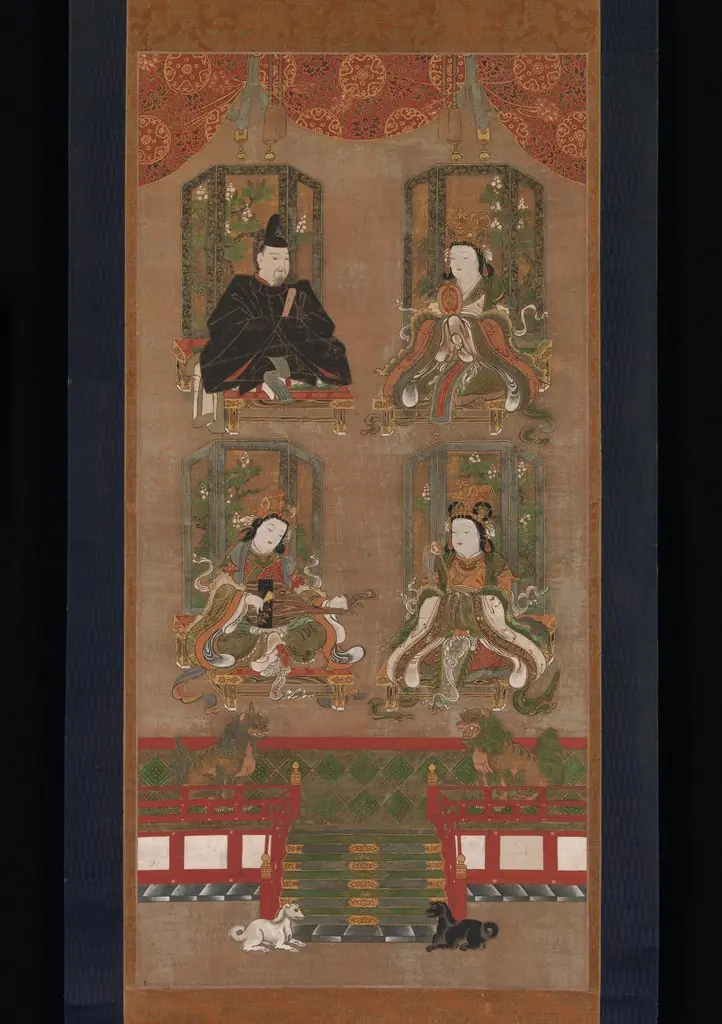 The Four Deities of Mount Kōya
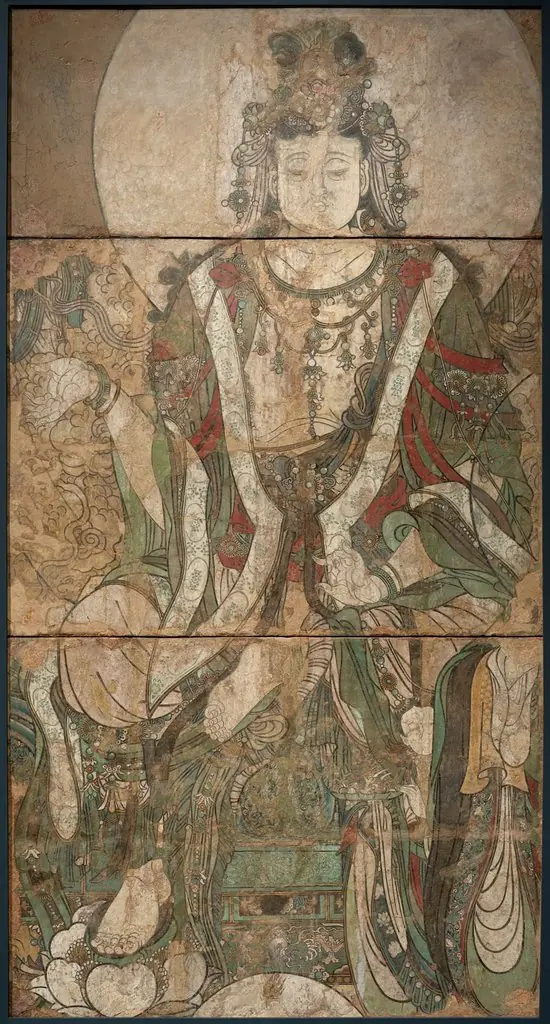 Bodhisattva
 People Dancing
 Autumn in the Mountains
 Celestial Buddhas and Deities of the Eastern and Southern Dipper Constellations
 明 佚名 絹本設色 鳥販圖 軸|Bird peddler
 Buddhist Panel