Artwork
Crown of thorns on the Holy Cross, with the Five Holy Wounds surrounded by rays
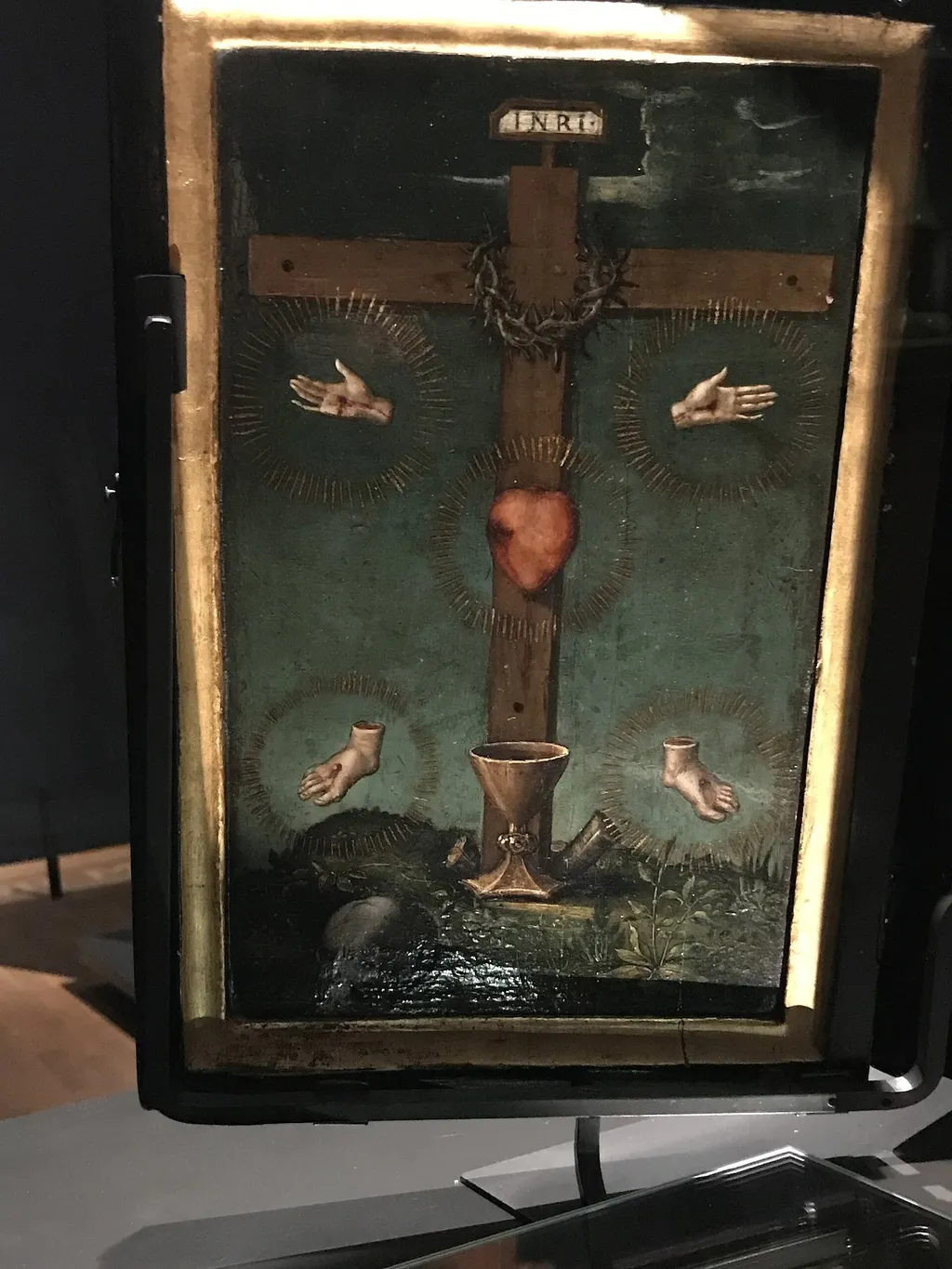
Crown of thorns on the Holy Cross, with the Five Holy Wounds surrounded by rays is an unspecified painting. It dates from 1523 and is held in the collection of the Rijksmuseum.
About this work
Subject & Meaning
The crown and wounds serve as iconographic references to Christ's suffering, while the surrounding rays suggest divine illumination or heavenly endorsement.
The painting presents the Crown of Thorns placed upon the Holy Cross, with the five wounds of Christ encircled by radiating rays. According to the documentation, it also includes symbols such as the True Cross, chalice, heart and skull, all associated with the Passion narrative. The crown and wounds serve as iconographic references to Christ's suffering, while the surrounding rays suggest divine illumination or heavenly endorsement.
Together these elements convey a devotional focus on the redemptive sacrifice of Jesus, inviting viewers to contemplate both his agony and the promise of salvation.
History & Provenance
Created in 1523, this painting is attributed to an anonymous artist and is held in the collection of the Rijksmuseum in Amsterdam. The image appears on the verso side of a portrait depicting Willem van Bibaut, indicating its original function as part of a double-sided panel. No specific inventory or accession number is documented in the available sources, and no exhibition history is recorded, nor are details of its commission or intermediate ownership prior to entering the museum's holdings provided in the available records.
Overview
This painting, titled Crown of thorns on the Holy Cross, with the Five Holy Wounds surrounded by rays, presents a stark devotional image. A wooden cross dominates the composition, centrally adorned with a crown of thorns. The artwork employs a muted green background to highlight the more vivid elements of the cross and its associated symbols.
The overall impression is one of profound reverence, inviting viewers to engage in contemplation of its religious significance and the suffering it represents.
Technique & Style
The artist employs a direct and focused compositional strategy, placing the symbolic cross at the visual heart of the painting. The deliberate contrast between the subdued green background and the brighter, more saturated tones of the cross and its emblems enhances their visual impact. The radiating light from the hands and feet draws the eye, contributing to the work's solemn and contemplative atmosphere. This stylistic approach underscores the painting's devotional purpose, guiding the viewer's attention to its spiritual message.
Artist & collection