Artwork
Calvari
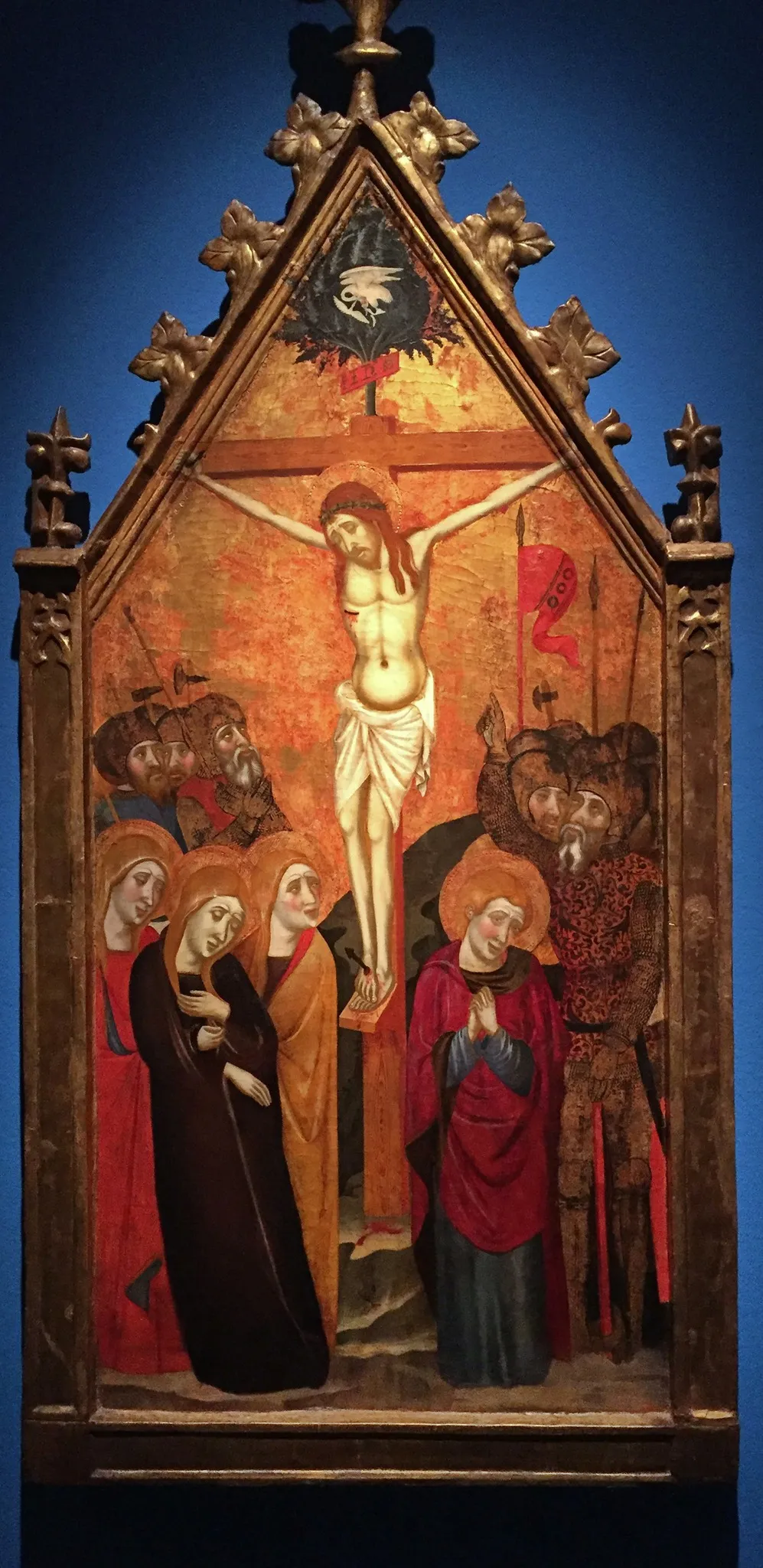
Calvari is a tempera painting by the Gothic painting artist Jaume Serra. It dates from 1390 and is held in the collection of the Museu Nacional d'Art de Catalunya.
About this work
Overview
Created around 1390, this tempera painting by Jaume Serra portrays the Crucifixion of Christ. It is a devotional panel typical of late medieval Catalan religious art. The work is part of the collection at the Museu Nacional d'Art de Catalunya, where it remains a key example of Gothic-era panel painting in the region.
Subject & Meaning
The scene centers on Christ crucified, bare-chested and crowned with thorns, his body suspended against a golden backdrop. Surrounding figures, clad in somber robes, gaze upward in quiet grief. The composition emphasizes spiritual contemplation rather than physical suffering, reflecting its function as an object of private or liturgical meditation.
Technique & Style
Executed in tempera on wood, the painting employs fine brushwork and flat, stylized forms characteristic of Gothic panel painting. The golden background enhances the sacred atmosphere, while the figures’ drapery is rendered with linear precision. Color contrasts between warm gold and cool textiles guide the viewer’s focus toward the central figure.
History & Provenance
The painting was likely commissioned for a chapel or private devotional use in Catalonia. It entered the Museu Nacional d'Art de Catalunya’s collection in the early 20th century, following the consolidation of religious artworks from suppressed monastic institutions. Its attribution to Jaume Serra is based on stylistic comparison with other documented works from his workshop.
Context
This work emerged during a period when Catalan artists synthesized International Gothic influences with local traditions. Religious imagery dominated artistic production, serving both liturgical and didactic roles. The emphasis on emotional restraint and hierarchical composition aligns with broader trends in late 14th-century Iberian devotional art.
Legacy
As one of the few surviving panels attributed to Jaume Serra, it offers insight into the devotional practices and artistic standards of late medieval Catalonia. While not widely known beyond regional scholarship, it remains a significant reference for understanding the evolution of religious painting in the Crown of Aragon.
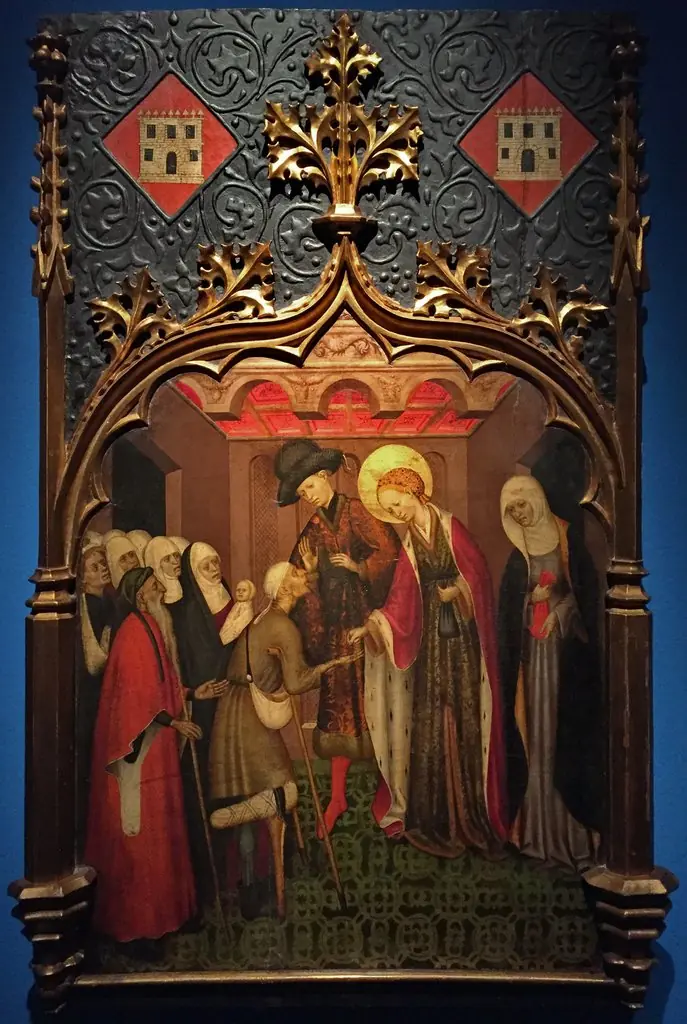
Artist & collection
Artist
Jaume Serra was a Catalan painter active in Barcelona during the second half of the fourteenth century, dying around 1395.

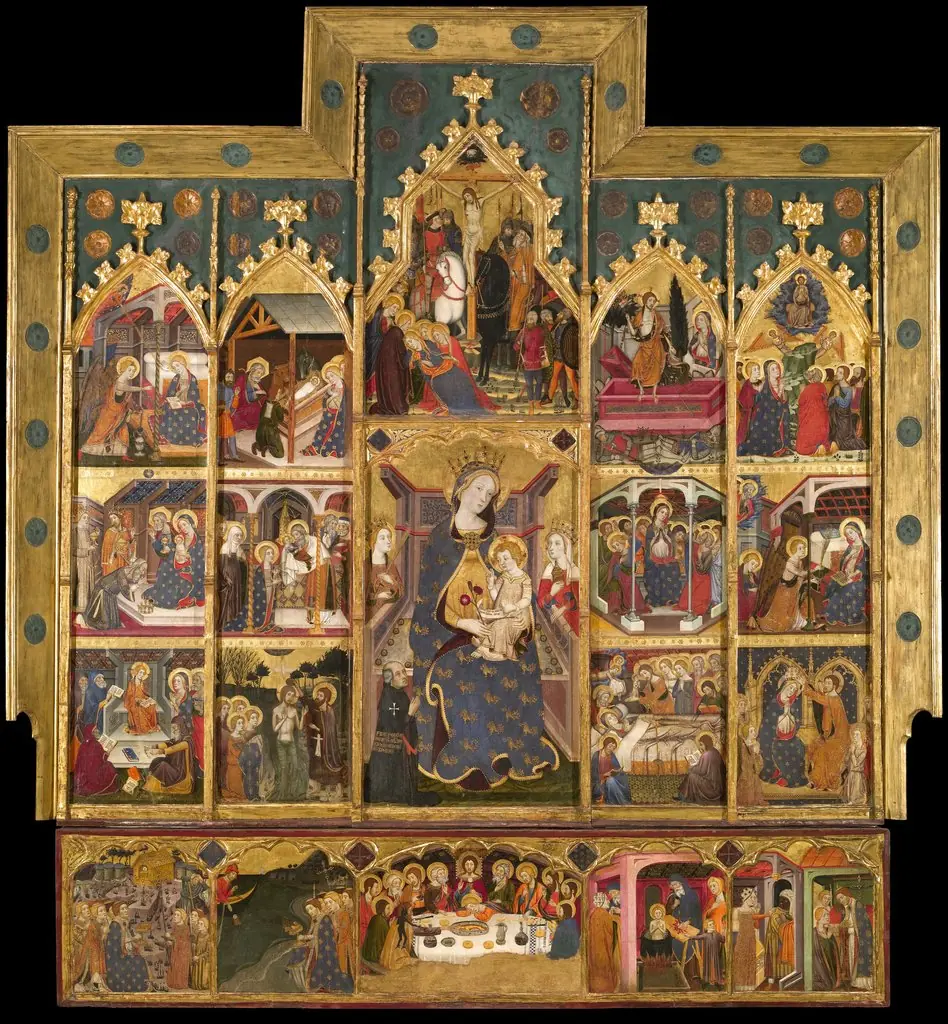
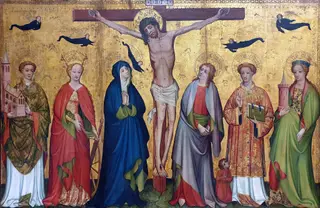 Christ on the cross with saints
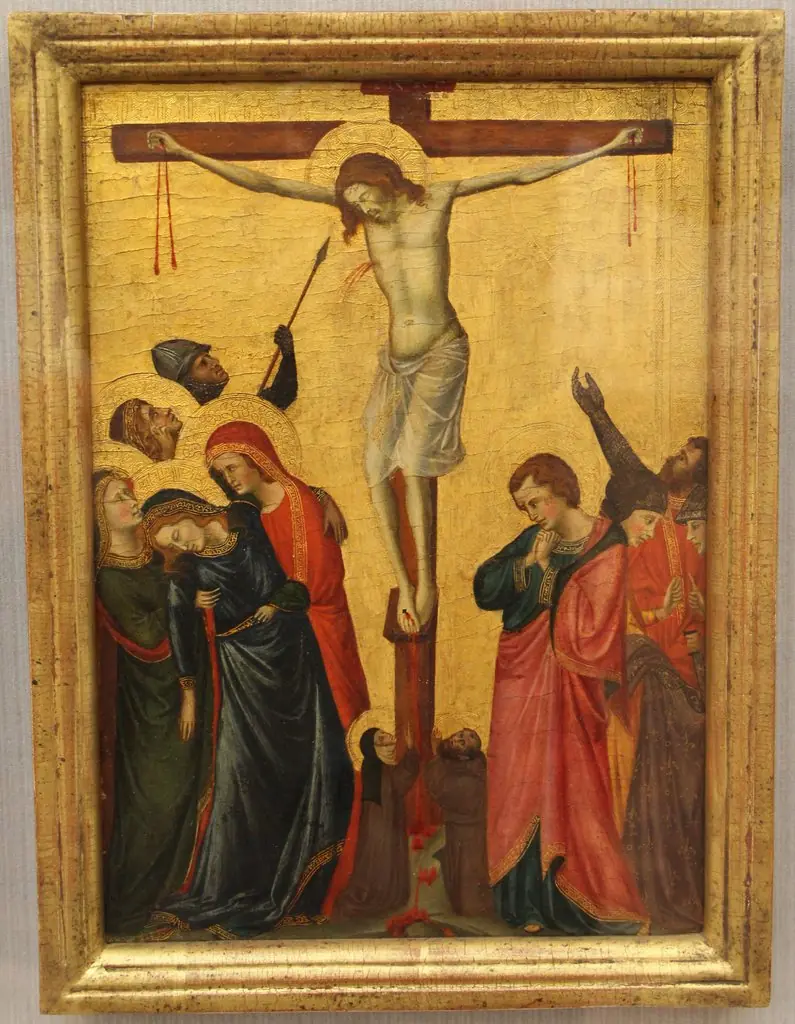 The Crucifixion
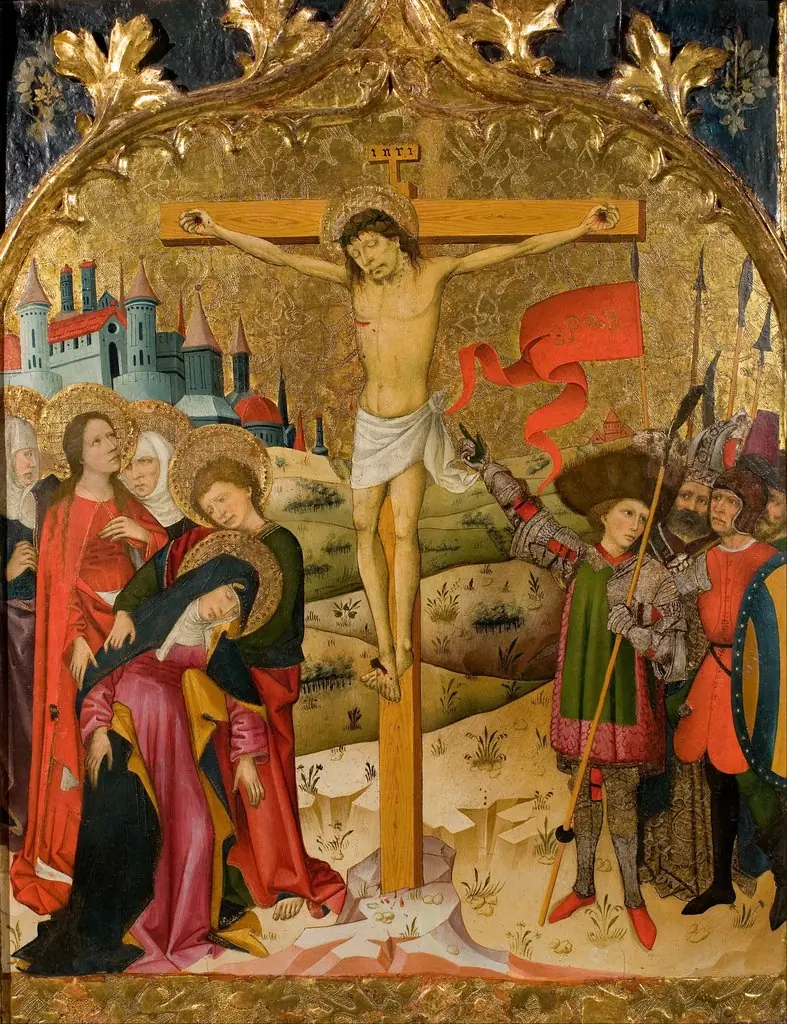 Calvary
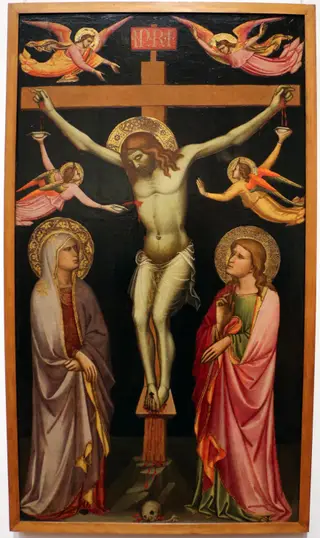 Crucifixion
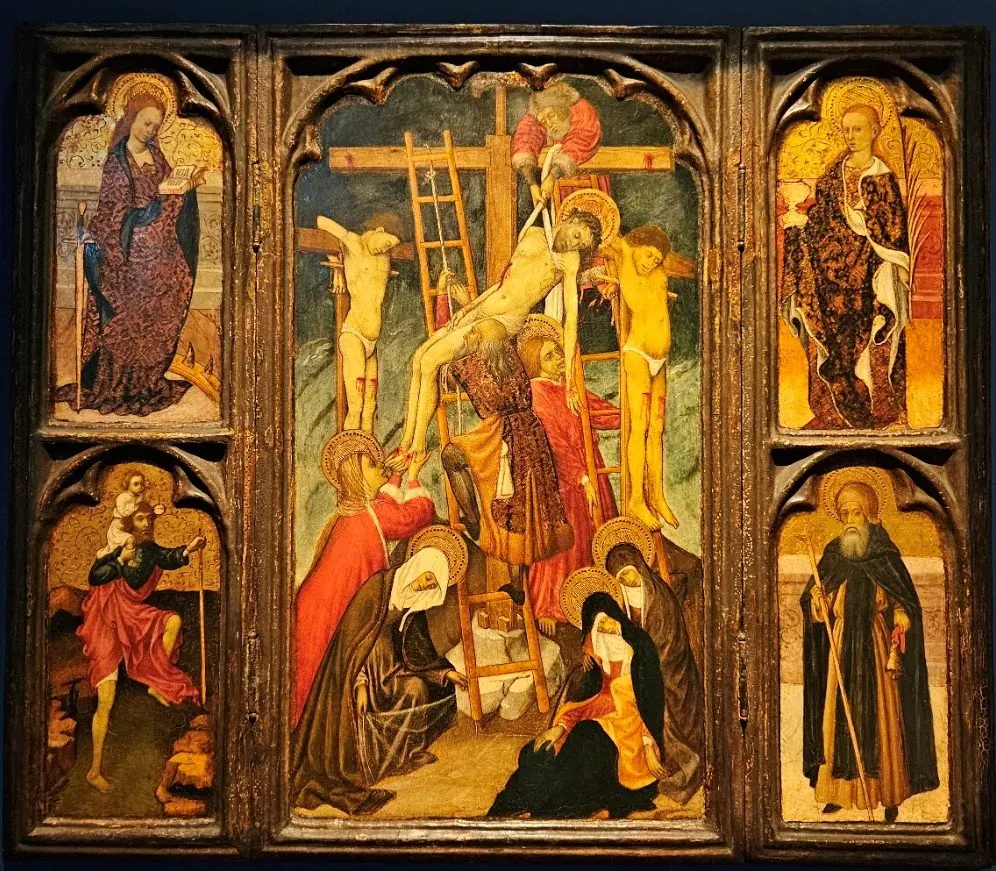 Triptych of the Descent from the Cross
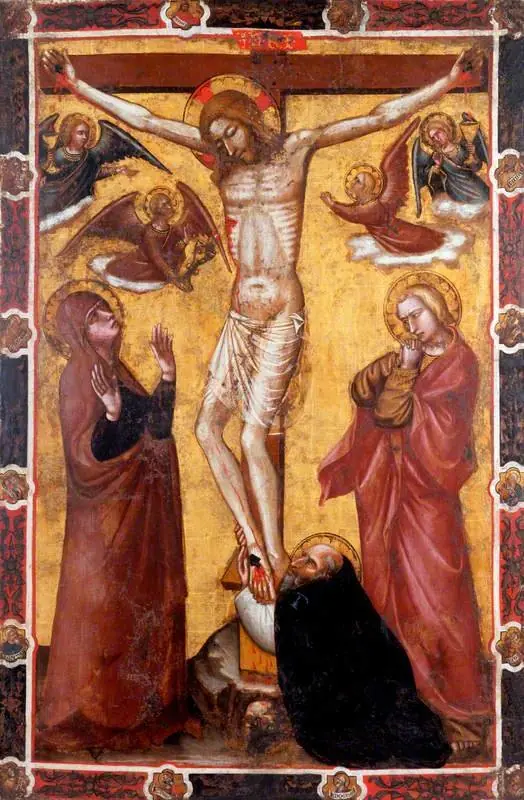 The Crucifixion with the Virgin and Saint John; Saint Anthony Abbot at the Foot of the Cross (one side of a processional banner) (formerly attributed to Barnaba da Modena)
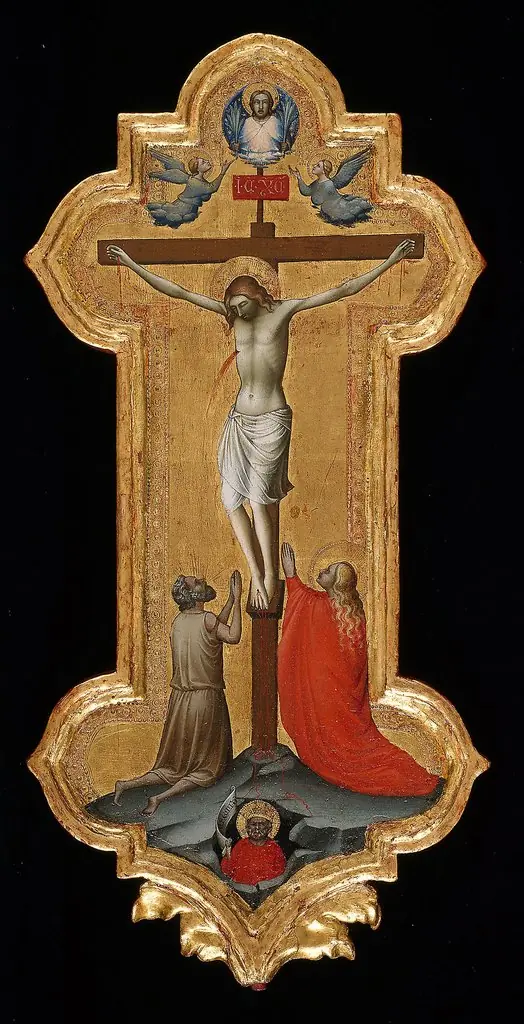 Processional Cross
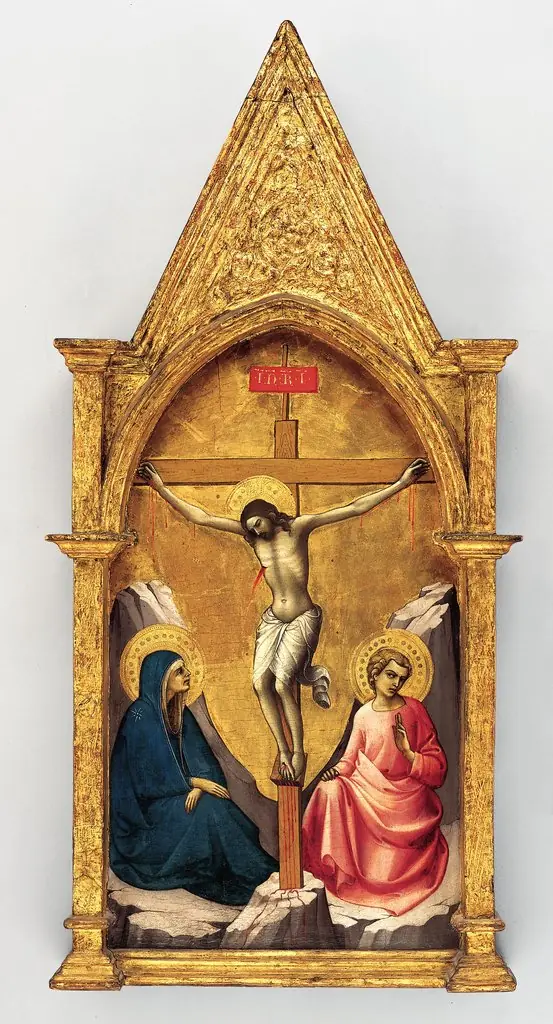 Tabernacle frame
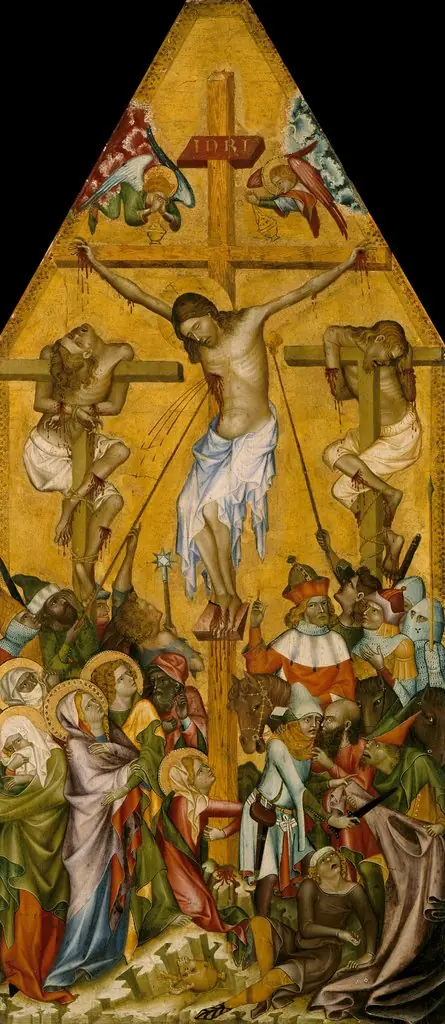 The Crucifixion of Christ
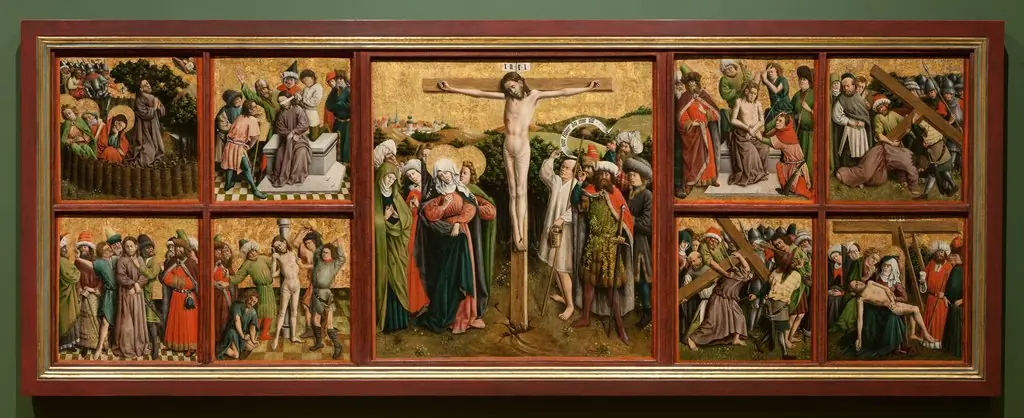 Altarpiece with The Passion of Christ
- Santa Llúcia repartint almoines