Artwork
David vencedor de Goliat
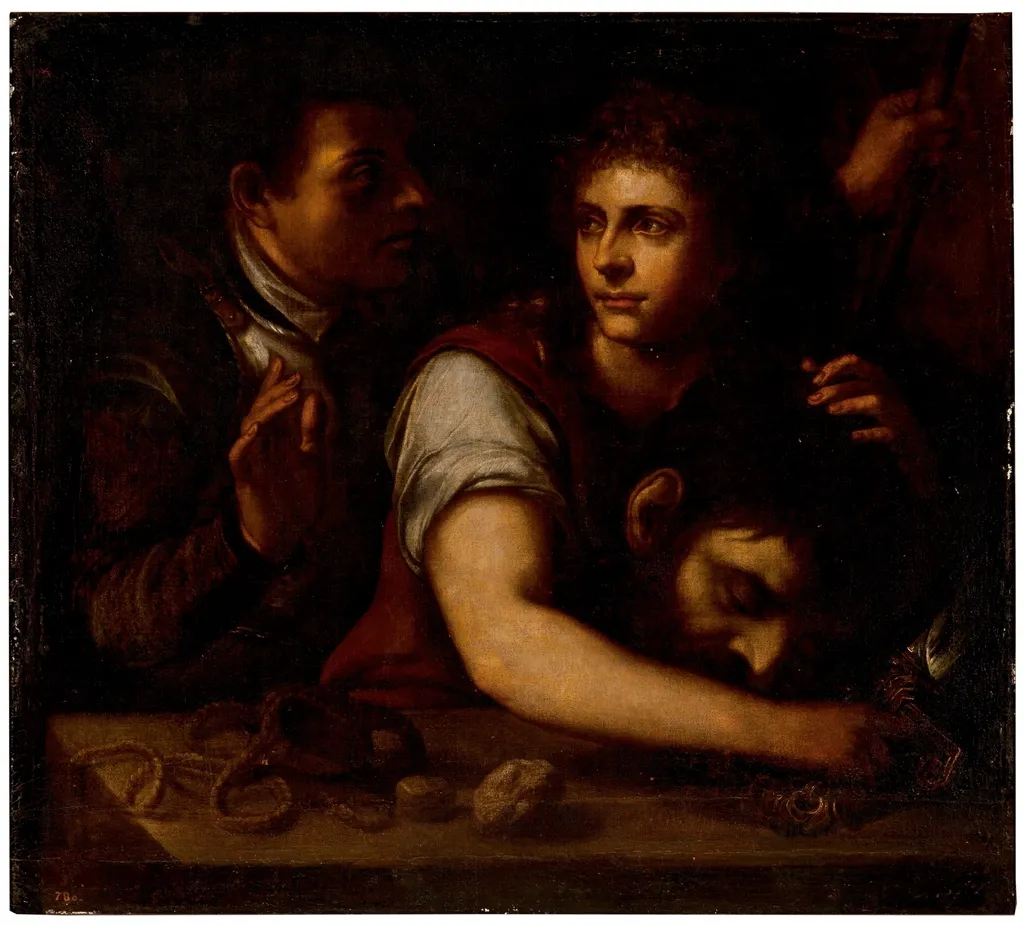
David vencedor de Goliat is an oil painting by the Early Baroque Italian artist Unknown. It dates from 1601 and is held in the collection of the Museo del Prado. The canvas presents a youthful figure, presumed to be David, clutching the severed head of a towering opponent, likely Goliath.
About this work
Subject & Meaning
In this composition David is presented as the victorious underdog, embodying divine favor and the triumph of faith over physical might.
The painting shows the biblical hero David triumphing over the giant Goliath, a scene drawn from the Old Testament narrative of the battle between the young shepherd and the Philistine warrior. In this composition David is presented as the victorious underdog, embodying divine favor and the triumph of faith over physical might. The work belongs to the religious art genre and was created in 1601 using oil on canvas, measuring 96 cm by 106 cm. It entered the collection of Ferdinand VII of Spain and is housed in the Museo del Prado at the Royal Palace of Aranjuez.
Symbolically, the depiction emphasizes themes of righteousness, divine intervention, and the moral victory of the faithful, resonating with Counter‑Reformation ideals of spiritual triumph. The anonymous artist’s rendering captures the dramatic moment with a focus on David’s confident posture and Goliath’s fallen form, reinforcing the narrative of divine justice.
The subject therefore encapsulates the biblical episode of David and Goliath, highlighting themes of faith, courage, and divine support that were central to the religious art of the period.
Technique & Style
The work is executed in oil on canvas, measuring 96 cm in height by 106 cm in width. Its medium and support place it within the conventions of early seventeenth-century Spanish religious painting. The depiction of David and Goliath belongs to the religious genre, rendered with the tonal and textural possibilities characteristic of oil paint on canvas.
History & Provenance
The work was created in 1601 as an oil painting on canvas for the Spanish monarch Ferdinand VII, who commissioned it for display in the Royal Palace of Aranjuez. It entered the collection of the Museo del Prado, where it remains on view today.
The painting depicts the biblical episode of David and Goliath and is classified within the religious art genre. Its dimensions are 96 cm in height and 106 cm in width, and it was executed using oil paint on canvas.
The painting David vencedor de Goliat is held in the collection of the Museo del Prado. Historical records indicate the work was once owned by Ferdinand VII of Spain. While the piece has been associated with the Royal Palace of Aranjuez as a specific location within the museum's scope, no specific inventory number or detailed exhibition history is provided in the available documentation.
Context
The painting David venciendo a Goliat, created in 1601 by an anonymous artist, was executed in oil on canvas and falls within the religious art genre. Originally part of the collection of Ferdinand VII of Spain, it was housed at the Museo del Prado in the Royal Palace of Aranjuez before being transferred to its current location at the Museo del Prado. The work depicts the biblical confrontation between David and Goliath and was classified as a religious painting upon its creation.
Its attribution to the early Baroque period reflects the artistic and religious context of Counter-Reformation Spain, where narrative-driven compositions emphasizing divine intervention were particularly favored.
Overview
The canvas presents a youthful figure, presumed to be David, clutching the severed head of a towering opponent, likely Goliath. The scene is set on a flat surface where the giant’s head rests amid scattered objects, while the young man’s right hand grasps the foe’s hair. Strong contrasts of light and shadow dominate the composition, focusing attention on the dramatic encounter.
Artist & collection









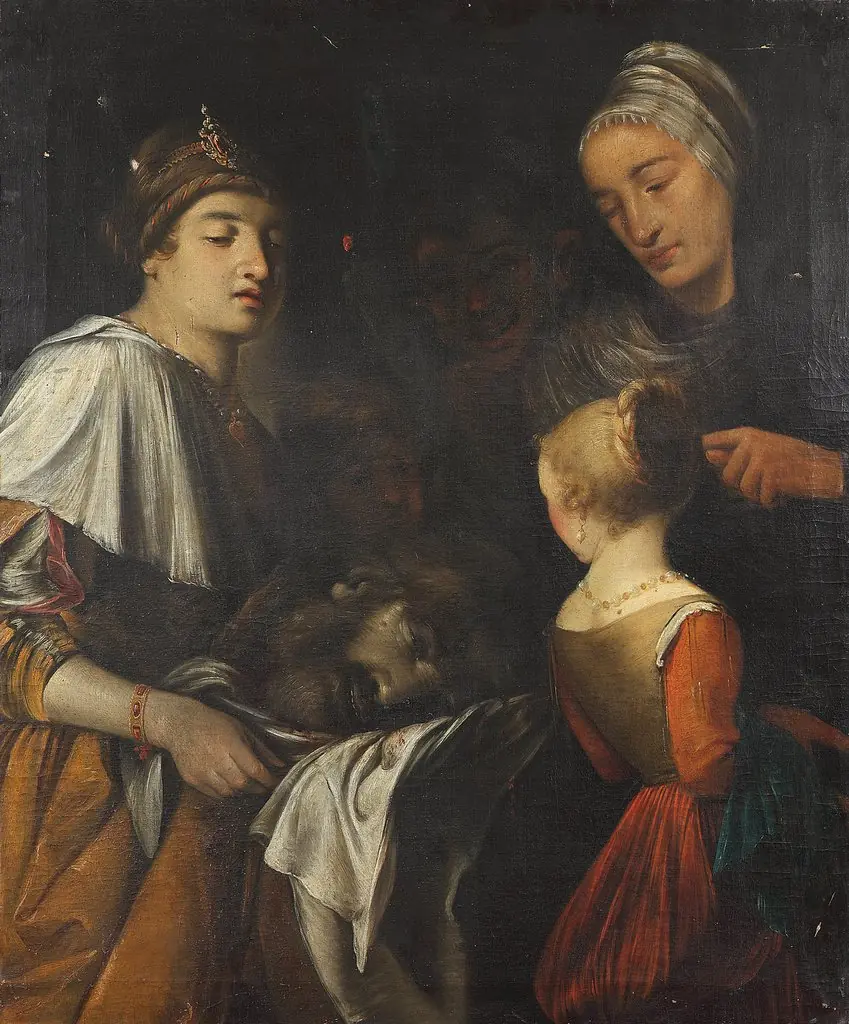 Judith with the Head of Holofernes
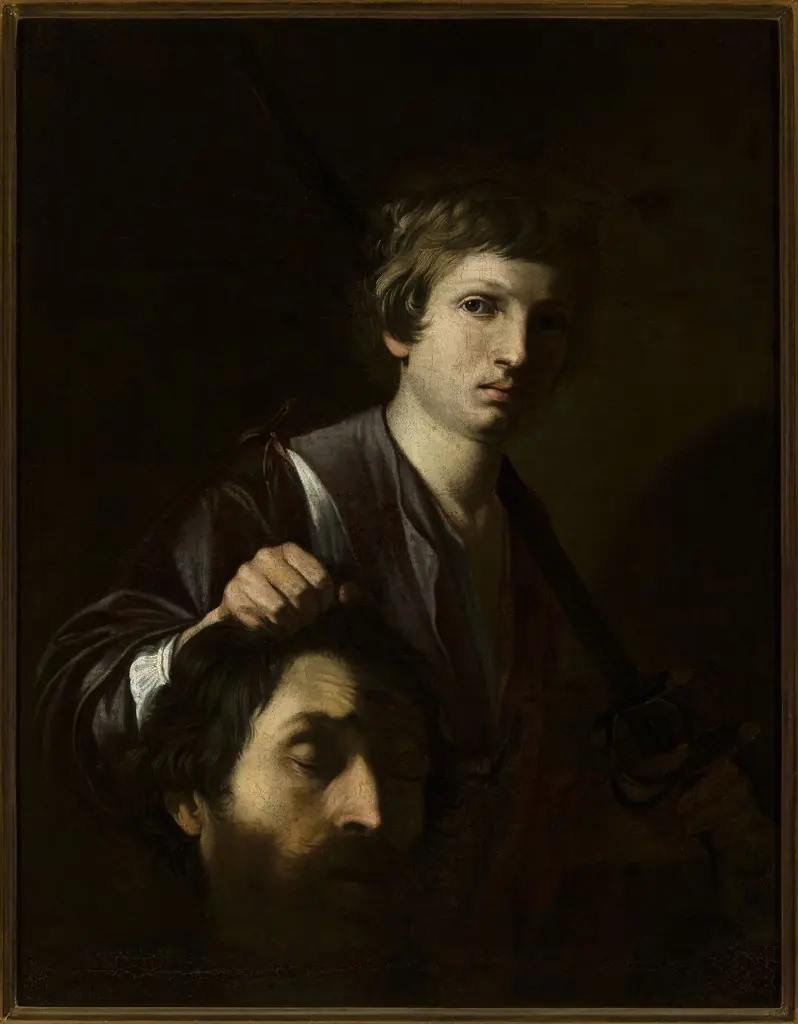 David with Goliath’s head
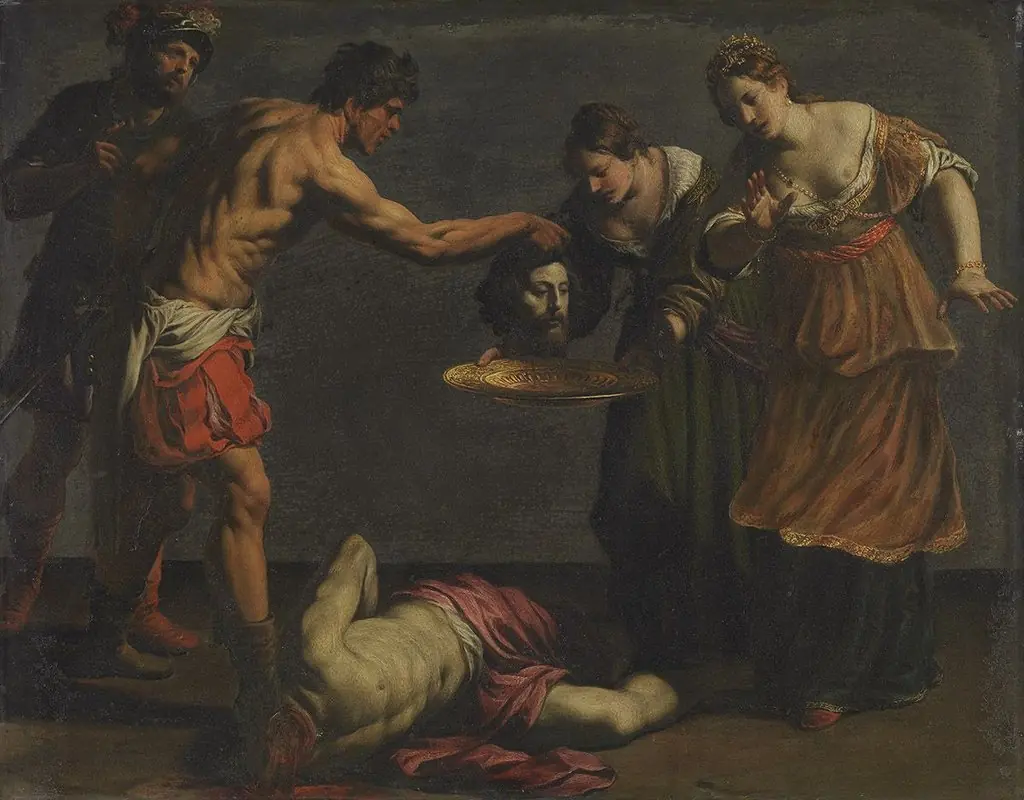 Salome empfängt das Haupt Johannes des Täufers
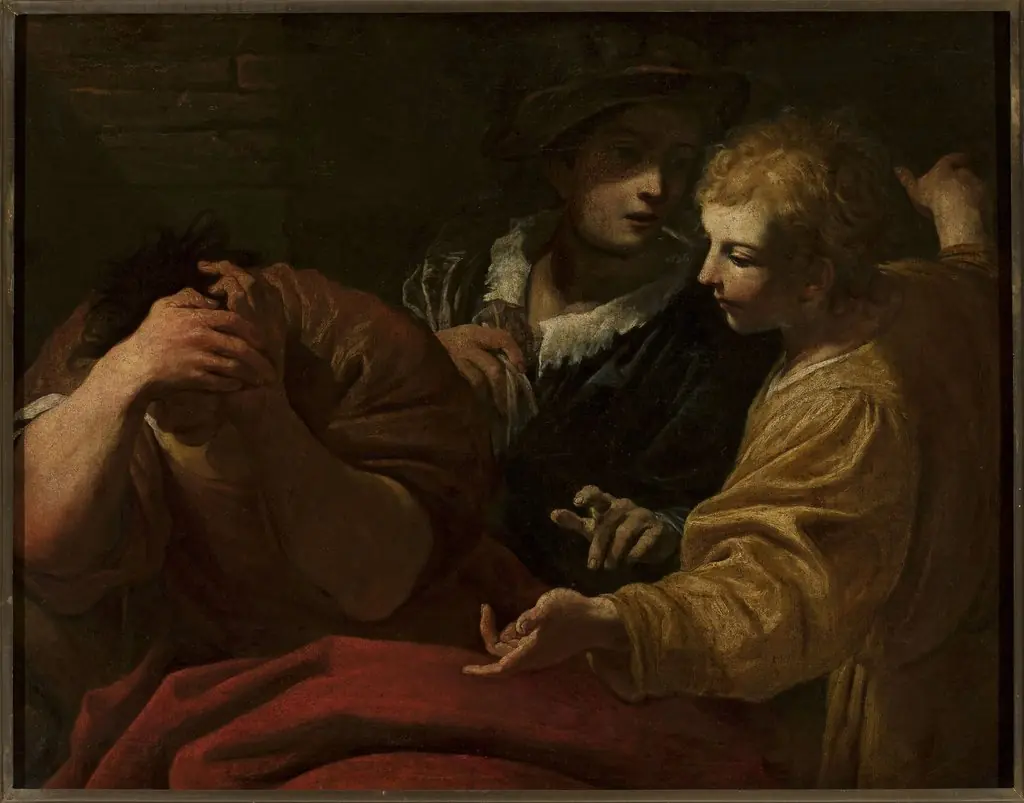 Joseph explaining dreams at the Pharaoh’s court
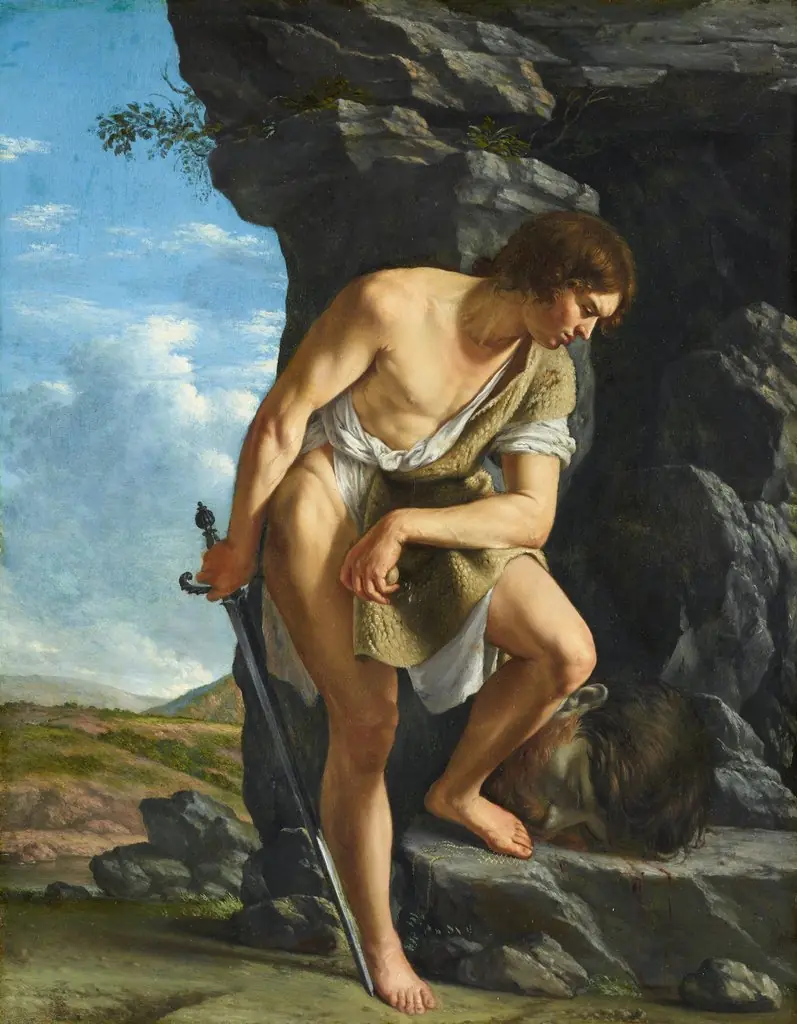 David Contemplating the Head of Goliath
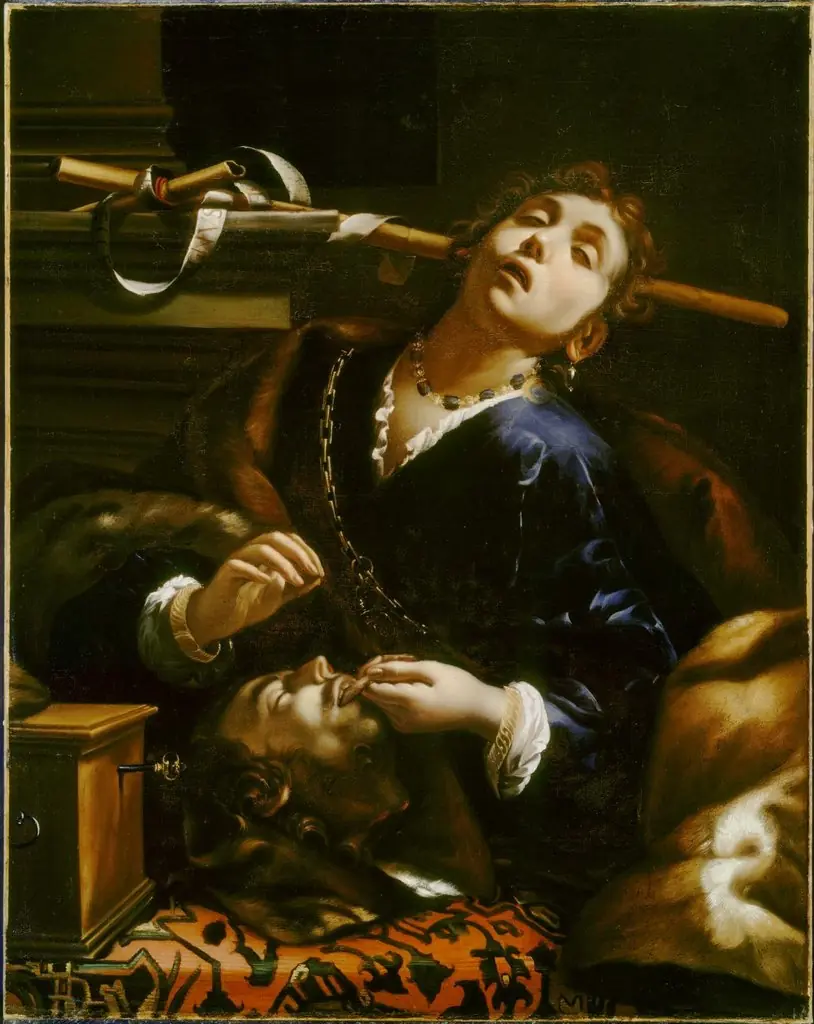 Herodias with the Head of Saint John the Baptist
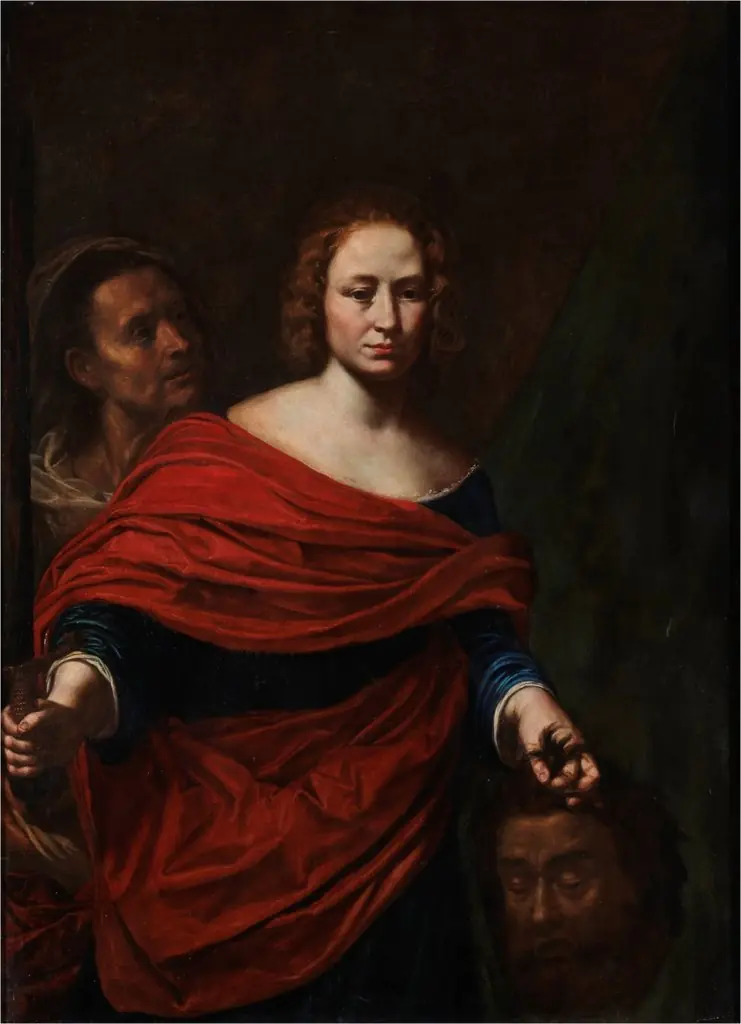 Judith with the Head of Holophernes
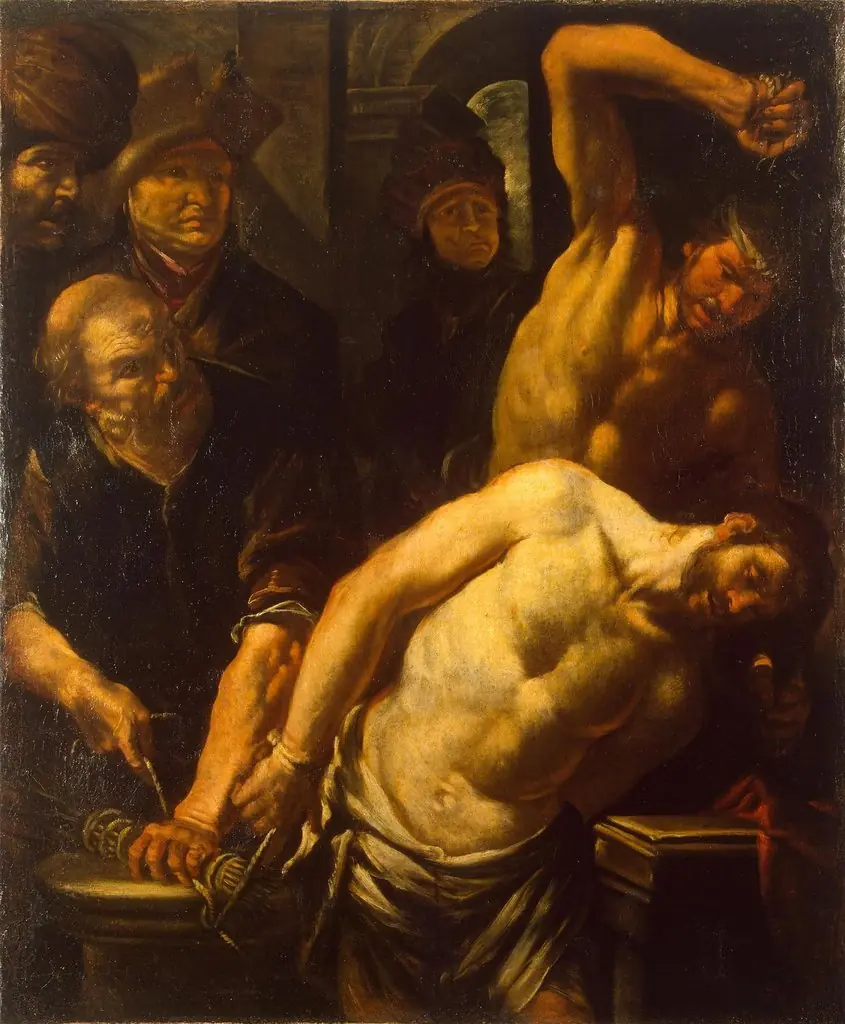 Mocking of Christ
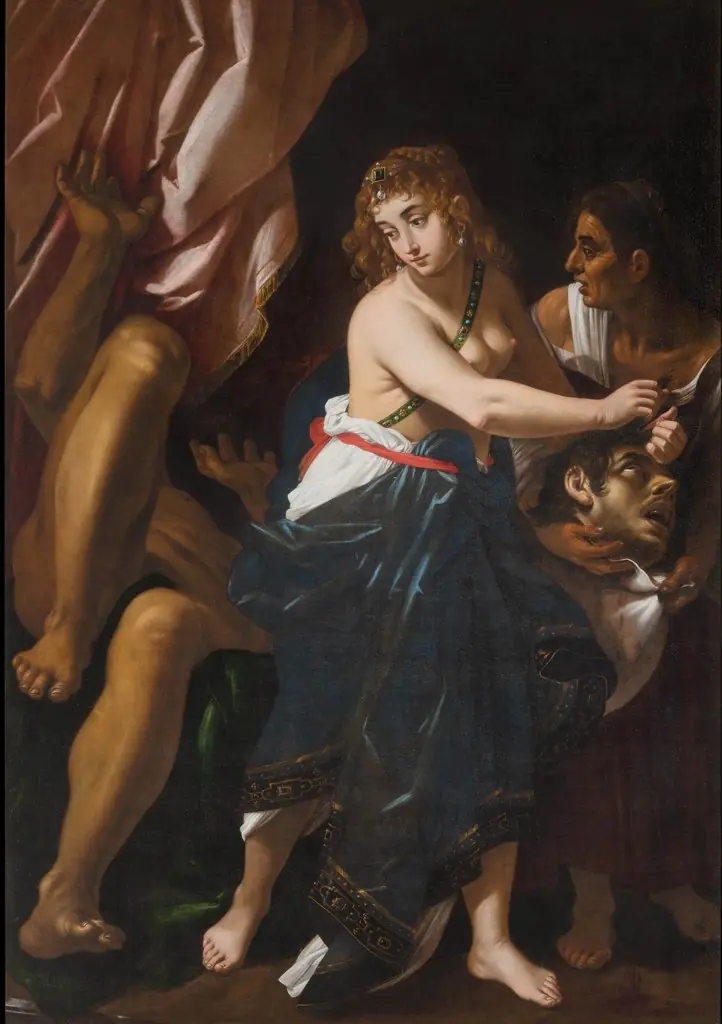 Judith and the Head of Holofernes
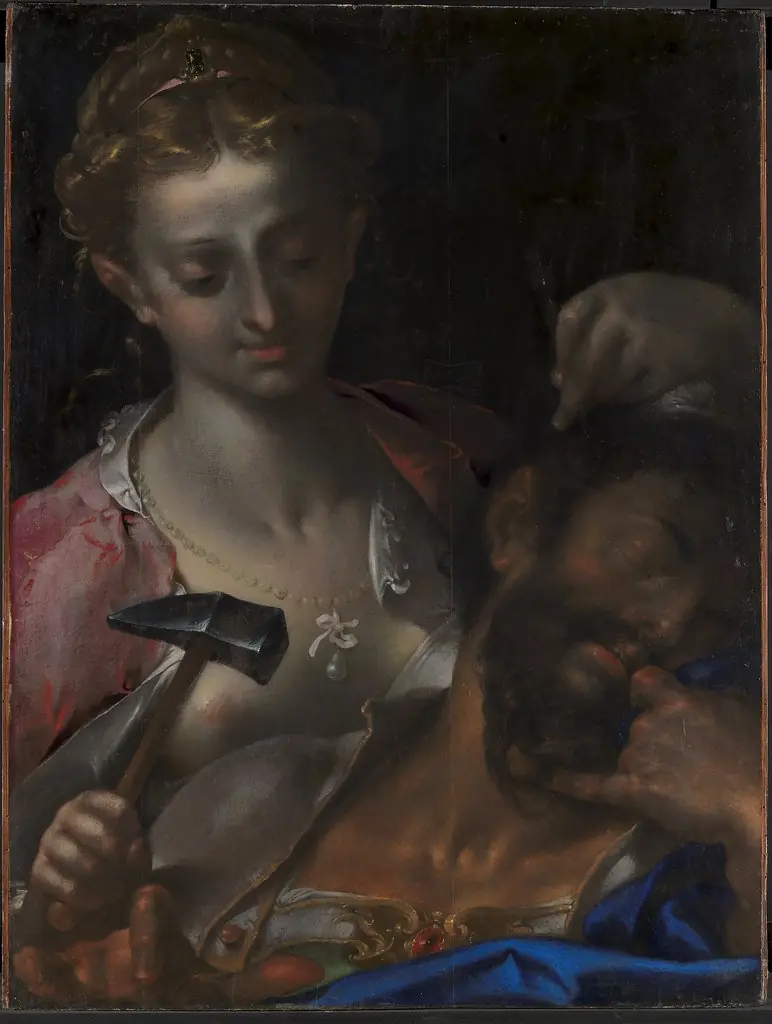 Jael Kills Sisera
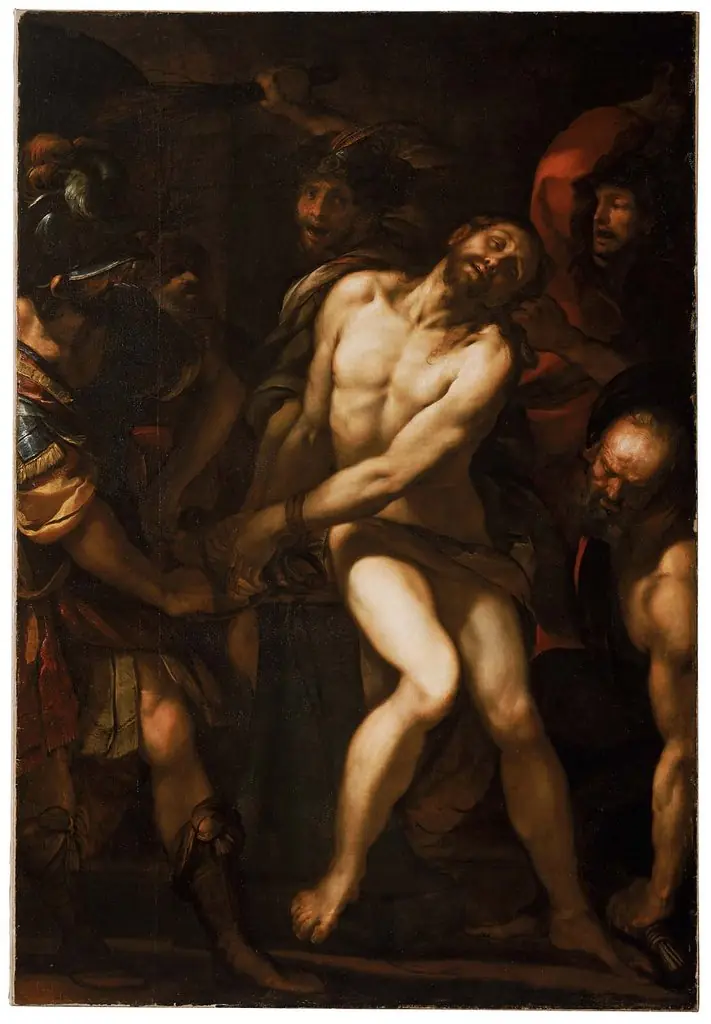 The Scourging of Christ
- Jesús en el pretorio