Artwork
Dish (piatto): Man Washing the Mouth of an Ass
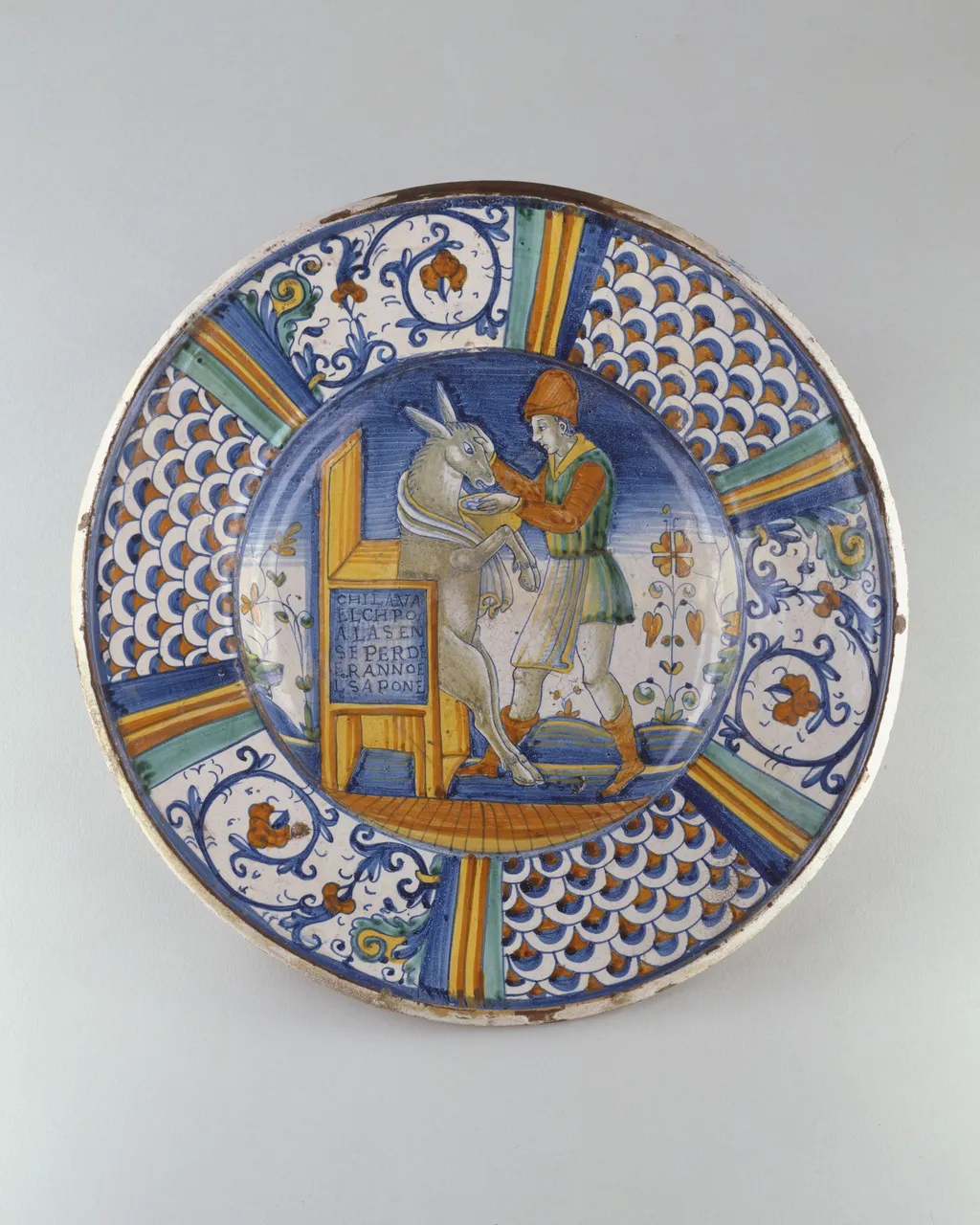
Dish (piatto): Man Washing the Mouth of an Ass is an unspecified painting. It dates from 1555 and is held in the collection of the Metropolitan Museum of Art. The work is a circular painted panel depicting a figure in vivid red and green attire attending to a donkey perched on a low platform.
About this work
Technique & Style
The composition is noted for its precise linear drawing and restrained coloration, characteristic of Northern Italian workshops of the period.
The work is an oil painting on wood panel, executed in the mid-sixteenth century. It portrays a man washing the mouth of an ass and reflects a modest scale typical of domestic devotional subjects. The composition is noted for its precise linear drawing and restrained coloration, characteristic of Northern Italian workshops of the period.
The surface condition shows fine craquelure along the edges but remains largely intact, with no significant losses recorded. Formal analysis emphasizes the balanced spatial arrangement and the subtle modeling of figures that convey a quiet narrative tone.
History & Provenance
The work titled Dish (piatto): Man Washing the Mouth of an Ass was created in 1555 and classified as a painting. It is an anonymous painting held in the collection of the Metropolitan Museum of Art, formerly owned by Robert Lehman.
The Dish (piatto) titled Man Washing the Mouth of an Ass is held by the Metropolitan Museum of Art in New York, where it forms part of the Robert Lehman collection. The work, dated 1555, is classified as a painting within that institution's holdings.
No specific exhibition history is recorded in the available sources.
Overview
The work is a circular painted panel depicting a figure in vivid red and green attire attending to a donkey perched on a low platform. The animal’s mouth is being brushed as if being cleaned, while a small bowl rests on the ground. Behind the scene a wooden crate bears a Latin inscription, and the surrounding space is filled with striking blue, white and orange decorative motifs.
Subject & Meaning
The composition presents a humorous tableau in which a man appears to wash the mouth of a donkey, treating the animal as though it were a human participant in a ritual. The absurdity of the act, combined with the presence of a Latin‑scripted box, suggests a satirical commentary, possibly mocking pretensions of learning or the folly of certain customs.
Context
During the era of its creation, painted plates often served as vehicles for allegorical or humorous scenes, reflecting contemporary tastes for wit and visual riddles. The inclusion of a donkey, a common symbol of stubbornness or folly, paired with a human figure in bright costume would have resonated with viewers familiar with emblematic literature and moralizing art.
Artist & collection

- Bowl
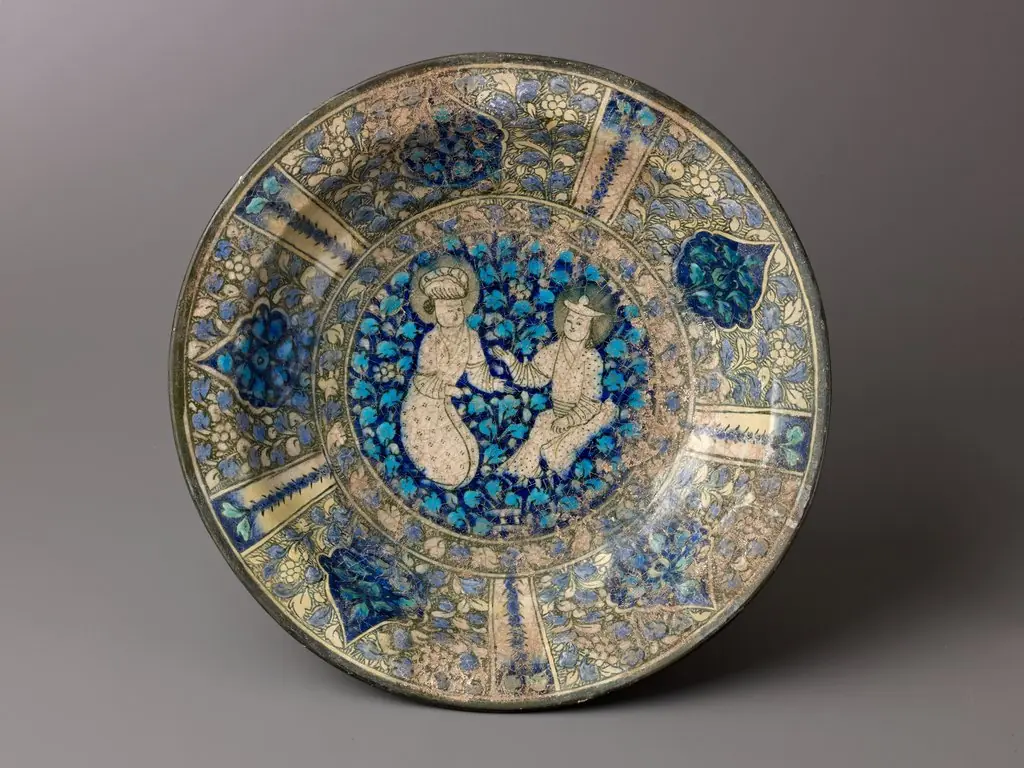 Bowl
Bowl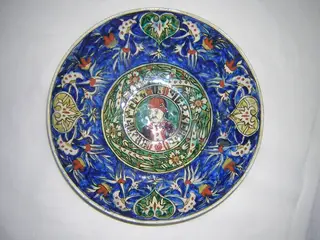 Farfurie cu portretul lui Harutiun Bezciyan (Bezdjian)
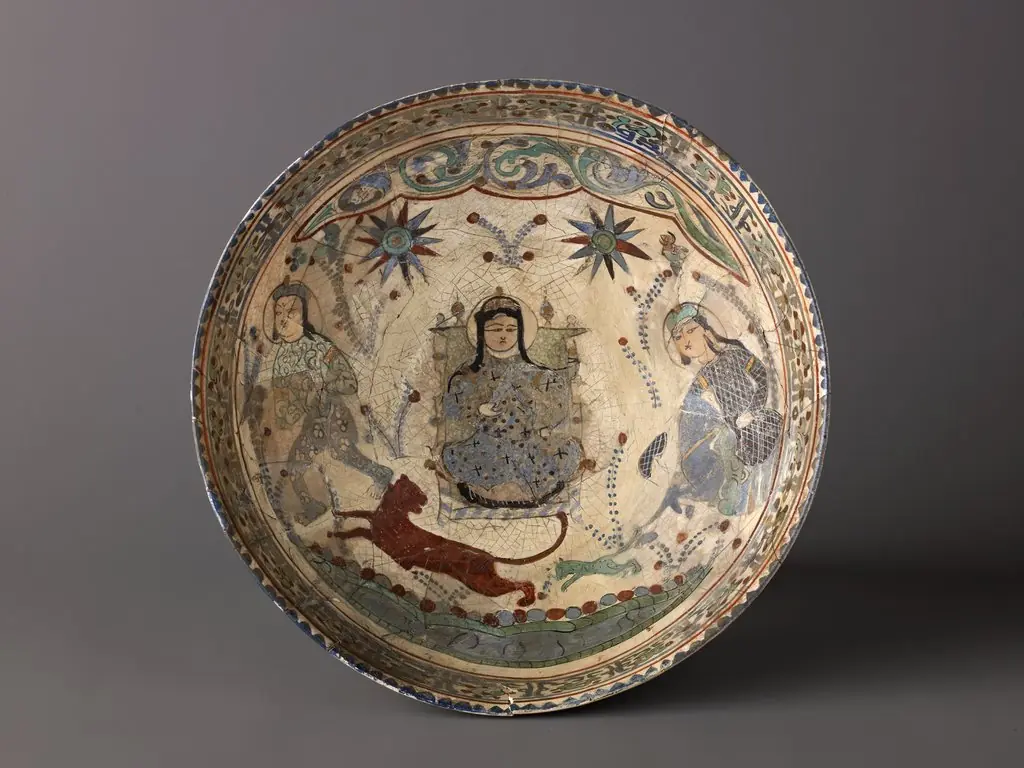 Bowl, Minai'i ("enameled") ware
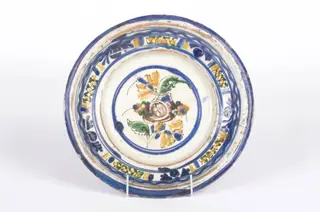 Vasul ceramic este de formă circulară, ușor adâncit, cu pereți evazați și ondulați. Decorul este amplasat pe două registre: primul registru se găsește la partea inferioară a buzei și se înscrie perimetral pe aceasta cu motive geometrice și florale (cercuri), al doilea registru este plasat central pe fundul vasului și prezintă același tip de motive. Cromatică: fond: alb-crem; motive: albastru; galben; verde; maro.
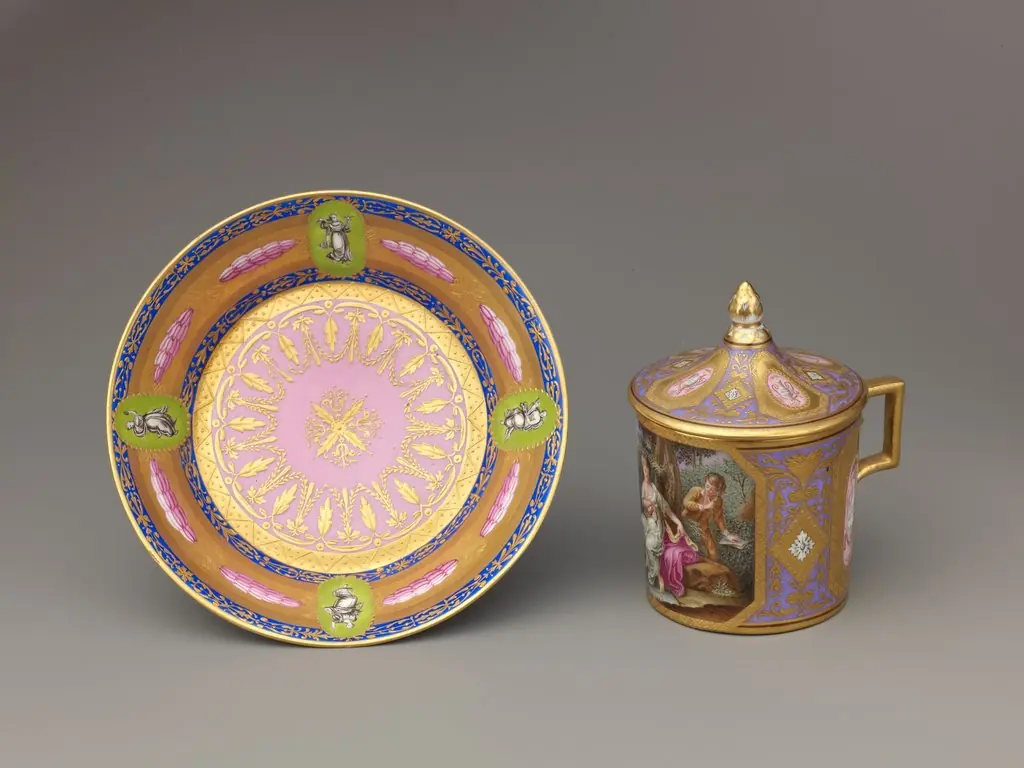 Covered Cup and Saucer
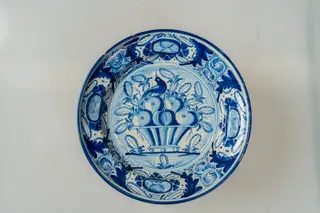 Farfurie de formă aplatizată, cu marginea lată, răsfrântă, ușor concavă spre interior. Decorul foarte bogat, dispus pe un fond alb, prin pictare, acoperă întreaga suprafață a farfuriei și este format din motive florale și vegetale fin stilizate (flori și frunze), avimorfe și un vas cu fructe (central, pe fundul farfuriei). Cromatica decorului: alb, albastru.
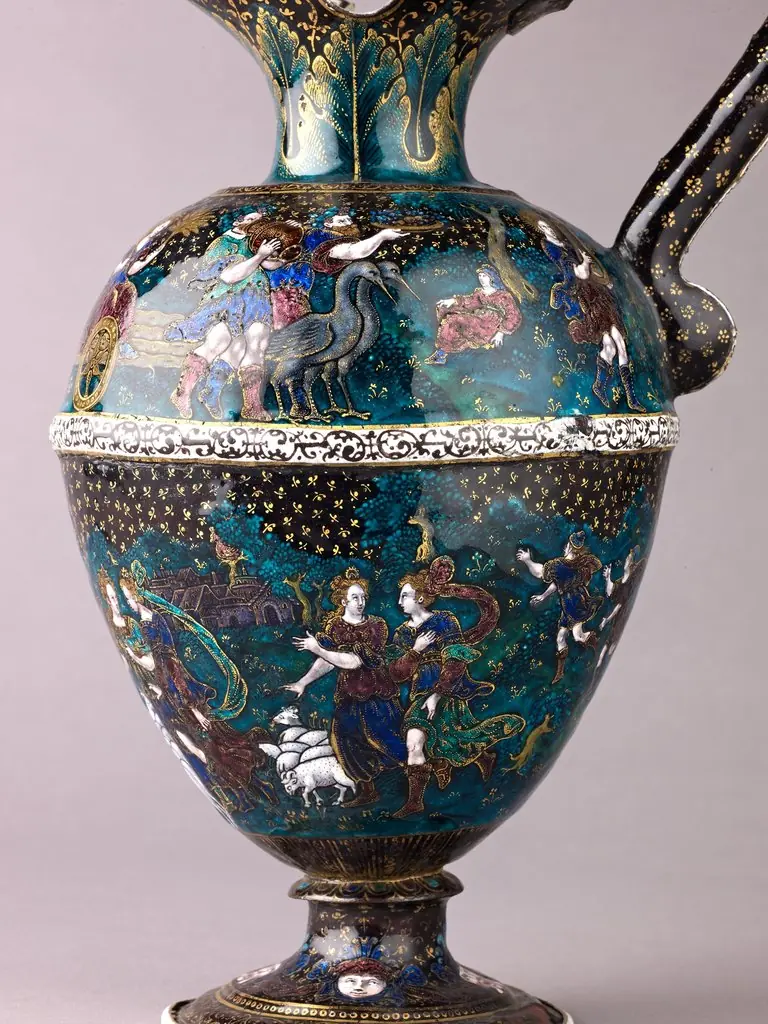 Triumph of Ceres
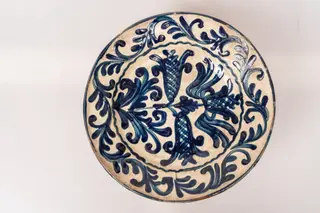 Farfurie semi-adâncă, cu buză răsfrântă; piesa este modelată la roata olarului și este angobată pe fața interioară cu humă albă. Decorul monocromatic este pictat cu pensula și se compune din motive decorative florale și vegetale stilizate (o floare de crin cu doi boboci și cu frunze, plasate central pe fundul farfuriei; buza farfuriei este acoperită cu un șir continuu de motive vegetale). Muchia buzei este marcată de o linie albastră iar bordura interioară a farfuriei de o linie vălurită. Cromatica: alb, albastru. Fața ornamentată a farfuriei este acoperită cu un strat de smalț transparent.
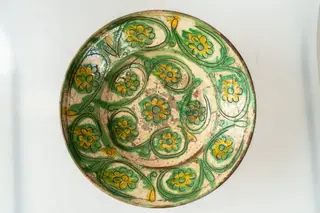 Farfurie de formă adâncă, cu buză răsfrântă. Piesa este modelată la roată, angobată cu humă albă pe fața interioară. Decorul este realizat prin pictare cu pensula, cu smalțuri colorate (verde și galben) și prin sgrafitare. Motivele decorative sunt florale și vegetale stilizate (flori cu frunze) dispuse pe întreaga suprafață a farfuriei. Bordura interioară a farfuriei este marcată cu o linie groasă sub formă de cerc, de culoare verde. Pe fața interioară a farfuriei este aplicat un strat de smalț transparent. Cromatica: alb, verde, galben.
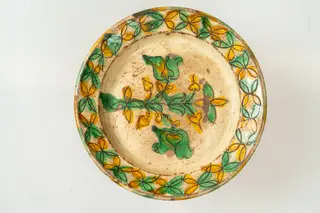 Farfurie de formă aplatizată, cu buză răsfrântă și muchie rotunjită. Piesa este modelată la roata olarului, angobată cu humă albă. Decorul este realizat prin sgrafitare în angoba crudă, peste care se aștern cu pensula culorile de smalț: verde și galben. Motivele decorative sunt florale și vegetale stilizate, dispuse pe fundul și pe buza farfuriei. Cromatica decorului: alb, galben, verde.
 Plate
Plate