Artwork
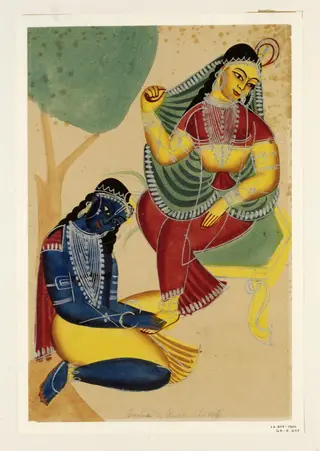
Dushyanta watching his son Bharat playing with the tiger at the end of the Abhijnanashakuntalam (verso), from a Kalighat album
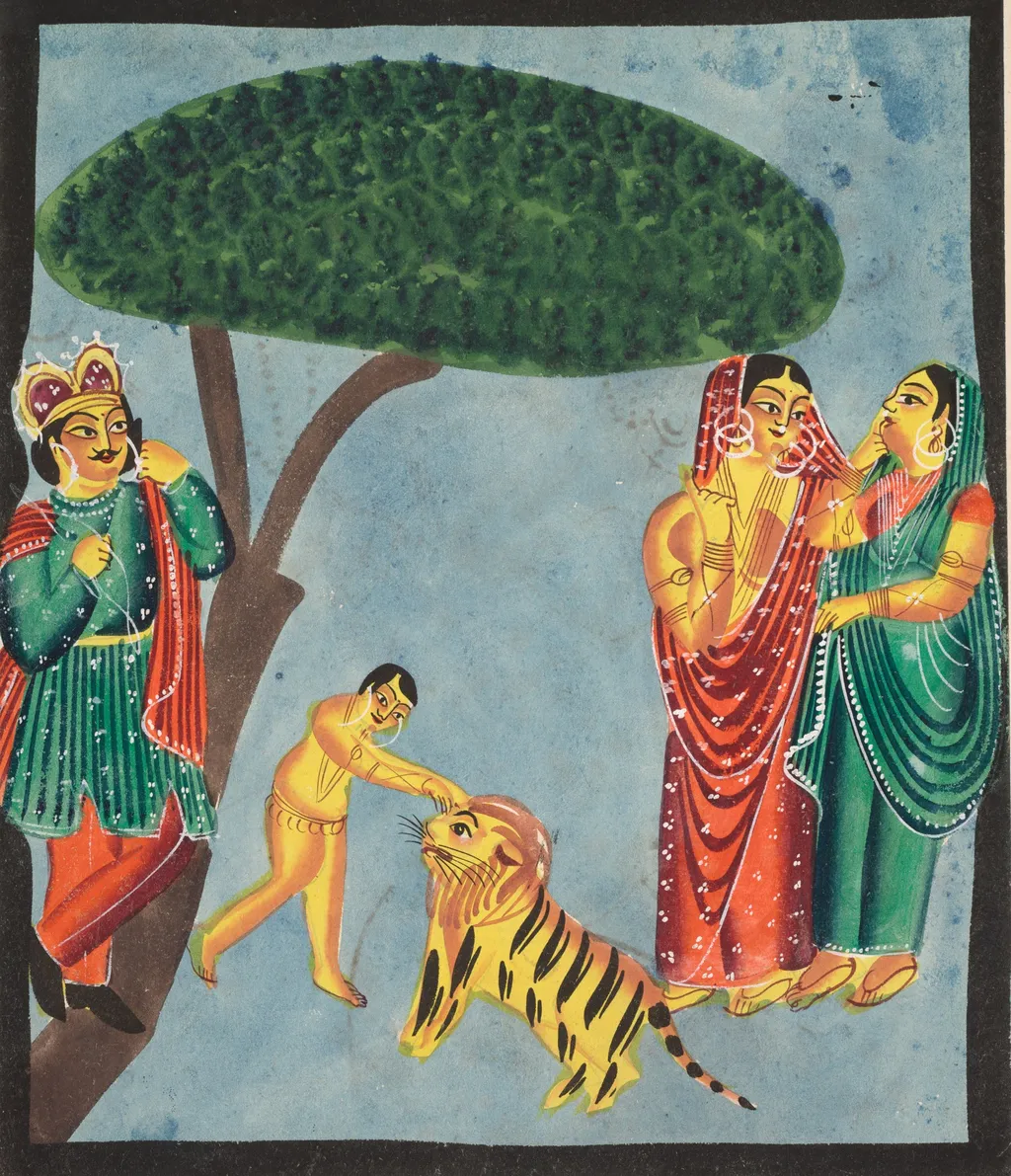
Dushyanta watching his son Bharat playing with the tiger at the end of the Abhijnanashakuntalam (verso), from a Kalighat album is an unspecified painting. It dates from 1896 and is held in the collection of the Cleveland Museum of Art.
About this work
Subject & Meaning
The imagery evokes the restoration of the royal lineage and the resolution of the dramatic conflict between the king and Shakuntala.
The artwork depicts a specific narrative moment from the conclusion of the Sanskrit play Abhijnanashakuntalam, illustrating King Dushyanta observing his son Bharata. The young prince is shown playing with a tiger, a traditional element representing his future heroic status. The imagery evokes the restoration of the royal lineage and the resolution of the dramatic conflict between the king and Shakuntala.
As a work from a Kalighat album made in Kolkata around 1896, the painting serves as a visual retelling of this classic literary episode, emphasizing the themes of royal destiny and familial reconciliation found in the original text.
Technique & Style
The work is a watercolour painting on paper, created with the materials typical of 19th-century Kalighat production. Executed circa 1896 in Kolkata, it depicts Dushyanta observing his son Bharat playing with a tiger, rendered in the bold outlines and flat colour fields characteristic of the Kalighat style. The composition uses simplified forms and expressive figures without detailed perspective, reflecting the genre's focus on narrative immediacy rather than realism. The Cleveland Museum of Art holds the piece within its collection of Indian works on paper.
History & Provenance
The verso painting depicting Dushyanta watching his son Bharat play with a tiger is a Kalighat album leaf dated to 1896 and made in Kolkata by an unidentified artist. Its modern provenance begins with its acquisition by the Cleveland Museum of Art, where it is registered as accession 2003.109.b and remains in the collection. Earlier ownership, any commission, or exhibition history prior to its entry into the museum are not recorded in the available sources.
Overview
The work, titled Dushyanta watching his son Bharat playing with the tiger at the end of the Abhijnanashakuntalam (verso), is a painted sheet from a Kalighat album. Executed in vivid pigments, the scene is set against a light‑blue ground and populated by figures in bright red and green garments, arranged around a central child and a tiger.
Context
Kalighat albums were produced in 19th‑century Kolkata as portable, illustrated booklets for a growing urban clientele. The sheet belongs to a series that illustrated scenes from popular literary and theatrical works, reflecting the cultural exchange between indigenous visual traditions and the narratives of classical Sanskrit drama.
Artist & collection

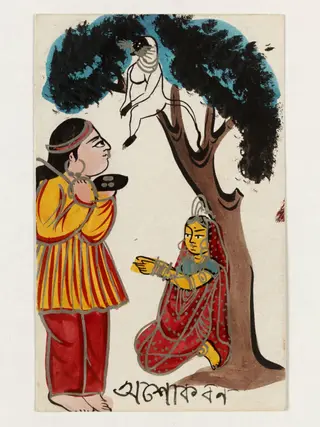 Hanuman and Sita
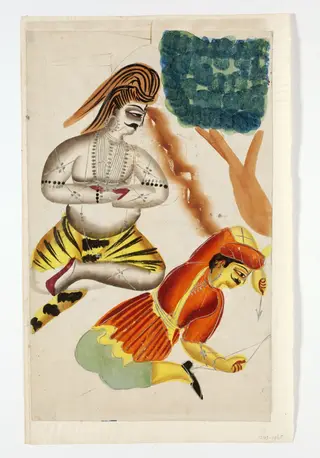 Shiva and Kama
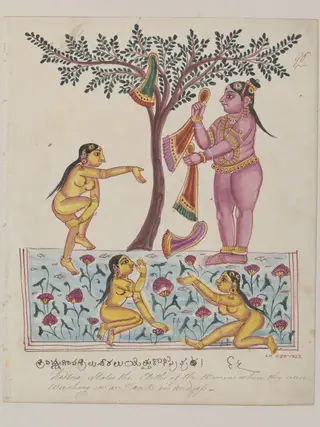 Krishna steals the gopis' clothes
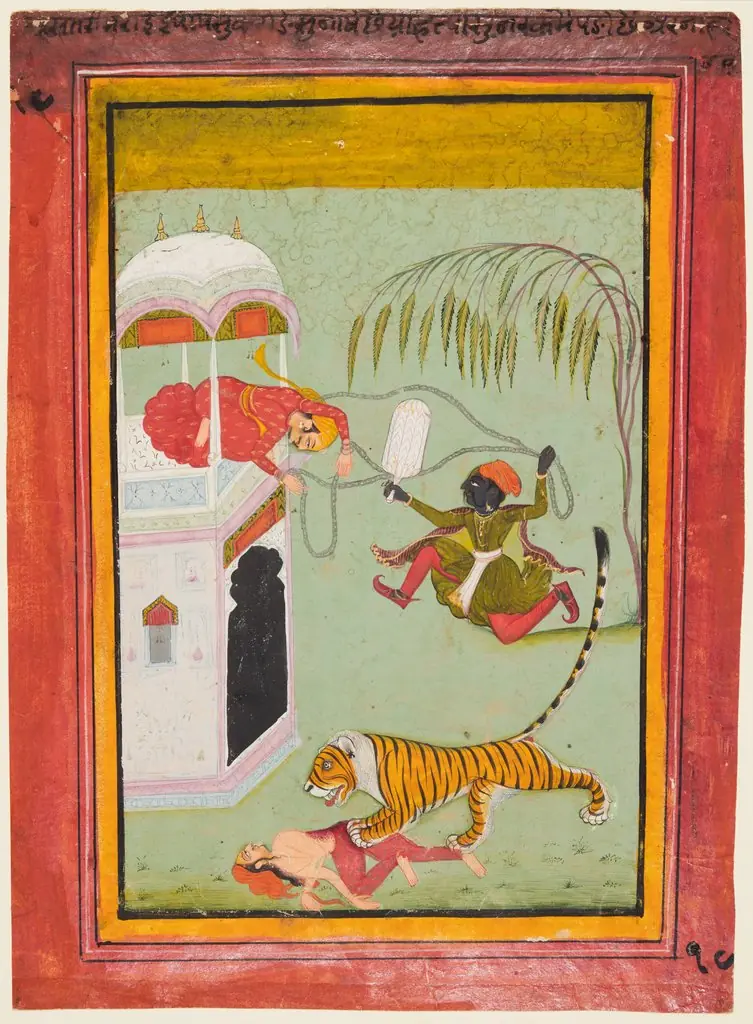 A page from a Punishment series: Punishment for murder
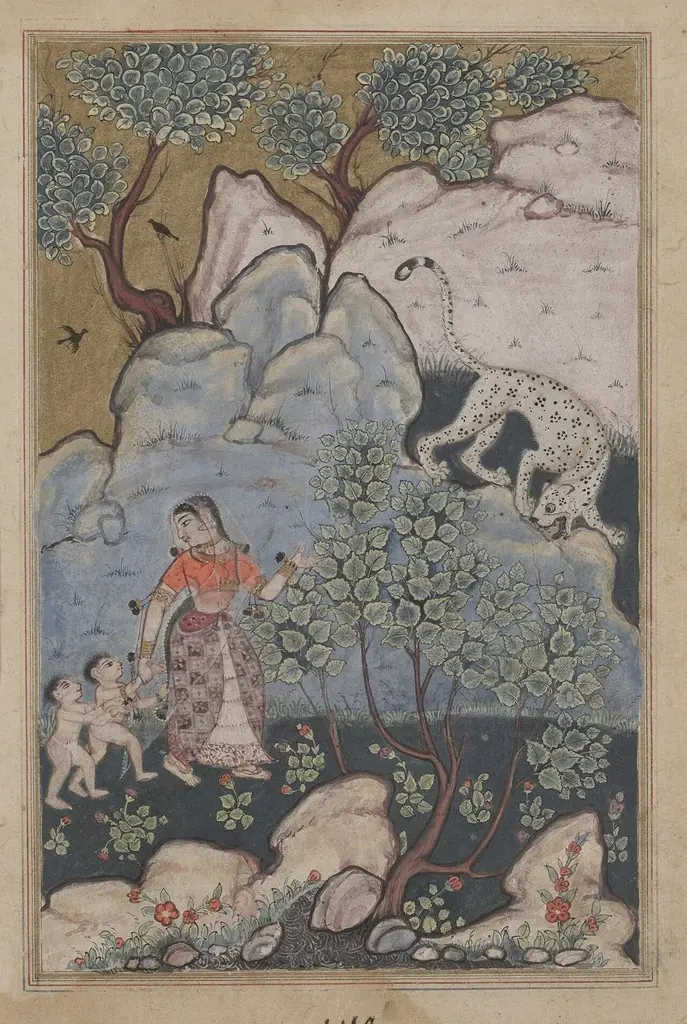 A woman with two children, having abandoned her home, goes into the forest where she encounters a leopard, from a Tuti-nama (Tales of a Parrot): Thirtieth Night
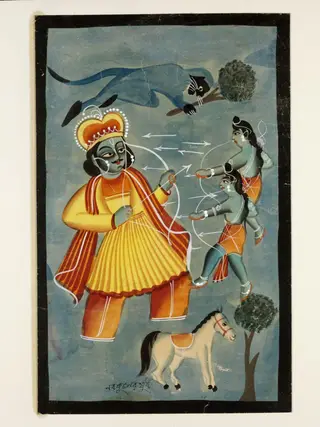 Rama, Lava and Kusha
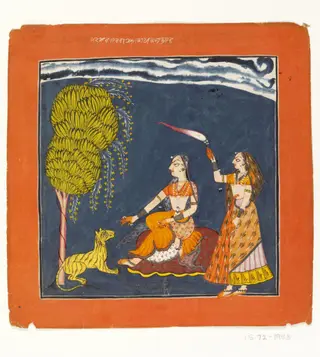 Patamanjari Ragini
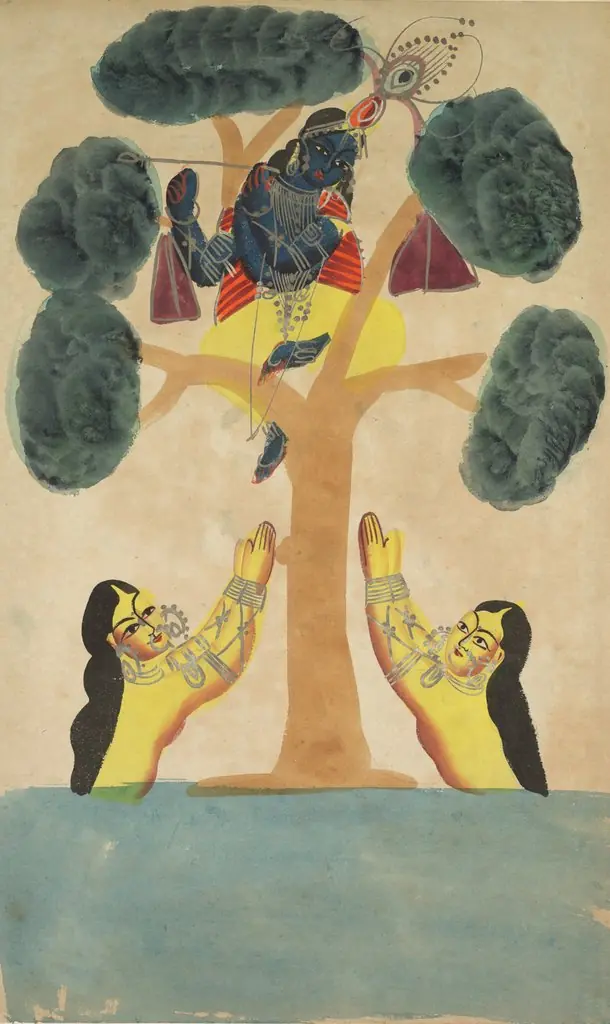 Krishna Steals the Clothes of the Cowgirls (Gopis) (recto), from a Kalighat album
 Krishna and Radha