Artwork
Dwarf with a Dog, formerly denominated Antonio el Inglés
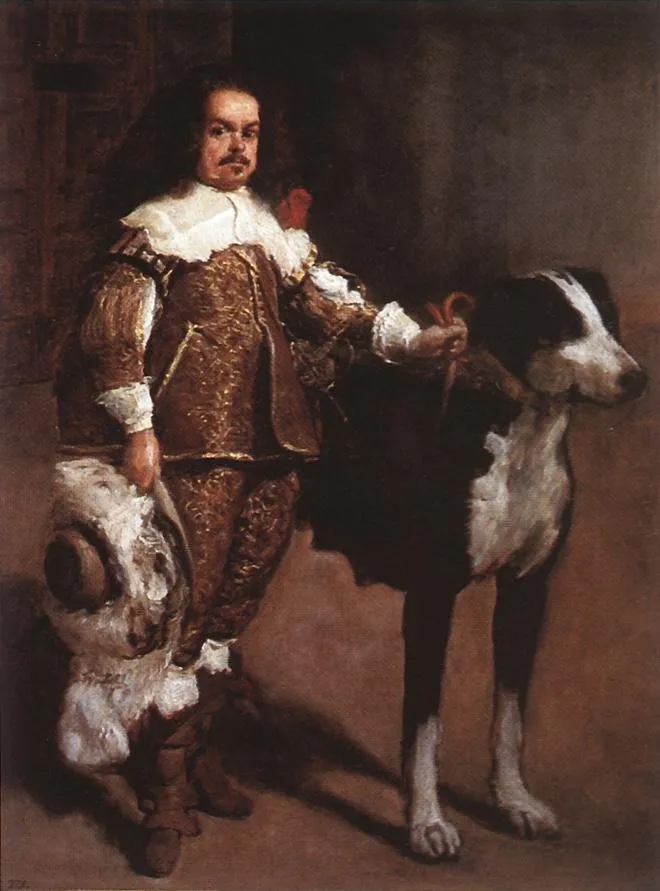
Dwarf with a Dog, formerly denominated Antonio el Inglés is an oil painting. It dates from 1645 and is held in the collection of the Museo del Prado. This oil painting, titled Dwarf with a Dog, presents a full-length portrait of an unidentified man accompanied by a spotted canine.
About this work
Subject & Meaning
' This work belongs to the Spanish court tradition of portraying dwarfs and jesters, a genre frequently practiced by Velázquez for Philip IV.
The painting depicts a court dwarf or jester standing beside a Spanish Mastiff nearly equal to his height, a compositional choice that visually emphasizes the subject's small stature while suggesting a social rank barely superior to that of the animal. Dressed in an elegant ochre costume with gold embroidery, white lace, and a sword at his waist, the figure holds a hat, projecting a vague nobility contradicted by his role as a 'man of pleasure.' This work belongs to the Spanish court tradition of portraying dwarfs and jesters, a genre frequently practiced by Velázquez for Philip IV.
While historically identified as Don Antonio 'the Englishman,' this attribution has been refuted on chronological grounds, and the sitter's identity remains uncertain.
Technique & Style
The work is executed in oil paint on a canvas support, a medium consistently noted across the sources. Its handling displays a loose, pasty brushwork with separate strokes that are shorter and rougher than the refined technique typical of Velázquez, giving the painting a somewhat unfinished appearance. Stylistically, the composition reflects Velázquez's court portraiture but shows limitations in spatial conception and overall execution, suggesting a work either from his circle or a follower who struggled to master the master's finer handling.
History & Provenance
Dwarf with a Dog was executed in oil on canvas around 1645, though some accounts place it closer to 1650. It was long recorded as a Velázquez in eighteenth-century inventories of the Spanish royal collection, where it hung in the royal palace. In 1925 Juan Allende-Salazar became the first scholar to contest the traditional attribution, proposing instead Juan Carreño de Miranda.
Kurt Gerstenberg later linked the painting to Juan Bautista Martínez del Mazo by comparing the mastiff here with the dog in Mazo's authenticated hunting scene at the Prado. Both José López-Rey and Jonathan Brown excluded the canvas from their catalogues of Velázquez, and most specialists now regard it as a late product of Velázquez's circle or a follower's work, noting spatial inconsistencies that suggest an unfinished surface. The painting is held in the Museo del Prado, Madrid (inventory P01203), having appeared in the eighteenth-century inventories of the royal collection.
Context
Critical reception of Dwarf with a Dog has evolved from confident Velázquez attribution to workshop or circle works. Early inventories listed it among Velázquez's holdings, but Juan Allende-Salazar contested this in 1925, proposing Juan Carreño de Miranda instead. Kurt Gerstenberg later linked the canvas stylistically to Juan Bautista Martínez del Mazo, citing the dog's resemblance to a mastiff in Mazo's Cacería del tabladillo (Prado).
Major Velázquez scholars José López-Rey and Jonathan Brown excluded it from the master's oeuvre, attributing it to a follower influenced by Velázquez's technique but marred by spatial missteps and hasty execution. While praised as a court portrait exemplifying Velázquez's genre, its unresolved handling and uncertain authorship limit its status, situated within the broader tradition of Spanish Baroque court dwarf portraits but distinguished by its unresolved compositional and technical issues.
Legacy
The work's legacy is defined by its shifting attribution and its status as a key example of the Spanish court dwarf portrait genre. Historically celebrated as a Velázquez by Antonio Palomino and recorded in eighteenth-century royal inventories, the painting faced significant scholarly re-evaluation in the twentieth century. Critics such as Juan Allende-Salazar, Kurt Gerstenberg, José López-Rey, and Jonathan Brown excluded it from the master's core catalog, reclassifying it as a product of the Velázquez circle or workshop, potentially by Juan Carreño de Miranda or Juan Bautista Martínez del Mazo.
These scholars noted compositional similarities to Velázquez but cited technical deficiencies, such as spatial errors and a rougher execution, to justify the demotion. Despite these disputes, the painting remains a recognized instance of the courtly portraiture model disseminated by Velázquez, preserving the visual tradition of depicting dwarfs and jesters like Francisco Lezcano and Diego de Acedo.
Overview
This oil painting, titled Dwarf with a Dog, presents a full-length portrait of an unidentified man accompanied by a spotted canine. The artwork, once known as Antonio el Inglés, captures its subject in an elaborate costume, standing with a dog on a dark ground. The composition emphasizes the figure's presence and his interaction with the animal, characteristic of portraiture from its era.
Artist & collection

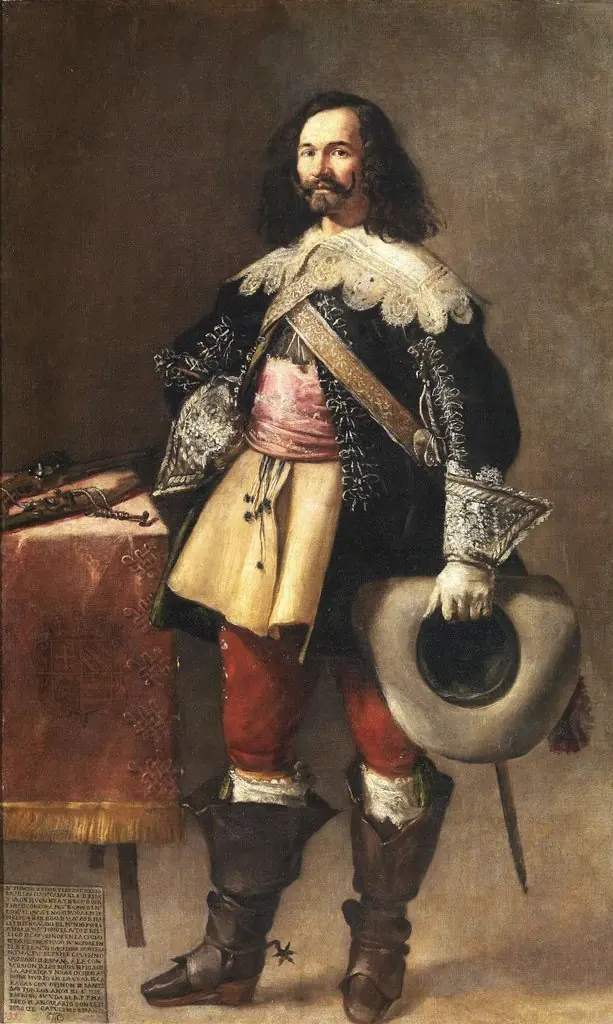 Don Tiburcio de Redín
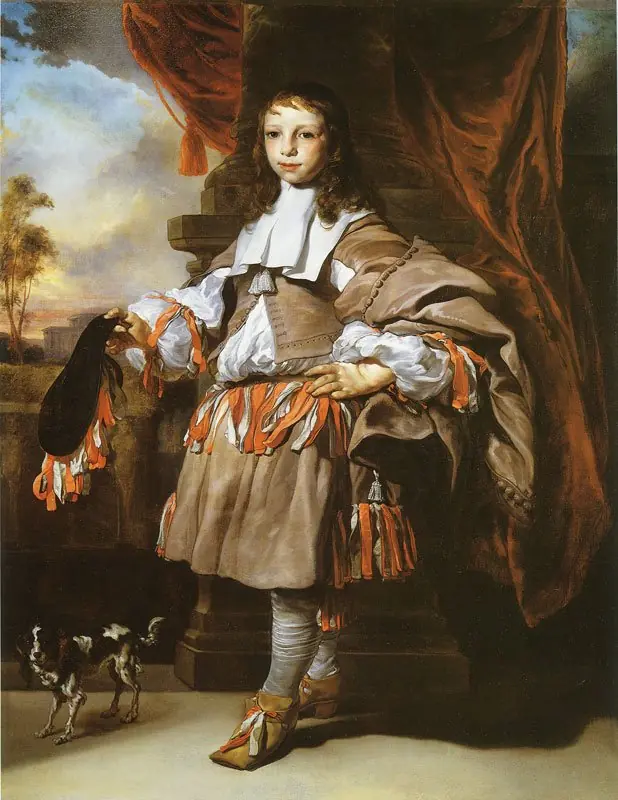 Portrait of a Boy
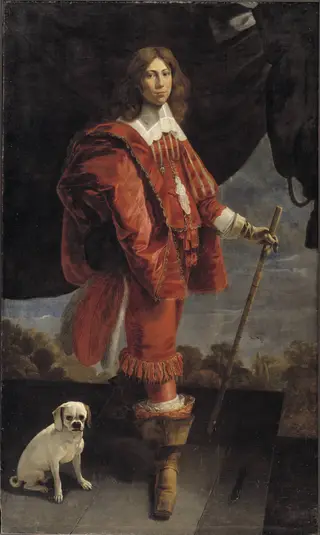 Ulrik Christian Gyldenløve (1630-1658), son of Christian IV and Vibeke Kruse
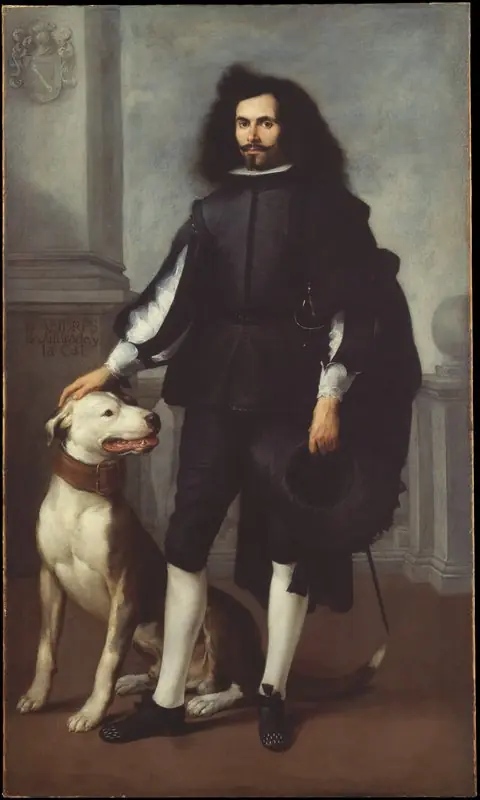 Don Andrés de Andrade y la Cal
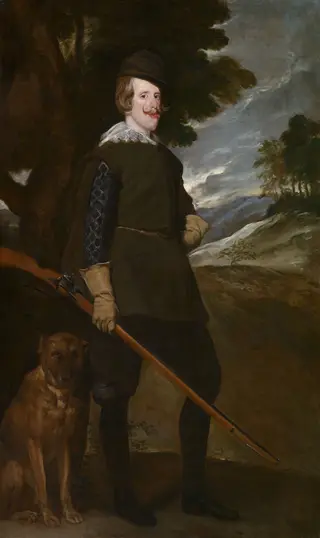 Portrait of Philip IV
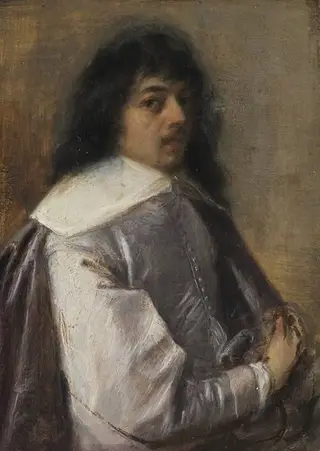 Portrait of an unknown man
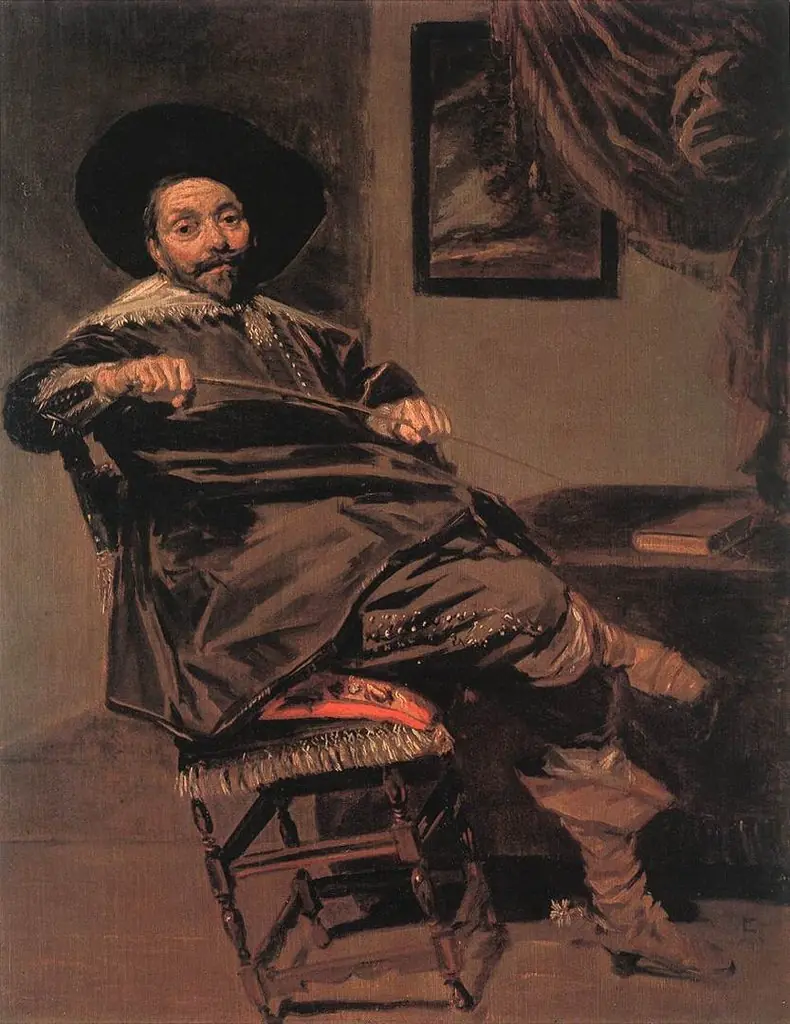 Portrait of Willem van Heythuysen
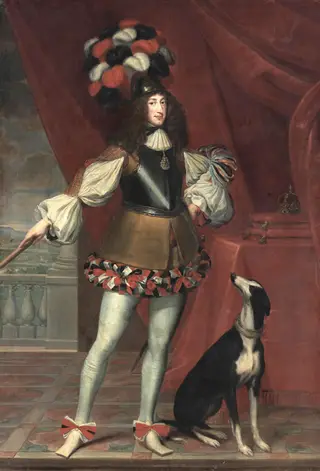 Karl Emanuel II., Herzog von Savoyen (?)
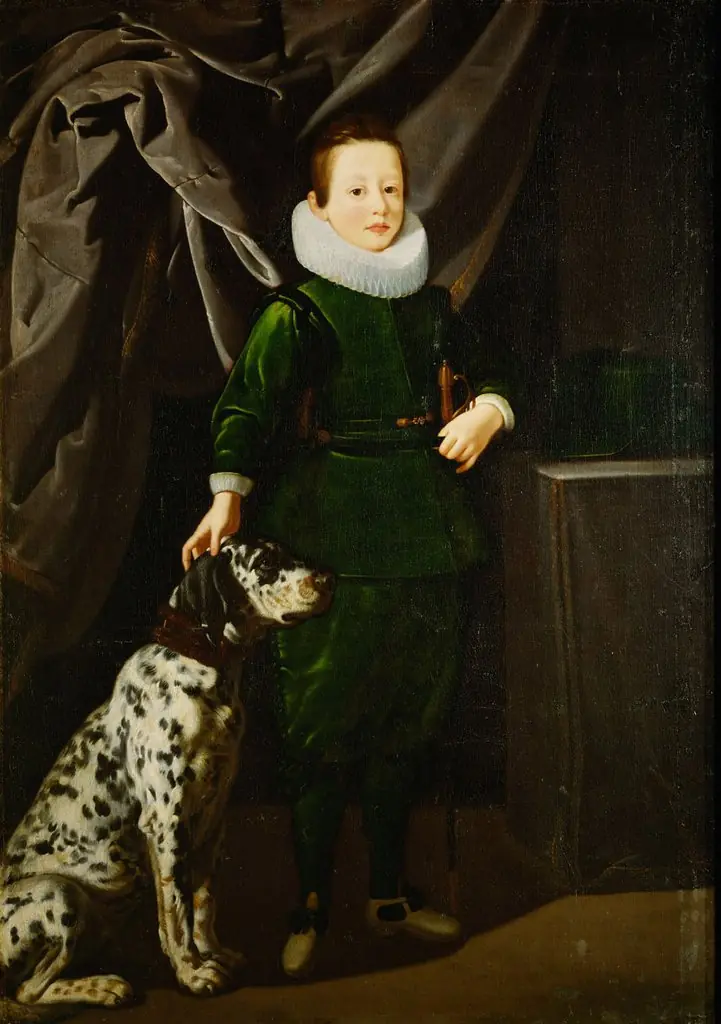 Francesco de' Medici (1614-1634)
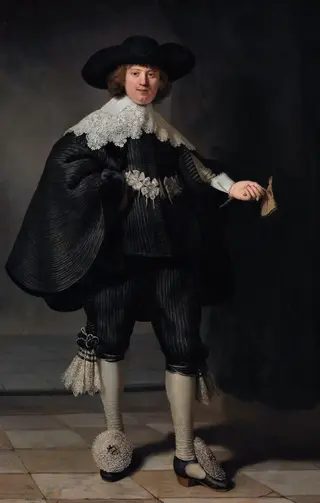 Portrait of Maerten Soolmans