Artwork
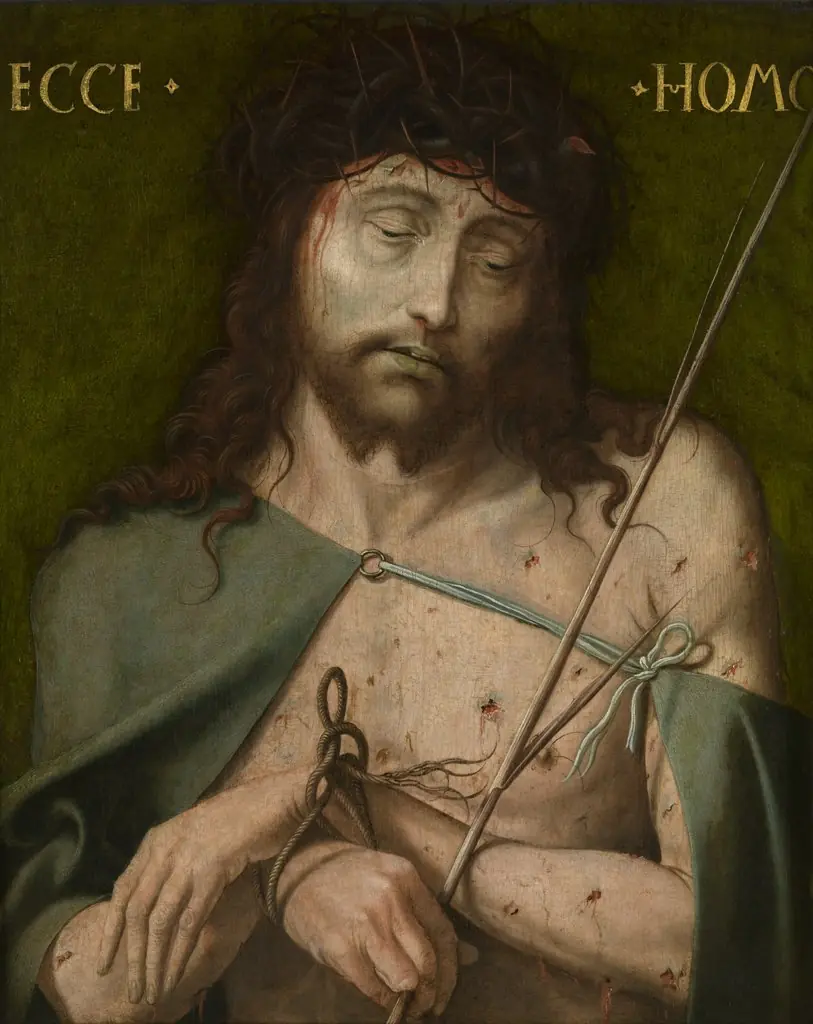
Ecce Homo
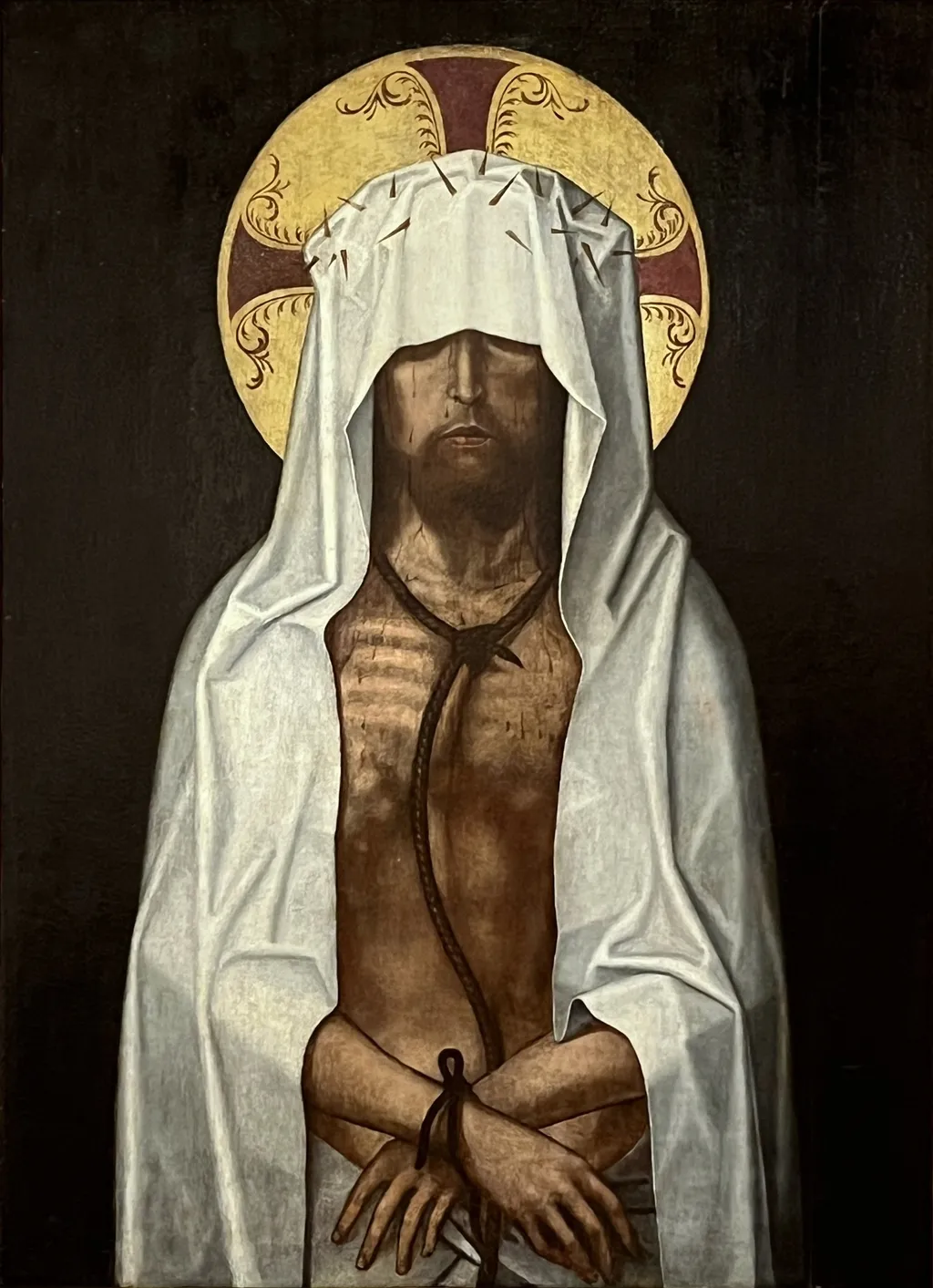
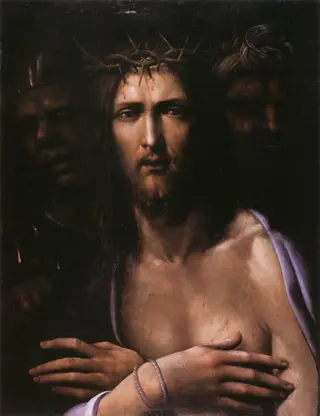
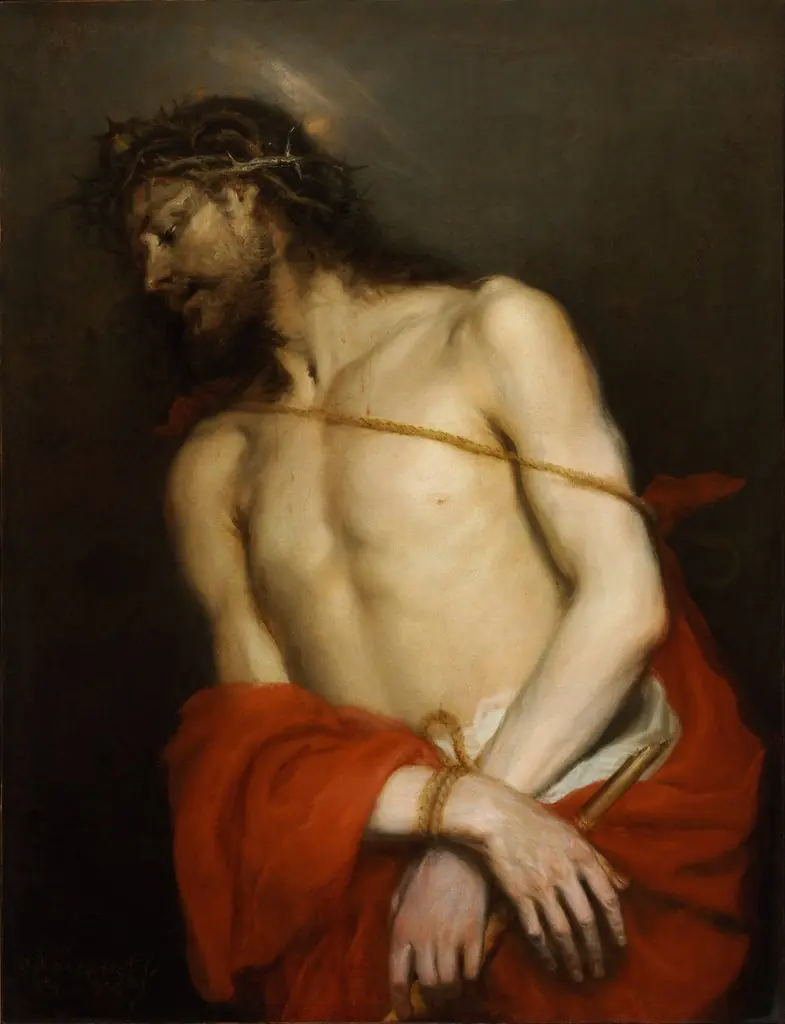
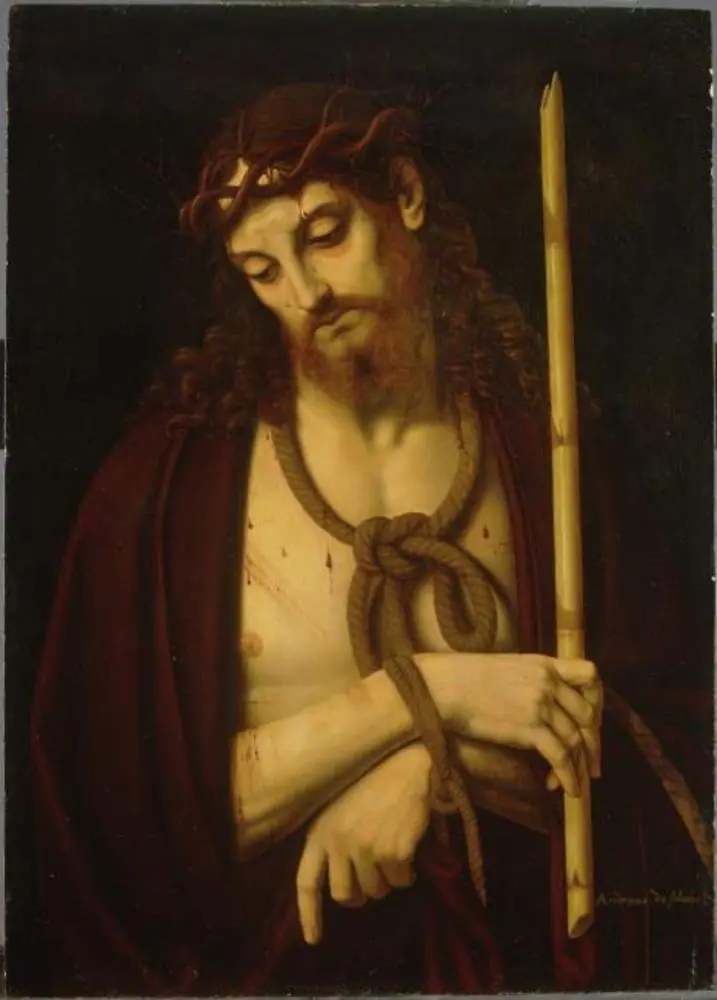
Ecce Homo is an oil painting by the Early Baroque Italian artist Unknown. It dates from 1600 and is held in the collection of the National Museum of Ancient Art.
About this work
Overview
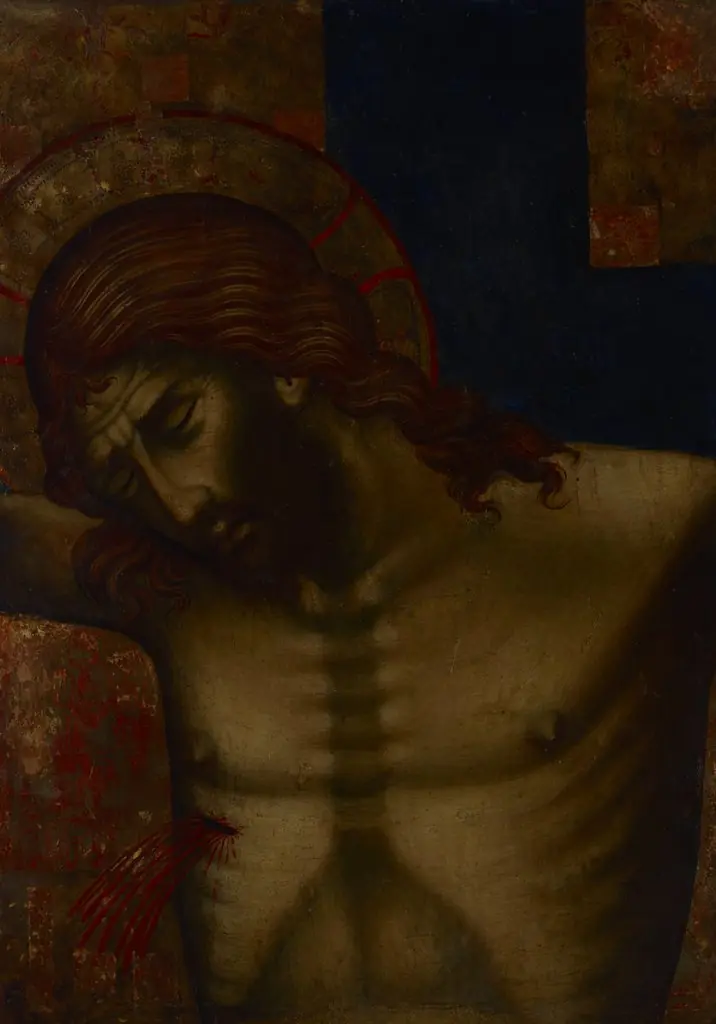
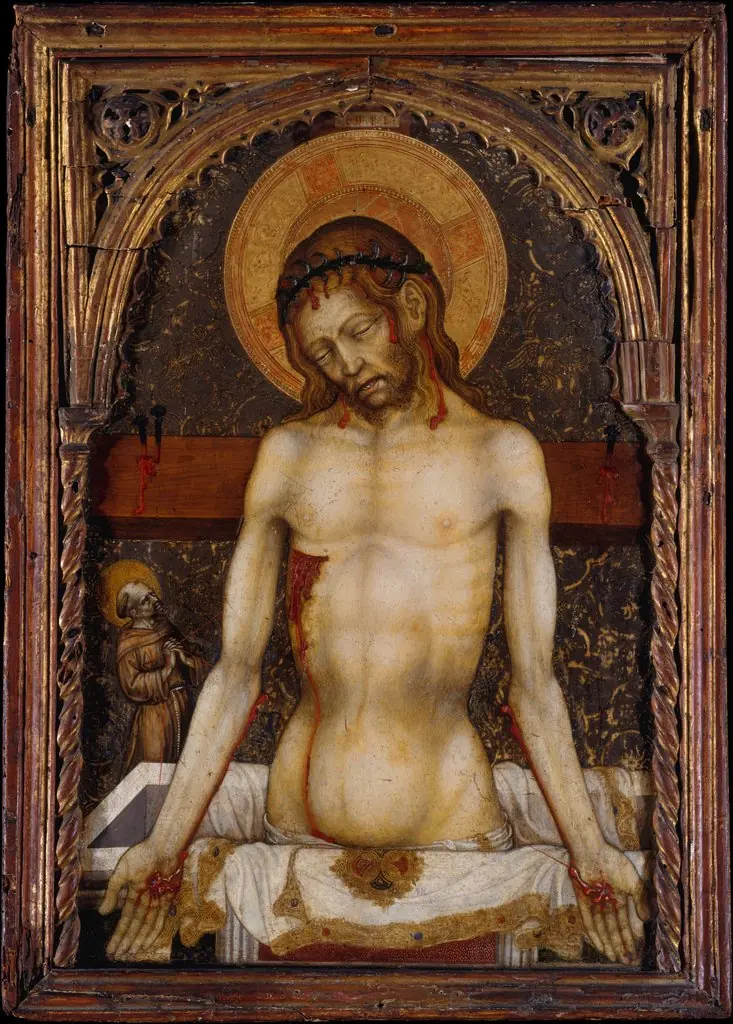
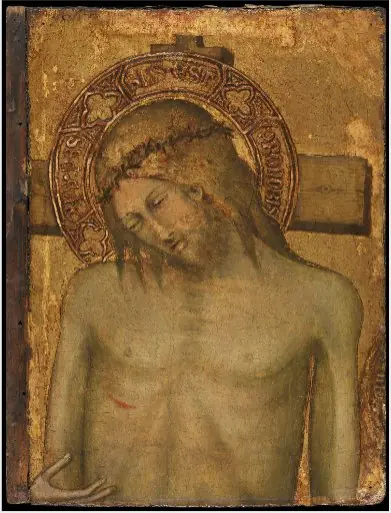
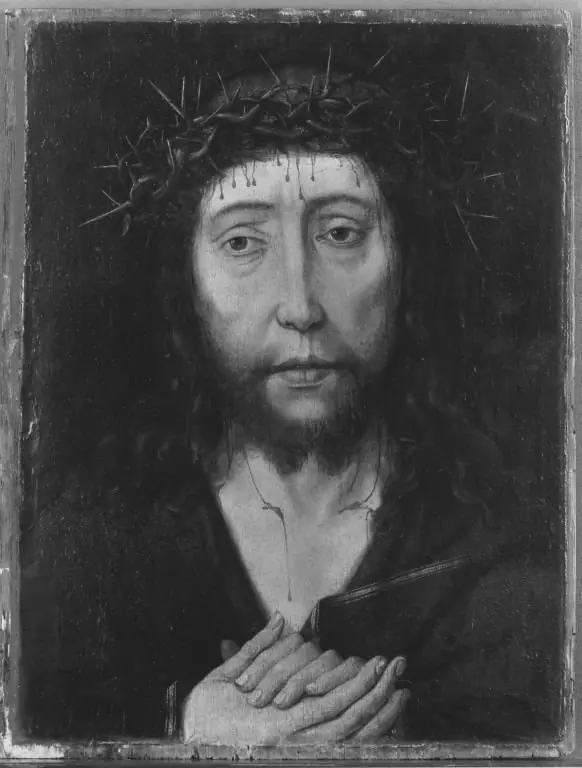
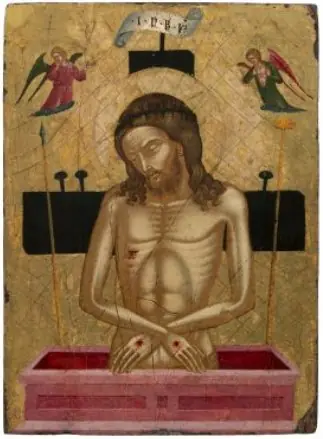
The work is an oil painting titled “Ecce Homo.” It presents a bearded man clothed in a white drapery pierced by nails, his head and shoulders covered. A rope encircles his neck and binds his wrists, while his torso remains uncovered. Behind him glows a yellow circle bearing a red cross, set against a dark, muted backdrop.
Subject & Meaning
The composition depicts the biblical moment when Pontius Pilate presents a condemned Jesus to the crowd, a theme traditionally known as Ecce Homo. The figure’s downcast gaze and sorrowful expression convey suffering and resignation, while the stark contrast of bright clothing and the illuminated emblem underscores themes of sacrifice and redemption.
Technique & Style
Rendered in oil on canvas, the artist employs a limited palette that juxtaposes luminous whites and yellows with deep, somber tones. The chiaroscuro effect heightens the drama, emphasizing the figure’s form against the dark background. Precise brushwork defines the nails and rope, while the simplified circular backdrop functions as a symbolic halo.
Context
Ecce Homo has been a recurrent subject in Western art, allowing artists to explore the pathos of Christ’s passion. This painting follows that tradition, using contemporary color contrasts and symbolic motifs, such as the red cross within the yellow disc, to link the historical narrative to modern visual language.
Artist & collection