Artwork
Ecce homo
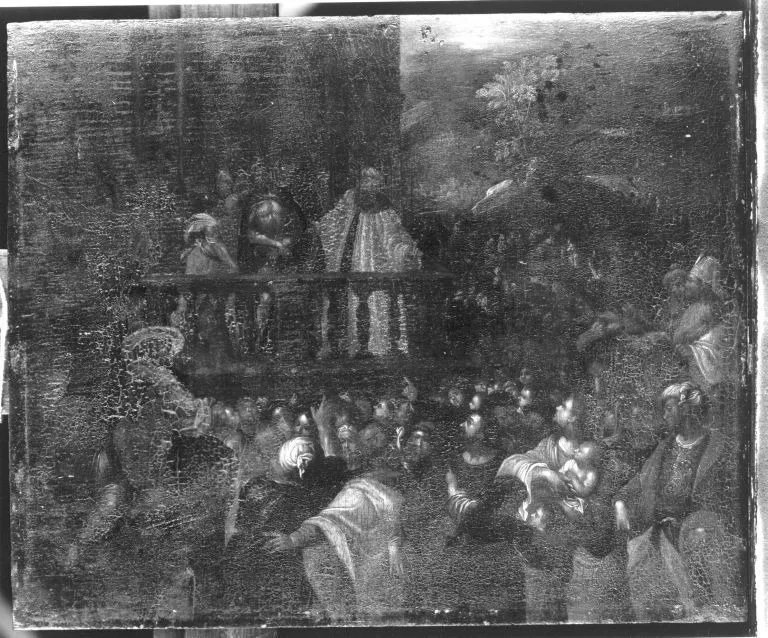
Ecce homo is an unspecified painting by the Early Baroque Italian artist Unknown. It dates from 1620 and is held in the collection of the Bavarian State Painting Collections.
About this work
Subject & Meaning
The painting shows Christ in the moment of condemnation, presenting Him to a hostile crowd while the words 'Ecce Homo' echo from the figure's gesture.
The painting shows Christ in the moment of condemnation, presenting Him to a hostile crowd while the words 'Ecce Homo' echo from the figure's gesture. The work draws on traditional iconography of the Roman governor Pontius Pilate presenting the scourged Messiah, a scene that symbolizes both the injustice of the trial and the sacrificial suffering of Christ. Its meaning lies in the dramatic confrontation between authority and humanity, emphasizing the humanity of Jesus amid mockery and injustice.
Technique & Style
Ecce homo is a religious painting executed on a small-scale support measuring 29.8 cm in height by 36.8 cm in width, a modest format consistent with cabinet-sized devotional works of the period. The work is classified as a painting and belongs to the genre of religious art, depicting Jesus Christ as its main subject. Held in the Bavarian State Painting Collections and housed at the Alte Pinakothek, the piece dates to 1620.
Beyond these cataloguing details, the available sources do not specify the medium (such as oil, tempera, or panel versus canvas), the support, the handling of paint, the present condition, or the formal and stylistic qualities of the composition.
History & Provenance
The Ecce homo painting is dated to 1620, as indicated by its inception date of 1 January 1620. It is a work by a Dutch (Niederländisch) artist depicting Jesus Christ in the Ecce Homo motif and belonging to the religious genre. The work has been part of the Bavarian State Painting Collections, where it is displayed at the Alte Pinakothek in Munich. No earlier provenance, commission details, or ownership transfers are recorded in the available sources.
The painting Ecce homo, dated to 1620, is held within the Bavarian State Painting Collections. It is currently located at the Alte Pinakothek in Munich. The work measures 29.8 cm in height and 36.8 cm in width. No specific inventory numbers or details regarding its exhibition history are provided in the available records.
Legacy
The painting Ecce homo was later interpreted as a powerful meditation on suffering and redemption, shaping devotional practices in European religious art. Its stark portrayal of Christ’s condemnation influenced Baroque artists who emphasized emotional intensity in sacred scenes. The work remains part of the Bavarian State Painting Collections, where it is displayed in the Alte Pinakothek in Munich, preserving its historical and theological significance.
Overview
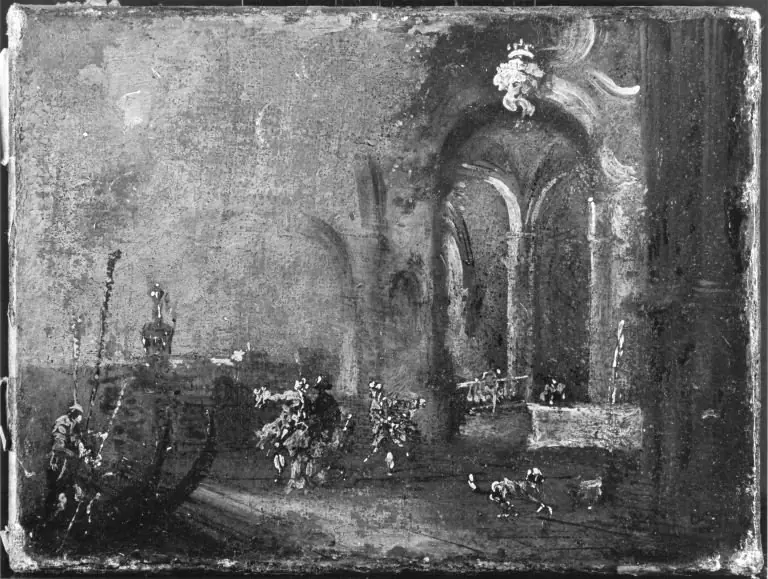
The work titled “Ecce homo” presents a nocturnal gathering around a modest raised platform. Figures in unadorned, dark garments occupy the foreground, their visages obscured by deep shadow. A modest structure with a window and a few indistinct trees form the background, contributing to the composition’s overall dim atmosphere.
Context
Although specific details about the artist and date are not provided, the title and visual strategy align the piece with a tradition of religious and moralizing works that use dramatic lighting to underscore narrative gravity, a practice common in Baroque and later periods.
Artist & collection









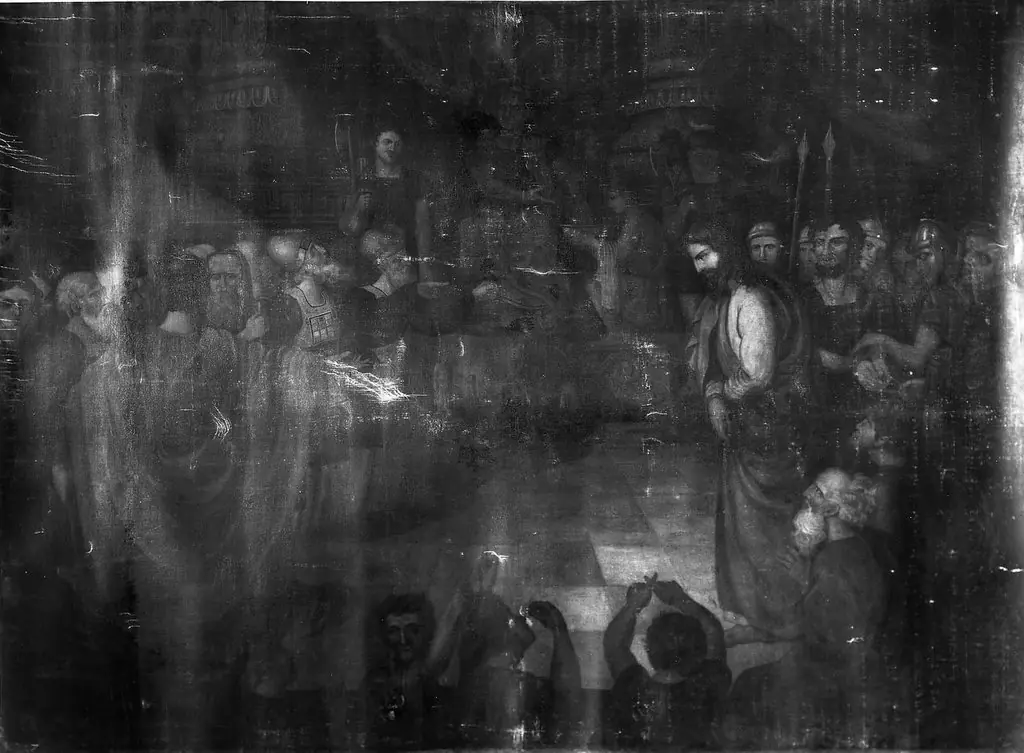
- Christ Rejected
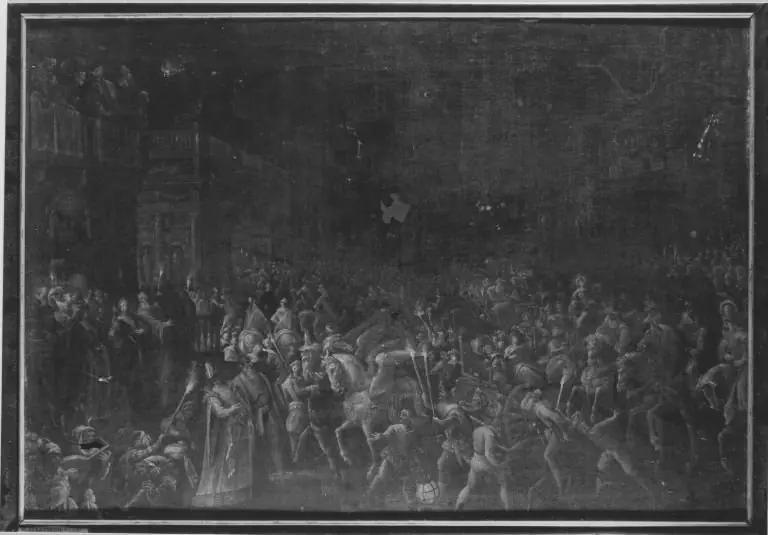 Maskenfest
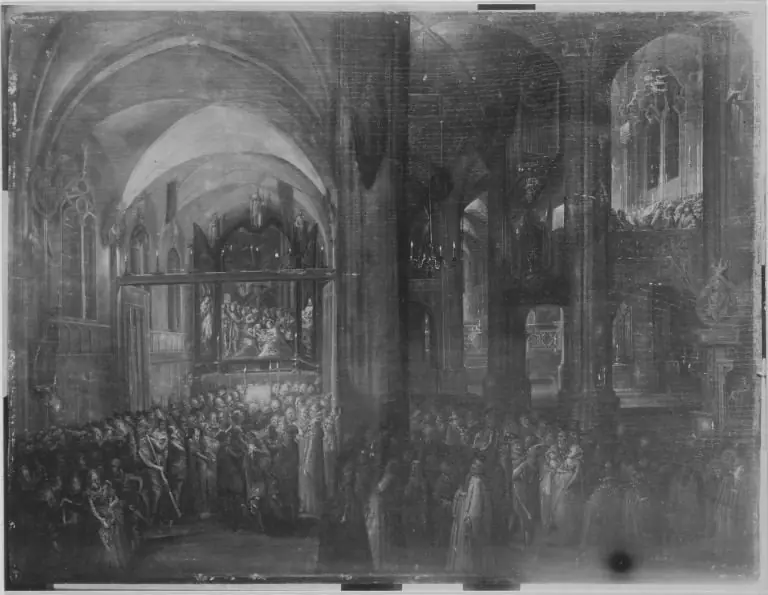 Konzert in einer nächtlichen Kirche
 Enthaltsamkeit des Scipio
 Jonah Preaching to the Ninevites
 Gypsy camp in an abandoned bulding
 Jonah Preaching to the Ninevites
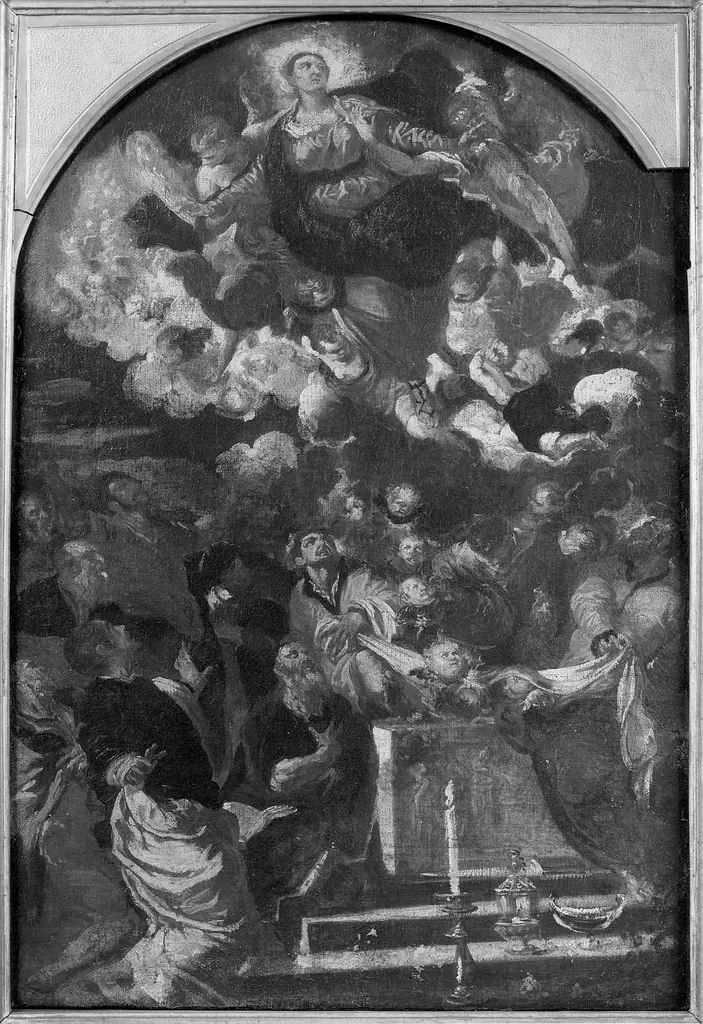 The Assumption of the Virgin
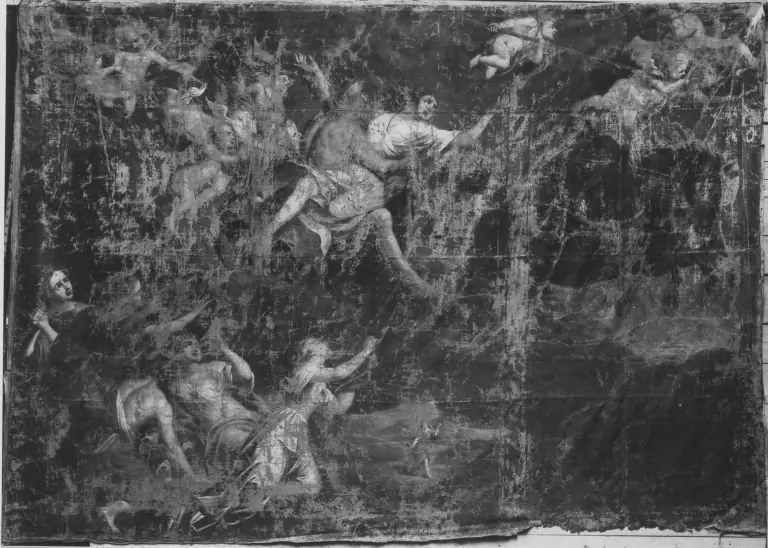 Pluto entführt Proserpina (zugeschrieben)
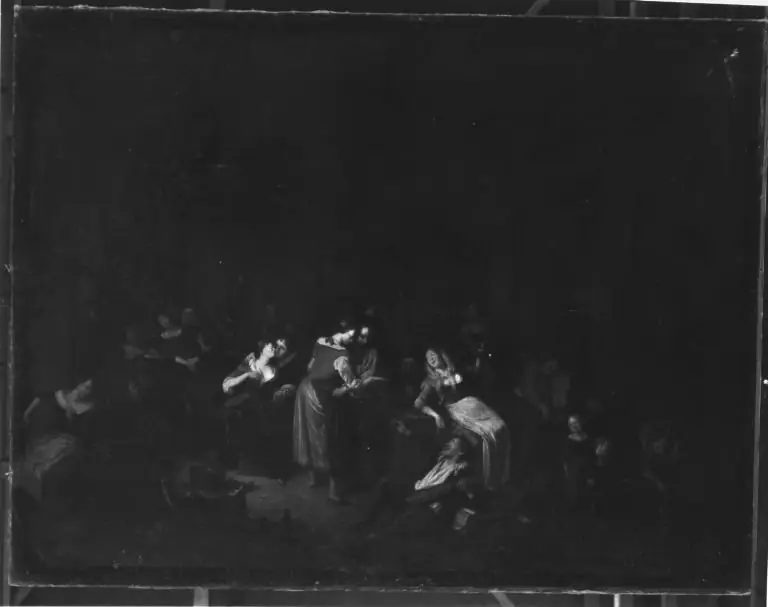 Lustige Gesellschaft
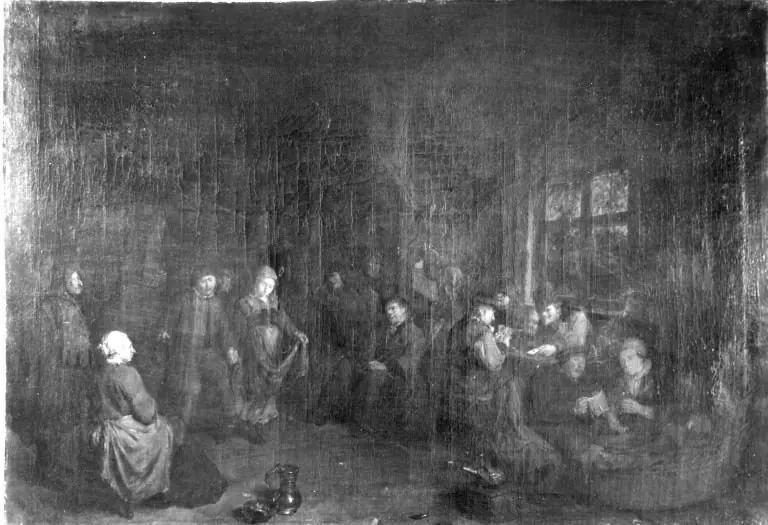 Bauerngenre
 Architektur-Capriccio (Nachahmer)