Artwork
Elephant
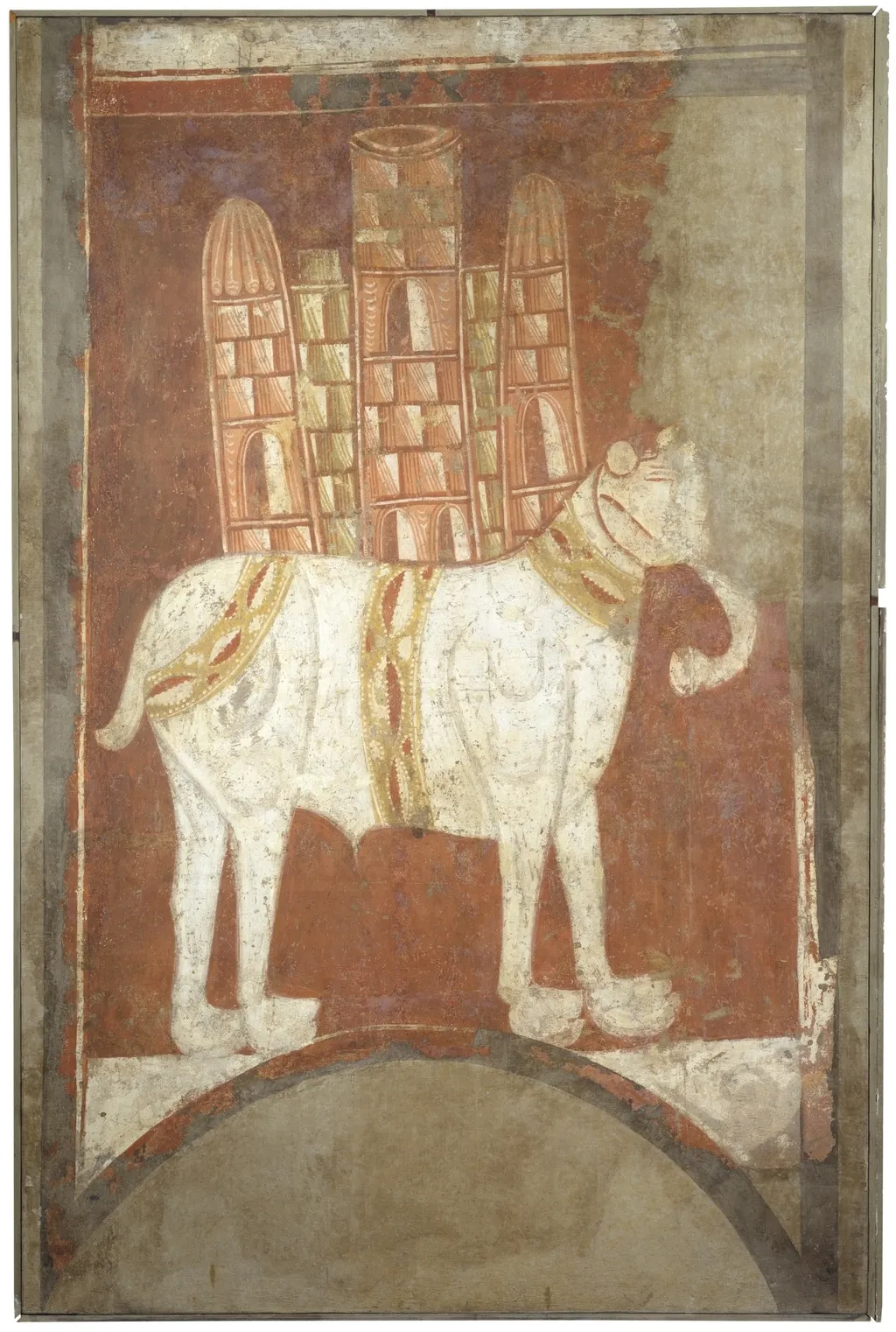
Elephant is a fresco painting by the Byzantine icon painting artist Unknown. It dates from 1125 and is held in the collection of the Museo del Prado.
About this work
Subject & Meaning
The subject matter is consistent with the broader genre of religious frescoes from this period and location.
The work depicts an elephant, serving as the central figure within a religious art context. Created in 1125 as a fresco, the image originated at the Hermitage of San Baudelio in Casillas de Berlanga. While the specific iconographic program or symbolic meaning is not detailed in the provided records, the classification of the piece as religious art indicates its function within a spiritual or devotional setting rather than a purely naturalistic one. The subject matter is consistent with the broader genre of religious frescoes from this period and location.
Technique & Style
The work was executed as a fresco using coating on plaster support, measuring 205 cm in height and 135 cm in width. It depicts an elephant within a religious composition and was created in 1125. The painting is part of the collection of the Museo del Prado and is housed in the Metropolitan Museum of Art.
History & Provenance
Elephant is a religious painting executed in coating medium around 1125. The work was created as a fresco in the Hermitage of San Baudelio at Casillas de Berlanga in the province of Soria. It entered the collection of the Museo del Prado and is also held by the Metropolitan Museum of Art.
The painting measures 205 cm in height and 135 cm in width. Its subject depicts an elephant, and it is classified within the genre of religious art. The work's creation is linked to an inception date recorded as 1125-01-01.
Historical records indicate the fresco was commissioned for the hermitage environment, reflecting devotional artistic practices of the period.
The fresco originates from the Hermitage of San Baudelio in Casillas de Berlanga, Soria. It is currently held by the Museo del Prado, though the Metropolitan Museum of Art is also associated with the work's collection history. No specific inventory or accession numbers, nor details of its exhibition history, are provided by the available sources.
Overview
The work presents a solitary white elephant positioned on a curved platform and oriented toward the right. It is adorned with a harness featuring alternating red and gold bands. Behind the animal rise three slender, vertically‑stretched structures, each punctuated by numerous windows and rendered in muted brown and green tones. The entire scene rests against an unmodulated brown field.
Context
Although the medium is listed merely as “coating,” the piece aligns with a tradition of stylized animal depictions that appear in medieval and early modern visual culture. The use of a white elephant, a creature rarely seen in Europe, reflects a fascination with exotic subjects that circulated through travel accounts and courtly spectacles during the period.
Legacy
The painting’s minimalist aesthetic and enigmatic subject continue to attract interest for its blend of exotic iconography and medieval visual strategies. It serves as a reference point for scholars examining cross‑cultural representations of wildlife and the adaptation of foreign motifs within a restrained, symbolic artistic framework.
Artist & collection









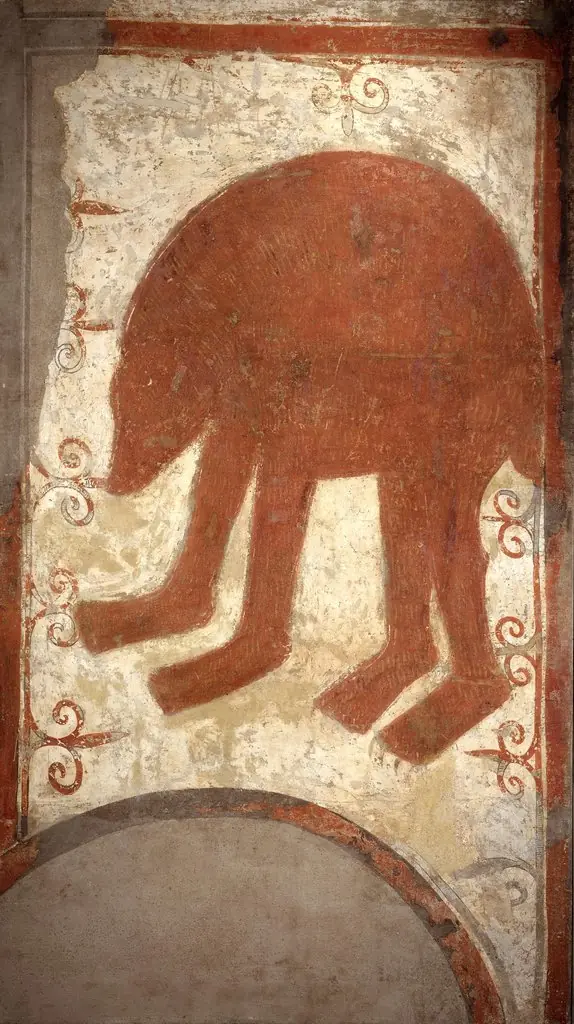 Bear
Bear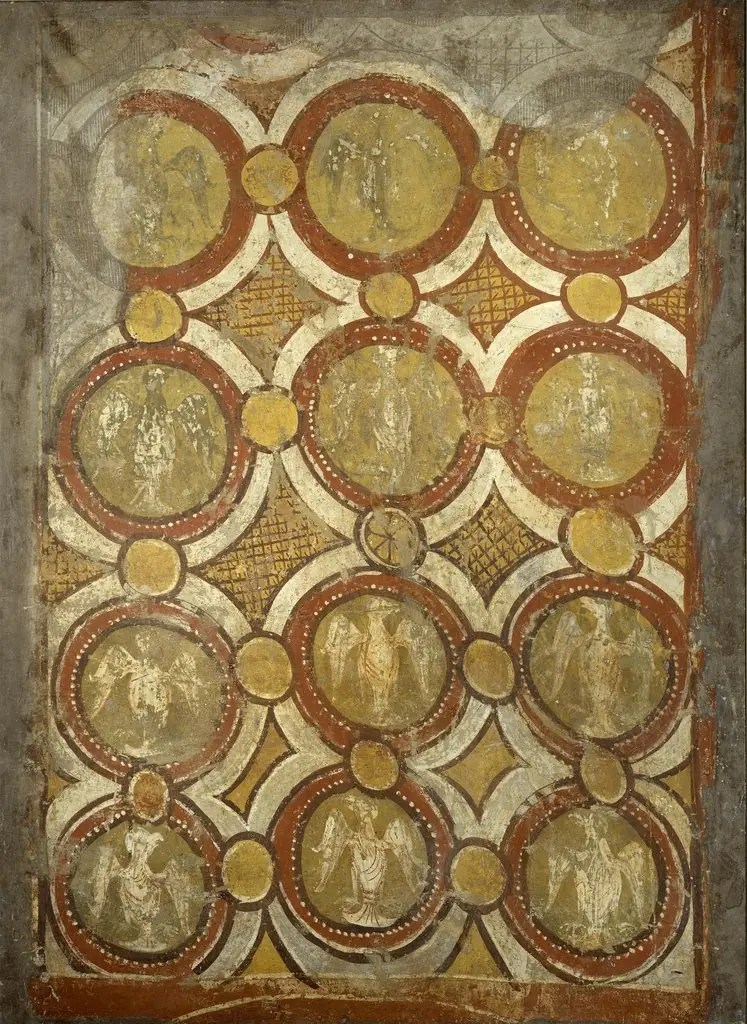 Decorative Panel with Eagles
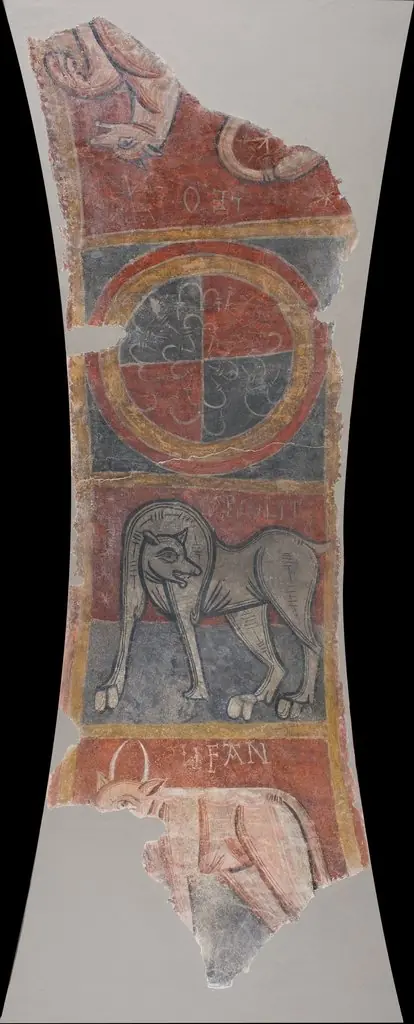 CARCOLITI, elephant and lion from Boí
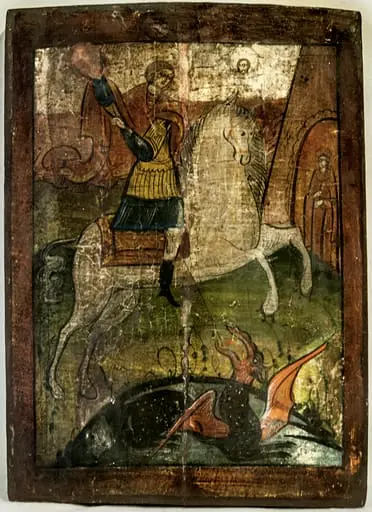 Tema iconografică este "Sfântul Gheorghe omorând balaurul". În prim plan, Sf. Gheorghe, în veșminte ostășești, călare pe un cal alb, cambrat, ridicat în două picioare, omoară balaurul plasat în registrul inferior. Veșmintele sfântului au o tentă țărănească(tunica albastră acoperită 3/4 de lorica argintie, pantaloni albi, cu motiv floral, cizme înalte. Calul are ambii ochi vizibili, coama bogată, coada în fuior. Partea dinspre privitor a ansamblului cal cu călăreț este supradimensionată, creând o impresie optică de înălțare a sfântului. În partea dreaptă, fata de împărat pe care o salvează sfântul, sub portalul palatului. privind scena. Veșminte lungi, simple, coroană împărătească. Înveșmântată în haine simple, lungi, cu coroană pe cap, privește scena cu brațele la piept. În colțul din stânga dreapta sus, Iisus Hristos așa cum apare pe sfântul Keramion. Nimbul cruciger. Balaurul plasat în registrul inferior asemănător unui grifon, corp diform, terminat cu o coadă în săgeată, aripile și capul roșii. Motiv mai elaborat decât în alte icoane unde redarea balaurului este minimizată. Compoziția este dinamică, chipurile expresive, gesturile bine realizate. Linia desenului variază, contribuind la efectul optic. Fondul foiței argintii(superior), relief din benzi late în tonuri de brun, brun roșcat, galben, alb, verde, cu elemente de vegetație. Bordura roșiatică lată, specifică icoanelor de tip krashnuska. Inscripție pe chenar, în partea superioară.
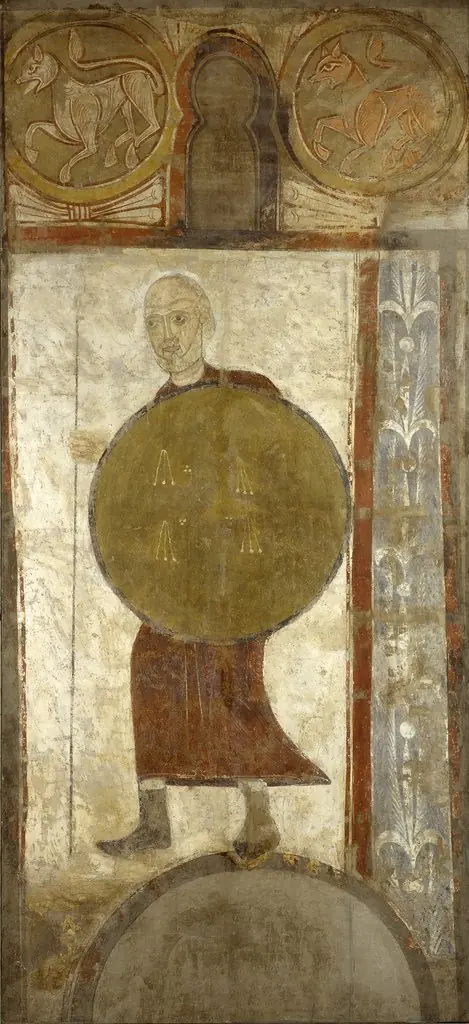 Soldier. Hermitage of San Baudelio. Casillas de Berlanga (Soria)
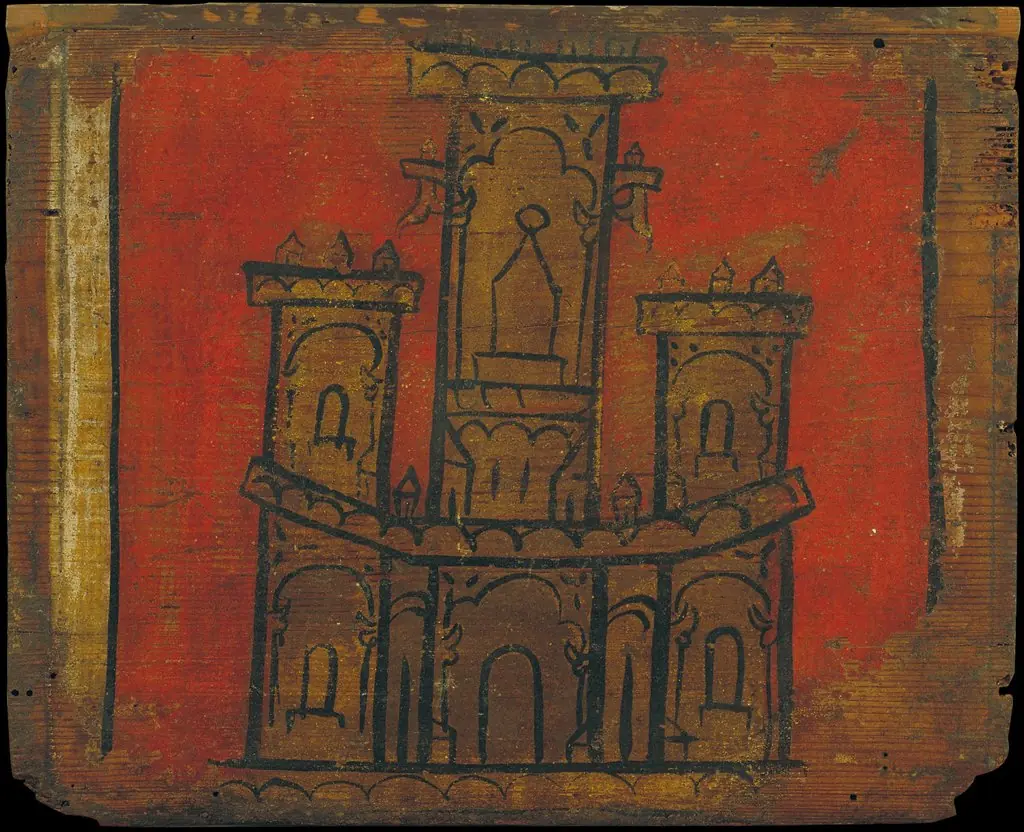 Small coffered ceiling panel with castle
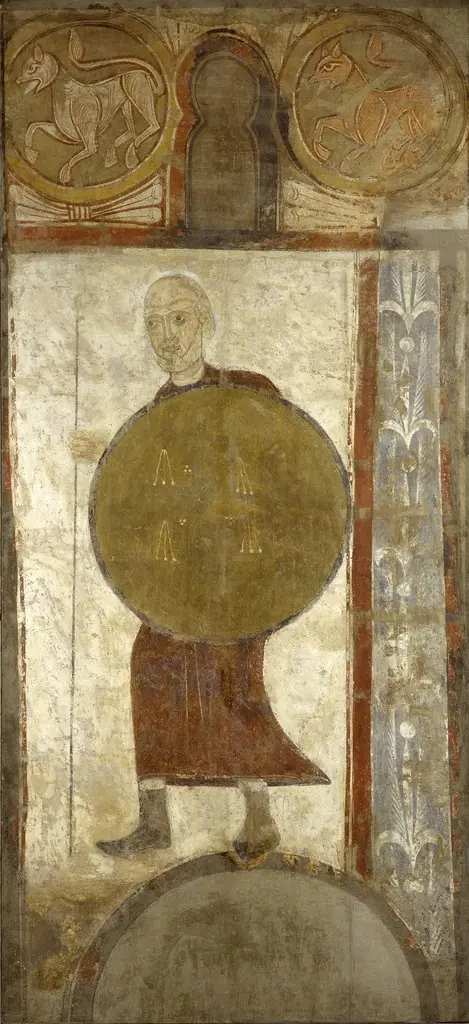 Warrior with Shield
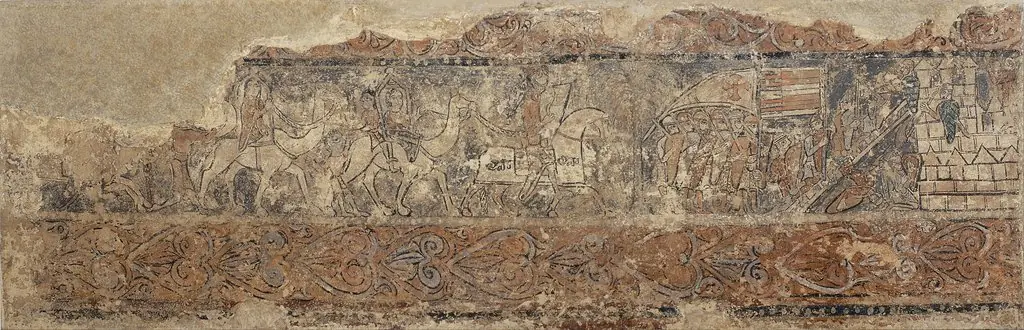 Profane paintings from Sigena: Retinue of pilgrims and assault on a castle (Saint John of Acre?)
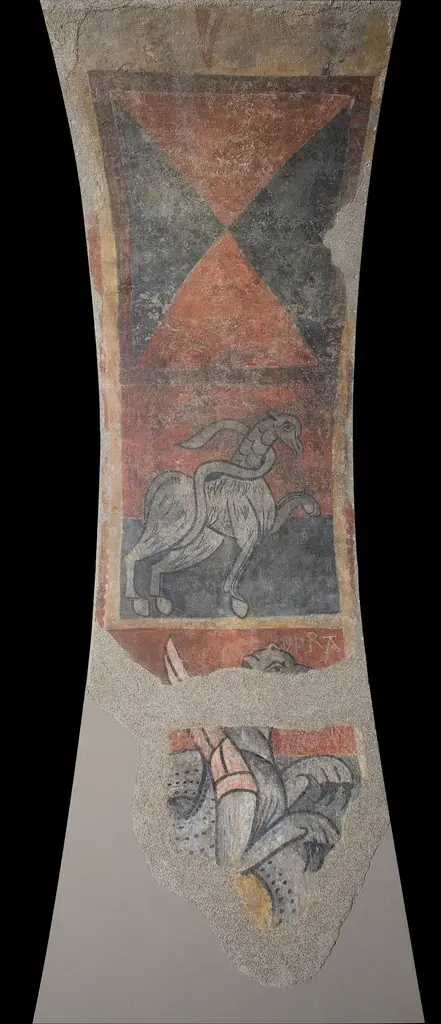 VIPRA (dragon) and other animals from Boí
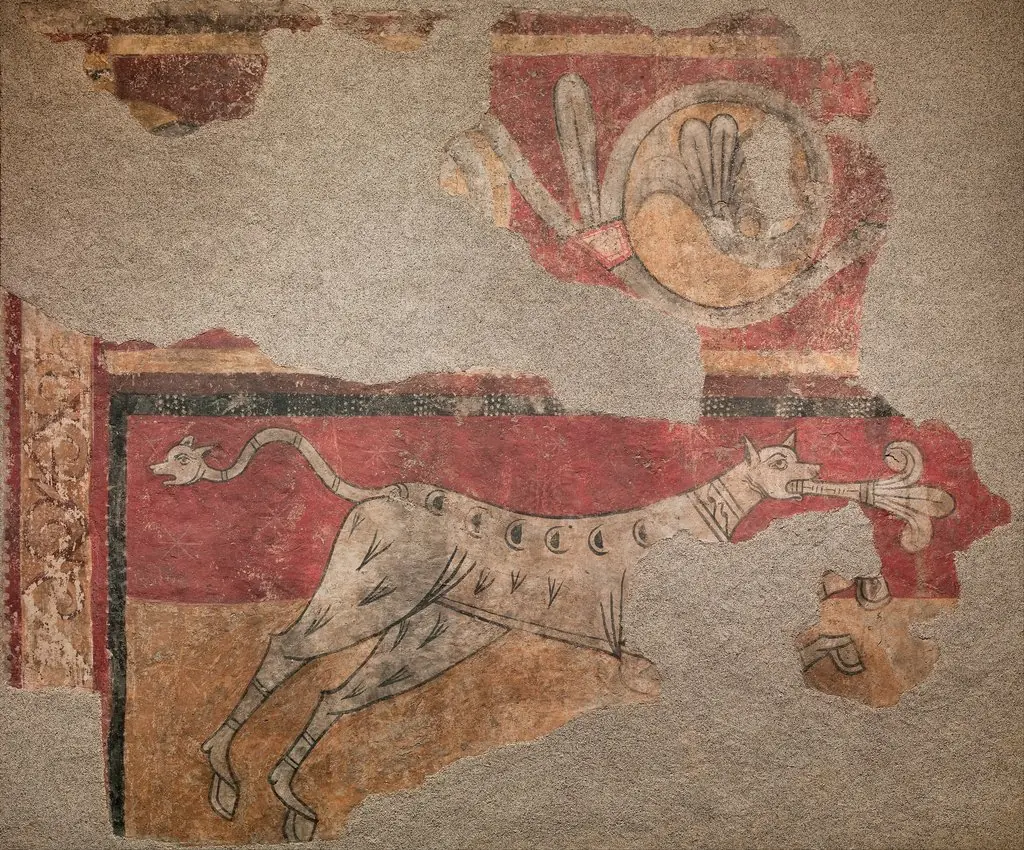 Quadruped with Fleur-de-lis from Boí
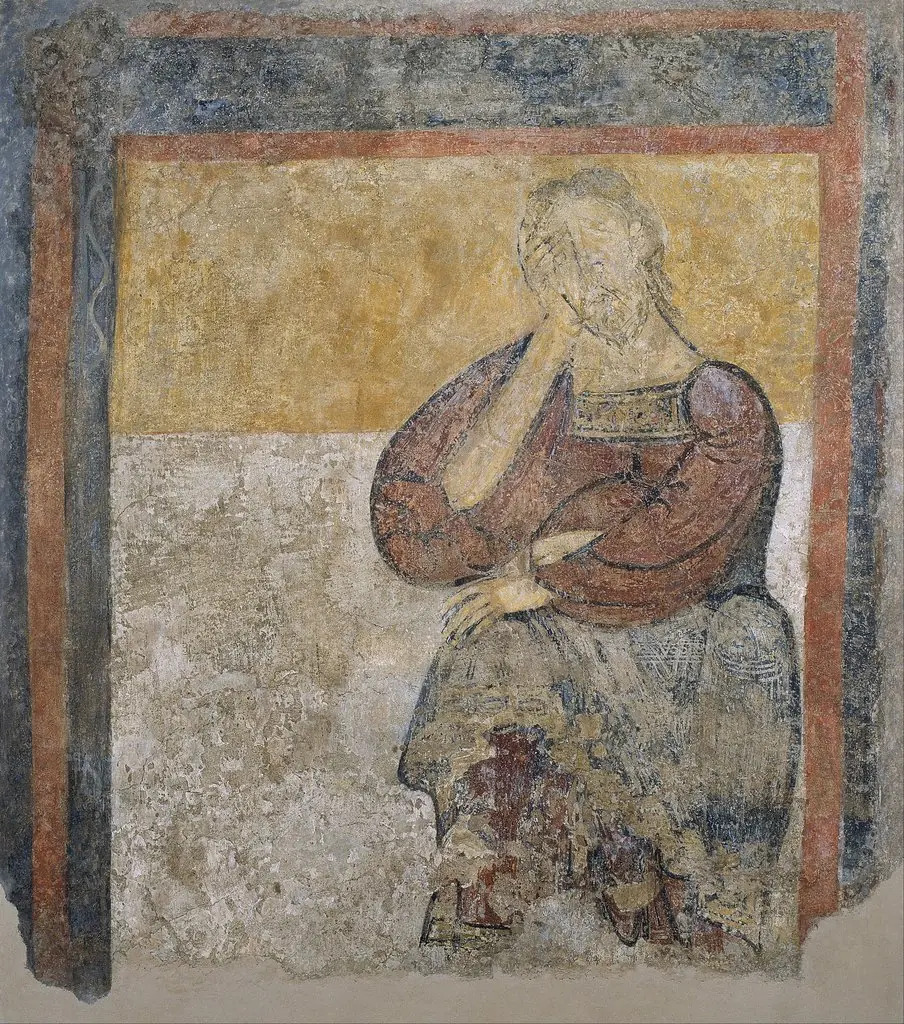 Distressed man from Sant Climent de Taüll
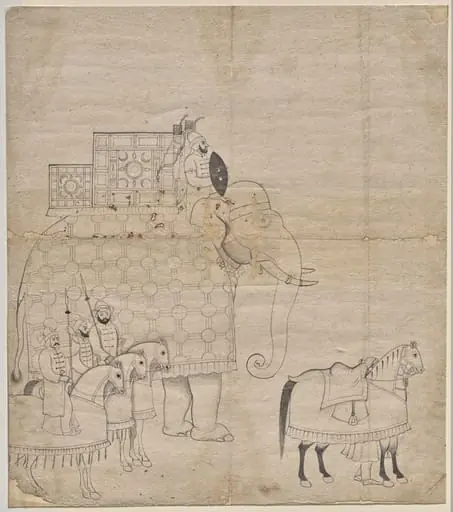
- Caparisoned Elephant and Horses