Artwork
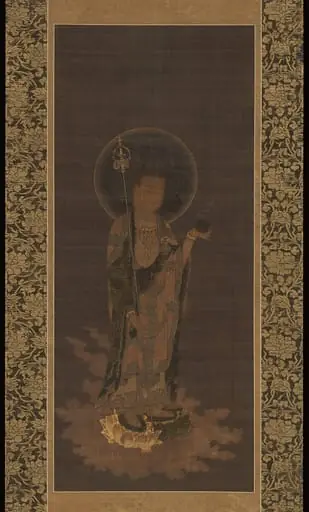
英一蝶筆 地蔵菩薩図|Jizō Bosatsu
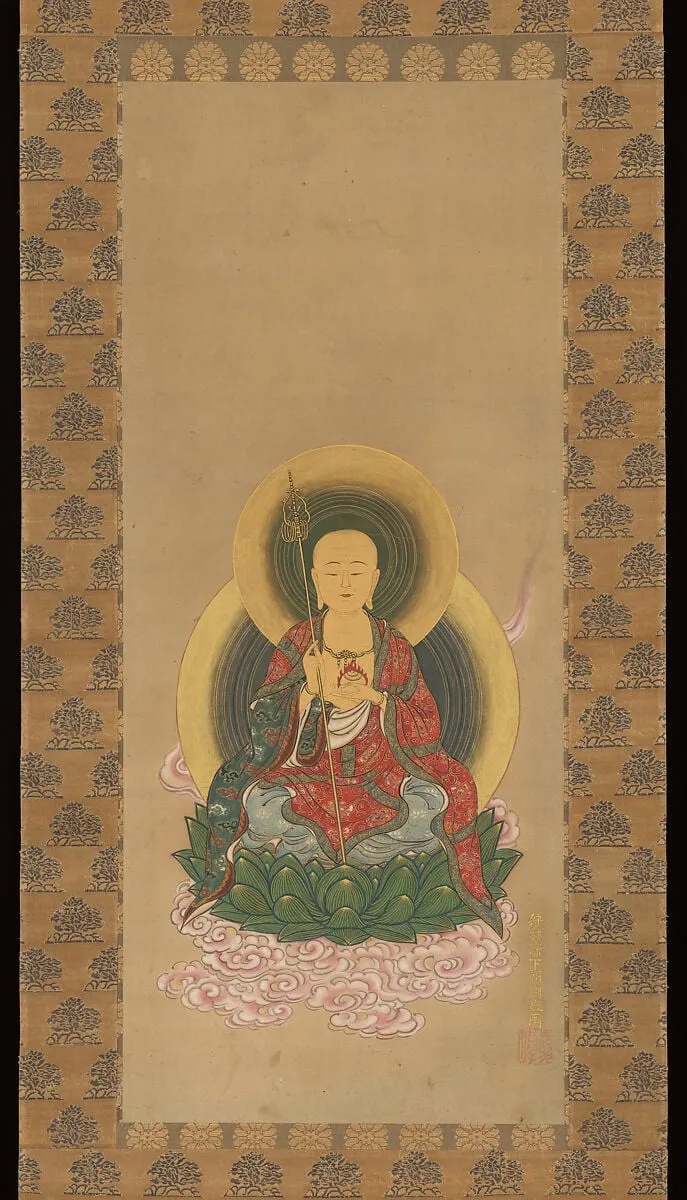
英一蝶筆 地蔵菩薩図|Jizō Bosatsu is an ink painting by the Baroque artist Hanabusa Itchō. It dates from 1682 and is held in the collection of the Metropolitan Museum of Art.
- Accession no.
- 36.100.33
About this work
Subject & Meaning
The inclusion of gold paint and the specific medium of a hanging scroll underscore the sacred nature of the subject within the context of Japanese Buddhist art.
The artwork depicts the Bodhisattva Jizō, a central figure in Buddhist religious iconography known for compassion and salvation. Created by Hanabusa Itchō in 1682, the hanging scroll presents this deity using ink, color, and gold paint on paper. As a religious painting, the work serves as an object of veneration, representing the spiritual qualities associated with Jizō Bosatsu.
The inclusion of gold paint and the specific medium of a hanging scroll underscore the sacred nature of the subject within the context of Japanese Buddhist art.
Technique & Style
The work is executed as a hanging scroll using ink, color, and gold paint on paper. Its measured dimensions are 62.9 by 26.7 centimeters, producing the tall, narrow proportions typical of devotional hanging-scroll formats. The combination of monochrome ink with applied color and gold accents is consistent with religious painting of the period, supporting a depiction of the bodhisattva Jizō. No condition notes are recorded in the available sources.
History & Provenance
Hanabusa Itchō painted Jizō Bosatsu in 1682 as a hanging scroll in ink, color, and gold on paper. The work was created in Japan during the early Edo period.
The painting entered the collection of the Metropolitan Museum of Art, where it remains part of its holdings. No documented commission or earlier ownership history has been established for this work in the available sources.
Overview
Jizō Bosatsu, created by Hanabusa Itchō in 1682, is a Japanese religious hanging scroll. Rendered with ink, color, and gold paint on paper, it depicts the revered bodhisattva Jizō. The artwork presents a gentle and sacred image, reflecting Jizō's benevolent role within Buddhist tradition.
Its composition and palette aim to evoke a sense of warmth and quiet devotion, rather than formal distance or austerity.
Artist & collection

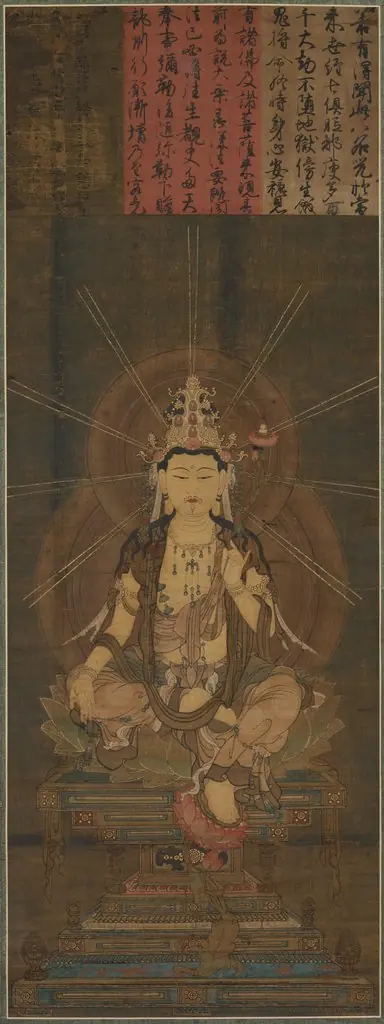 Miroku (Maitreya)
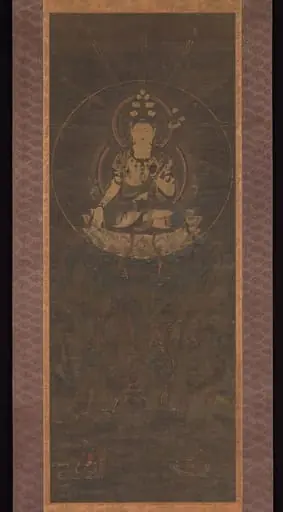 十一面観音影向図|Eleven-Headed Kannon on Mount Fudaraku
 Monju as a Child (Chigo Monju)
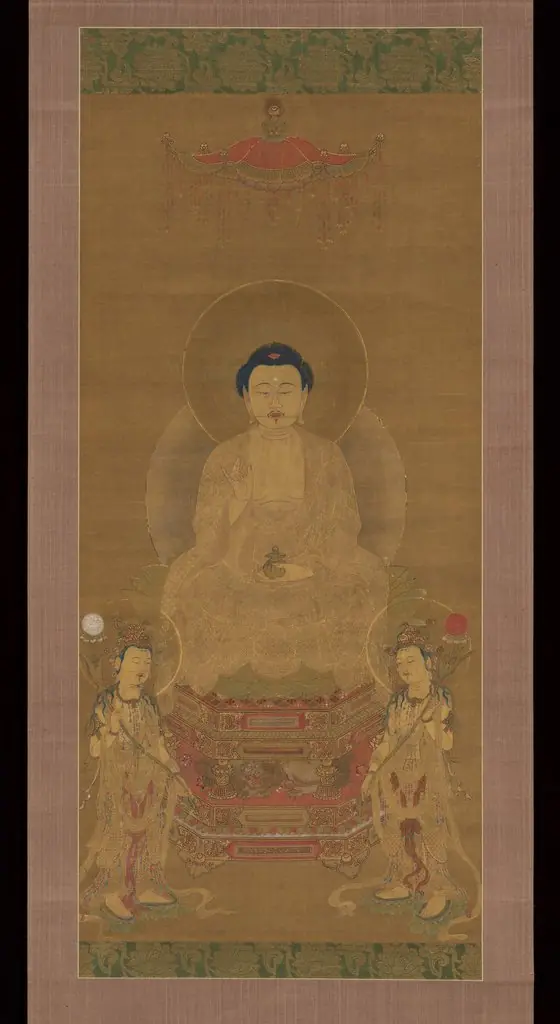 Triad of the Medicine Master Buddha Yakushi (Bhaisajya Buddha)
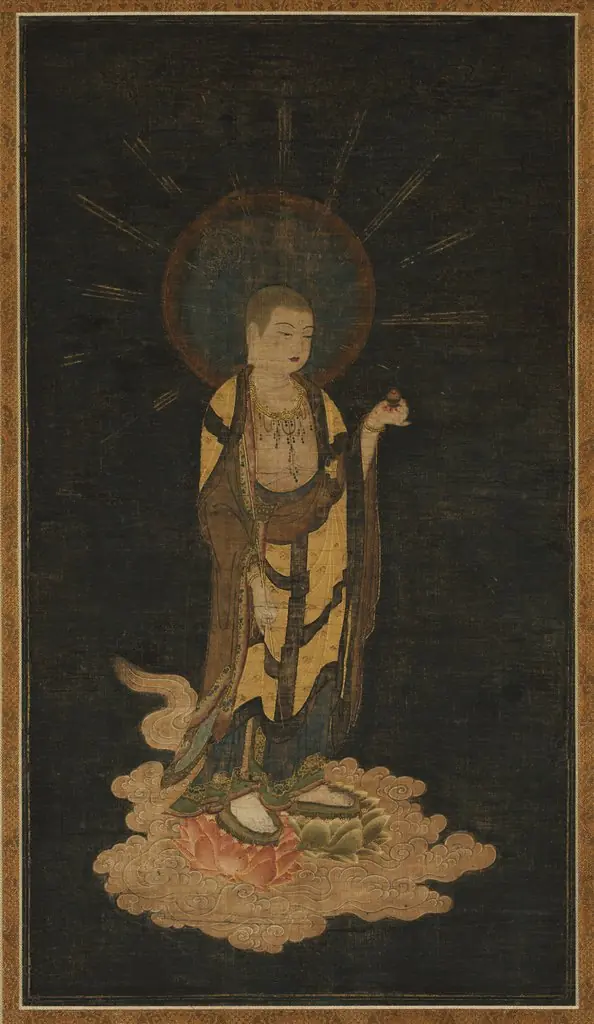 Welcoming Descent of Jizō
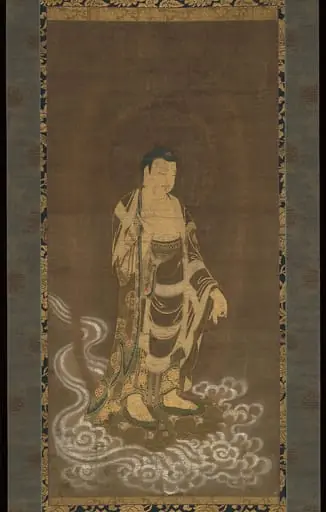 阿弥陀如来像|Welcoming Descent of Amida Buddha
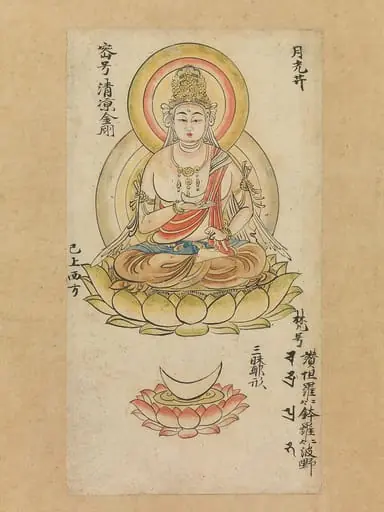 伝託磨為遠筆 月光菩薩像 「金胎仏画帖」断簡|Gakkō Bosatsu, from “Album of Buddhist Deities from the Diamond World and Womb World Mandalas” (“Kontai butsugajō”)
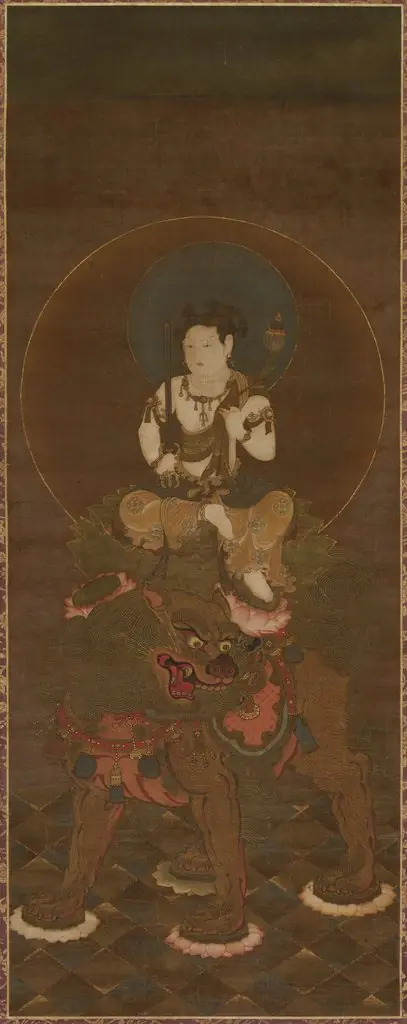 Monju with Five Hair Knots