Artwork
Monju with Five Hair Knots
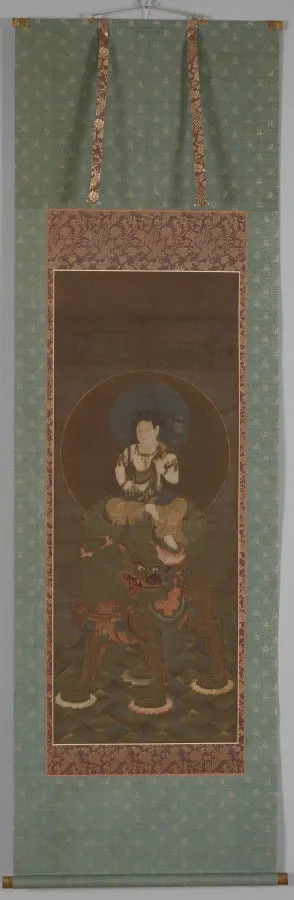
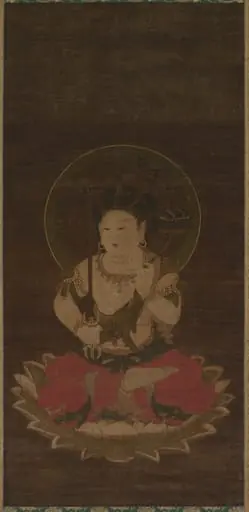
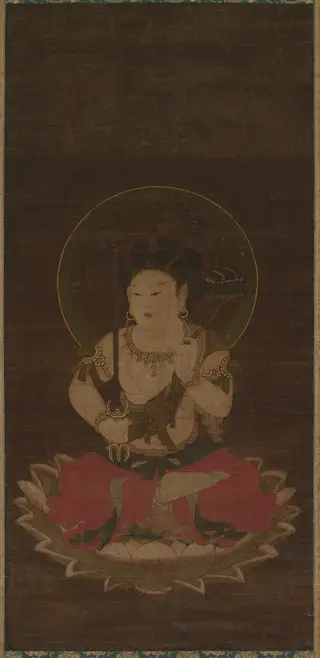
Monju with Five Hair Knots is an unspecified painting by the Tosa School artist Unknown. It dates from 1337 and is held in the collection of the Cleveland Museum of Art. This painting depicts Monju (Manjushri), a Buddhist bodhisattva, riding a lion.
- Accession no.
- 1971.21
- Credit line
- Purchase from the J. H. Wade Fund
About this work
The painting was made long ago, when Buddhist art in Japan often used gold to show sacred things.
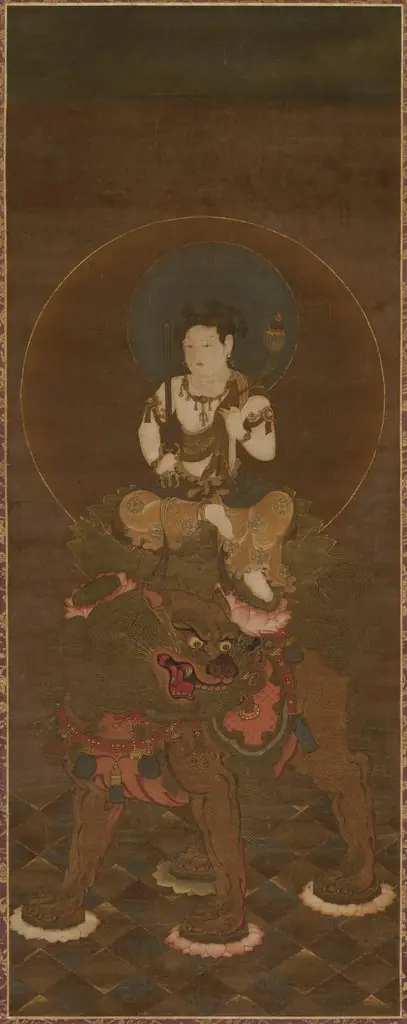
You see a young boy with a calm face riding a bright gold lion. The boy has five small buns of hair on his head. The lion stands on lotus flowers, and every strand of its fur is painted in gold.
This is Monju, a wise figure in Buddhism who helps others reach enlightenment. The five hair knots are a promise to protect people from bad luck. The gold lion shows its magical power. The painting was made long ago, when Buddhist art in Japan often used gold to show sacred things.
To see more art like this, look up Japan, Kamakura period (1185–1333).
Overview
This painting depicts Monju (Manjushri), a Buddhist bodhisattva, riding a lion. Characterized by his youthful appearance, Monju embodies pure wisdom and assists others in achieving enlightenment.
Subject & Meaning
Monju's five hair knots symbolize his vow to ward off calamity, while the lion, with every strand of its fur rendered in gold, represents supernatural power. The composition conveys Monju's role as a protector and guide towards enlightenment.
Technique & Style
The use of gold for the lion's fur and the lotus platforms beneath its feet signifies the sacred and supernatural elements of the scene, a characteristic technique of Japanese Buddhist art during the Kamakura period.
History & Provenance
Created during the Kamakura period (1185–1333), this painting reflects the prevalent use of gold in Japanese Buddhist art of the time to denote sacred subjects.
Context
The depiction of Monju as a bejeweled, silk-clad youth is inspired by the attire of an Indian prince, highlighting the cross-cultural influences in Japanese Buddhist iconography.
Artist & collection









- Monju with Five Hair Knots
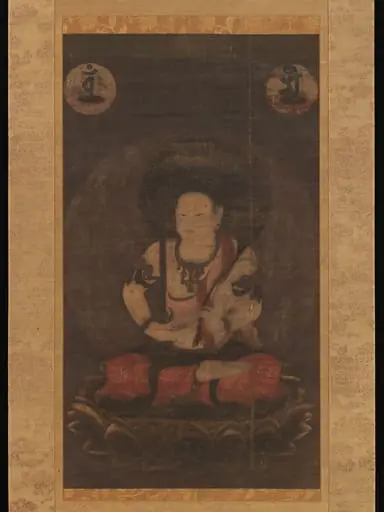 五髻文殊菩薩像|The Bodhisattva Monju (Manjushri) with Five Topknots
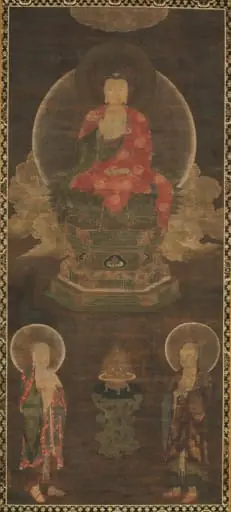
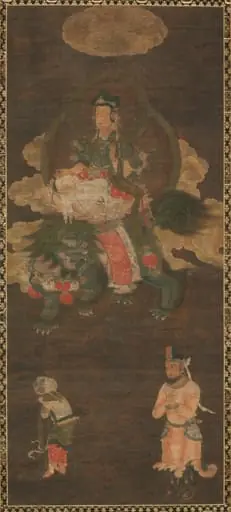 Shakyamuni Triad: Buddha Attended by Manjushri and Samantabhadra (Bodhisattva with Lion)
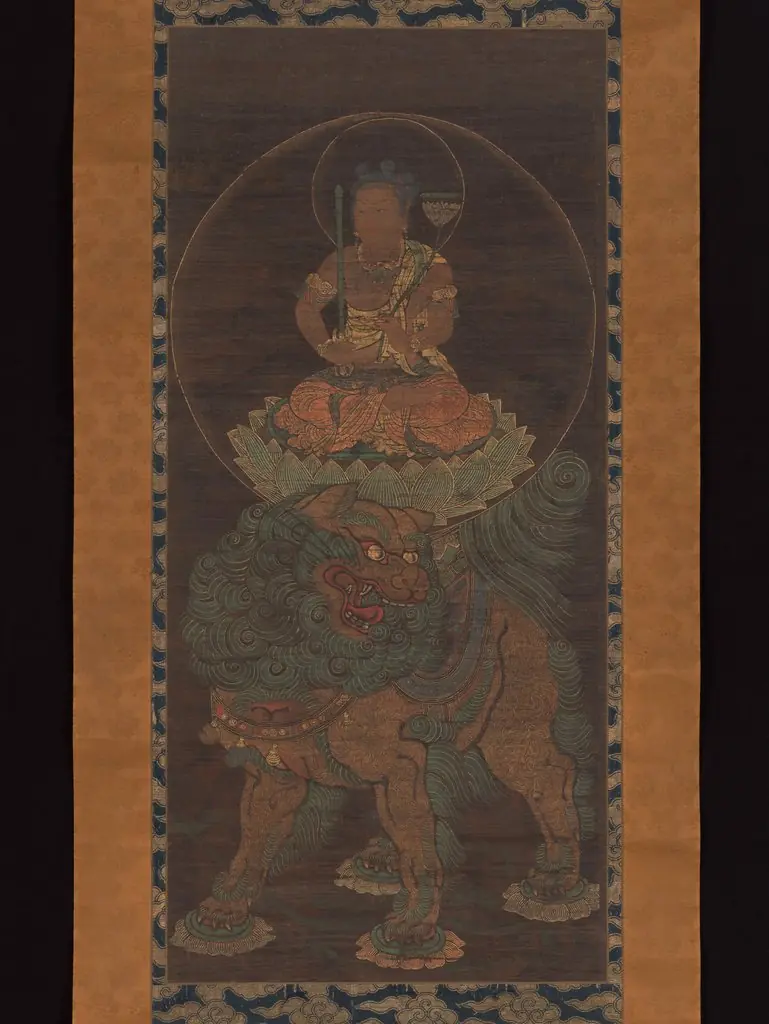 The Bodhisattva Monju (Manjushri) with Five Topknots
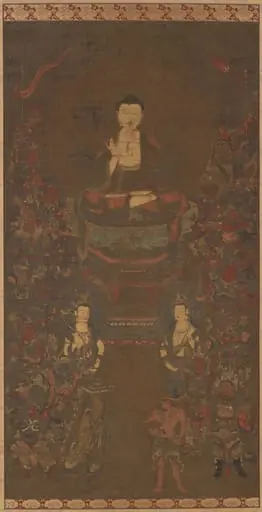 Shakyamuni with the Sixteen Benevolent Deities
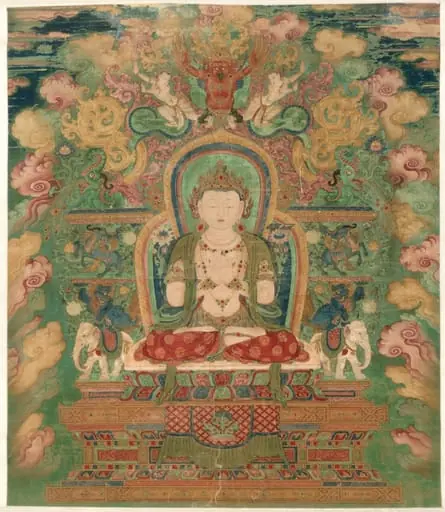 Manjushri
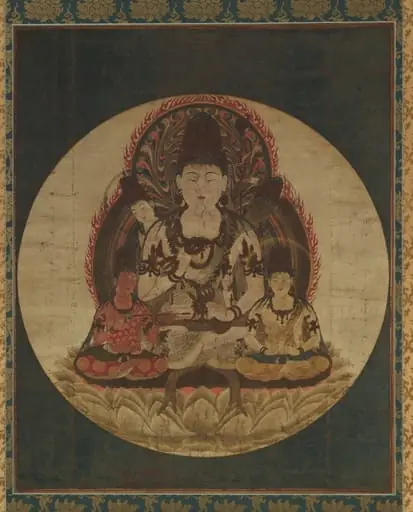 The Secret Five Bodhisattvas (Gohimitsu Bosatsu)
 Monju as a Child (Chigo Monju)
 Shakyamuni Triad: Buddha Attended by Manjushri and Samantabhadra (Buddha)
 Monju as a Child (Chigo Monju)