Artwork
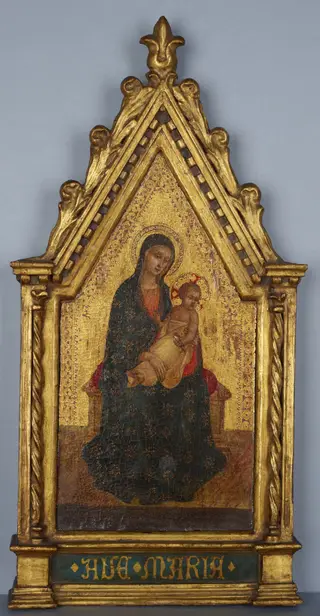
Engaged arched cassetta frame and arched tabernacle frame
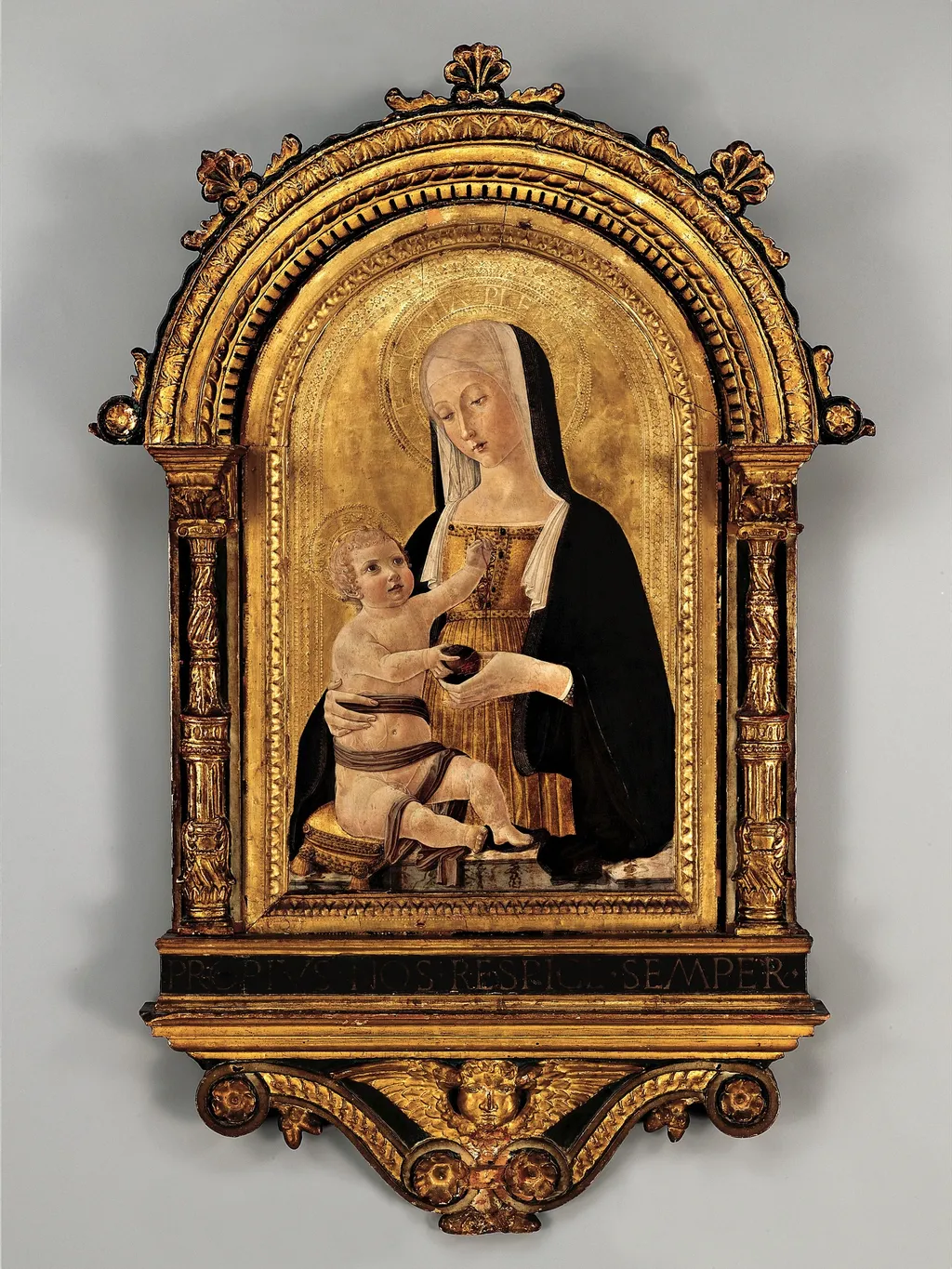
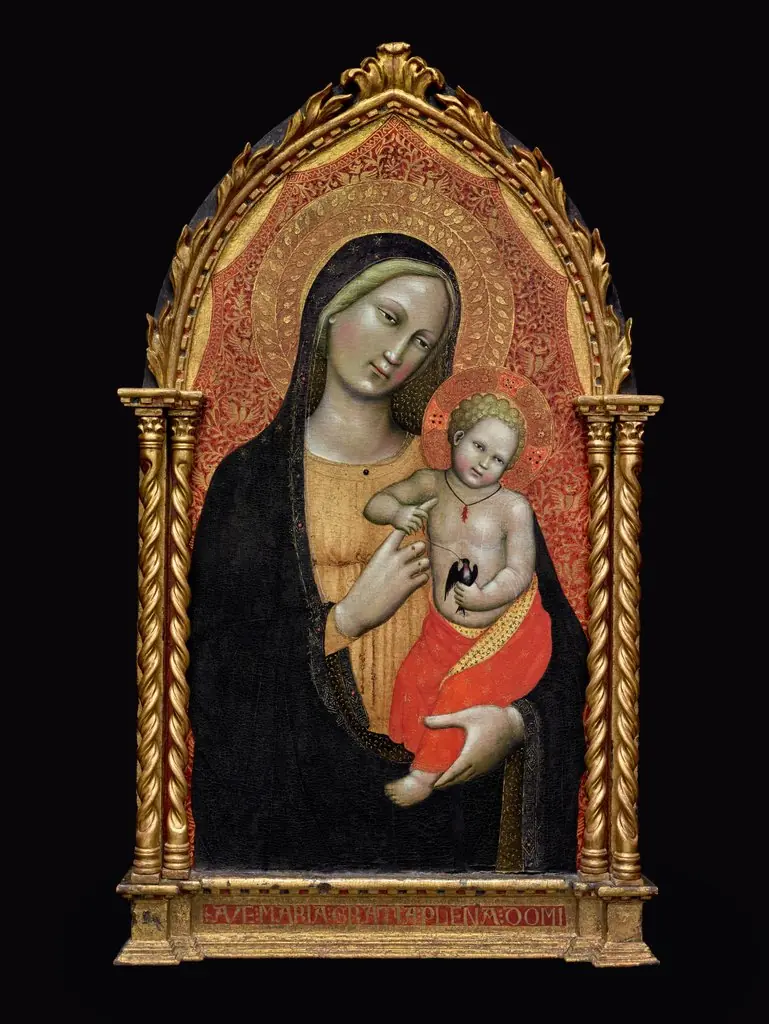
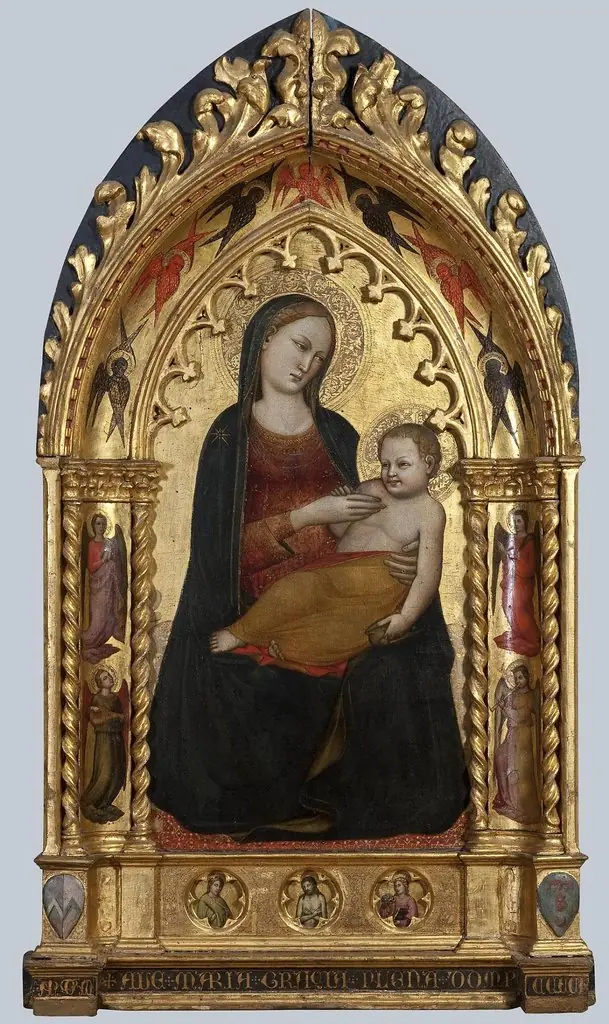
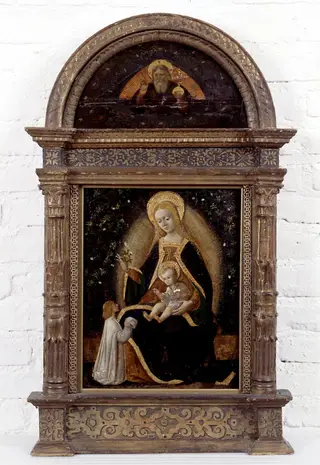
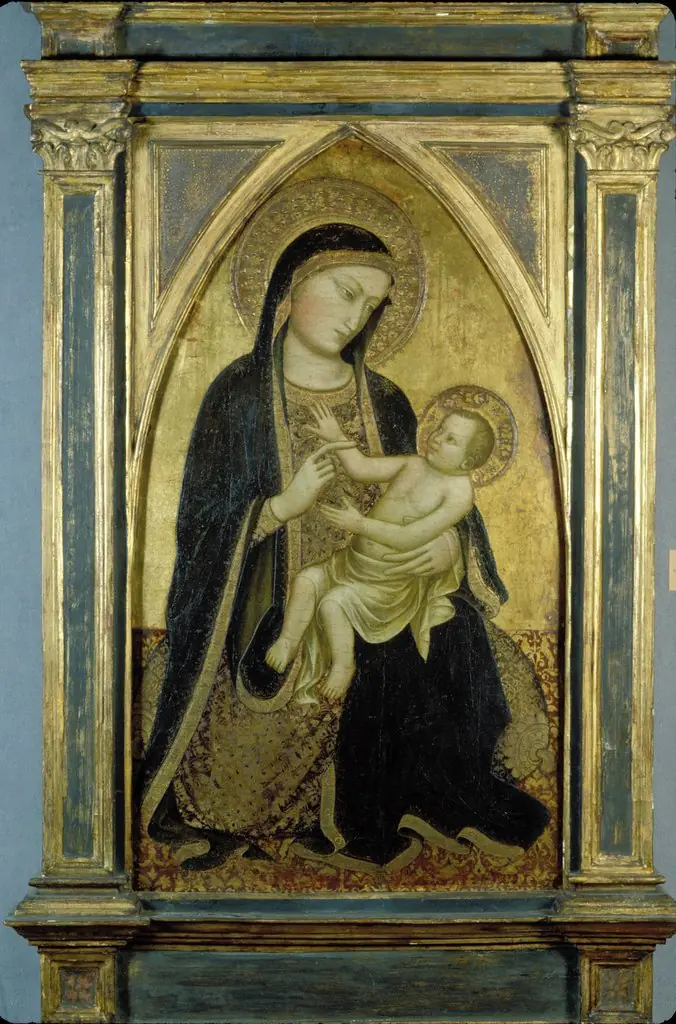
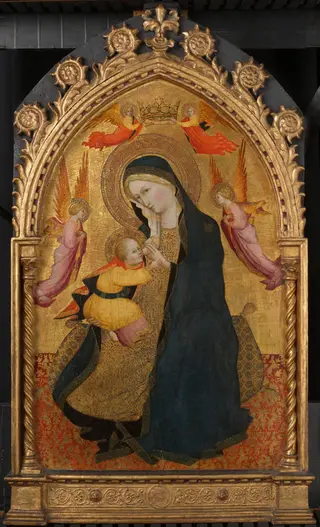
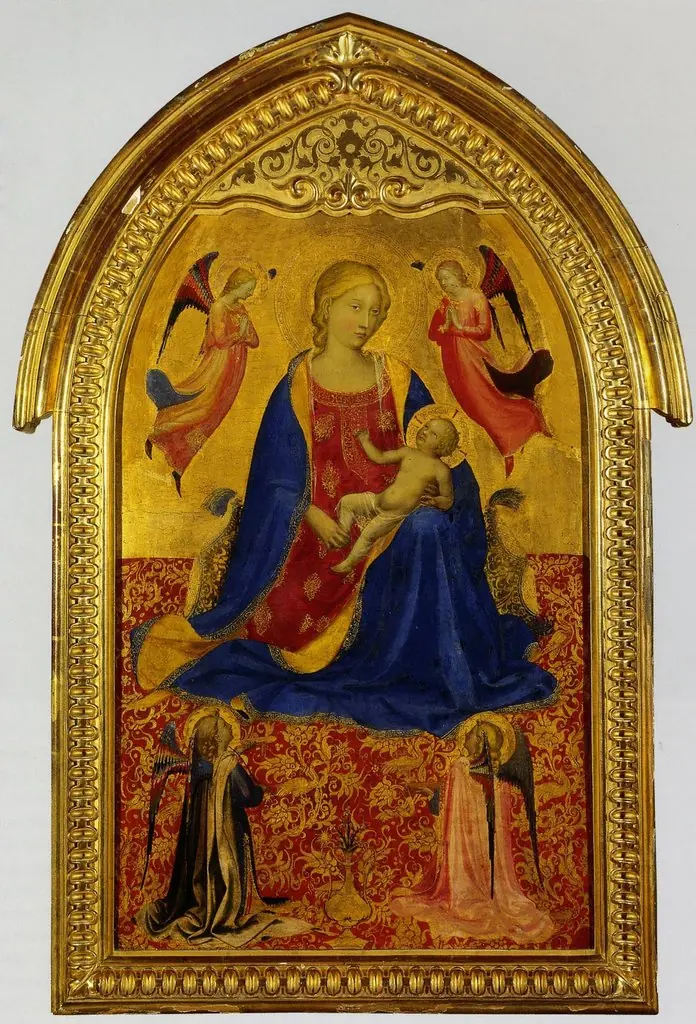
Engaged arched cassetta frame and arched tabernacle frame is an unspecified painting. It dates from 1465 and is held in the collection of the Metropolitan Museum of Art. The work presents a seated woman holding a small child within an elaborate gold‑encrusted frame.
About this work
History & Provenance
The work entered the collection of the Metropolitan Museum of Art through the bequest of Robert Lehman, who previously held ownership of the piece.
This anonymous religious painting was created in 1465. It is distinguished by its specific framing, featuring an engaged arched cassetta frame and an arched tabernacle frame. The work entered the collection of the Metropolitan Museum of Art through the bequest of Robert Lehman, who previously held ownership of the piece. The painting remains part of the museum's holdings today.
The engaged arched cassetta frame and arched tabernacle frame is held in the collection of the Metropolitan Museum of Art. This anonymous religious painting, dated to 1465, was formerly owned by Robert Lehman. The work is part of the museum's holdings derived from the Lehman collection.
No specific accession number or detailed exhibition history is provided in the available records.
Overview
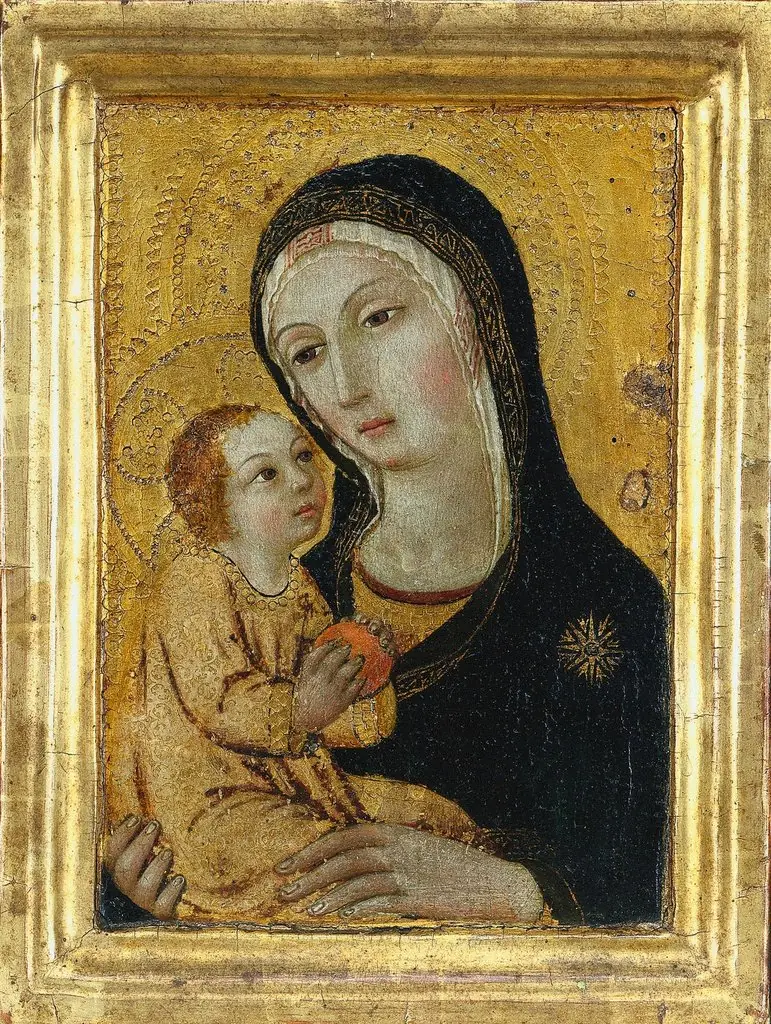
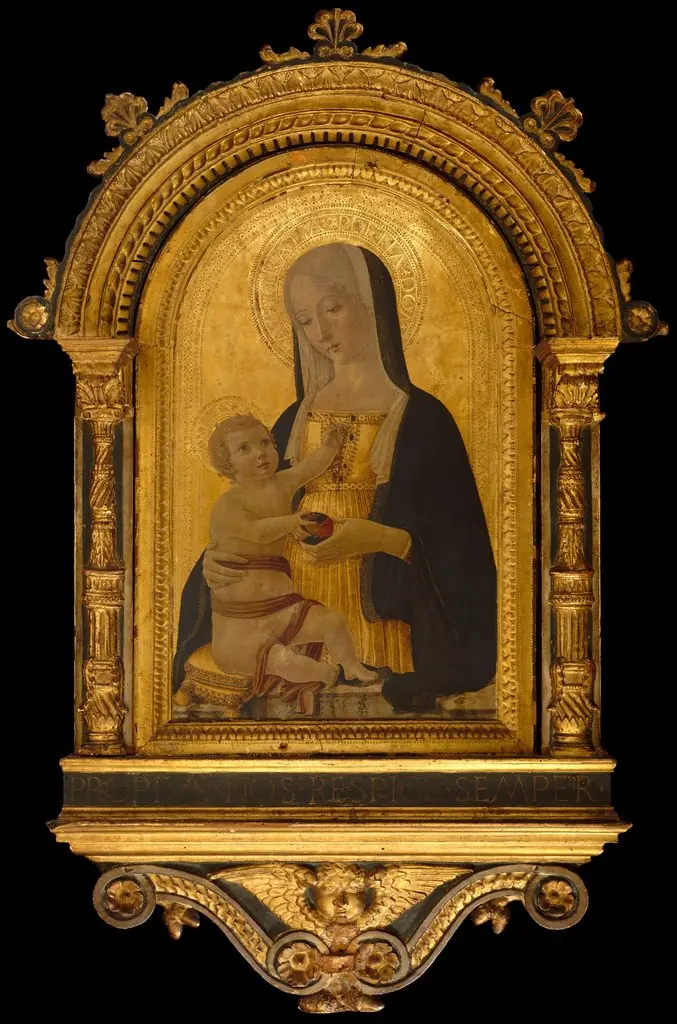
The work presents a seated woman holding a small child within an elaborate gold‑encrusted frame. The woman is dressed in a dark garment trimmed with a light collar, and a halo is rendered behind her head, indicating a sacred identity. The child, barefoot, rests on a ledge and clutches a round object, while the surrounding ornamental border features swirling motifs and diminutive figures reminiscent of devotional metalwork.
Subject & Meaning
The composition suggests a devotional scene, likely portraying a holy mother and her infant, conveyed through the serene expressions and the presence of a halo. The child's grasp of a spherical item may symbolize a celestial or theological concept, reinforcing the painting’s function as an object of contemplation rather than a narrative tableau.
Technique & Style
Executed in paint on panel, the image employs a limited palette of deep tones contrasted with the luminous gold of the frame. Linear detailing defines the garments and halo, while the ornamental border is rendered with intricate, almost filigree‑like brushwork that imitates the appearance of metalwork commonly found on reliquaries.
Context
The decorative border mirrors the design of arched cassetta and tabernacle frames used in liturgical settings, indicating the painting’s original placement within a religious context, possibly as a portable altarpiece or a devotional panel. Such framing conventions were typical in the late medieval to early Renaissance periods, when painted images were often integrated with precious metal surrounds.
Artist & collection