Artwork
Madonna and Child with Four Аngels
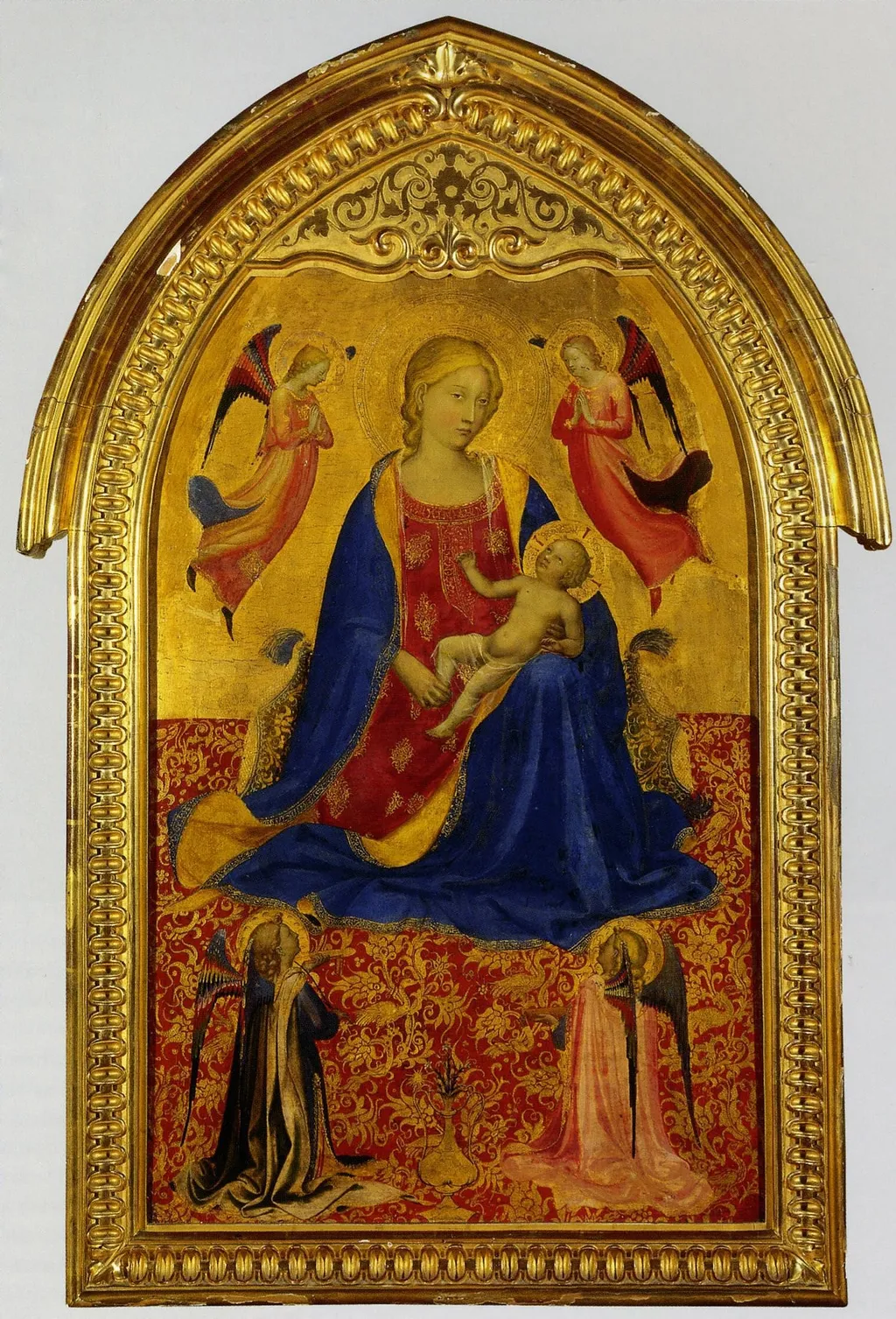
Madonna and Child with Four Аngels is a tempera painting by the Early Renaissance artist Fra Angelico. It dates from 1420 and is held in the collection of the Hermitage Museum.
About this work
Subject & Meaning
Two angels stand to the sides with hands clasped in prayer, while the other two kneel before the Madonna, playing musical instruments.
The painting depicts the Virgin Mary holding the infant Jesus, surrounded by four angels arranged symmetrically around them. Two angels stand to the sides with hands clasped in prayer, while the other two kneel before the Madonna, playing musical instruments. A golden vase of lilies at the lower center symbolizes the purity of the Virgin.
The figures are rendered in rich colors, with Mary wearing a blue mantle lined with yellow and a red robe adorned with yellow motifs, seated on a red and gold carpet. The work is executed in tempera on a poplar panel and was painted in the early 1420s. Its iconography emphasizes Marian devotion and the intercessory role of angels within a sacred context.
The symbolic elements, including the lilies and the angels’ gestures, reinforce themes of purity, divine intercession, and the heavenly court surrounding the Holy Family. This composition reflects the religious and artistic conventions of early Renaissance devotional imagery, where the Virgin and Child are often accompanied by saints or angels to underscore their spiritual significance. The painting’s meaning lies in its devotional function, inviting contemplation of the sacred mystery of the Incarnation through a harmonious arrangement of sacred figures.
Scholarly analysis confirms that the attribution to Fra Angelico was solidified in 2006 following an exhibition in Florence, where comparative stylistic examination with authenticated works by the artist provided conclusive evidence of authorship. The work is housed in the Hermitage Museum in Saint Petersburg, where it has been part of the collection since 1922, following earlier attributions to other artists such as Arcangelo da Camerino.
Technique & Style
The painting is executed in tempera on a poplar panel, following the Florentine tradition of the early 1420s. The composition is organized around a central vertical axis formed by the Virgin’s throne, with two angels hovering in profile on either side and two kneeling musicians at the lower corners, creating a balanced, symmetrical arrangement. Mary wears a deep blue mantle lined with gold and a red robe with yellow motifs, seated on a patterned red-and-gold textile; the Christ Child is placed before her.
The background features a gilded, diaphanous sky that flattens the space and emphasizes the hieratic presence of the figures.
The upper section of the poplar support was later trimmed, requiring the addition of a special frame to conceal the alteration. The handling is precise and linear, characteristic of Fra Angelico’s early style, with delicate modeling achieved through fine hatching and a restrained palette dominated by saturated reds, blues, and golds.
History & Provenance
The work was painted in the early 1420s, though its early ownership is undocumented. By the late nineteenth century it entered the Stroganov collection, and its authorship was initially uncertain, with some scholars attributing it to Gentile da Fabriano. In 1909 the Italian researcher Arcangelo di Cola da Camerino was credited as the maker, and the painting was acquired by the Hermitage Museum in 1922.
Italian art historian Roberto Longhi first proposed Fra Angelico as a possible author in 1928, a view that gained increasing support, though definitive attribution was not achieved until 2006, when comparative analysis during an exhibition in Florence confirmed Fra Angelico as the creator and refined the dating to the early 1420s. The painting is housed in the Hermitage Museum's Grand Building, room 209.
The work is held in the Hermitage Museum in Saint Petersburg. Its inventory number is not specified in the sources. It has been exhibited as part of the Hermitage's collection, appearing in the museum's 1958 catalogue under the attribution to Arcangelo da Camerino, later reattributed to Fra Angelico in the 1994 catalogue and definitively confirmed in 2006 following an exhibition in Florence. The painting is displayed in the Grand Ermitage building, room 209.
Context
The painting’s attribution evolved markedly in modern scholarship. Initially linked to Gentile da Fabriano, it was assigned to Arcangelo di Cola da Camerino by 1909 and entered the Hermitage in 1922 under that name. Italian critic Roberto Longhi first proposed Fra Angelico in 1928, a view progressively endorsed by specialists despite lingering doubts until the late twentieth century.
Hermitage catalogues reflected this shift: attributed to Arcangelo da Camerino in 1958, to Fra Angelico (with a question mark) in 1976, and “attributed” to Fra Angelico in 1994. Definitive confirmation arrived in 2006 through technical analysis and comparison with securely attributed works by Fra Angelico during a Florence exhibition, which also refined the dating to the early 1420s.
Fra Angelico’s early fifteenth-century Florence shaped the composition’s delicate balance of lyrical figuration and devotional clarity, aligning with contemporaneous trends in Florentine tempera painting and the city’s humanist religious culture.
Overview
Created circa 1420 by the Dominican friar Fra Angelico, this tempera panel presents a devotional image of the Virgin Mary with the infant Christ, attended by four angels. The work exemplifies early Florentine Renaissance painting and is part of the State Hermitage Museum’s collection.
Own this work as a print
Artist & collection

Artist
Fra Giovanni da Fiesole (born Guido di Pietro; c. 1395 – 18 February 1455), known posthumously as Fra Angelico ( FRAH an-JEL-ik-oh, Italian: ), was an Italian Dominican friar and painter active during the early…

- Madonna and Child
 Madonna and Child
 Madonna and Child
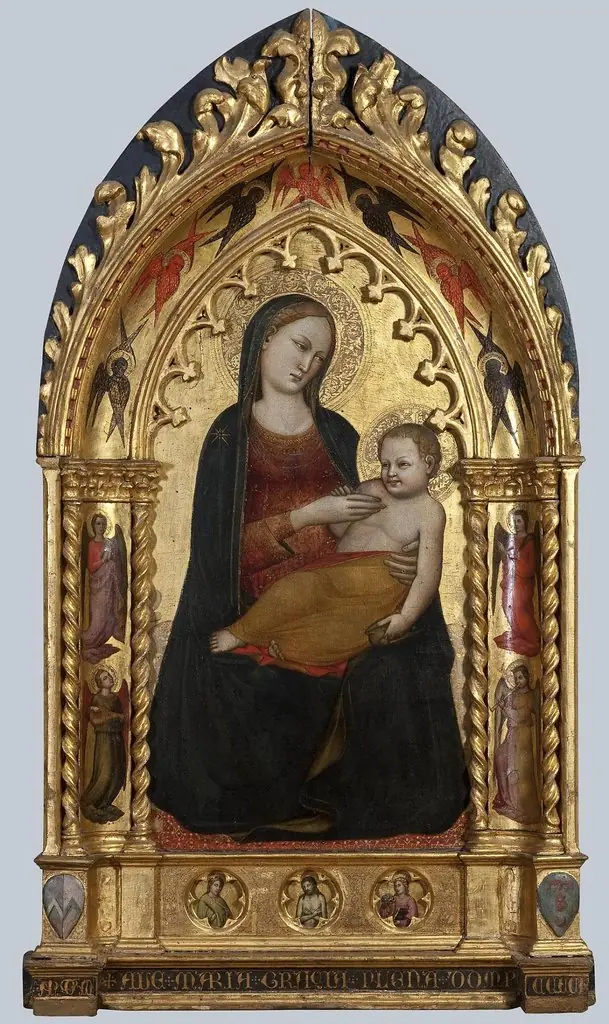 Madonna and Child
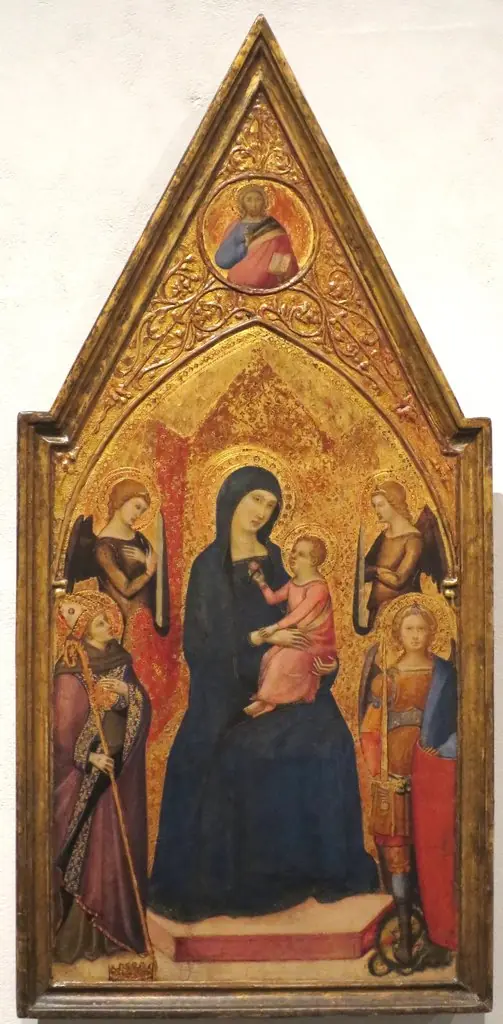 Virgin and Child with Sts. Louis of Toulouse and Michael
 Madonna of Humility
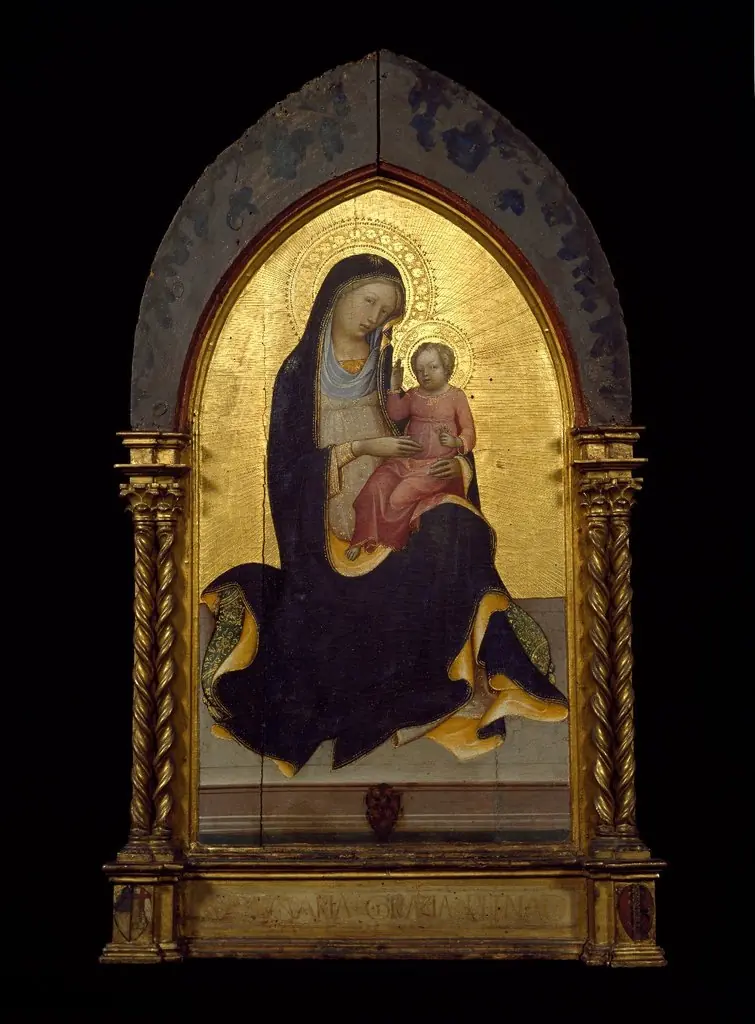 Madonna of humility
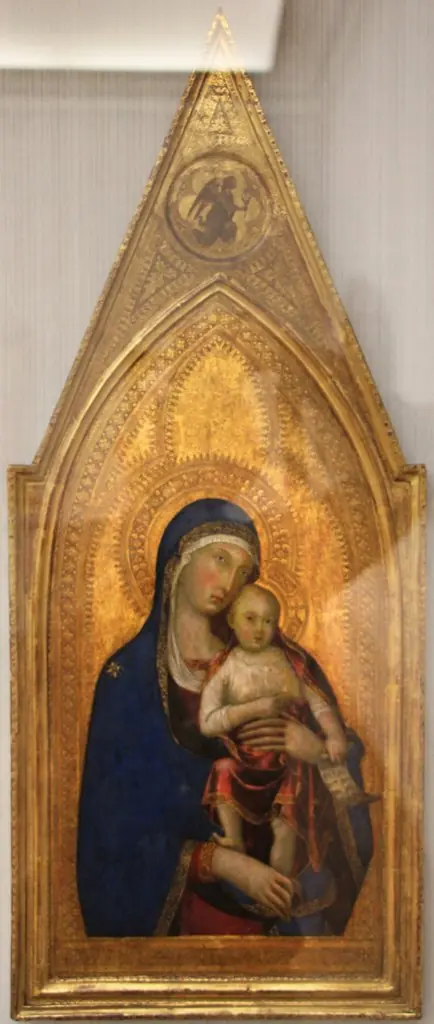 Maria mit dem Kind
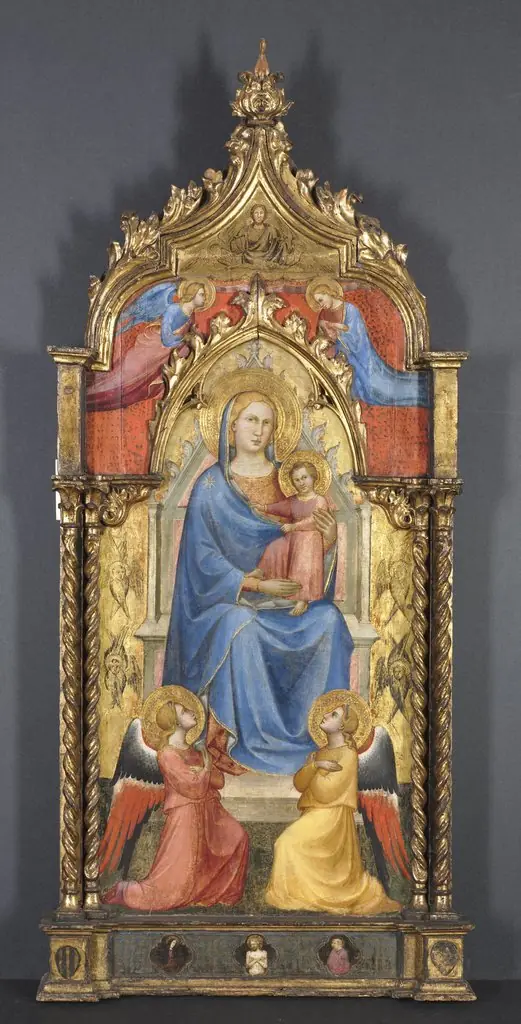 Virgin and Child with Angels
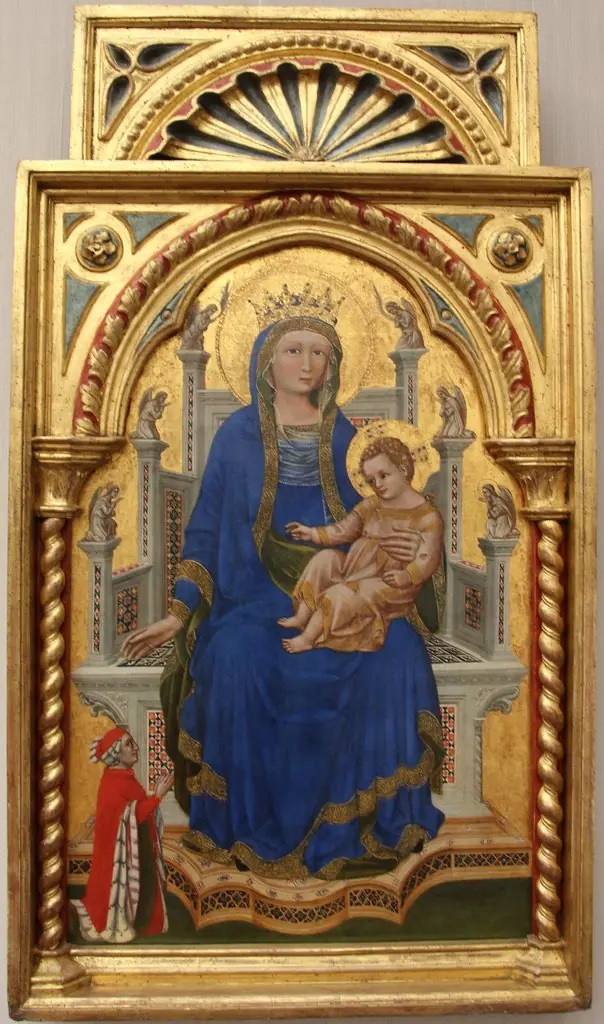 The Virgin and Blessing Child Enthroned with a Donor
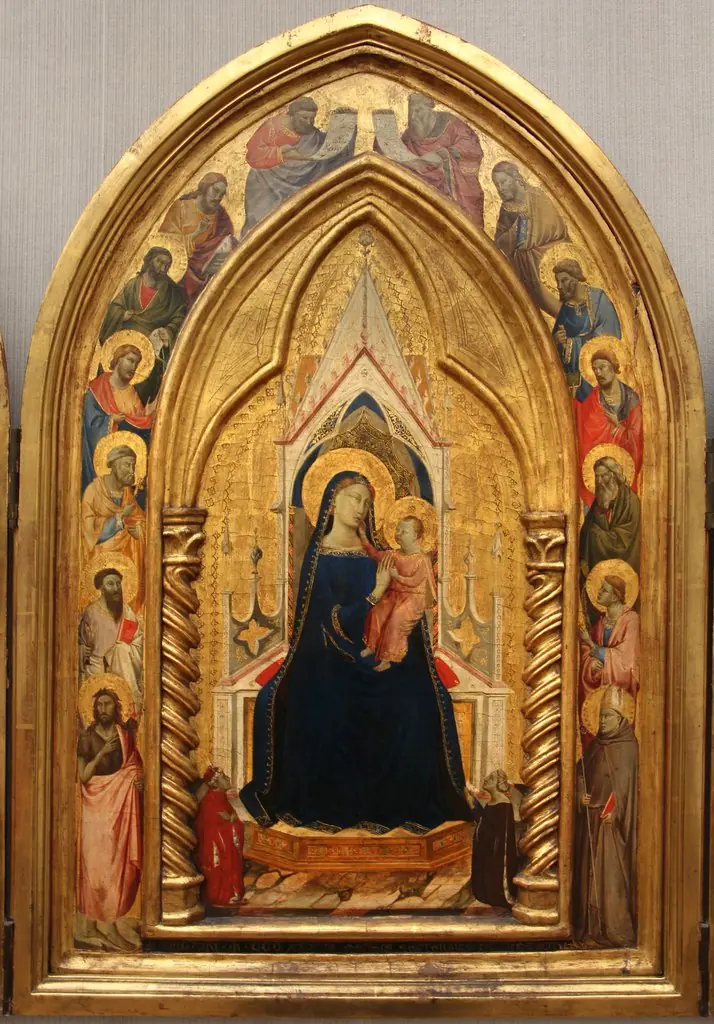 Central panel of the triptych
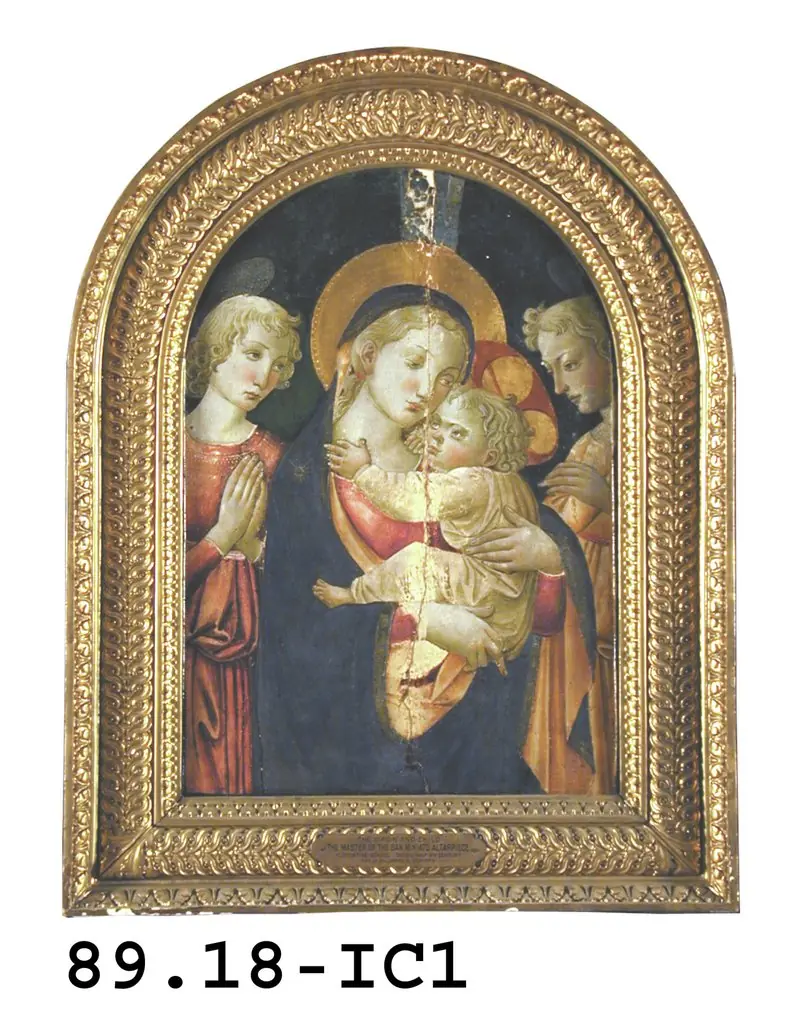 Madonna and Child with Two Angels