Artwork
Guru Dragpo
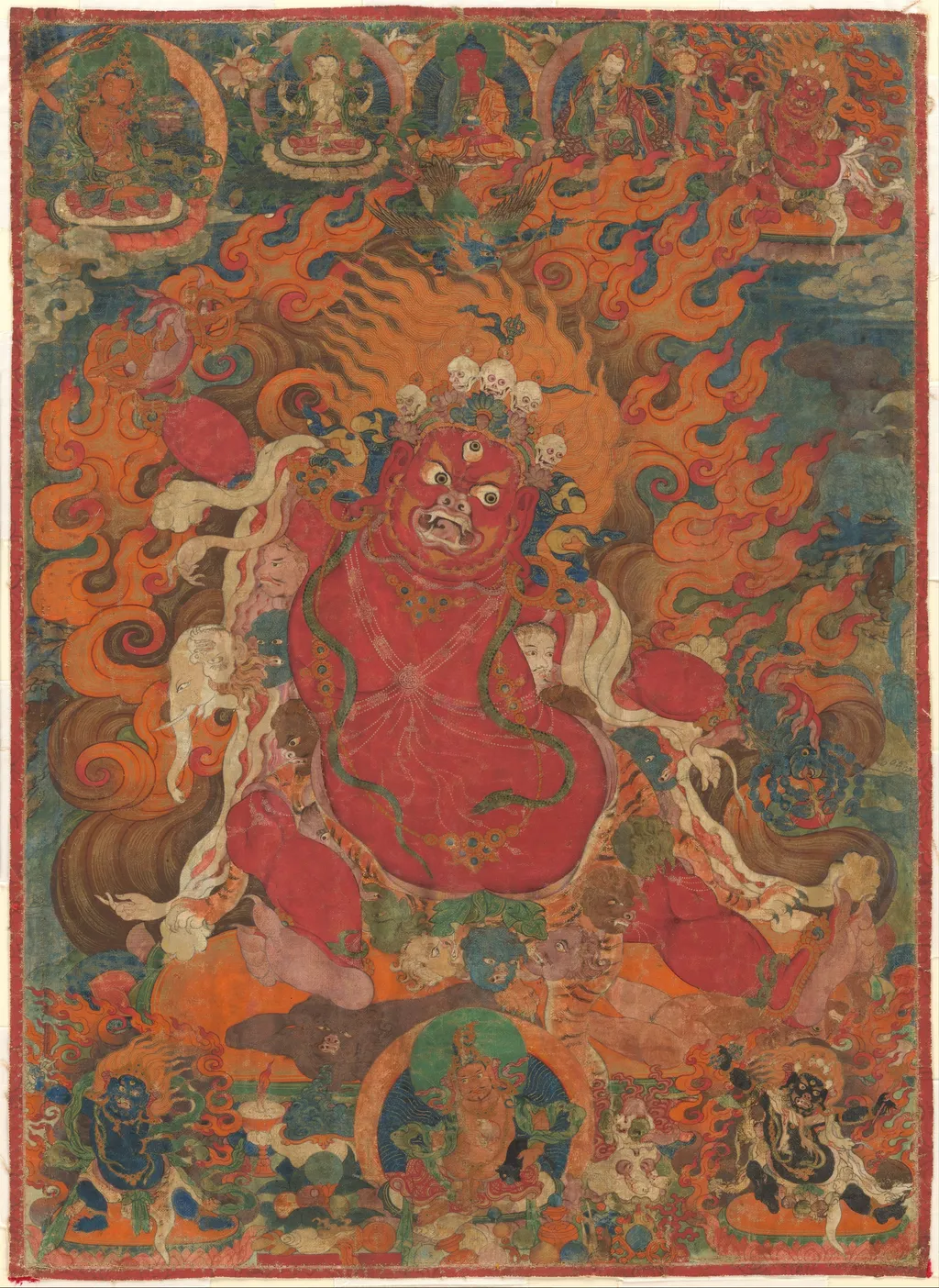
Guru Dragpo is an unspecified painting. It dates from 1749 and is held in the collection of the Metropolitan Museum of Art.
About this work
Subject & Meaning
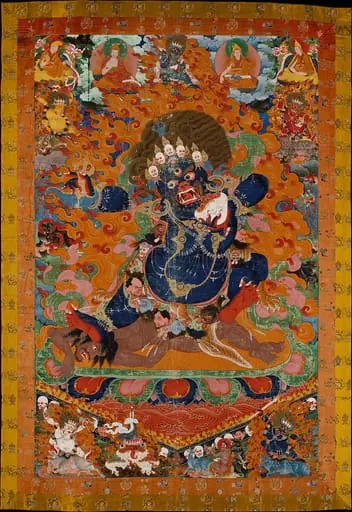
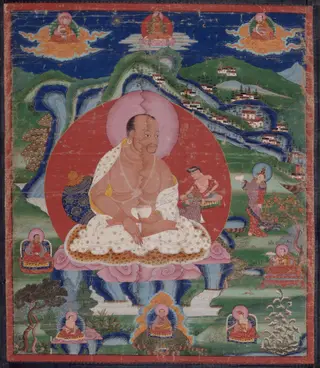
Guru Dragpo is portrayed as a wrathful Buddhist deity within a thangka painting dated 1749 that belongs to the Metropolitan Museum of Art.
Guru Dragpo is portrayed as a wrathful Buddhist deity within a thangka painting dated 1749 that belongs to the Metropolitan Museum of Art. The composition shows the figure mounted on a skull and an elephant, attributes recorded in the work's description. The skull functions as a symbol of impermanence, while the elephant represents strength and the subjugation of ignorance; together they illustrate the deity's role in overcoming obstacles and transforming destructive forces. The painting's iconography aligns with tantric traditions that use fearsome imagery to convey spiritual triumph.
History & Provenance
Guru Dragpo is a Tibetan religious painting produced in 1749, executed by an anonymous master and classified as a devotional work. The composition portrays a wrathful deity together with an elephant and a skull, iconographic elements typical of Himalayan Buddhist art. After its making the piece was incorporated into the collection of the Metropolitan Museum of Art, where it remains on view; no earlier owners or commissioning patron are documented.
Legacy
Guru Dragpo, a 1749 Tibetan painting attributed to an anonymous artist, entered the collection of the Metropolitan Museum of Art, where it is displayed as part of the museum's Asian art holdings. The work portrays a wrathful deity accompanied by an elephant and a skull, iconography that reflects core themes of Tibetan Buddhist spirituality. Its inclusion in a prominent Western museum has made the piece a reference point for scholars studying eighteenth-century Himalayan visual culture, preserving its reputation as an important example of religious art from the period.
Overview
This painting depicts Guru Dragpo, a wrathful manifestation, at its core. The composition is dynamic, featuring a central red-faced figure with untamed hair, encircled by an array of smaller entities that combine human and animal characteristics. The background is animated with swirling clouds and flames, while subtle details like miniature skulls and various animals emerge from the periphery, contributing to the work's intricate visual texture.
Technique & Style
The artwork is characterized by its vibrant palette and energetic forms. Bold outlines define the figures and elements, which are rendered with flat areas of color, contributing to a distinct visual impact. The background's swirling clouds and flames, alongside the varied shapes of the figures, create a sense of movement and intensity. Despite the density of elements, the composition maintains a visual equilibrium, presenting a busy yet harmonious scene.
Artist & collection

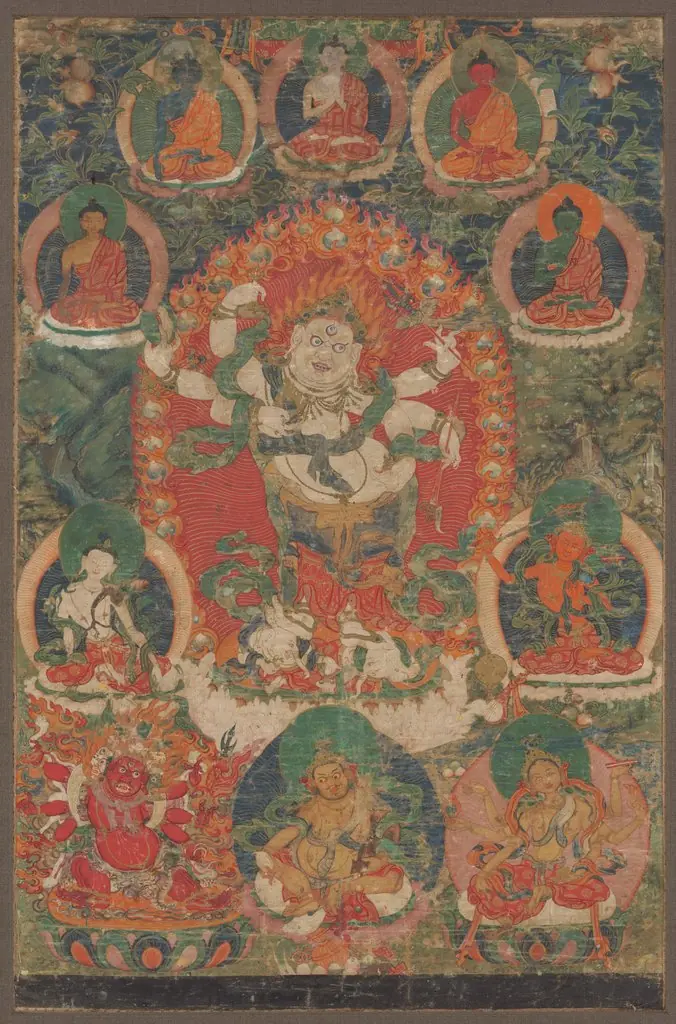
- White Mahakala
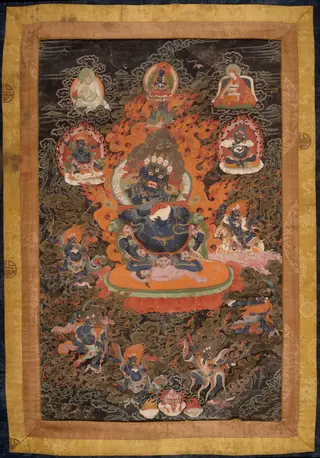 Mahakala and Companions
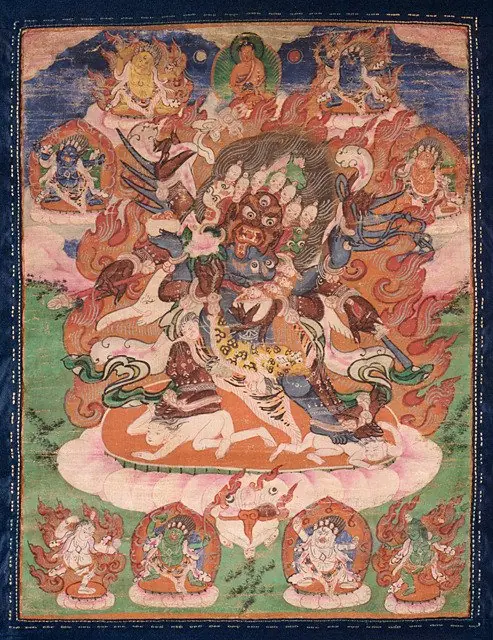 Garuda-Feathered Hayagriva and Consort
 Untitled
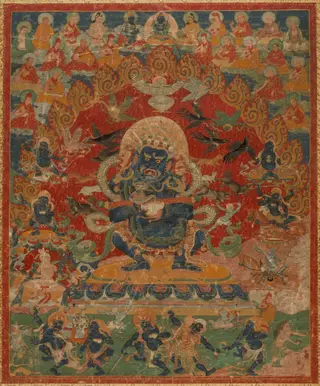 Mahakala Panjarnata (Lord of the Pavilion)
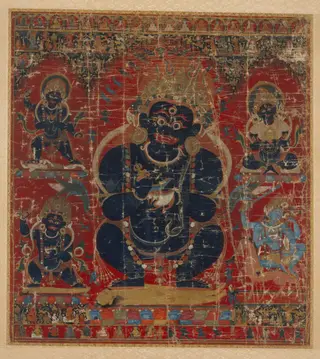 Mahakala Panjarnata (Lord of the Pavilion)
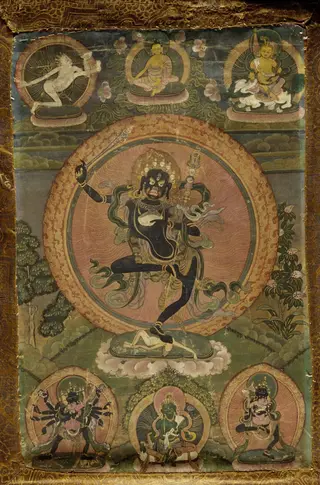 Khadgayogini
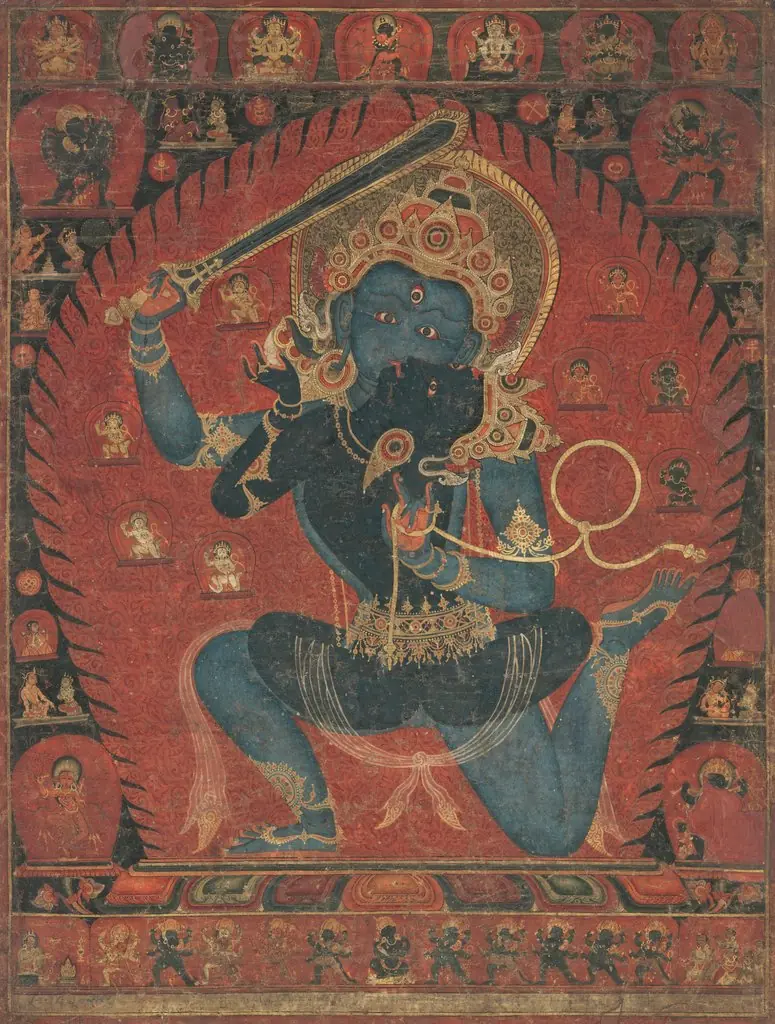 Achala with His Consort Vishvavajri
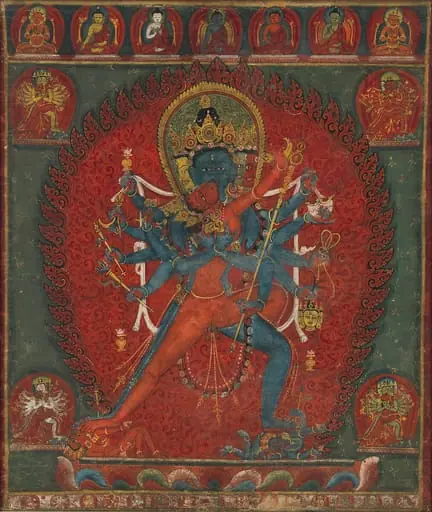 Untitled
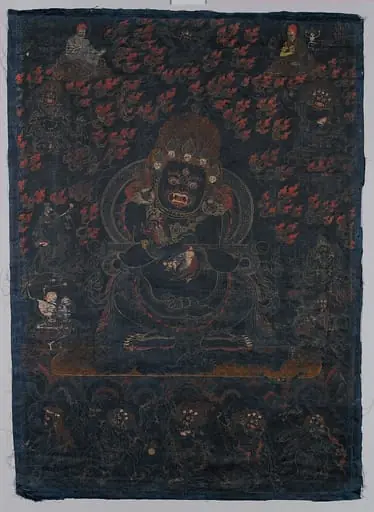 Untitled
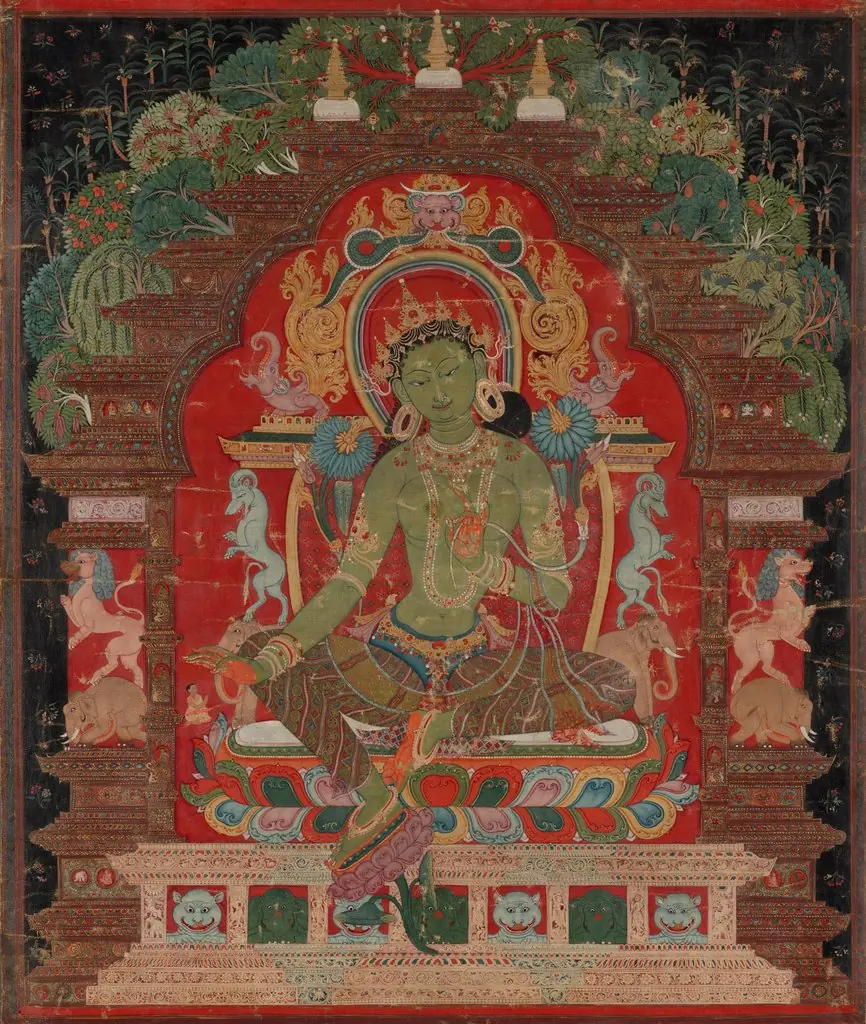 Green Tara
 Padma Dorje (1128-88) as a Mahasiddha (Great Adept) and Lamas