Artwork
Untitled
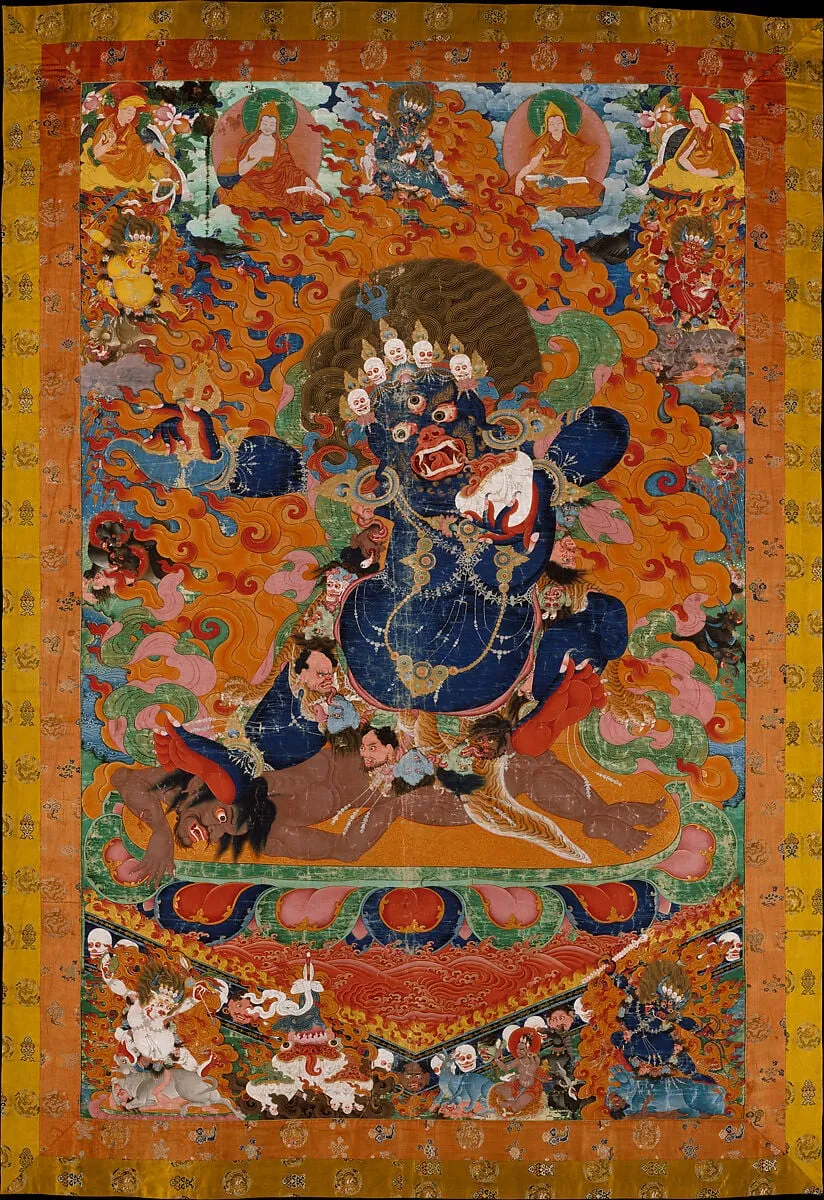
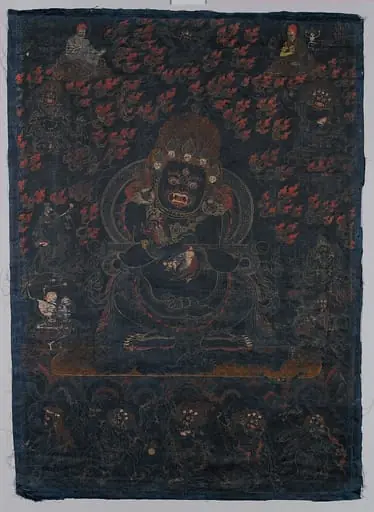
Untitled is a distemper painting. It dates from 1716 and is held in the collection of the Metropolitan Museum of Art.
About this work
Technique & Style
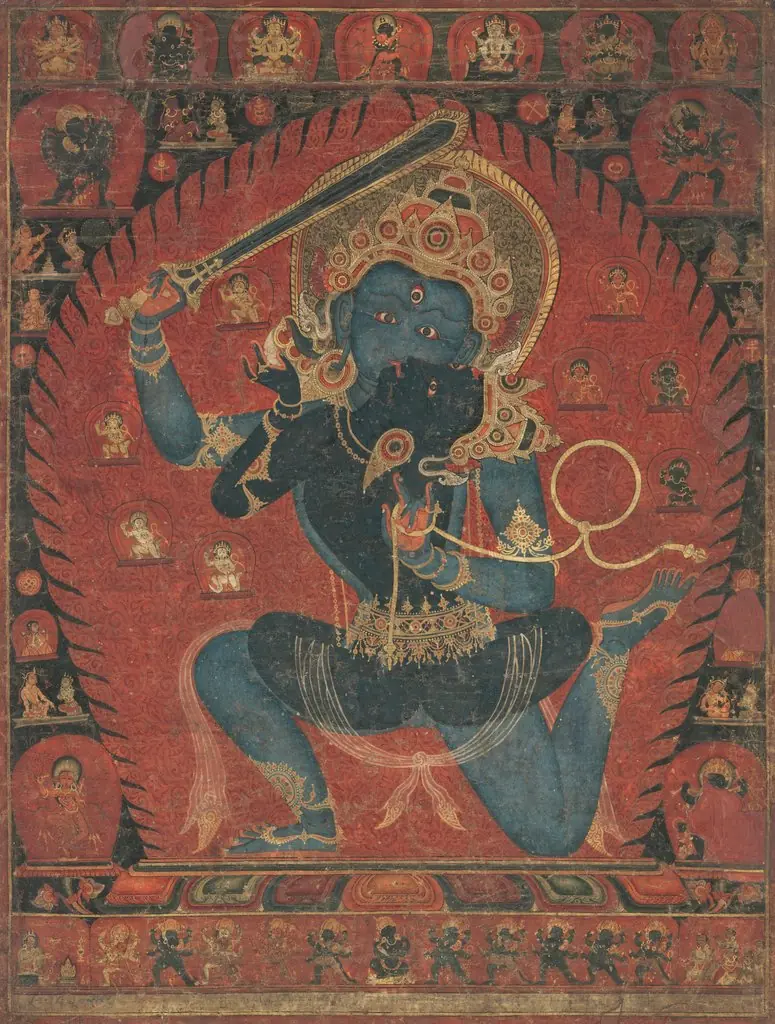
Stylistically, the composition is defined by its depiction of specific iconographic elements, including a deity, a male figure, and a skull.
Executed in 1716, this religious painting utilizes distemper as its primary medium, applied directly onto a cloth support. The work measures approximately 183.8 centimeters in height and 118.4 centimeters in width. Stylistically, the composition is defined by its depiction of specific iconographic elements, including a deity, a male figure, and a skull.
While the artist remains anonymous, the piece is classified within the genre of religious paintings and is held in the collection of the Metropolitan Museum of Art.
History & Provenance
Created in 1716, this religious painting executed in distemper on cloth is attributed to an unknown artist. The work, which depicts a deity, a man, and a skull, currently resides in the collection of the Metropolitan Museum of Art. Its dimensions measure approximately 183.8 cm in height and 118.4 cm in width. No documentation of a specific commission or chain of ownership prior to its museum acquisition is available.
Legacy
The painting, dated 1716, is executed in distemper on cloth and classified as a religious work depicting a deity, a man and a skull. Its attribution to an anonymous painter and its presence in the Metropolitan Museum of Art collection have positioned it as a reference point for scholarship on early eighteenth‑century anonymous religious art. Recorded dimensions of 183.8 × 118.4 cm further document its physical profile.
These factors contribute to its reputation as a notable example of the period’s devotional imagery and inform ongoing research into anonymity and iconography in historic paintings.
Overview
This untitled painting, executed in distemper on cloth, presents a powerful deity with red skin, a skull crown, and ritual implements. Such images were integral to Tibetan Buddhist practices, serving a functional role within ceremonies rather than purely decorative purposes. The choice of distemper as a medium imparts a distinctive flat, matte finish, characteristic of traditional Tibetan painting techniques.
Subject & Meaning
The central figure of this artwork is a wrathful deity, identifiable by its vivid red skin and a crown adorned with skulls. It is depicted holding a sword and a bowl of blood, elements frequently encountered in Tibetan Buddhist iconography. These attributes symbolize protective functions or transformative spiritual principles, making the image a focal point for specific ritualistic and meditative practices.
Context
Originating from Tibet, this painting is deeply rooted in the region's rich cultural and religious traditions. Artworks of this type were not merely objects for aesthetic contemplation but functioned as active components in spiritual life, often utilized as aids for meditation or as central elements in ceremonial rites. They exemplify a profound artistic heritage intertwined with spiritual beliefs.
Artist & collection

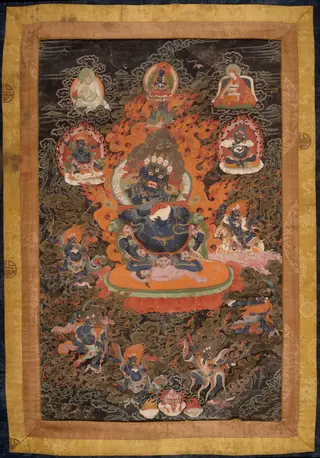
- Mahakala and Companions
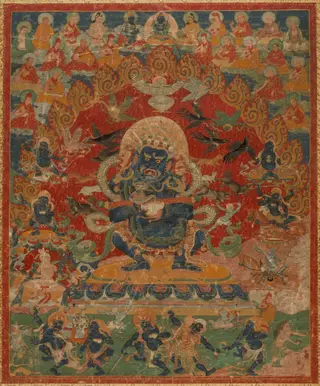 Mahakala Panjarnata (Lord of the Pavilion)
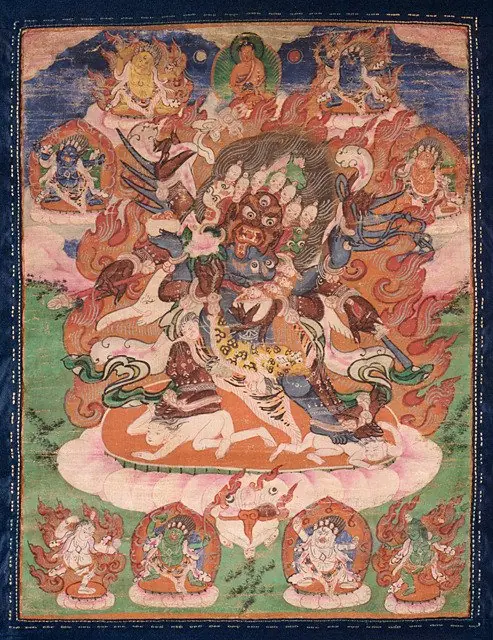 Garuda-Feathered Hayagriva and Consort
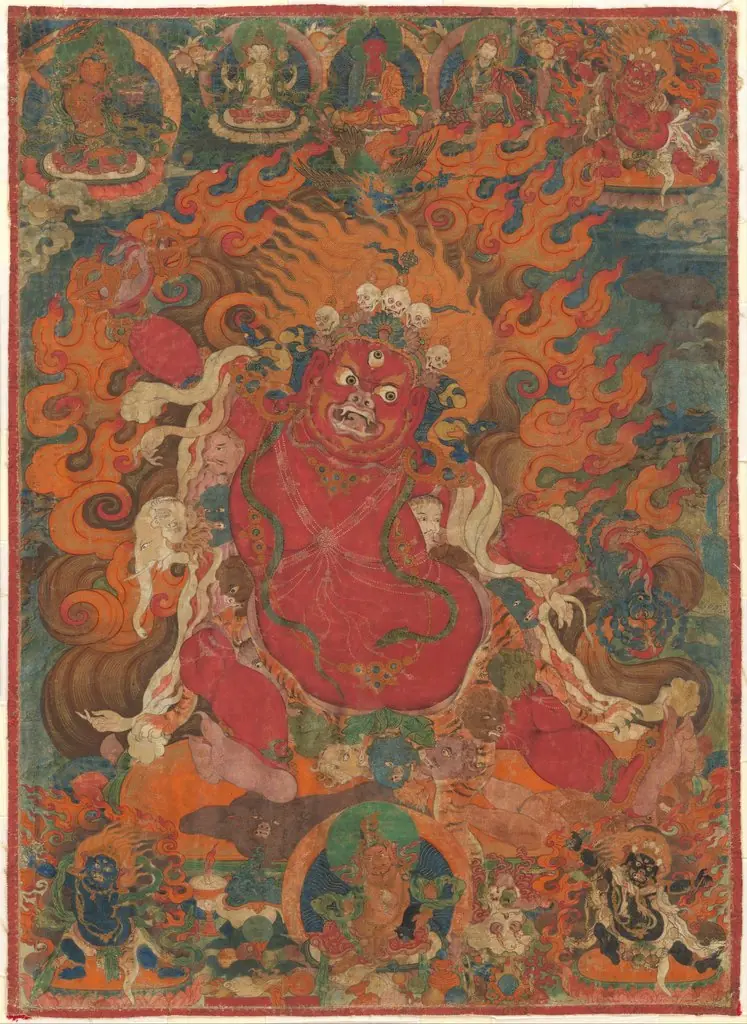 Guru Dragpo
 Yamantaka Vajrabhairava
 Painted Banner (Thangka) with Guru Dragpur or Vajrakila, a Wrathful Form of Guru Padmasambhava
 Yama and Yami
 Untitled
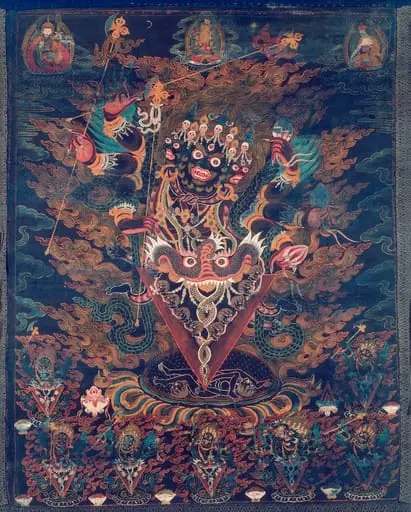 Painted Banner (Thangka) with Guru Dragpur, a Wrathful Form of Padmasambhava
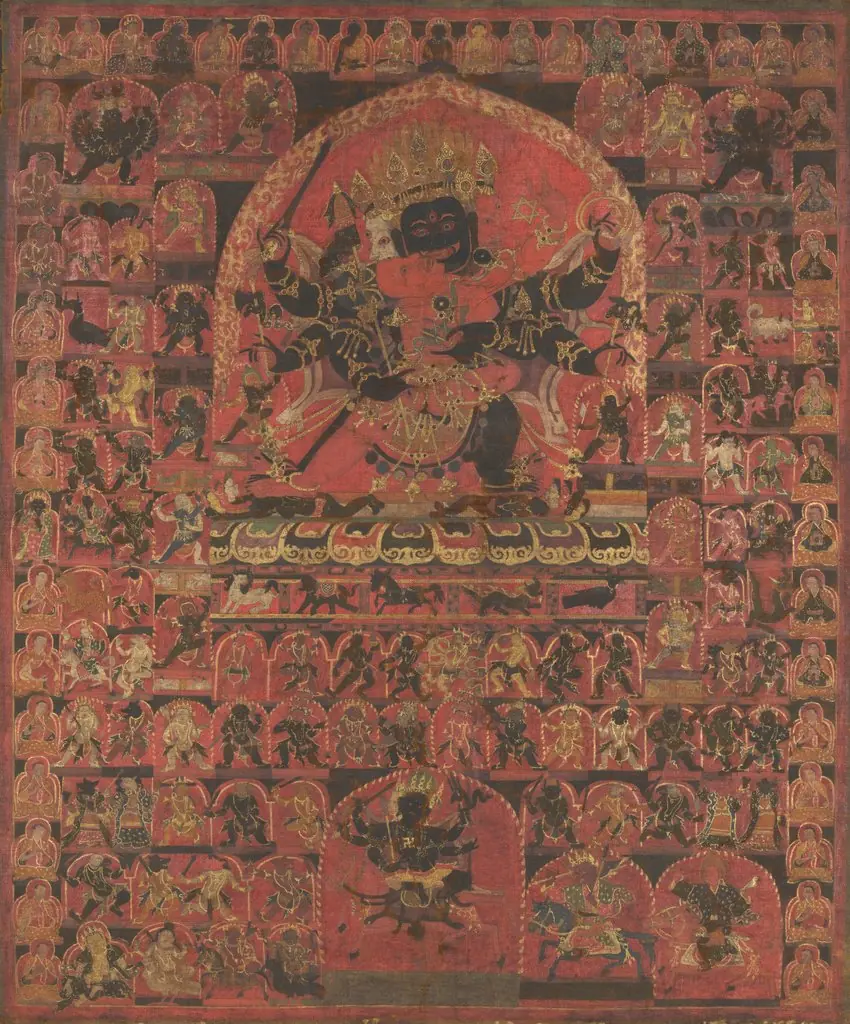 Bon Deity Trowo Tsochog Khagying
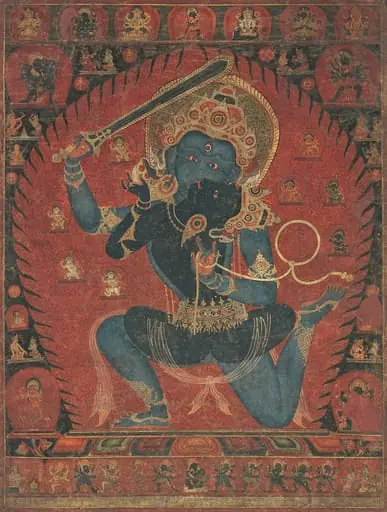 Untitled
 Achala with His Consort Vishvavajri