Artwork
Hindola raga
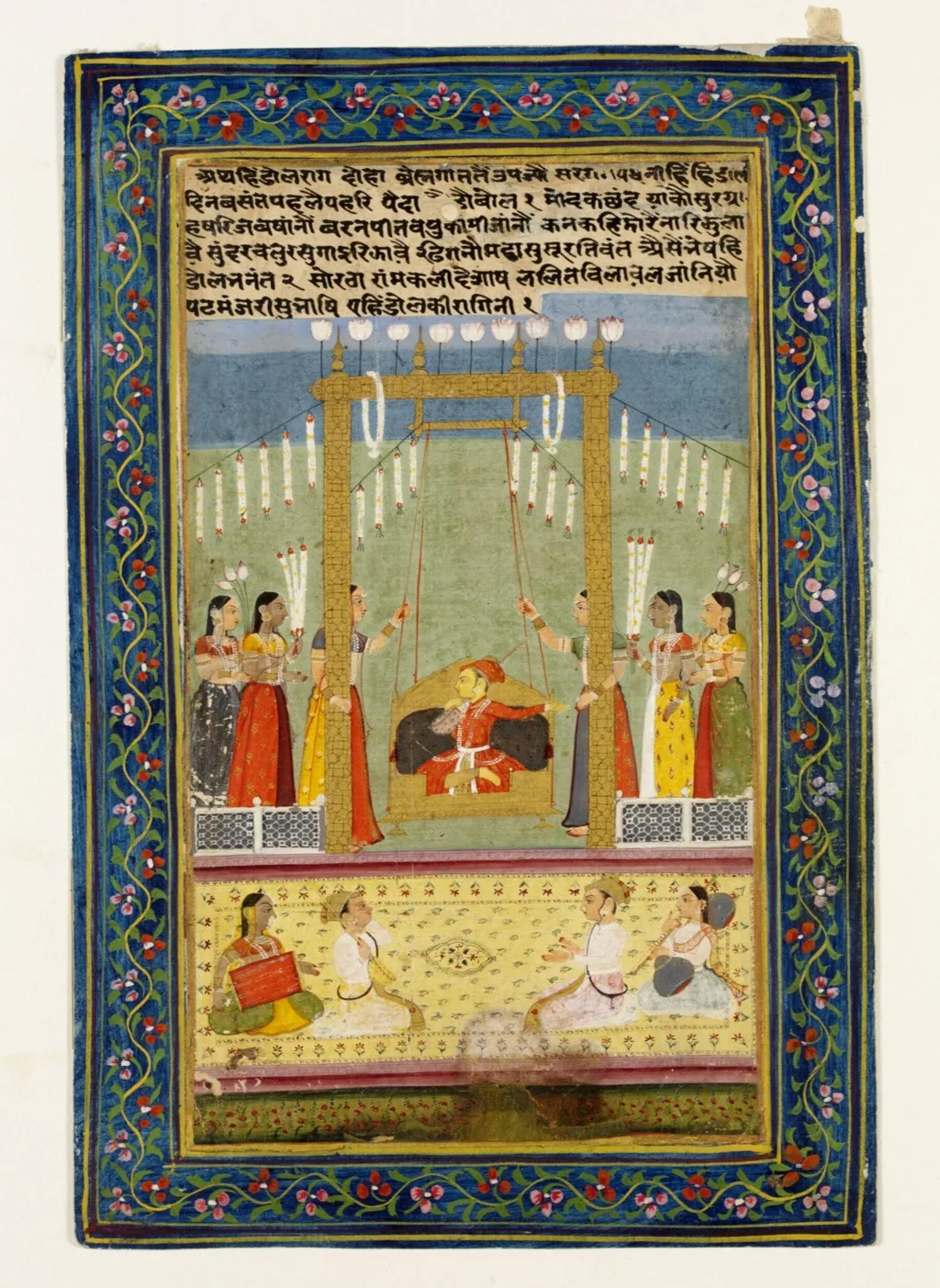
Hindola raga is a paint painting by the Mughal Painting artist Unknown. It dates from 1750 and is held in the collection of the Victoria and Albert Museum.
About this work
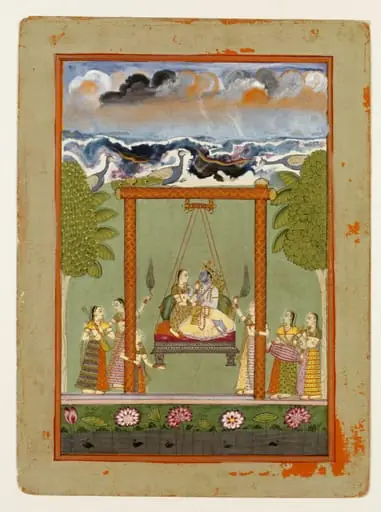
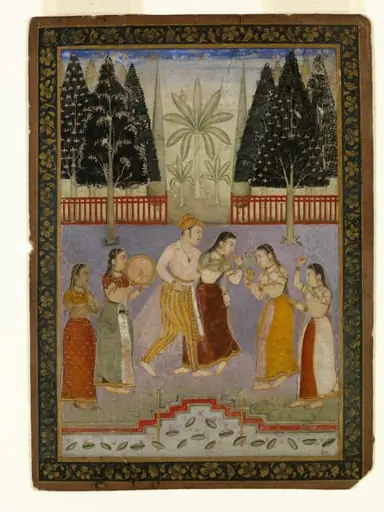
The women are all dressed in colorful saris and are standing around the swing, some of them holding flowers or other objects.
This painting shows a man sitting on a swing, surrounded by eight women. The man is wearing a red robe and a red turban, and he is holding onto the ropes of the swing. The women are all dressed in colorful saris and are standing around the swing, some of them holding flowers or other objects.
The background of the painting is a green field with a blue sky above it. The painting is framed by a decorative border with intricate designs and patterns.
The painting is a beautiful example of Indian art from the early 18th century. To learn more about this style of art, look up the Victoria and Albert Museum.
Overview
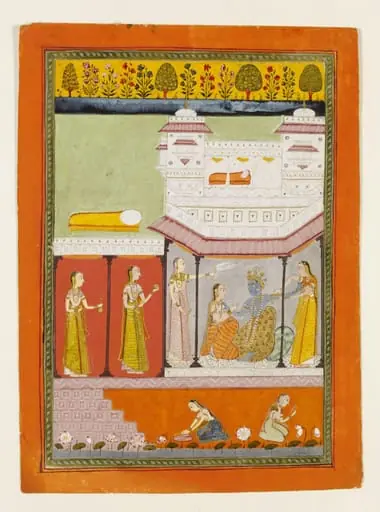
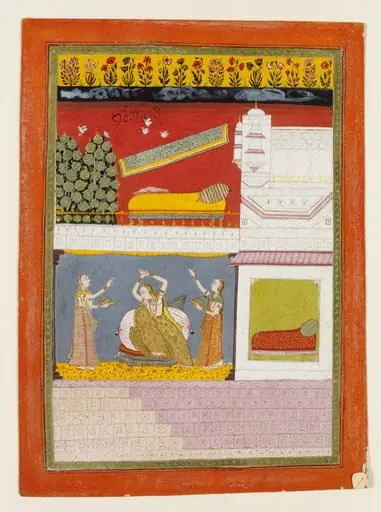
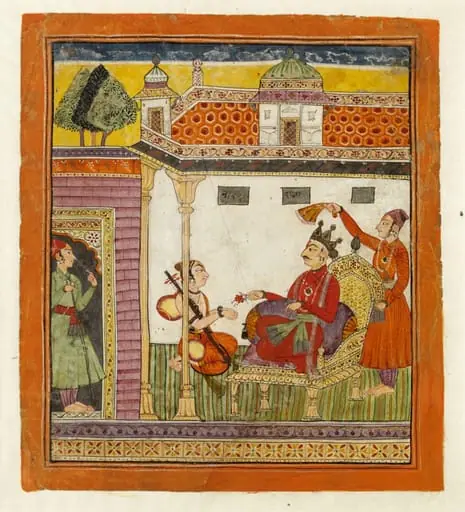
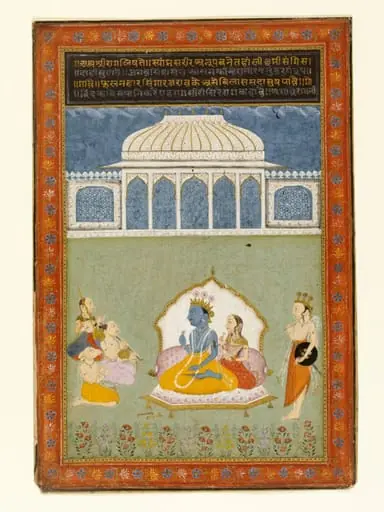
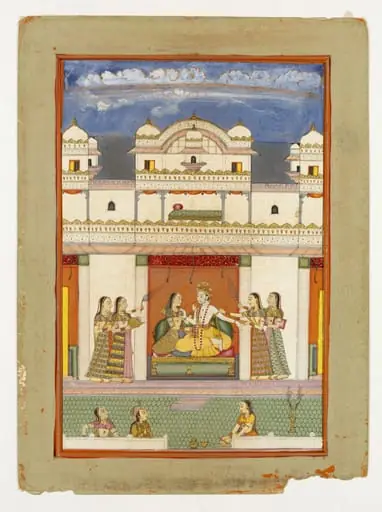
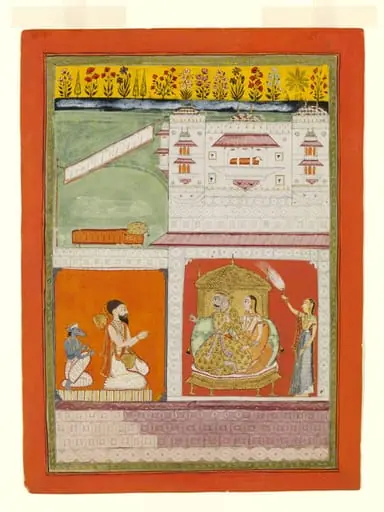
This opaque watercolour on paper, dated to around 1750, belongs to the Ragamala tradition, a series of visual interpretations of Indian musical modes. It illustrates Hindola raga, associated with swinging and courtly leisure. Executed in delicate pigments, the work reflects the refined aesthetic of late Mughal and Rajput painting traditions, blending naturalistic detail with stylized composition.
Subject & Meaning
The scene depicts a prince reclining on a swing, surrounded by eight women, likely attendants or court ladies. The act of swinging evokes themes of pleasure, romance, and seasonal festivity, aligning with Hindola raga’s association with spring and divine play. Musicians are present, reinforcing the link between music and emotional expression in this poetic tradition.
Technique & Style
The painting employs fine brushwork and layered opaque watercolours to render textures of fabric, foliage, and skin. Figures are rendered with graceful contours and vivid, saturated hues, particularly in the prince’s red attire and the women’s patterned saris. The background features a flat, stylized landscape with a blue sky and green field, typical of regional Indian miniatures that prioritize symbolic space over perspective.
History & Provenance
Created in the mid-18th century, likely in a Rajput court studio, the work was part of a larger set of Ragamala paintings commissioned for royal collections. Its survival suggests it was preserved as a valued object, possibly within a princely household. Later, it entered institutional collections, with comparable works held at the Victoria and Albert Museum and other major repositories of South Asian art.
Context
Ragamala paintings emerged as a fusion of devotional poetry and musical theory, translating abstract ragas into visual narratives. This piece reflects the cultural practice of associating specific times, moods, and courtly activities with musical modes. Such works were not merely decorative but served as aids to meditation and aesthetic contemplation among elite patrons.
Legacy
The painting exemplifies the enduring influence of Indian musical iconography in visual art. Though the Ragamala tradition declined after the 18th century, its compositions continue to inform modern understandings of Indian aesthetics. Surviving examples like this one remain critical for studying the intersection of music, poetry, and painting in pre-colonial South Asia.
Artist & collection