Artwork
Hotei with a Child
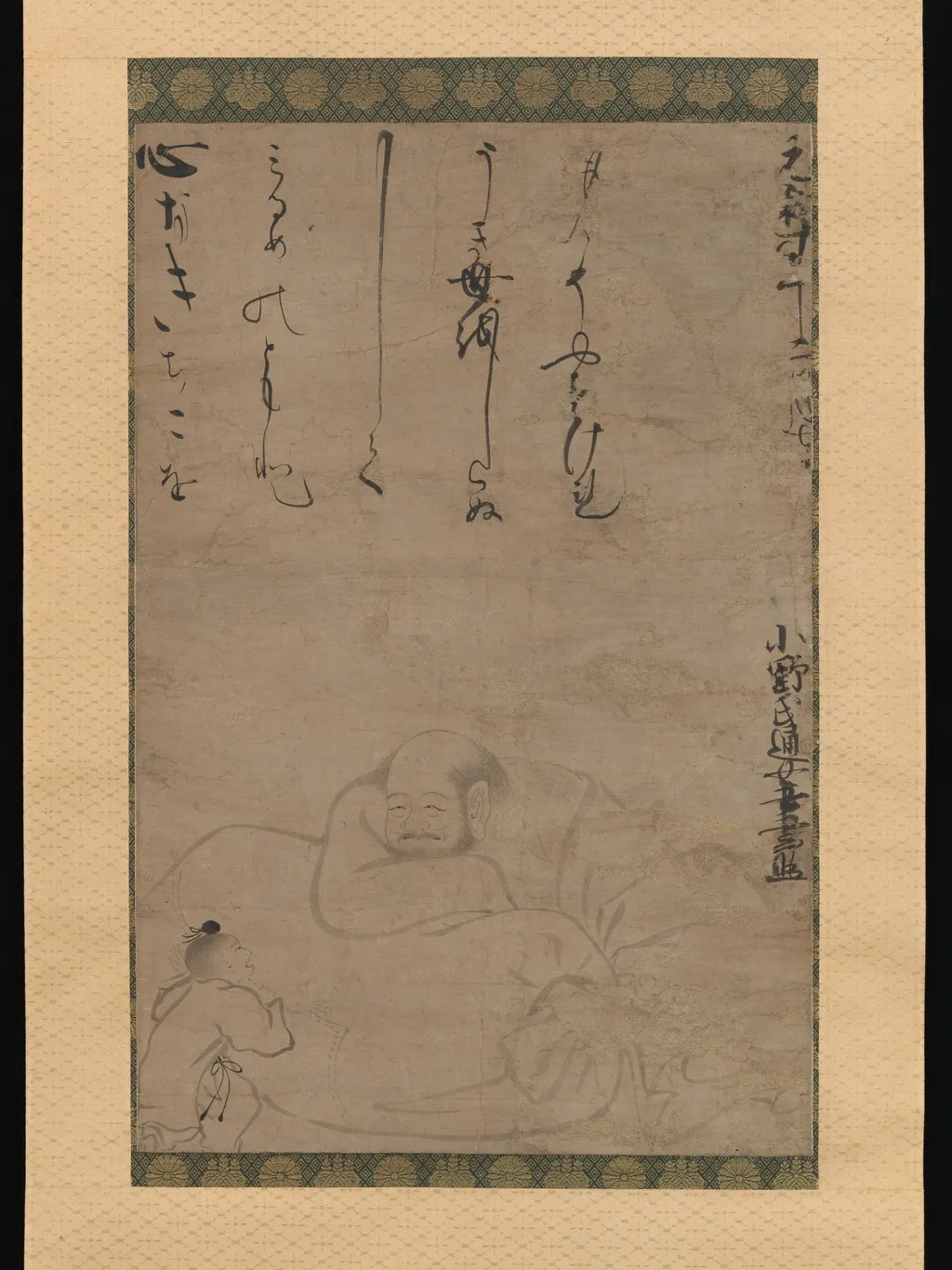
Hotei with a Child is an unspecified painting. It dates from 1624 and is held in the collection of the Metropolitan Museum of Art. This painting depicts Hotei, a revered figure, alongside a young child.
About this work
History & Provenance
The painting Hotei with a Child, dated 1624 and attributed to Ono no Otsū, is held in the collection of the Metropolitan Museum of Art in New York.
The painting Hotei with a Child is dated 1624, aligning with the Edo period in Japan.
The work has been attributed to Ono no Otsū (Ozū) and is held in the collection of the Metropolitan Museum of Art. Its documented provenance traces to that institution, where it remains located.
The painting Hotei with a Child, dated 1624 and attributed to Ono no Otsū, is held in the collection of the Metropolitan Museum of Art in New York. The work depicts a man and a boy, consistent with the iconography of the Buddhist deity Hotei. While the specific inventory or accession number is not provided in the available records, the museum's location is confirmed as the primary holding institution for this Japanese painting.
Context
Attributed to the Japanese artist Ono no Otsū, the painting Hotei with a Child was created in 1624. The work is currently held in the collection of the Metropolitan Museum of Art in New York. As a product of early 17th-century Japan, the piece depicts the Buddhist deity Hotei accompanied by a child, reflecting the era's artistic engagement with religious figures and daily life.
The attribution to Otsū situates the work within a specific lineage of Japanese painting, distinguishing it from anonymous productions of the same period.
Overview
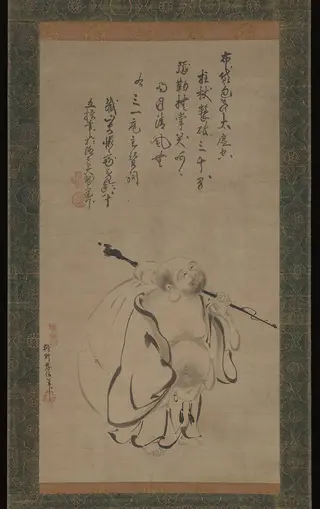
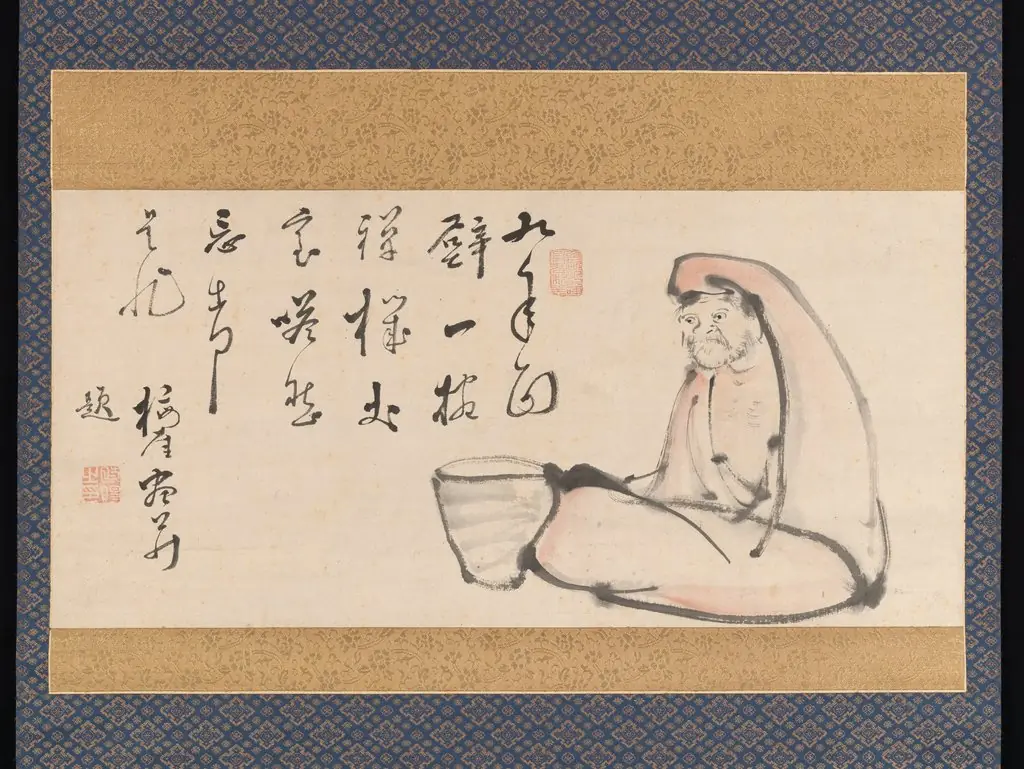
This painting depicts Hotei, a revered figure, alongside a young child. The composition features a jovial, corpulent man seated cross-legged, holding a fan, while a boy kneels beside him, gazing upwards. The background is rendered with minimal brushwork, suggesting natural elements.
Inscriptions in black ink frame the central imagery, contributing to the overall aesthetic. The scene conveys a sense of tranquility and contentment through the figures' expressions.
Subject & Meaning
The central figure is Hotei, often associated with good fortune and abundance, characterized by his prominent belly and cheerful demeanor. His relaxed, almost laughing expression contrasts gently with the child's calm, upward gaze, which imparts a peaceful quality to their interaction. This pairing frequently symbolizes innocence, joy, and the transmission of wisdom or blessings, creating a harmonious and benevolent narrative within the artwork.
Technique & Style
The artist employs a direct and unadorned approach, utilizing simple brushstrokes to delineate the background elements like trees and tall plants. This minimalist rendering allows the viewer's focus to remain on the two figures. The black ink inscriptions bordering the composition are an integral part of the visual structure, suggesting a connection between image and text. The overall style emphasizes clarity and expressive characterization over detailed realism.
Artist & collection